The Albemarle-Pamlico National Estuary Partnership has found that the amount of seagrass the state has lost over a 14-year period totals about 25 square miles.
The federal-state program that manages the Albemarle-Pamlico Estuarine System located in northeastern North Carolina and southeastern Virginia recently published these findings, an update to its 2021 report on the extent of high-salinity underwater grass in the Albemarle-Pamlico estuary.
Supporter Spotlight

APNEP Quantitative Ecologist Dr. Tim Ellis, an author of the study, explained that, although the study confirms that North Carolina has the largest amount of seagrass habitat along the U.S. Atlantic Coast, the critical coastal resource is declining, with an estimated loss of approximately 16,000 acres, or 16%, from 2006 until 2020.
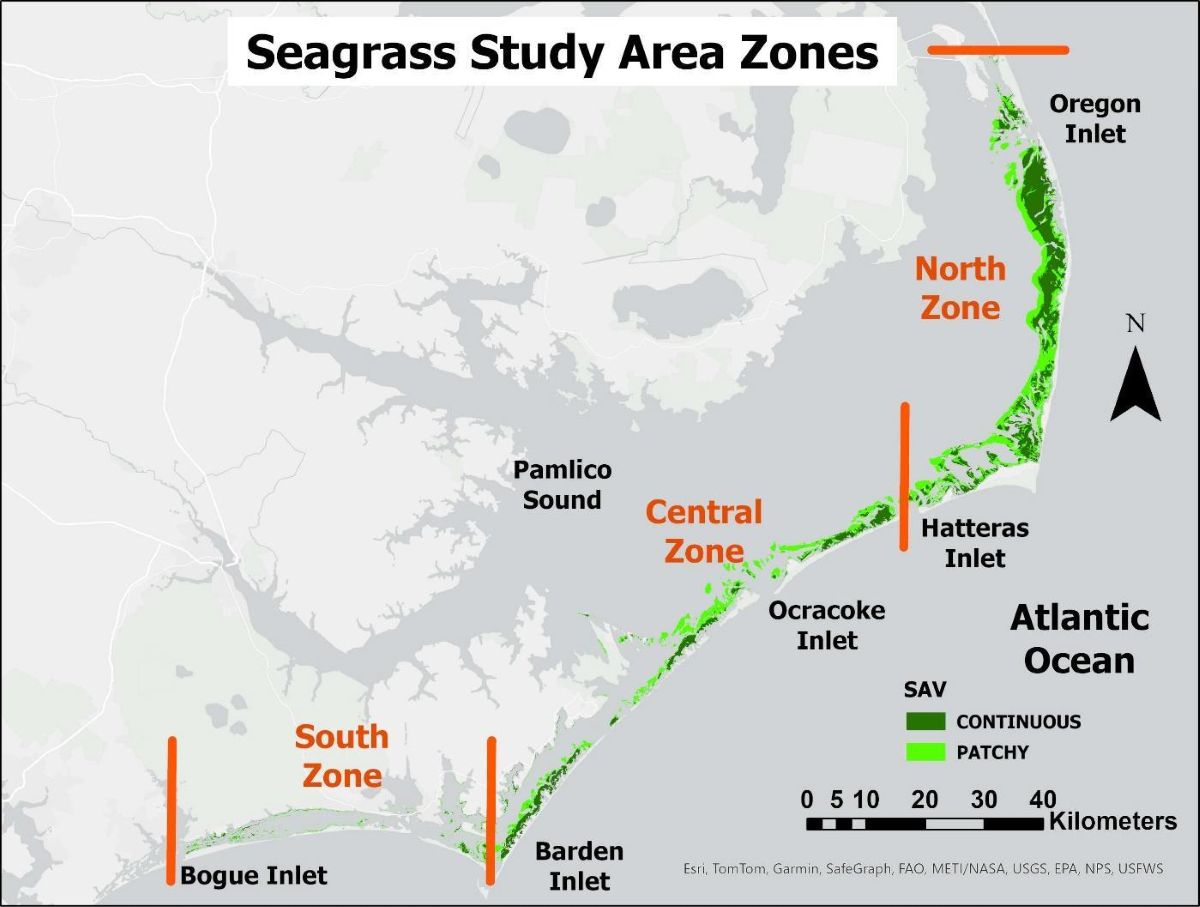
Using data from three aerial surveys of soundside, high-salinity estuarine waters, or where seagrasses would most likely be expected to grow, between Manteo and Bogue Inlet, researchers found that the real extent of seagrass in 2006-07 was 109,607 acres, in 2013 was 95,157 acres, and in 2020 was 88,531 acres. That is a decline of about 1% a year, “despite suitable habitat available for expansion.”
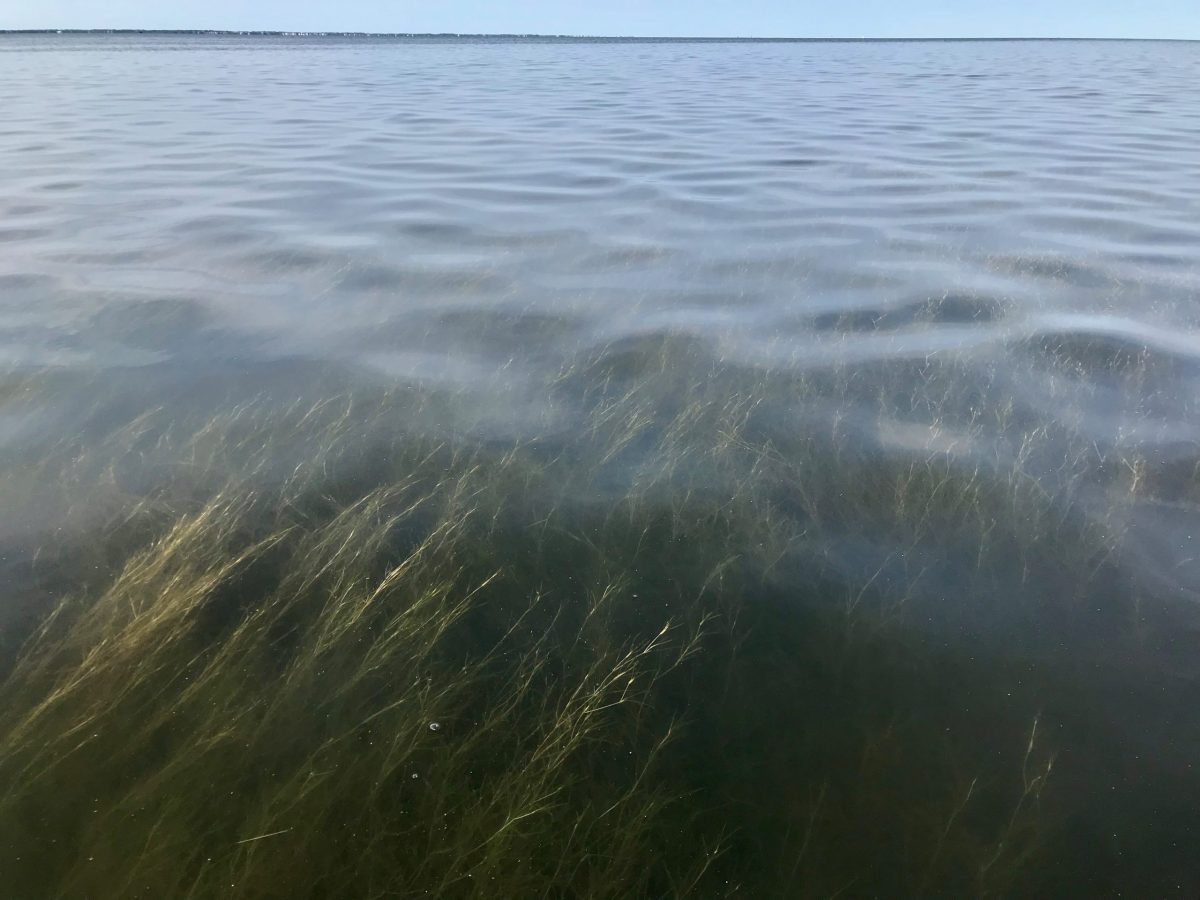
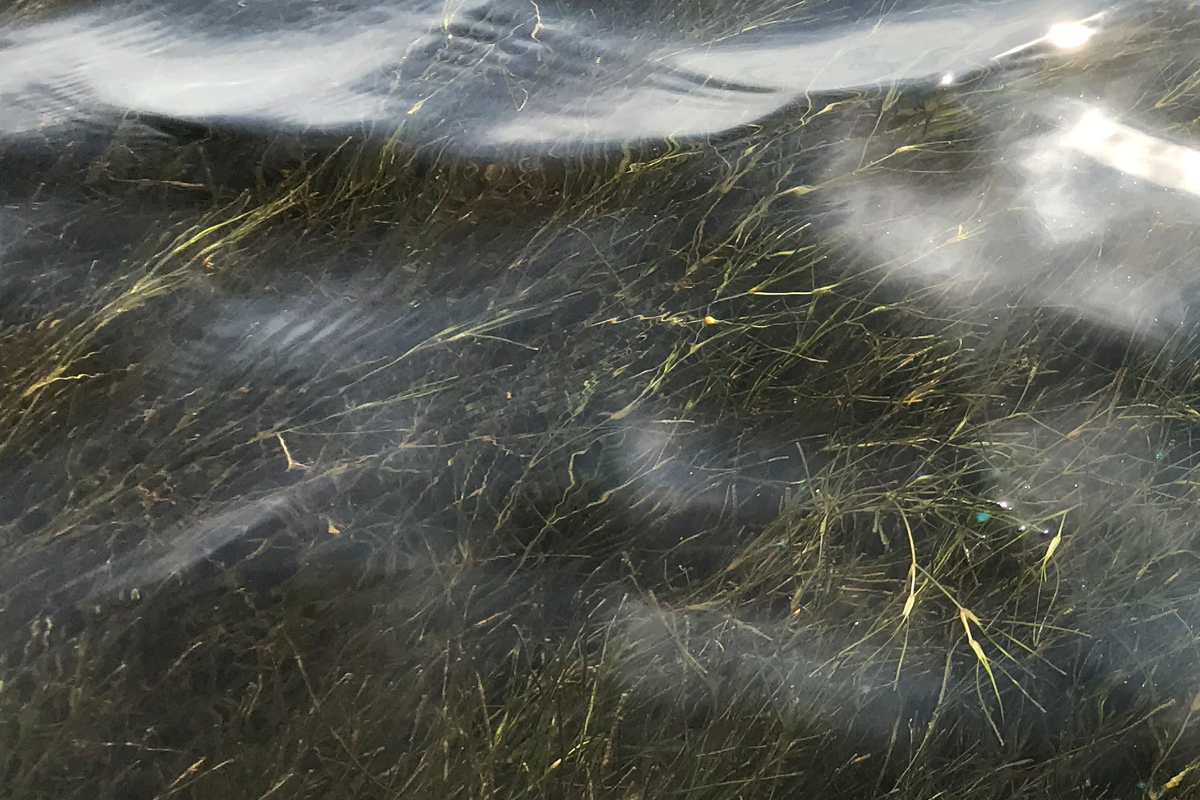
These flowering plants that are fully submerged and are completely dependent on sunlight to flourish are often called subaquatic vegetation, SAV, seagrasses or underwater grasses. In addition to keeping “waters healthy by providing habitat, food, and shelter for aquatic life, sequestering carbon, protecting shorelines, absorbing and recycling nutrients, filtering sediment, and acting as a barometer of water quality,” seagrasses “enrich shallow aquatic environments around the world, providing sanctuaries for mollusks, crustaceans, and finfish as well as sustenance for waterfowl and other herbivores,” according to the report.
The declining trend is seen worldwide, “primarily due to water quality degradation, coastal development, dredging, fishing, boating, and other related aquatic activities, sea level rise, warming water temperatures, and tropical cyclones.”
North Carolina is experiencing annual rates of seagrass loss at or below the global average, but that’s cold comfort. “Because seagrass is sensitive to water quality, including nutrient and sediment pollution, a continued decline in the acreage of these underwater meadows indicates that the overall health of North Carolina’s estuaries may be declining,” APNEP states.
Supporter Spotlight

Ellis said that seagrass is a sensitive indicator of estuarine health because of its direct and complex associations with its surrounding environment. Seagrasses are also ecosystem engineers, meaning these plants modify the areas they inhabit by trapping sediments and absorbing nutrients to improve water clarity and by creating habitat to support biodiversity and biological productivity.
The study notes that the decline in North Carolina is not evenly distributed. “In the central portion of the study area, from Hatteras Inlet to Barden Inlet near Cape Lookout, seagrass acreage decreased 2.0% per year compared with a decline of 0.8% and 1.4% per year in the northern and southern portions of the study area, respectively.”
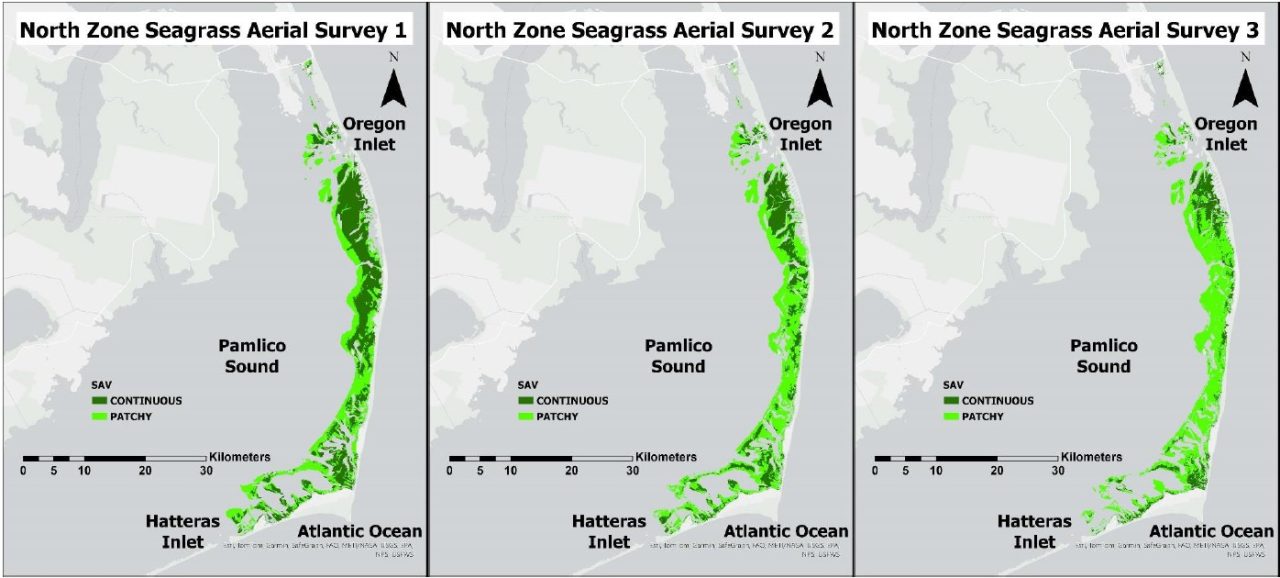
Over the 14 years there were three notable changes in the estuarine system’s seagrass meadows that were identified in the study, including that the total area of seagrass meadows is declining, the rates of change in extent vary, and coverage is shifting away from continuous toward more patchy and fragmented meadows.
Related: Work begins for periodic update of state coastal habitat plan
These “seagrass meadows are becoming more fragmented, meaning large, continuous beds are transitioning to more isolated and disconnected patches,” Ellis said. “This affects how well seagrass can provide critical habitat for fisheries and wildlife, stabilize sediments and protect shorelines, contribute to good water quality, and endure and respond to environmental changes, including major storm events.”
Over the period that the three surveys were conducted there were 10 tropical cyclones that directly impacted the Albemarle-Pamlico estuary, physically disturbing meadows, water quality and the stability of the barrier island inlets and flood deltas, APNEP notes.
Impact on marine life
Study co-author Jud Kenworthy, who researched seagrass for his more than 30-year career before retiring from the National Oceanic and Atmospheric Administration’s National Centers for Coastal Ocean Science, said in an interview that “what we’re seeing in the patchiness is that we’re losing the cover of grass. Not only are we losing the total amount (of seagrass) in the entire coastal system, the increase in patchiness is also a decrease in cover where the seagrasses are actually occurring in those patches.”
The implications of seagrass patchiness and reducing cover cascade through everything, especially all the fisheries that depend on this habitat at some point in their life stage. “They’re exposed to less vegetation and a tendency for less cover due to the increase of patchiness,” he said.
Although some species will be affected by that process more than others, it could result in changes in food availability for different commercial and recreational fisheries cherished in North Carolina as part of the social and economic fabric, Kenworthy said.
When asked what species will see the biggest hit, Kenworthy said there’s probably a list of at least a dozen, including the keystone commercial and recreational fisheries like red drum, spotted sea trout and flounder, any species of shrimp, plus any marine life that use the estuary as a nursery and depend on the resources in seagrass beds.
Kenworthy added that many species totally dependent on the seagrass beds are not harvested but are food for larger predators.
“The one that comes to mind is the pinfish,” which consume seagrass. “Nobody that I know of eats pinfish, but a lot of people use pinfish for bait, and of course, pinfish are a major source of food for a lot of the larger species,” Kenworthy said. If there’s no seagrass for pinfish or other prey for larger species, the foundation of the food chain is going to be affected.
Kenworthy explained that if estuaries lose SAV, all the important ecosystem services like capturing, trapping and recycling nutrients, stabilizing sediments, storing carbon in the soil and providing habitat places for plants and animals, especially their food, are going to be affected.
“How dramatically these services are affected is going to depend on whether we find some sort of balance where the seagrasses reach an equilibrium or whether they tend to continue to decline,” he added.
Continued monitoring
Ellis said continued monitoring of seagrass allows APNEP and partners to closely track changes in the estuary to evaluate the effectiveness of existing conservation and management strategies and to adapt those strategies quickly as needed to meet desired protection and restoration goals.
“Based on the experience gained during these three surveys and our better understanding of the ecology of the seagrass ecosystem in North Carolina, APNEP and partners have intensified and expanded seagrass monitoring efforts, completing new subregional surveys of the Albemarle-Pamlico estuary in 2021-2025,” Ellis said.
In addition to aerial surveys, he continued, which are now conducted during both spring and fall each year to better capture the different peak abundances of the state’s temperate and subtropical seagrass species, monitoring also includes in-water sampling to collect information on species composition and abundance, depth, and water quality.
“Analysis of these additional survey data are underway and will enable APNEP to provide a more complete picture of seagrass status and trends in the Albemarle-Pamlico estuary,” Ellis said.
Ellis said It takes a lot of funding and coordinated effort to monitor seagrass in North Carolina, especially given its widespread distribution across the coast. APNEP relies on regional partnerships with state and federal agencies, universities, and others to build and maintain the collaborative network and leveraging of resources needed to address the many financial and logistical challenges of conducting a long-term seagrass monitoring and assessment program.
What’s causing the decline?
Why it’s happening though, that “is the $64,000 question,” Kenworthy said. “I don’t think you can pin any one thing on seagrass decline.”
Ellis agreed that understanding the causes of the changes they’re seeing is complicated “because seagrass in North Carolina faces many challenges, including rising and warmer waters, more frequent and intense storms, varying and marginal water clarity that limits the amount of sunlight that reaches the plants, and physical damage from human activities.”
Regardless, “the situation warrants the attention of managers to both better protect the resource where it remains and to evaluate restoration opportunities in areas where it no longer exists but could potentially thrive again.”
Kenworthy points to water quality, especially water clarity, as the biggest issue right now that can be managed immediately and reasonably. The plants in this warmer environment have high light requirements, and when there’s turbidity and phytoplankton in the water from nutrients or sediments released from the land, the actual clarity of the water declines, and the plants get less light.
”Our biggest manageable challenge is to at least sustain or improve the clarity of the water.”