Second in a series
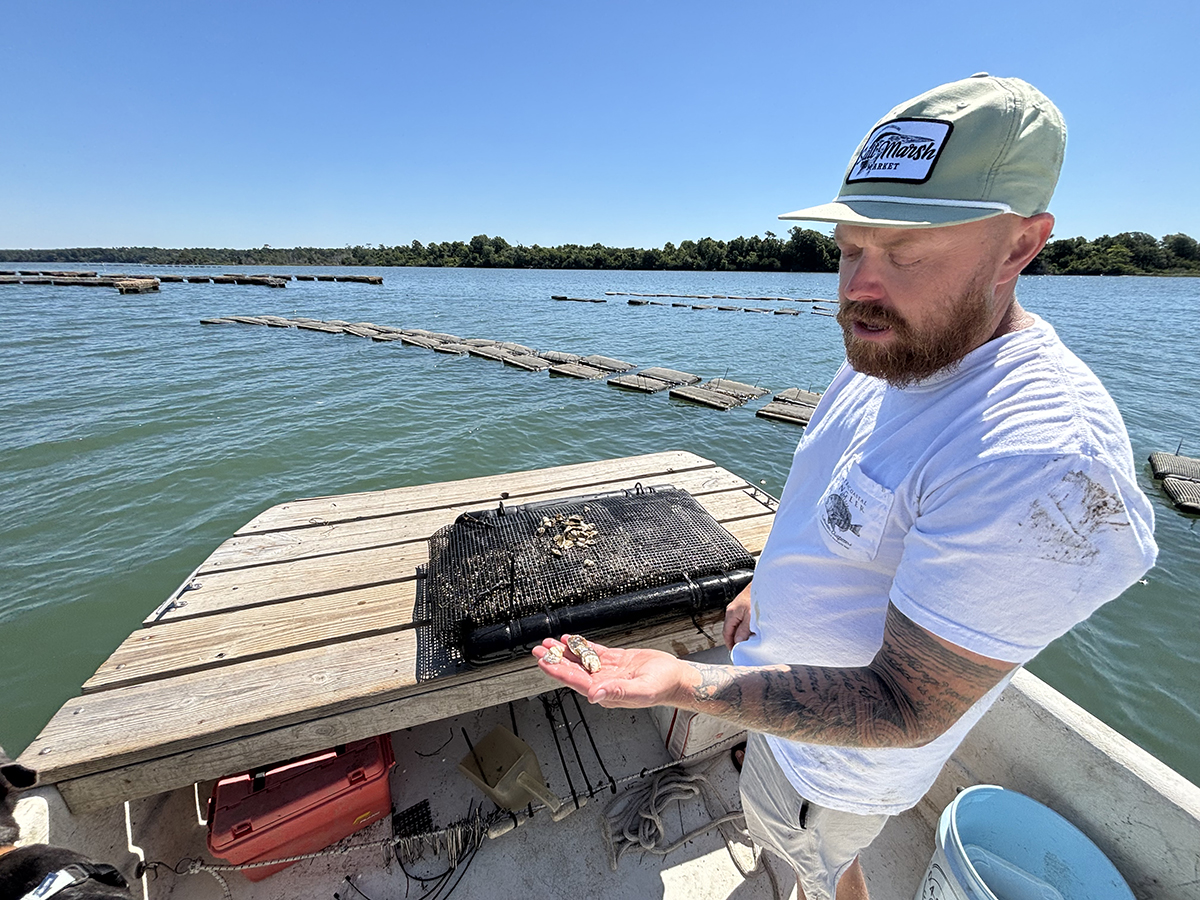
SNEADS FERRY – The easy chatter of shellfish farmers gearing up for another day of work broke through an otherwise quiet morning landside of the lower New River’s sun-gleamed waters.
Supporter Spotlight

The air that early June day still hung cool over the small marina a handful of shellfish growers share as their waterfront hub in this storied fishing village in Onslow County.
Though they run independent shellfishing businesses, this tightknit group supports one another, sharing a passion for what they do for a living and the hardships that come with it.
“This just happened naturally,” oysterman Cody Faison of Ghost Fleet Oyster Co. said before firing up the motor of his well-weathered skiff. “Oyster farming, they’re stronger as communities. What you find here is five farmers who help each other out.”
Like Faison, many of the folks working shellfish leases in Onslow and Pender’s coastal waterways are first-generation aquatic farmers, men and women in an industry challenged by seasonal shellfish mortality events, water quality impacts, and, as of late, fewer areas in which they can farm.
“Part of the reason that all these farms are here is because they can’t go north and they can’t go south,” Faison said.
Supporter Spotlight

Temporary and permanent shellfish lease moratoriums in coastal counties to the north and south of Topsail Island have pushed growers to the waters of Topsail Island. The steady increase in shellfish leases has amplified concerns among property owners, boaters, and recreational fishers who argue shellfish farms, particularly those with floating cages, restrict access to prime fishing locations, obstruct scenic waterfront views, and create navigational hazards.
This is the second year in which local officials are pushing for a temporary shellfish lease moratorium in the waters behind Topsail Island.
On Tuesday afternoon, the House Rules, Calendar, and Operations Committee passed proposed House Bill 1113 sponsored by Rep. Ted Davis, R-New Hanover. The bill aims to extend New Hanover County’s shellfish lease moratorium by another five years, appropriate a one-time, $10,000 fund for public education activities related to that county’s lease pause, extend a leasing moratorium in Bogue Sound to July 1, 2028, and impose a two-year moratorium on new leases in parts of Onslow and Pender counties until July 1, 2028.
“This will not prohibit people from going out and getting oysters,” Davis said in the committee meeting Tuesday. “What this prohibits is any more of these new things being put into the water. And, I will say that one of the concerns is the fact, you know, people have the right to use the water. It’s a public trust, and when these cages are put up, it can inhibit people’s enjoyment of that public trust. I know where I live, if a boat was to hit one of these cages, it could be bad. If somebody water skiing on a jet ski, or anything else, hits one of these cages, it’s going to be bad.”
Growers argue a moratorium in Stump and Topsail sounds would only put the squeeze on areas that do not have moratoriums, including waters around Newport, Morehead City and Beaufort.
Faison is not alone in worrying that language in the proposed bill, which currently targets the sounds directly behind Topsail Island, might be changed to include all waters in Pender and Onslow counties, a move that would shut down new leases in bays and creeks in the New River.
“What if this moratorium goes from two to 10 years?” Faison asked during a recent tour of shellfish leases in the lower New River, where he farms a 4-acre water column lease in Traps Bay.
Faison worked his way up to this lease, starting out in the business roughly six years ago by subleasing from a fellow farmer in Topsail Sound. He personally believes the state should promote subleasing. He encourages anyone considering entering the business to go that route.
He doesn’t judge which types of gear or leases other growers use. Farmers who use Seapa baskets, which are smaller and weigh less than typical, heavy-duty wire-mesh floating cages, suspend the baskets from lines that they attach to PVC pipes. That’s why some water column shellfish lease farms are so populated with the pipes, Faison explained.
Faison’s lease is dotted primarily with low-profile floating bags, a method he has found that works best for him.
“This is the future,” he said as he coasted his boat next to a line of bags in his lease. “I think this is going to be my success. I’m not saying this is right for every other farmer.”
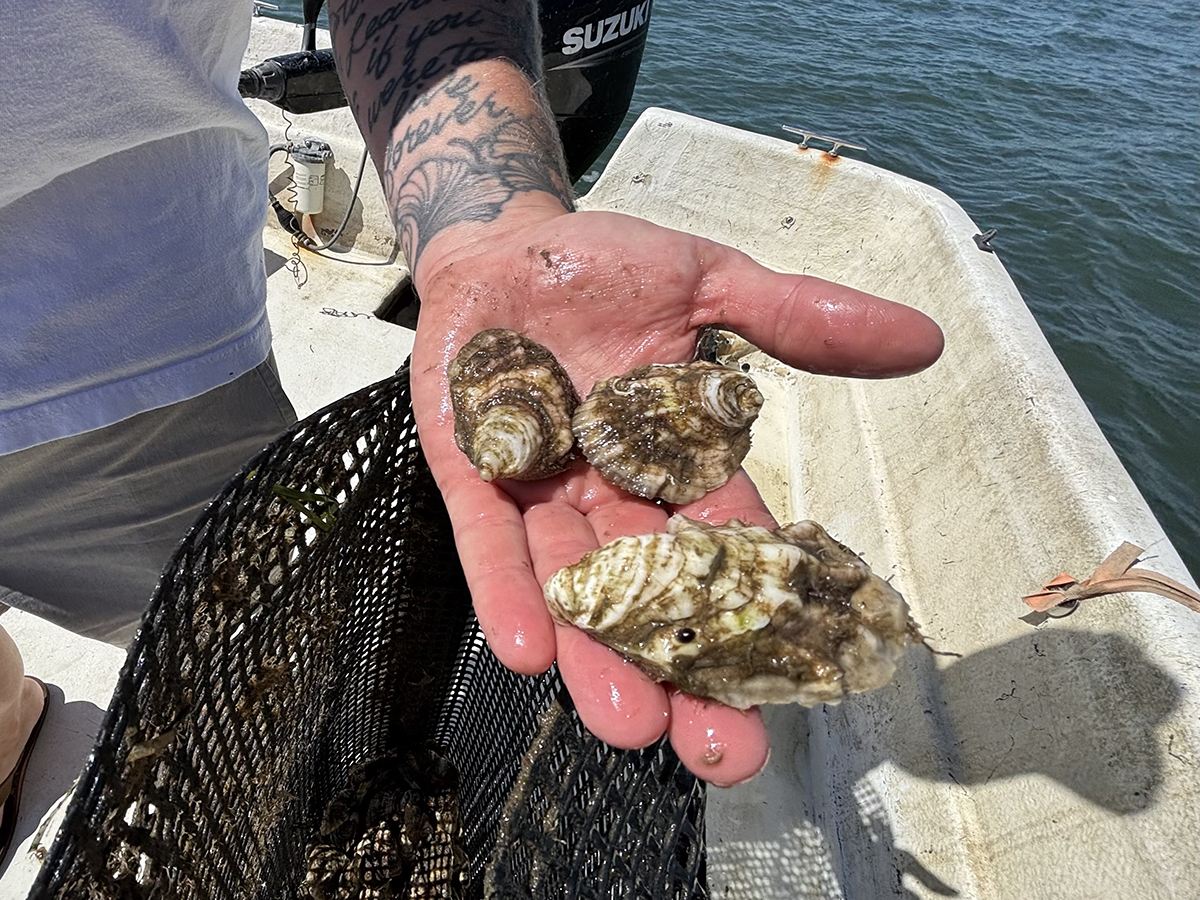
For North Carolina oyster farmers, floating gear is the only method for producing the much-sought, high-quality oyster that looks just as pretty on the plate as it tastes, he said. Oysters must be symmetrical, their outer shells clean and barnacle-free.
“We’re all growing oysters for the raw bar, and you can’t do that on the bottom,” Faison said. “There’s no other way to do it. We don’t have enough tide swing.”
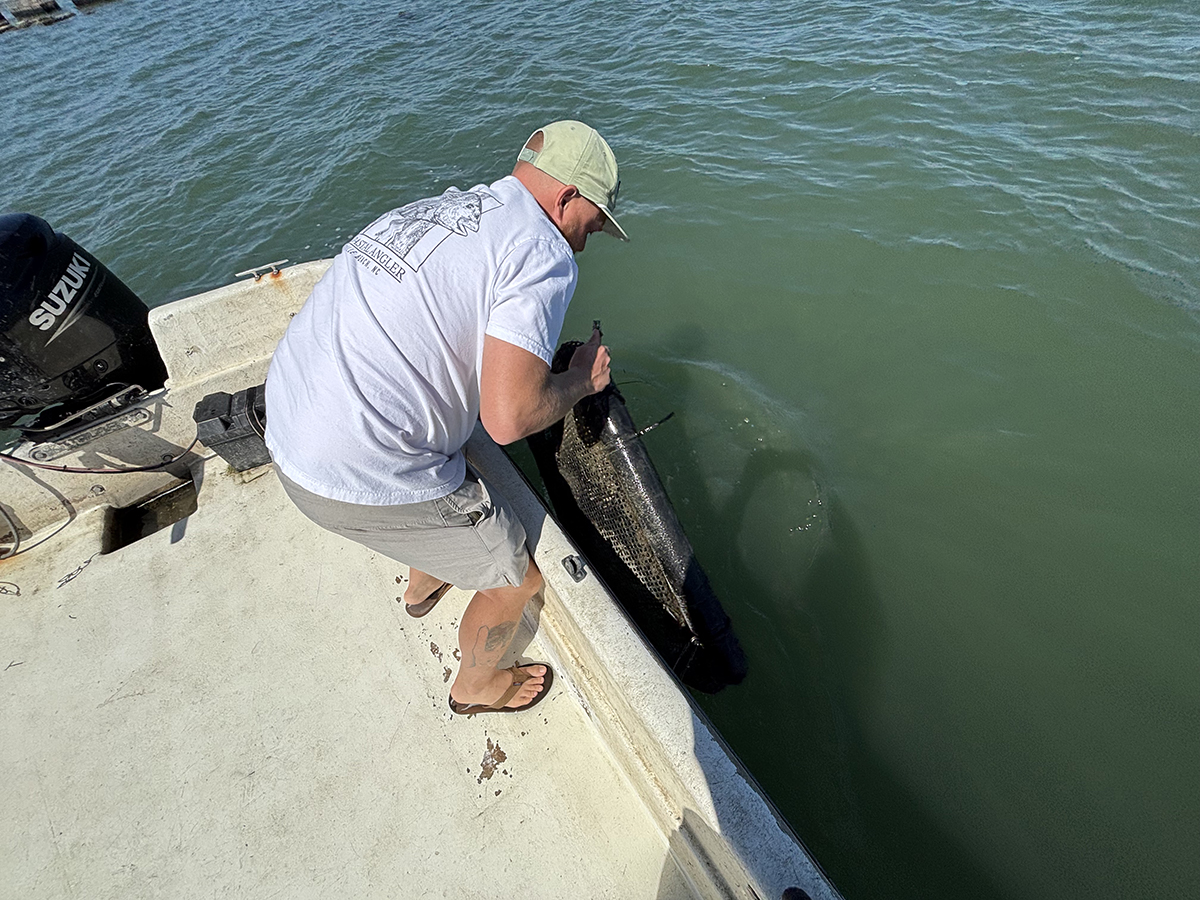
Floating gear allows farmers to replicate low tide, giving oysters a twice-daily dry spell that helps them build stronger shells, deter barnacles, and extend their shelf life.
Those North Carolina-grown, presentation-perfect oysters served to customers at area raw bars cost a pretty penny to cultivate.
“Oyster farming is a very tough way to make money,” Faison said. “I think people think we’re out here just killing it.”
According to an economic analysis published in 2024, the average startup cost to launch an off-bottom oyster farm ranges from less than $60,000 for a single line of floating bags to more than $200,000 for 24 lines.
“The total annual cost, including depreciation and interest on invested capital, labor, fuel, seed and other expenses, is estimated to range from approximately $50,000 to operate a single line of floating bags to approximately $250,000 to operate twenty-four lines,” the study states.
As boats go, the 19-footer that Faison bought off a local fisherman is about as basic as they come. There’s no console. No seats — just a couple of stacks of colorful baskets placed to one side of the otherwise flat-bottomed, open vessel.
“Is the better way to look at this a lot more moratoriums or more strict on the DMF side?” Faison said, referring to the North Carolina Division of Marine Fisheries, which permits shellfish leases. “I don’t know the answer. I don’t know that any of us quite yet know how to bridge this gap. Instead of trying to fight for really positive change, we’re just fighting. We’re strong as this big, massive group of people working together for a common goal.”