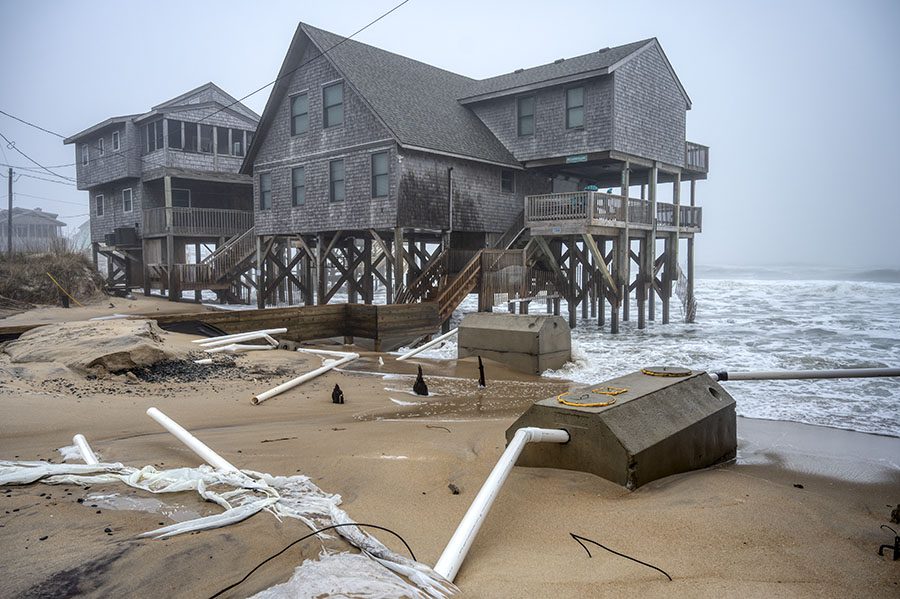
The North Carolina Coastal Resources Commission is to consider at its meeting later this month proposed rule amendments that would address compromised septic systems on the ocean shoreline.
The full commission meeting is to begin at 12:30 p.m. Wednesday, Oct. 28, and resume at 9 a.m. Thursday, Oct. 29, at the DoubleTree New Bern Riverfront at 100 Middle St. Members of the public may attend or join the meeting online. An in-person public comment period is scheduled for 12:45 p.m. Oct. 28.
Supporter Spotlight

The Coastal Resources Commission establishes rules for coastal development. The Division of Coastal Management, under the North Carolina Department of Environmental Quality, acts as staff to the commission and carries out its policies.
The meeting agenda and related documents can be found on the NCDEQ website.
The Coastal Resources Advisory Council, a 20-member group that provides the commission with local government perspectives and advice, will not meet in October.
During the commission’s August 2026 meeting, members heard proposed amendments to the rules addressing the repair, replacement and relocation of on-site wastewater systems within Ocean Hazard Areas of Environmental Concern. The commission asked for more information instead of pushing the draft language through the rulemaking process. At the October meeting, staff are to present four newly drafted proposed alternatives for the commission to consider. Three are based on geographic lines and the fourth on the commission’s existing imminently threatened structure standard.
Commissioners are to hear a discussion on oceanfront erosion is scheduled as well to feature updates from North Carolina Department of Transportation on N.C. Highway 12, the Dare County Task Force, and Cape Hatteras National Seashore Superintendent Dave Hallac, and “Barrier Islands 101” with Dr. Laura Moore. Moore, a professor in the Department of Earth, Marine and Environmental Sciences at University of North Carolina Chapel Hill, is the chair of the Science Panel, which provides the commission scientific data and recommendations pertaining to coastal topics.
Supporter Spotlight

Also on the agenda is a presentation on thin-layer placement, the topic of one of the Coastal Habitat Protection Plan’s four issue papers in the draft 2026 update. Thin-layer placement involves placing sediment, typically dredged material, on the surface of an existing marsh to increase elevation and promote sediment accretion without permanent loss of marsh. State law requires that the Coastal Habitat Protection Plan be updated every five years and approved by the Coastal Resources, Environmental Management and Marine Fisheries commissions. North Carolina Division of Marine Fisheries staff are drafting the update and have been presenting to the commissions throughout the process. When Marine Fisheries reviewed the draft plan with the CRC at its August meeting, commissioners asked for additional information on the method.
Other action items are a variance on pier length in Perquimans County, and several rules going through various stages of the Periodic Rules Review Process.