Guest Commentary
To stimulate discussion and debate, Coastal Review welcomes differing viewpoints on topical coastal issues.
Wake County Superior Court Judge G. Bryan Collins Jr. recently issued a ruling that was a wake-up call for everyone who cares about North Carolina’s coastal fisheries. Thankfully Gov. Stein appealed Judge Collin’s decision and work is underway to counter claims made in the lawsuit.
Supporter Spotlight

In a 190-page decision in the lawsuit brought by the Coastal Conservation Association of North Carolina and 86 citizens, Judge Collins concluded that the state has failed to meet its obligation to manage and protect fisheries for the benefit of the public. The court found that none of North Carolina’s 13 state-managed coastal fish stocks currently demonstrate long-term viability. Judge Collins concluded that rebuilding them will require “drastic management changes.”
I spent 30 years of my career with the North Carolina Division of Marine Fisheries, and was fortunate to help develop, and then implement, the recommendations of the Fisheries Reform Act (FRA) of 1997. Nearly 30 years later, I believe we have lost sight of one of the most important ideas behind that landmark legislation.
We cannot restore our fisheries simply by regulating how many fish people catch.
The late Reggie Caroon, a wise crab dealer from Lowland, in Pamlico County, put it much better:
“If you can’t hatch them, you can’t catch them.”
Supporter Spotlight

That simple truth was embedded in the Fisheries Reform Act.
The law created fishery management plans to address harvest and ensure the long-term viability of important fisheries. These plans were to contain the best science of that time and recommend actions based on that science with extensive stakeholder input. But, the Fisheries Reform Act also created another cornerstone: the Coastal Habitat Protection Plan, or CHPP.
The reason was obvious. Fish need clean water to spawn and to thrive. Juvenile fish need nursery areas. Oysters and clams need suitable bottom and water quality. Bay scallops need submerged aquatic vegetation. Submerged vegetation needs sunlight. Wetlands and salt marshes need room to survive. Anadromous fish need access to rivers, streams and good water quality for successful spawning, and the list goes on. Fisheries scientists have long recognized the significant importance of environmental factors on fish populations.
Without a healthy ecosystem capable of producing fish, managing harvest often becomes an exercise in dividing an increasingly small pie. That is why the General Assembly didn’t assign responsibility for fisheries solely to the Marine Fisheries Commission.
The law made the CHPP a joint responsibility of the Marine Fisheries Commission, Environmental Management Commission, and Coastal Resources Commission so fish, water quality, and habitat could be managed cohesively to support our public fisheries. North Carolina has more estuarine habitat than any other state, and leaders recognized we needed a plan to protect that habitat, in addition to special fisheries areas in fresh water, such as anadromous spawning areas.
That was an innovative idea: Manage the fish, protect the water, and conserve the habitat as parts of the same fisheries-management system. The CHPP was created to implement ecosystem management for fish and the public.
Nearly three decades later, we have not lived up to that vision.
The first CHPP of 2005, and its subsequent amendments, have been an excellent source of scientific information regarding fish habitats. The draft 2026 CHPP Amendment is a case in point. It contains good science and accurately describes many serious problems. But, too many proposed actions call for more studies, mapping, workgroups, workshops and issue papers.
We have been doing those things for more than 20 years. We know enough to act.
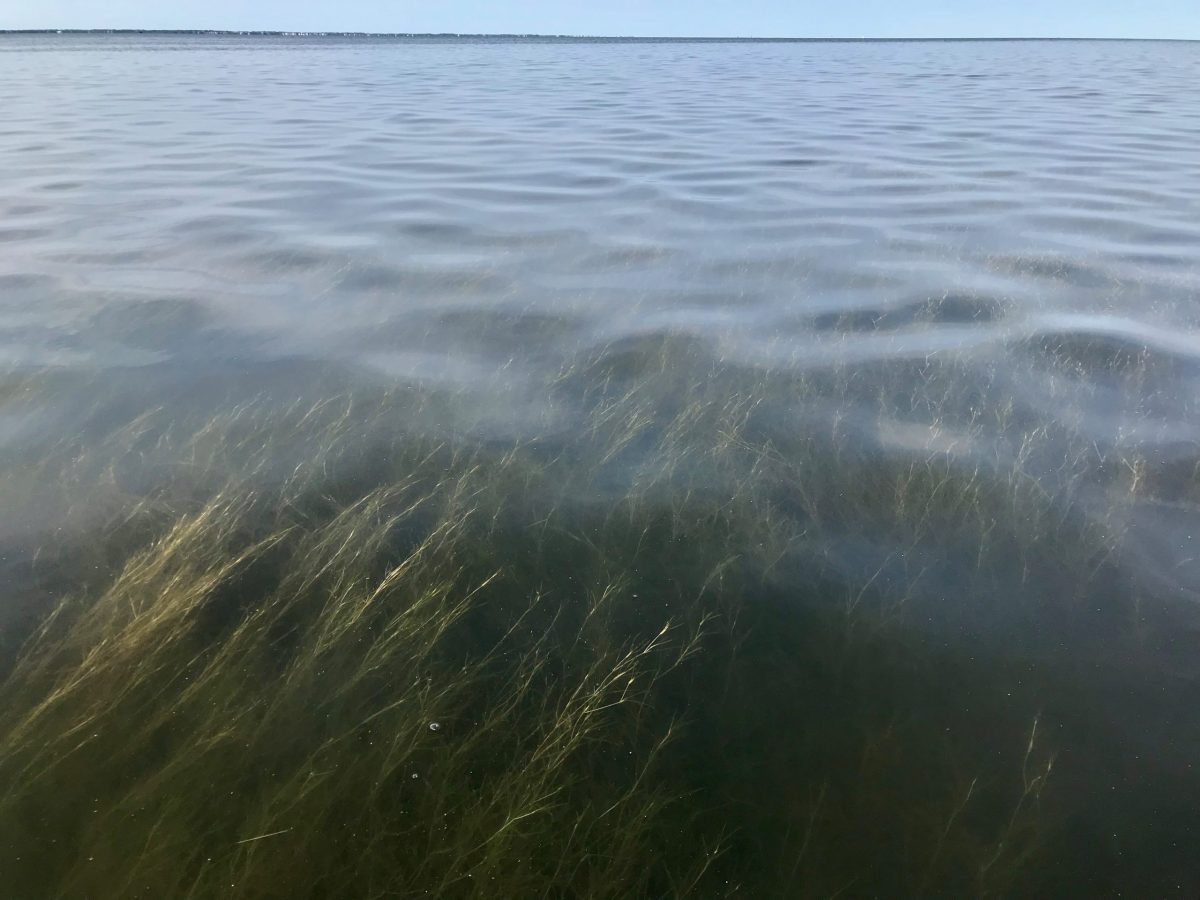
We have documented major losses of submerged aquatic vegetation (SAV), particularly in the Albemarle Sound and the Neuse and Pamlico rivers. We know sediment and nutrient pollution contribute to these losses. Our state still does not have a formal seagrass restoration program, while other states are undertaking such efforts. We continue to lose high-salinity grass beds, even though the Marine Fisheries Commission closed known vegetation beds to harmful fishing gear many years ago, based on science. Yet we continue to emphasize developing standards to protect submerged vegetation, studying the problem rather than making the investments needed to reduce pollution entering these waters, and investments in a state-led restoration program.
We know the areas where river herring, striped bass, American shad, hickory shad (anadromous fish) spawn. These species need access to spawning areas and protection from possible pollutants to ensure the critical areas function as they did historically. River herring and shad were two of North Carolina’s most important fisheries in the 1800s and up to the mid-1990s. Harvest has been significantly reduced for shad since the FRA was implemented and the river herring fishery was shut down in 2007 due to concerns about fishing impacts. There is no formal North Carolina restoration plan for river herring and no additional water quality or habitat protection measures for these critical anadromous fish habitats.
Consider Strategic Habitat Areas for fish. The first CHPP in 2005 called for identifying and protecting these especially important fish habitats. The scientific identification process began in 2006, and nominations for all four coastal regions were completed by 2017.
Research has since confirmed that these areas generally contain more diverse habitats, are less altered, and support greater biological diversity.
Yet the new CHPP amendment proposes more validation, another workgroup, another workshop, and another management issue paper. Twenty years after deciding to identify and protect our most important fish habitats, we are still discussing what we might someday do differently to protect them.
The same pattern appears elsewhere.
We know marshes are deteriorating and sea level is rising. We know dredged sediment can be beneficially used to help sustain wetlands. North Carolina should be building and monitoring demonstration projects, learning from them and expanding what works—not simply creating another workgroup to study the possibilities.
That is why Judge Collins’ ruling should concern much more than the Marine Fisheries Commission.
If polluted runoff destroys submerged aquatic vegetation, that is a fisheries problem.
If development eliminates wetlands and future marsh migration areas, that is a fisheries problem.
If dredging, shoreline modification, or other activities damage critical habitat, that is a fisheries problem.
If we do nothing to protect critical anadromous fish spawning areas, that is a fisheries problem.
And if we spend 20 years identifying our most important fish habitats without changing how we manage them, that is a fisheries management failure.
Judge Collins’ ruling focuses attention on harvest and fishing practices. When fish populations become depleted, commercial fishermen and recreational anglers alike are usually the first places scientists look for reasons of a decline, and many times fishermen and consumers have to accept painful restrictions while stocks recover.
But, we could slash commercial quotas. We could ban certain commercial gears. We could dramatically reduce recreational bag limits. In some fisheries we could stop harvest altogether.
And, we could still fail.
We cannot just regulate fishermen as the way to abundant fisheries if the environment producing those fish continues to deteriorate.
The Fisheries Reform Act envisioned something more ambitious: manage harvest, improve water quality and protect habitat together so North Carolina’s sounds and rivers can produce abundant fisheries; all based on science.
The 2026 CHPP amendment gives us an opportunity to finally put that vision fully into practice.
By the next CHPP update in 2031, success shouldn’t be measured by reports written, meetings held or maps produced. It should be measured by acres of habitat protected and restored, Strategic Habitat Areas receiving better management, pollution actually reduced, marshes and SAV recovering, fish passages reopened, and management decisions changed when ecological indicators tell us something is wrong.
North Carolina doesn’t need another generation of studies telling us that fish require clean water and healthy habitat.
We need the Marine Fisheries Commission, Environmental Management Commission, and Coastal Resources Commission to act with the urgency our fisheries demand. And, they will need the support of the North Carolina General Assembly, which establishes many of the laws governing these resources and provides the funding needed to turn plans into action.
The response to Judge Collins should not simply be another fight over who gets to catch the remaining fish and how they catch them. It should be a commitment to finally implement the full vision of the Fisheries Reform Act and rebuild the environmental productivity that makes abundant fisheries possible.
Nearly 30 years after passage of the FRA, we should remember what Reggie Caroon understood all along: If you can’t hatch them, you can’t catch them.