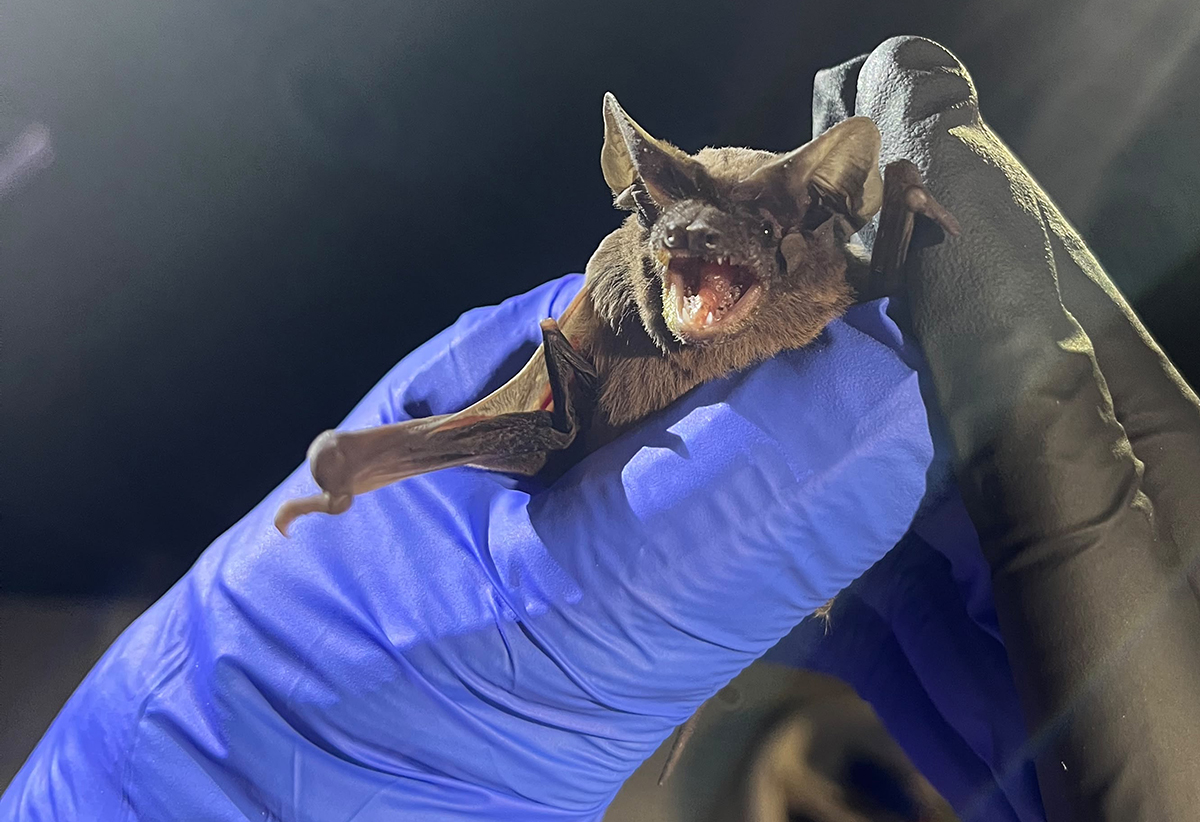
A group of more than 80 volunteers recently descended upon locations across Pender County here on the coast, as well as sites in Bladen, Columbus, Cumberland and Robeson counties, to participate in the most recent “Bat Blitz,” a three-night species inventory event across North Carolina’s coastal plain.
This particular Bat Blitz was co-organized by Lisa Gatens, the collection manager in mammalogy at the North Carolina Museum of Natural Sciences, and Ed Corey, the inventory biologist for North Carolina State Parks. Like past Bat Blitzes, it is hosted under the umbrella of the Southeastern Bat Diversity Network, a regional consortium dedicated to bat conservation.
Supporter Spotlight

“This is the third one that we have organized together, and this particular one that’s housed in Singletary Lake State Park (in Bladen County), that’s our home base,” Gatens said. “We did this 10 years ago, and so in part we are going to be revisiting sites that we surveyed then, and we’ve added lots of new sites too.”
Most of the participants are biologists from the North Carolina Bat Working Group, an organization focused on bat research and conservation. During the blitz, they gathered a great quantity of information on species diversity, population numbers, age, sex and general health.
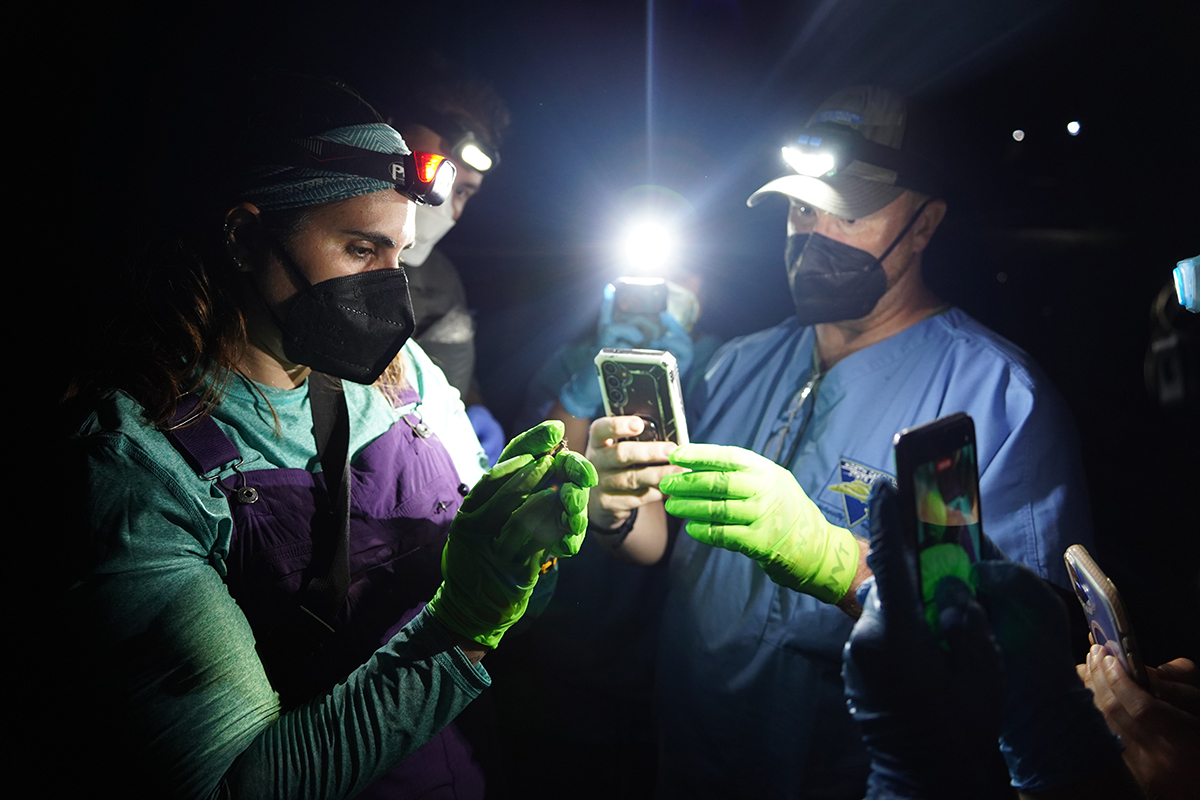
They also checked for signs of white-nose syndrome, a fungal disease that has caused millions of bat deaths nationwide. The disease itself won’t be present during the warmer months, but Blitz participants examined bats for physical damage indicative of the fungus. White-nose has only ever been recorded in North Carolina’s mountain region, but because all bats are migratory to a certain degree, it’s something that researchers are always looking out for.
The exact nature of bats’ migratory patterns is something of an unknown, however. Some species only travel short distances and will return to the same roosting spots on a seasonal basis. But others, like the silver-haired, eastern red, Seminoles, and hoary bats, are more solitary and prefer to roost in trees, making them more difficult to track. And while these species are far less likely to contact white nose syndrome, they are more susceptible to other environmental hazards.
“Those bats are actually impacted by poor placement of wind turbines. So if you have ridgetop wind turbines, that can impact migratory bats. It can also impact birds, too. But wind turbines can have severe effects on migratory bat species,” Corey said.
Supporter Spotlight

Bats are an incredibly valuable part of their ecosystems. They serve an important role as pollinators, and the economic benefits of healthy bat populations are documented. A single bat can consume its body weight in insects every night, which can be especially beneficial for farmers dealing with agricultural pests.
But Gatens believes that bats’ value lies beyond their monetary benefits. “They’re not doing this for us per se, and their value is inherent. It isn’t in what they do for us, in my humble opinion,” she said.
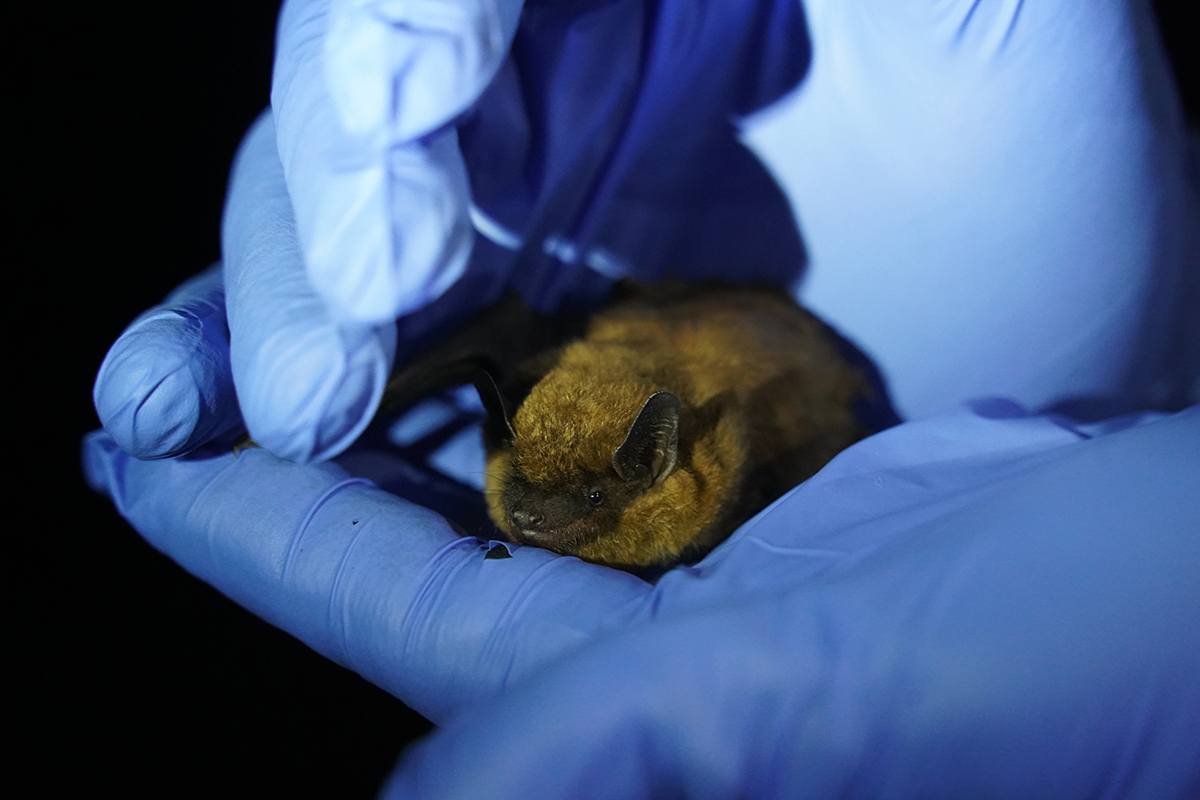
“A blitz is a way to efficiently cover a lot of area in a short period of time and gather an awful lot of data,” Gatens said. “If we don’t have a before and after, then how can we say what the impact is.”
Gatens loves the blitzes for many reasons, not least of all because she just loves the work.
“You can walk along a trail during the day, but when you’re out there at night, everything looks and sounds and smells and feels different than it did in the day, and you’re experiencing it in a completely different way,” she said. “You get to work with fantastic people, and it really is just loads of fun.”
Corey agreed. “I love it. It’s like Christmas every time you get to it. You never know what you’re going to see, and it’s just great to see. You know, great to see how people do things. So you can go out with 10 different people, 10 different leaders, and see 10 different ways of catching bats.”