The state set aside a day last month to share in the successes and evaluate the challenges of an ongoing initiative that aims to help communities prepare for and adapt to the risks including erosion, flooding and storm impacts that come with life on the coast.
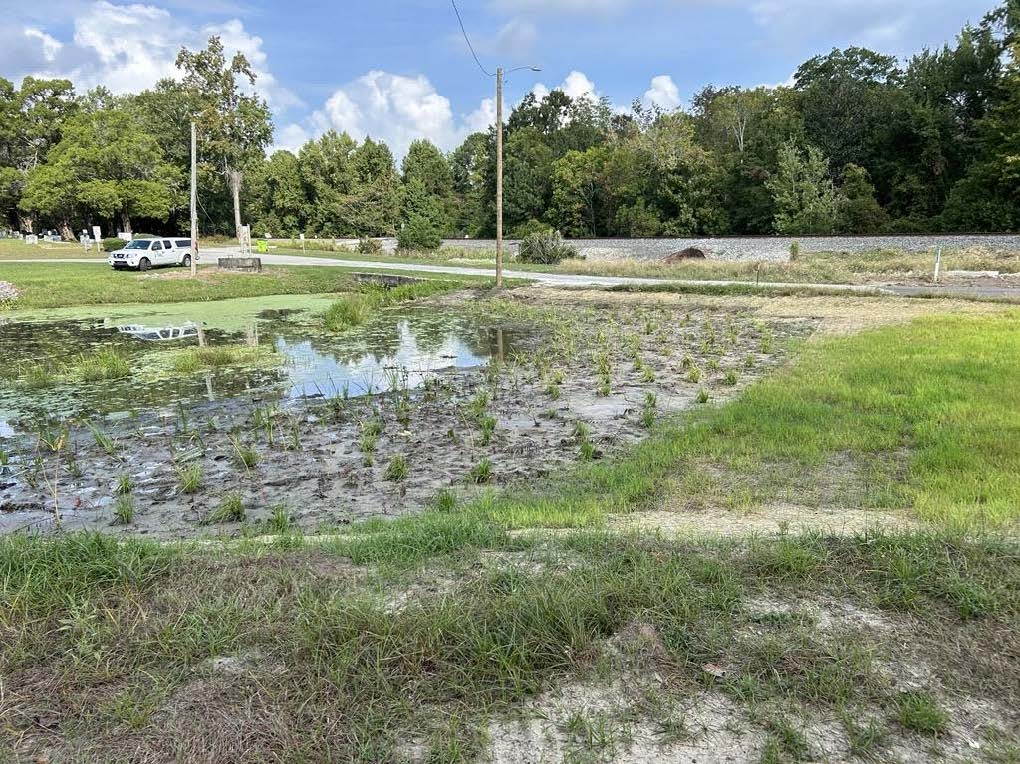
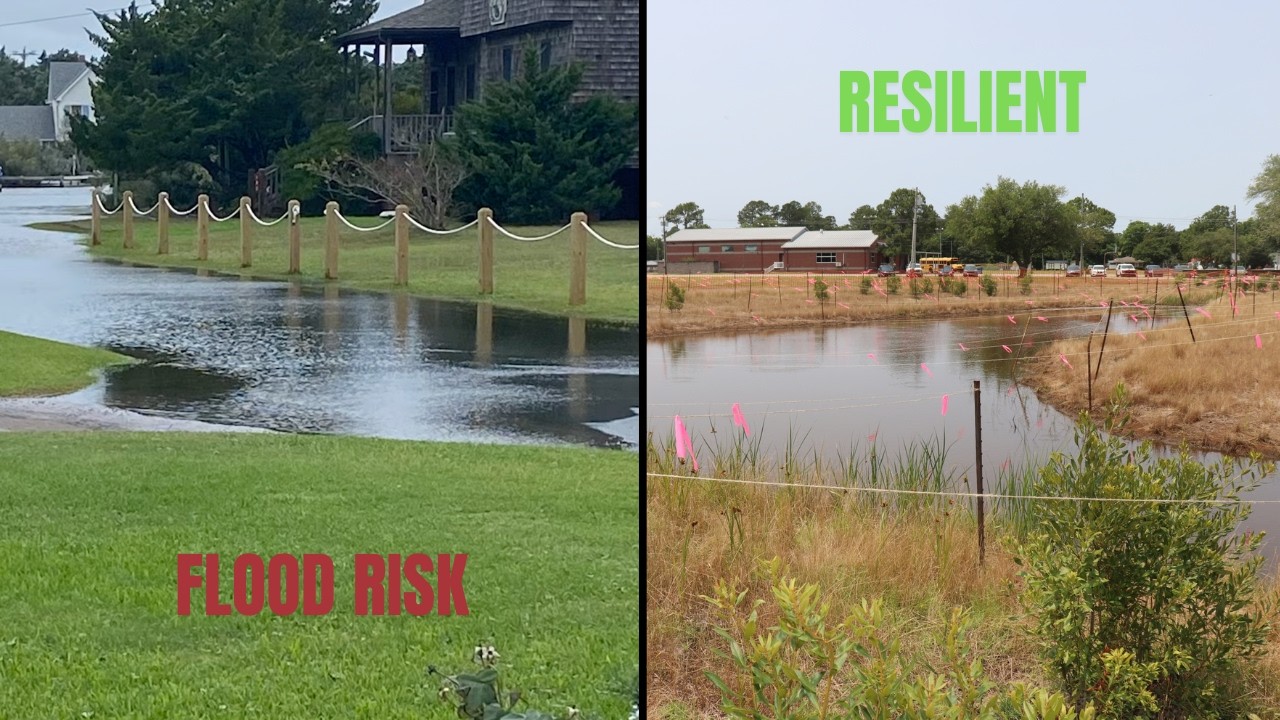
The Resilient Coastal Communities Program, or RCCP, is managed by the North Carolina Department of Environmental Quality’s Division of Coastal Management and provides financial and technical support for resilience planning and project development to local governments and recognized tribes within the 20 coastal counties. The four phases of the program are risk and vulnerability assessment and community engagement; planning, project selection and prioritization; project engineering and design; and implementation. Projects range from living shorelines to manage erosion to implementing a rain garden to reduce flooding impacts.
Supporter Spotlight

Coastal Resilience Coordinator Mackenzie Todd, who directs the program, explained to the 140 or so attending the daylong meeting on Sept. 24 that the “RCCP began about five years ago with a clear purpose to help coastal communities take what they already know about their risks and turn that knowledge into plans, policies, and projects.”
For RCCP’s phases 1 and 2, which take place concurrently, the division contracts directly with technical assistance providers to help communities assess their vulnerabilities, engage the public, develop resilience strategies, and prioritize projects. In phases 3 and 4, funding is awarded directly to communities to advance the selected projects through the design, permitting and implementation process.
Since its inception in 2020, the program “has served 60 communities through 125 grants at approximately $16.1 million. Through that work, communities have identified more than 300 resilience projects. Those numbers are worth celebrating, but they didn’t fully capture what it takes to get this work done. Behind every project is a community that identified a need, brought people together, searched for funding, and kept moving when the path became complicated,” Todd continued.
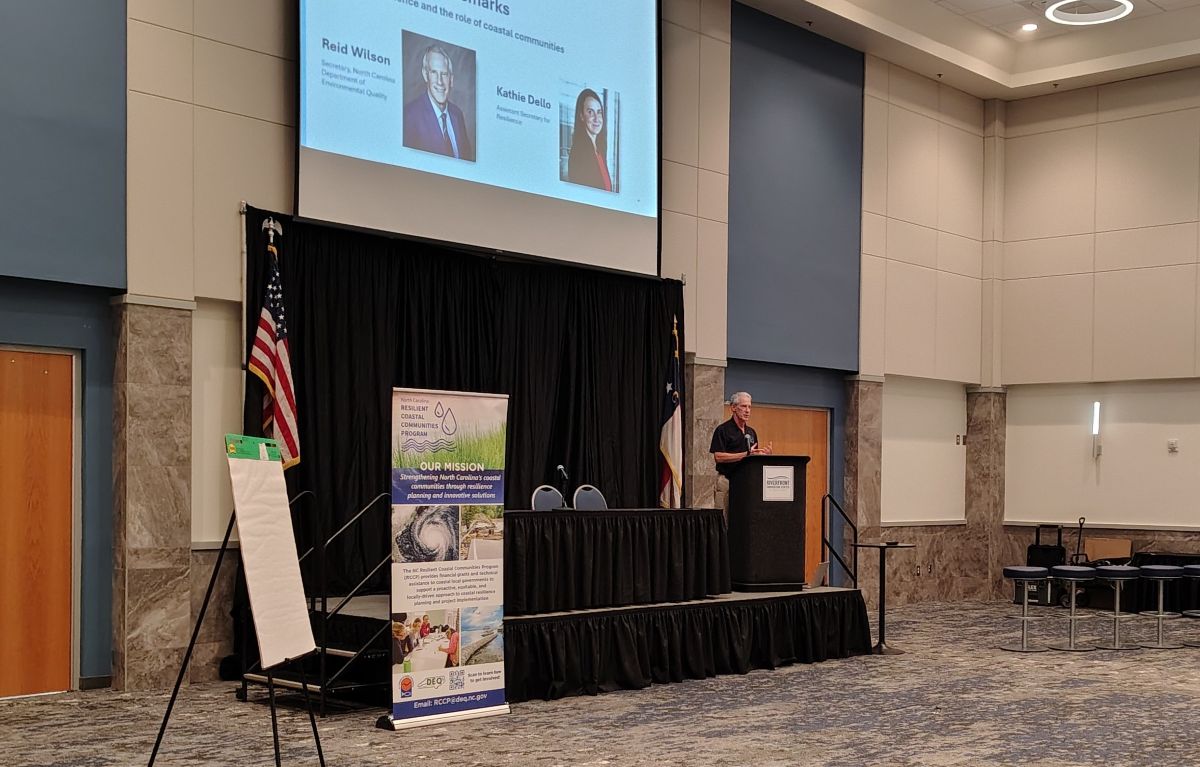
During the daylong workshop in the New Bern Riverfront Convention Center, participants representing government entities, academia and businesses heard about the different types of projects that qualify for RCCP such as living shorelines to control erosion and bioswales for floodwater management, from different communities that have successfully used the program like New Bern and Belhaven, as well as funding opportunities, navigating permitting processes, and advancing resilience strategies. The workshop wrapped up with breakout sessions on addressing permitting challenges, case studies on advancing resilience strategies, and an overview of nature-based solutions.
Attendees also screened a short film North Carolina Sea Grant produced about the program featuring staff and communities that have participated.
Supporter Spotlight
“We are marking an important milestone today: five years of this incredibly successful Resilient Coastal Communities Program,” NCDEQ’s Secretary Reid Wilson said from the podium early in the workshop. The RCC program began with the important idea that those “who know a community best should have a central role in determining how that community becomes more resilient. We do not have all the answers at DEQ. That’s why this partnership is so important because we are relying on local people who know what’s going on in those communities to help chart the course forward.”
These communities have worked to identify their risks and vulnerabilities, determine their priorities, develop resilient strategies, and then turn those strategies into actionable projects. “We want communities to have the tools to move from identifying the problem to developing a solution to finding the resources and the partnerships needed to actually put that solution into action. And over the past five years, we have seen communities up and down the coast do exactly that,” Wilson said. “Today does give us an opportunity to celebrate the progress and look to the future of the program,” adding that the day isn’t just a celebration, “we’re also going to plan how to make things better in the future.”
The program exists because of what Wilson called the “foresight and bipartisan support” from the North Carolina General Assembly. After hurricanes Florence in 2018 and Matthew in 2016 and recognizing that coastal communities needed additional assistance because of the challenges related to coastal hazards, the legislature appropriated $830,000 to the Division of Coastal Management, kicking off the RCCP.
State legislators recognized the success of the program in 2021 when members appropriated $1.15 million and in 2023 with another $10 million for projects, and the RCCP “team has been extra resourceful in figuring out how to pull in another $6 million from other sources.”
Todd explained earlier that morning in her comments that out of the $10 million the state appropriated in 2023, $1.25 million has been used as matching funds to bring in approximately $3 million from the National Fish and Wildlife Foundation, and the program has awarded around $7.2 million to 28 communities through grants. Expectations are to award the remaining $2.5 million this fall to those who are selected for funds out of this next round of applicants for the last two phases. Applications for which are due by 5 p.m. Nov. 10.
The state also made the two coastal resilience specialists positions permanent with this year’s budget, which has strengthened the division’s ability to support communities, but did not include new dedicated project funding, she added. “RCCP communities have built a growing pipeline of priorities, but we do not have yet dependable long-term funding to move those projects forward, so, that’s one reason why today’s conversations really matter. We want to understand where your projects stand, what barriers communities are encountering, and what support would make the greatest difference.”
Participants heard a brief overview of an independent external evaluation that Dr Miyuki Hino, an associate professor in the Department of City and Regional Planning at UNC Chapel Hill conducted in 2024 and 2025 with her team.
Coastal Resilience Specialist Jennifer Fickler told the crowd that the final report was released in November 2025, “and it asked three questions: Who is the RCCP serving? How strong and useful are the resilient strategies? And what effect is the program having on local capacity, policy, and investment?”
To answer these questions, the researchers compared participation patterns, conducted interviews, scored four resilient strategies, and compared local spending and grant activity between four RCCP communities and four similar communities that have not participated in the program.
The first finding was that the RCCP is reaching communities across the range of the North Carolina Department of Commerce’s economic distress tiers, income levels and racial demographics. Communities and contractors consistently identified the straightforward application, no local match, and the division managing contracts for phases 1 and 2 lower barriers for participants. At the same time, the smallest communities remain underrepresented with only 18% of eligible communities with 1,000 residents or fewer having participated in the program compared to the 46% of communities who have more than 1,000 residents.
Interviews showed that even when funding and contracting barriers are reduced, limited staff time and administrative capacity can still prevent a small community from participating or moving into the later phases, Fickler continued.
“The evaluation found that many communities really like using their tailored risk assessment and project portfolios to pursue additional funding, which is the goal,” she said, and all four communities received resilience grants after participating in the RCCP, and three had higher post-program grant totals than the comparable communities that didn’t participate in the program.
“While the sample size is pretty small and the time frame is relatively short, it’s encouraging to see that the communities secure additional resilience funding after participating in the RCCP. Again, that’s the goal,” Fickler said.
“Finally, most resilient strategies met the program’s minimum requirements. Common strengths included vulnerability assessments, stakeholder engagement, and community action team documentation,” she said. “The strongest strategies clearly connected phase 1 risks with phase 2 projects. There’s still room for improvement in addressing socially vulnerable populations, natural infrastructure, and future conditions.
Fickler continued that the evaluation points to four priorities to strengthen the program.
First is that the program can do more to reach smaller communities through targeted outreach and additional help with grant administration.
“Second, we can continue improving the planning handbook. The evaluation represents consistent asset scoring, clearer expectations with action teams, and stronger connections between future conditions and project selection,” she said. “Third, we need to close the gap between the project portfolio and readiness for implementation, engineering design. So, this includes stronger project scopes and cost estimates, along with assistance with procurement, grant administration, and other funding opportunities.”
And the fourth priority is the need to track what happens after a resilient strategy is completed, including projects that advanced, changes to local plans or policies, and outside funding received.
“The evaluation gives us an important outside perspective and is a starting point for strengthening the program,” Fickler closed.