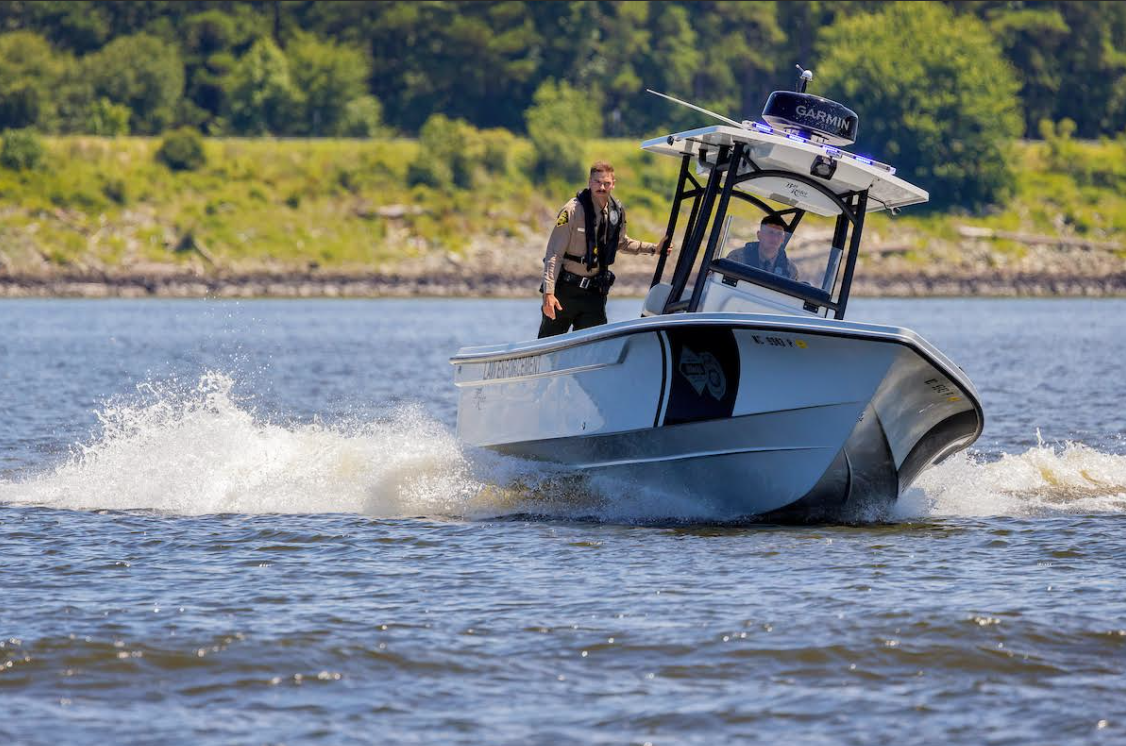
State and local law enforcement officials will be ramping up water patrols through the upcoming holiday weekend.
The North Carolina Wildlife Resources Commission Law Enforcement Division is once again participating in Operation Dry Water, a national campaign that aims to reduce impaired boating incidents year-round and heighten enforcement on the water during the July 4 holiday.
Supporter Spotlight
Alcohol use is the lead contributing factor in recreational boater deaths, according to the agency. It is illegal to operate a recreational water vessel with an alcohol concentration of .08 or higher, or under the influence of alcohol, drugs or other impairing substances.
Last August, 10-year-old Brooklyn Carroll and a family friend were cooling off in the waters of Shearon Harris Lake in Chatham County near their anchored boat when they were struck by the propellor of another vessel being operated by an impaired driver. Carroll died from her injuries. The other victim had a leg amputated due to the severity of their wounds.
WRC Law Enforcement Division Sgt. Claude Smith investigated the case.
“If individuals choose to drink, that is their decision, but they must ensure a sober, responsible adult is designated to operate the boat,” Smith said in a release. “And if someone chooses to operate a vessel while impaired, our officers will take every necessary action to prevent a tragedy like this from occurring again.”
During last year’s Operation Dry Water campaign, the agency deployed 153 officers and removed 43 people from the water who were boating while impaired.
Supporter Spotlight
Boating incidents in North Carolina resulted in 26 deaths in 2025.
This year, 62 boating incidents, including nine that were fatal, have occurred in North Carolina.
Operation Dry Water was developed through the National Association of State Boating Law Administrators and the U.S. Coast Guard. The campaign is supported by The Governor’s Highway Safety Program’s Operation Firecracker Booze It & Lose It campaign, which includes the N.C. State Highway Patrol, North Carolina Alcohol Law Enforcement, and the North Carolina Forensic Tests for Alcohol Branch.