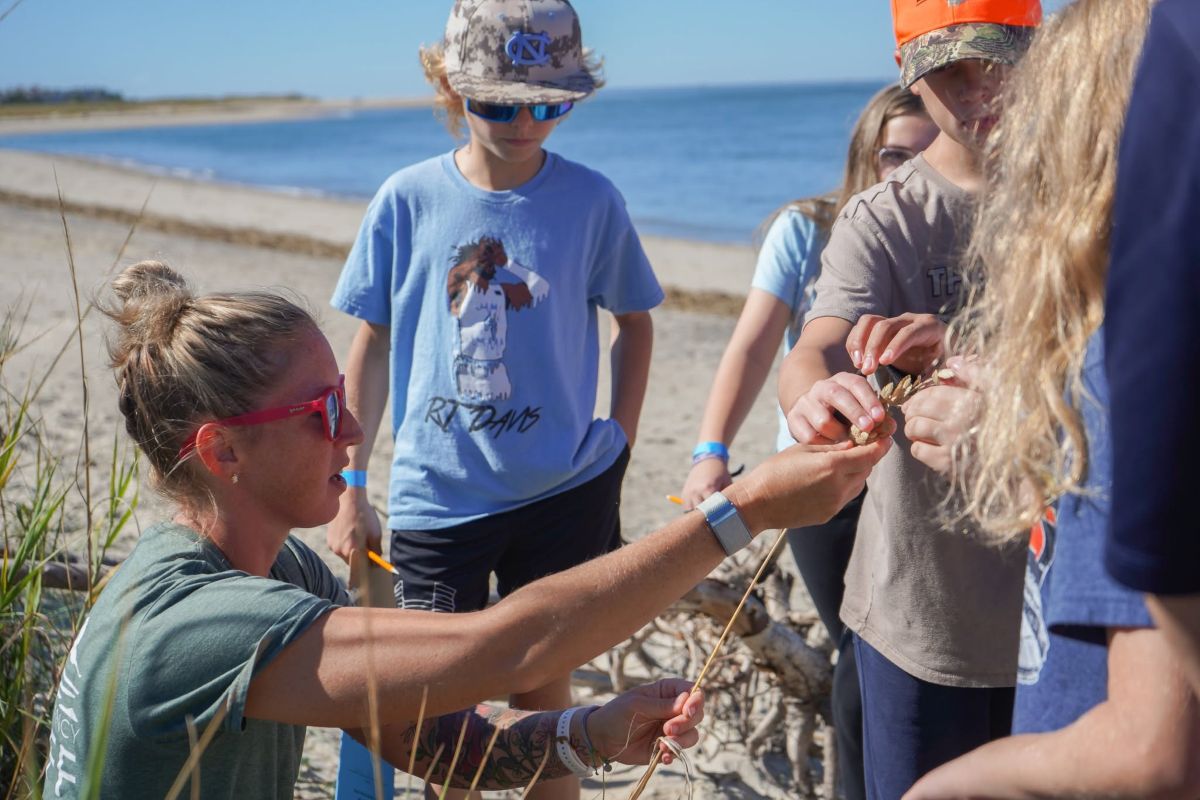
Funding has been cut for a state-run environmental education program and the two-member team that manages the 30-plus year outreach effort, a move widely criticized by educators and environmental groups.
Gov. Josh Stein on July 7 signed the $34 billion 2025-26 budget, the first full budget in more than two years, but it did not include the $275,000 needed to run the North Carolina Office of Environmental Education and Public Affairs.
Supporter Spotlight

The office’s Environmental Education Program Manager Lisa Tolley and Environmental Education Program Consultant Marty Wiggins told Coastal Review during a conversation last week that, just days before the Fourth of July holiday, they had confirmation that their program and positions had been eliminated.
“We’re trying to figure out the path forward for the program,” Tolley said. “That’s where we are.”
There had been talk about the office within the N.C. Department of Environmental Quality being axed during summer 2025 when the North Carolina General Assembly attempted to draft a budget, but when the process stalled, a mini budget was passed that didn’t address the program.
In addition to establishing the first Environmental Education Certification Program in the nation, the now-eliminated office is a hub of environmental education information that connects educators with resources, events, grants, jobs and facilities through the website, online calendar, and email lists.
In a 12-month window, more than a million have interacted with the office through its website, event calendar and social media, which its website states.
Supporter Spotlight

Since finding out that the Office of Environmental Education, often called the O of EE or OEE, was eliminated, the public has been rallying behind the office. They’re showing their support by sharing their stories online and with representatives ahead of the legislature reconvening Monday. That’s when committees are rumored to begin reviewing budget corrections.
The nonprofit Environmental Educators of North Carolina, which collaborates with the state-run program, encouraged the public to reach out to House and Senate members “about how the resources and programs provided by the Office of Environmental Education and Public Affairs supports your work, your job training, your classroom, your community, or your business. Ask them to propose a technical correction to the state budget that will reinstate funding to support administration of the EE Certification program and the technical support and resources they provide.”
This is not the first time funding has been in jeopardy. “We have faced this challenge before — in 2011 and in 2017 — and work from the EE Community and supporters saved this vital office, and we can do it again,” the nonprofit states.
Wiggins said Wednesday that he and Tolley both were overwhelmed by the support for the program.
“Several program participants have shared how participating in the Environmental Education Certification program has changed their lives and has helped them find jobs, start their own businesses or create new career pathways. North Carolina has the strongest environmental education community in the country, and we are proud of the work we have done to support educators, schools and communities,” he said.
NCDEQ leadership has spoken out about the program being eliminated. NCDEQ Secretary Reid Wilson explained to the Environmental Management Commission during its meeting July 9 in Raleigh that the budget was overall “very positive for this department,” but there are concerns.
“One, the budget eliminates the Office of Environmental Education and the two employees who work there,” Wilson said, noting that the “incredibly successful and helpful program” had been around for 30 years, “and it is no more. So, we are trying to figure out what to do with that.”
He told the commission that the program has certified more than “1,600 educators and that knowledge has been spread to thousands and thousands of children, K through 12.”
The department also noted its concern in a press release the day prior about the budget eliminating the office, which has a long history of supporting K-12 educators to advance science education, and improving “public’s environmental literacy and stewardship of our natural resources.”
A DEQ spokesperson told Coastal Review that, as of Wednesday, there had been no update on the program’s status.
Tolley explained how the office got its start in the mid-1990s to reduce inefficiencies in the state government. At the time, there were smaller environmental education programs offered throughout the state, and the Office of Environmental Education was set up to streamline access to these resources.
“In the late ’90s, when the fish kills happened on the Neuse River, the staff got an appropriation to do an education campaign on river basins. I was hired to do that, and so the river basin highway signs you see are part of that campaign around the state,” Tolley said.
More program managers were brought in who focused on K-12 education, adult education, and then partnerships with business and community, but over the years cuts have brought the staff down to the two, she said, adding that they have worked really hard “to form partnerships with other groups so that we could operate a large statewide program with just two people.”
Tolley said that the office partnered with 10 other states to develop the custom form to add events to the calendar, jobs board and grants.
“The main program we run is the Environmental Education Certification Program, and that’s for classroom teachers, informal educators like park rangers or those at science centers, science museums, or botanical gardens, to name a few.
“We really are set up to serve teachers and educators throughout the state, and we kind of have used the program to build the capacity across the state for other small counties and big counties to offer environmental ed programming,” she said.
Tolley said last week that there were 600 currently working to earn certification, and there are more than 700 who maintain active status with the program.
The self-paced effort requires educators to complete seven instructional workshops, 50 hours of outdoor environmental education experiences and 30 hours of experiences that promote awareness of the state’s environmental education resources to earn the certification. Certified educators are required to complete 50 hours of continuing education every five years to maintain an active status.
The office also has partnered with the North Carolina Museum of Natural Sciences to host livestreamed talks, and with the state Department of Public Instruction to cohost gatherings of classroom teachers and nonformal educators like those at science education facilities and offers a K-12 environmental literacy plan for teachers.
The state office collaborates with the Environmental Educators of North Carolina, an organization that has tailored many of the programs and workshops to meet certification requirements.
Wiggins said that, since it’s just him and Tolley, they don’t have the capacity to teach workshops, but the nonprofit has designed what it offers to meet certification program guidelines, “That’s been a great partnership.”
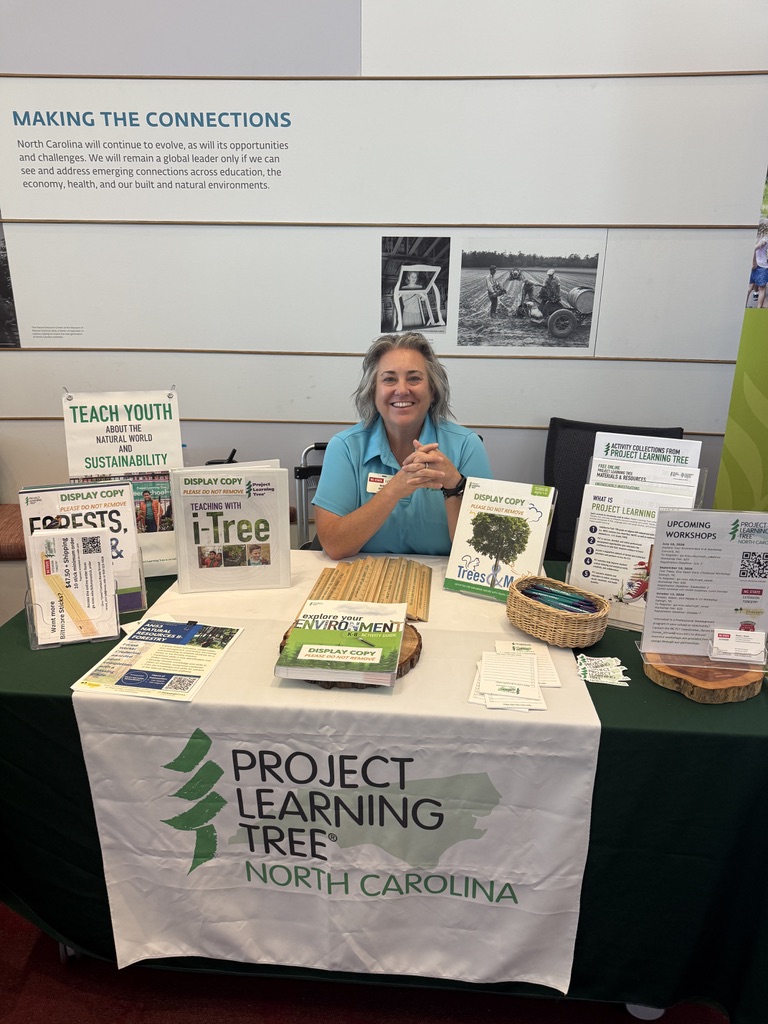
Renee Strnad, Project Learning Tree state coordinator whose office is housed in N.C. State University Extension Forestry, is a past president of the nonprofit. She directs the environmental education curriculum, which provides professional development to K-12 educators to help them implement environmental education in their classrooms.
Strnad was hosting a Sustainable Forestry Teachers Experience workshop Tuesday in Alamance County when she took a few minutes to speak to Coastal Review about how much she values the environmental education office.
“For me, the whole idea that the office serves as this clearinghouse, as a one-stop shop, helps me advertise my programs to educators broadly. It’s very difficult to get information out to teachers directly.”
She added that the office has close ties with the Department of Public Instruction, which ensures that nonformal educators are aware of the newest language or pedagogy that they need to help teachers include environmental education in their classroom. The office serves as a “connection point for all those state agencies that are also trying to reach K-12 educators, kind of that bridge to the Department of Public Instruction,” she said.
Strnad acknowledged that there is criticism about the intentions of environmental education, but the certification program “outlines what good environmental education is, that you’re not taking a stance.”
The educator learns how to offer information that helps people think critically about issues and understand that a solution to an environmental problem in their community might not work in another community because of varied factors. The program also helped legitimize environmental education as a field, and many states have used North Carolina’s EE certification program as a model and a basis for theirs.
“We were the first state in the country to actually do an environmental education certification program, which was mandated by the state with the Environmental Education Act,” in 1993, she said. The environmental education program formalized a way for people to call themselves environmental educators.
It’s sad knowing that the state has this amazing history and other states have looked to North Carolina as a model program, and the funding is completely being cut, Strnad said.
The education team at the North Carolina Coastal Federation, which publishes Coastal Review, are all certified. Education Director Sara Hallas, who joined the nonprofit organization in 2008, said that the state program helped shape her as an educator.
“Since I moved here from out of state to start working, it greatly impacted my ability to refine my skills and knowledge about the NC coast and its unique habitats. It was a tremendous resource that helped me build a set of teaching tools when I was just starting my career; these tools are still useful today,” Hallas said in an email. “Additionally, they provide continued support through networking with other EE professionals across the state. The certification is well designed and requires continued education hours, which have helped me stay sharp and continue learning new things! I hope they can find a solution to continue being a resource for North Carolina.”