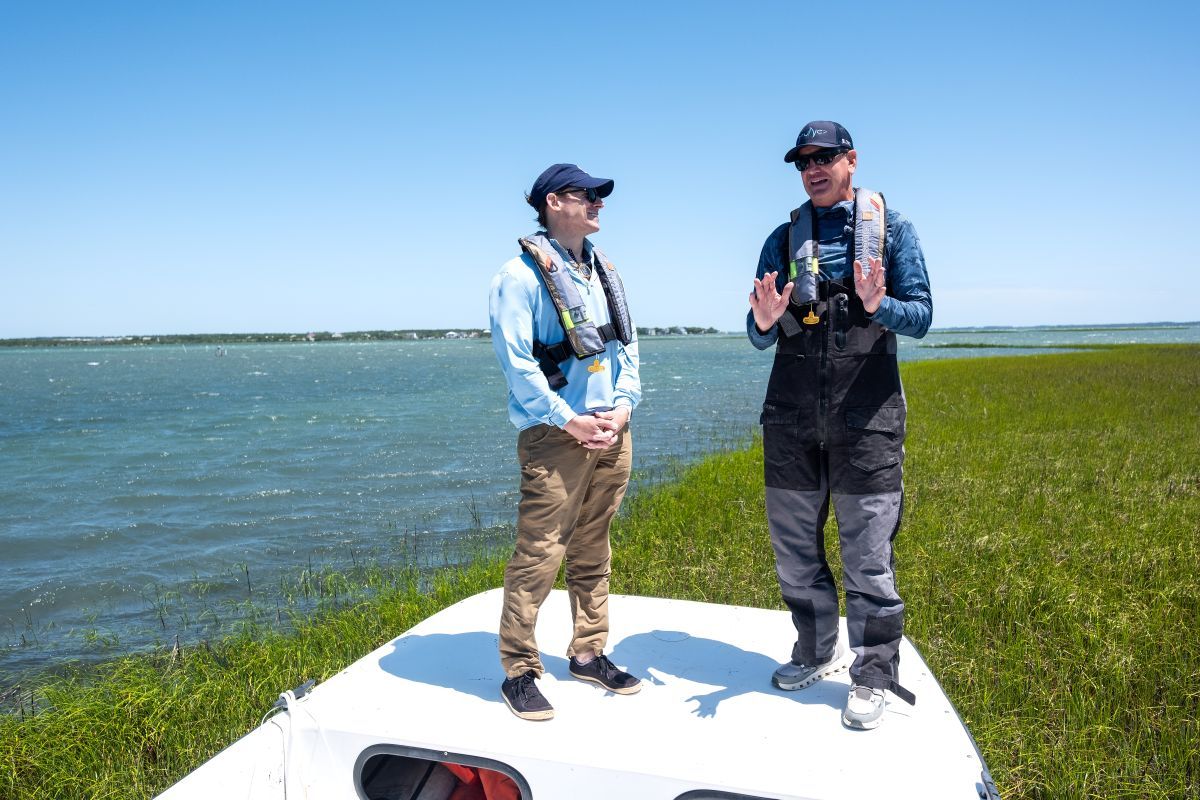
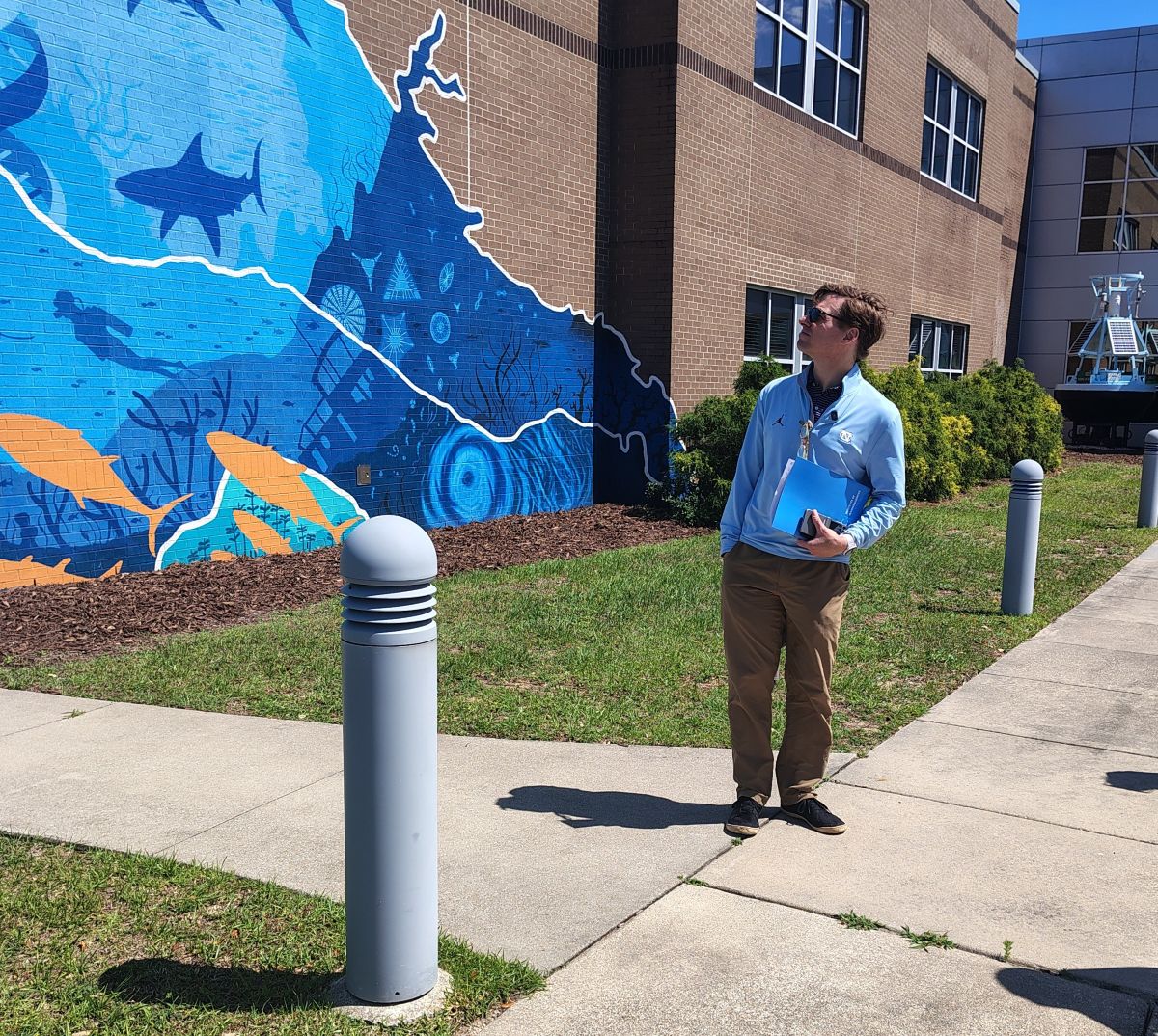
UNC Chancellor Lee H. Roberts, left, listens as IMS Director Dr. Joel Fodrie,gives an overview of the coastal ecosystems in the area. Photo: Jon Gardiner/UNC-Chapel Hill
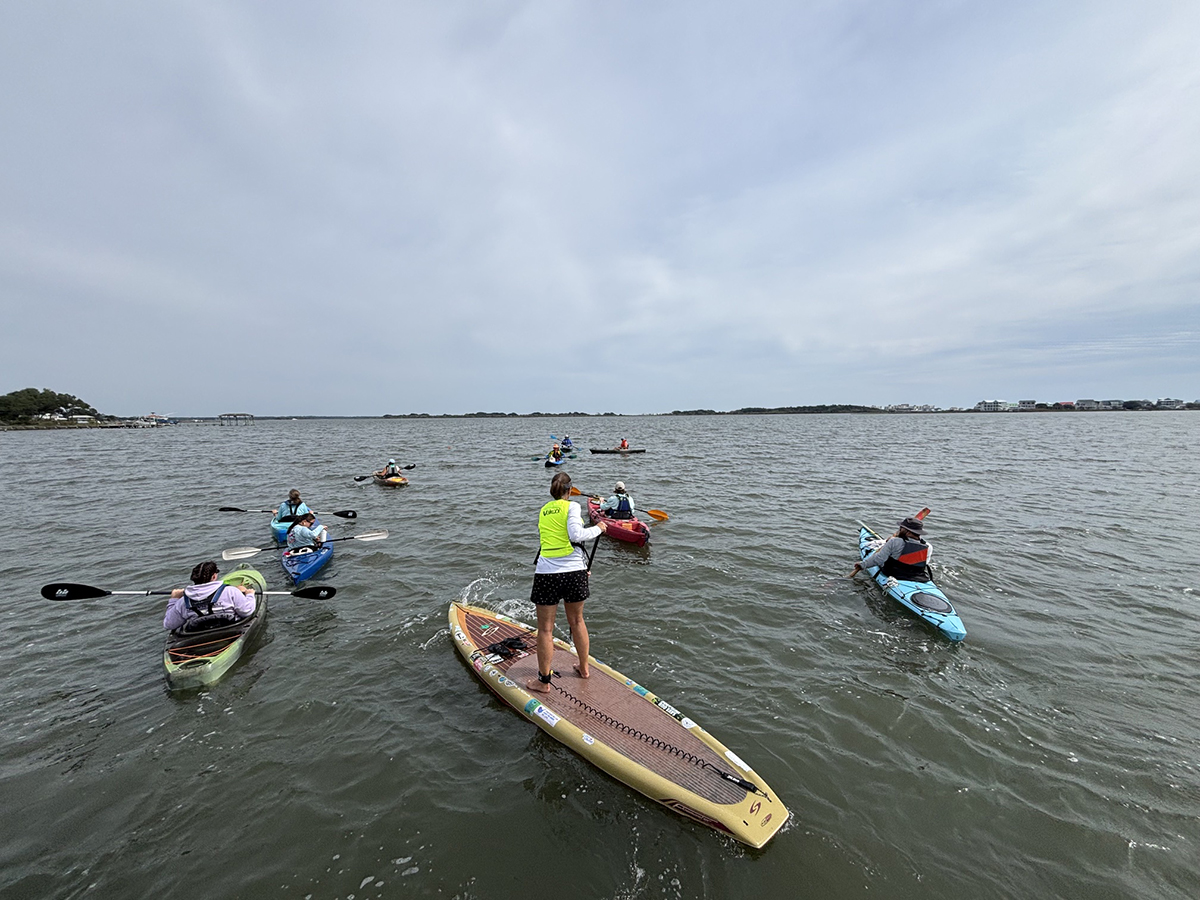
Fittingly, it was a Carolina blue sky that greeted University of North Carolina Chapel Hill Chancellor Lee H. Roberts as he joined Institute of Marine Sciences researchers for a boat ride Tuesday morning to Cape Lookout National Seashore’s undeveloped barrier islands, a stark contrast to the celebratory gridlock on Franklin Street that the Orange County city can expect after a big win.
Roberts was in Carteret County to meet with faculty and students and learn more about their research at the lab in Morehead City, one of the handful of stops for the chancellor’s second summer tour this year in eastern North Carolina.
Supporter Spotlight

The first summer tour in 2025 covered the western part of the state. The 2026 tour began May 29 with two days at Fort Bragg. After Carteret County, he stopped in New Bern, UNC Pembroke, UNC Wilmington and the USS Battleship North Carolina.
Roberts told Coastal Review Tuesday afternoon from inside the institute that these tours are the university’s connection to the state, and its people are “the source of our strength at Carolina.”
Because most of the state’s people do not live in Chapel Hill, Roberts explained that “it’s important to get out around the state and see people where they live and work and see as many communities across the state as we can.”
Roberts continued that most communities don’t have a facility like this one, “where we’ve made a large investment for a for a long time, and so this has been a particularly important part of Carolina’s history, having the physical outpost here, but the work Carolina scientists and researchers are doing is in every nook and cranny of the state, trying to help move the state forward.”
His visit Tuesday included a tour of the lab with a small group, including area media, led by Institute of Marine Sciences Director Dr. Joel Fodrie, a professor in the Earth, marine and environmental sciences department.
Supporter Spotlight

Fodrie said that the institute is approaching its 80th year, and the existing building was built about 25 years ago to house research for environmental processes, like water quality, biogeochemistry and geology.
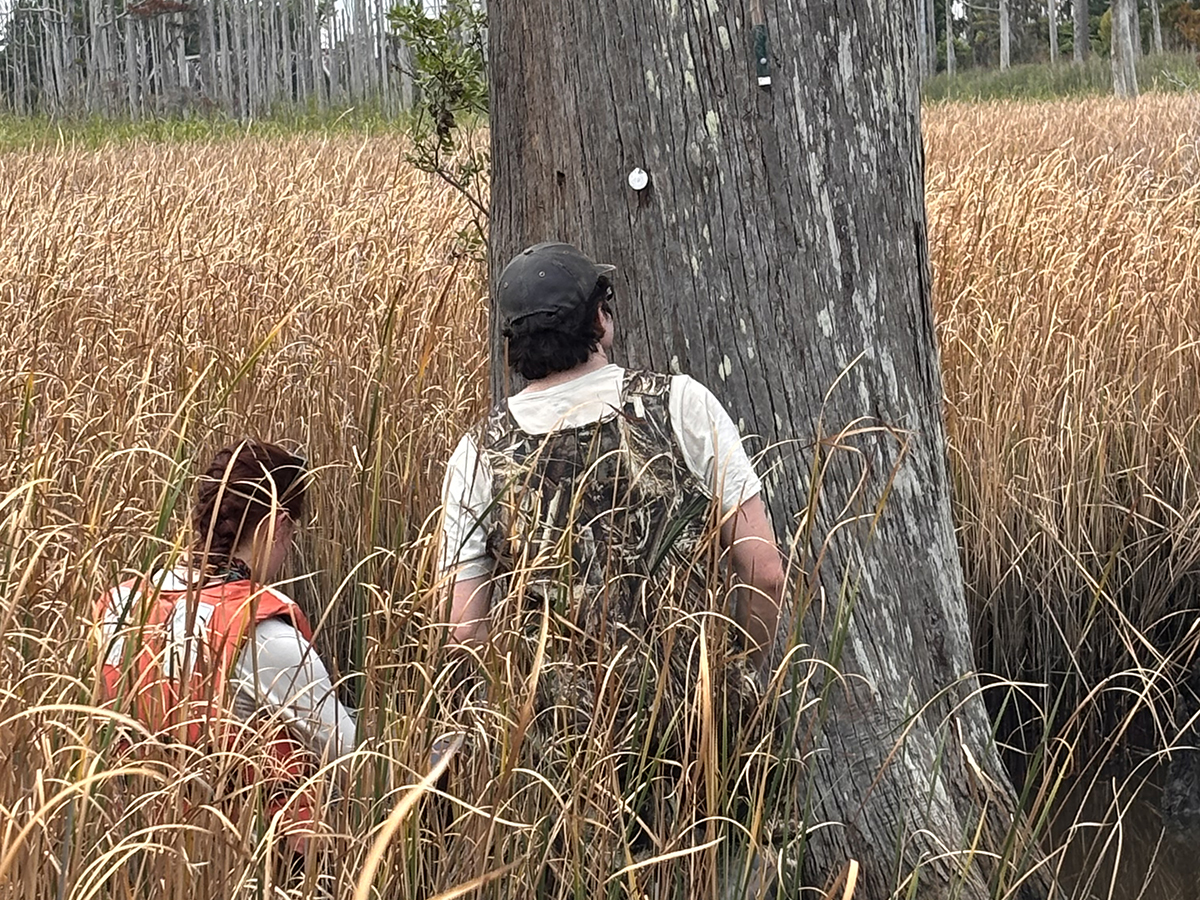
Throughout the tour, Roberts was able to observe research as it was happening and speak to the scientists as they analyzed microbiomes on the coast’s shark species, collected data on how much sediment flows downstream from inland waterbodies, and harvested seagrass seeds for large-scale seagrass restoration. Fodrie also made a point of introducing Roberts to the facilities and administration staff as well, highlighting their important role in keeping the the lab running smoothly.
During a pause by the office of Dr. Rick Luettich, former institute director, the alumni distinguished professor out of his office to talk about an ongoing flood data collection initiative called the Sunny Day Flooding Project.
Luettich said they’ve been working with people on campus, in city and regional planning, and with N.C. State University on the project that uses sensors installed in storm drains and ditches to record water levels.
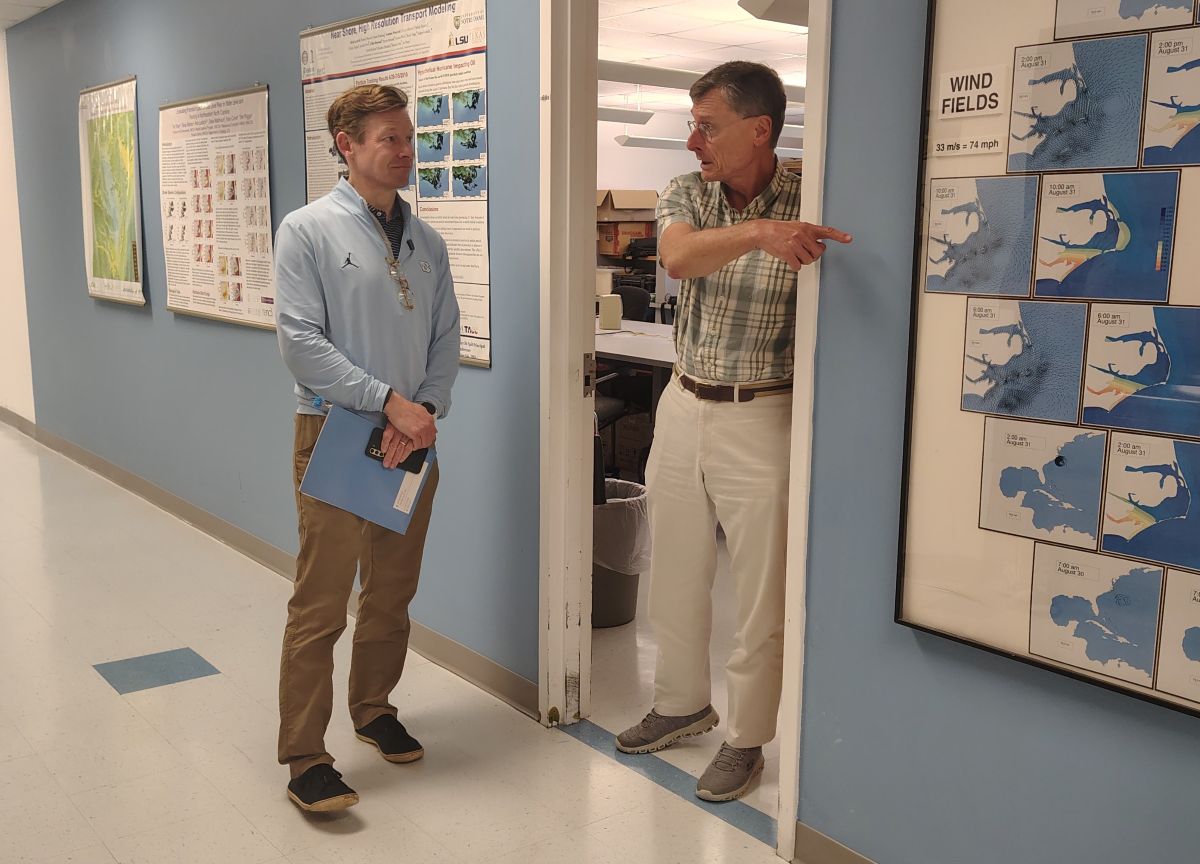
Luettich pointed to the neighboring office where research specialist in physical oceanography Tony Whipple was building the sensors that measure in real time how “frequently flooding is occurring now, not when a big storm comes, but just when it’s a King Tide, or with sea level rise.”
Luettich said there are sensors in New Bern, Beaufort, Carolina Beach and Down East Carteret County, and there’s a website that shows in real time what the water levels are in these understudied areas.
“We haven’t been really paying attention to whether they flood, but we’re seeing that they flood very frequently, and more and more often as sea level’s rising. So really interesting collaborative project that we’re kind of right at ground zero for,” Luettich said.
On the second floor, UNC Institute for the Environment Director Dr. Michael Piehler paused working on what he called a “really cool experiment” looking at salinity intrusion in farms to chat with Roberts.
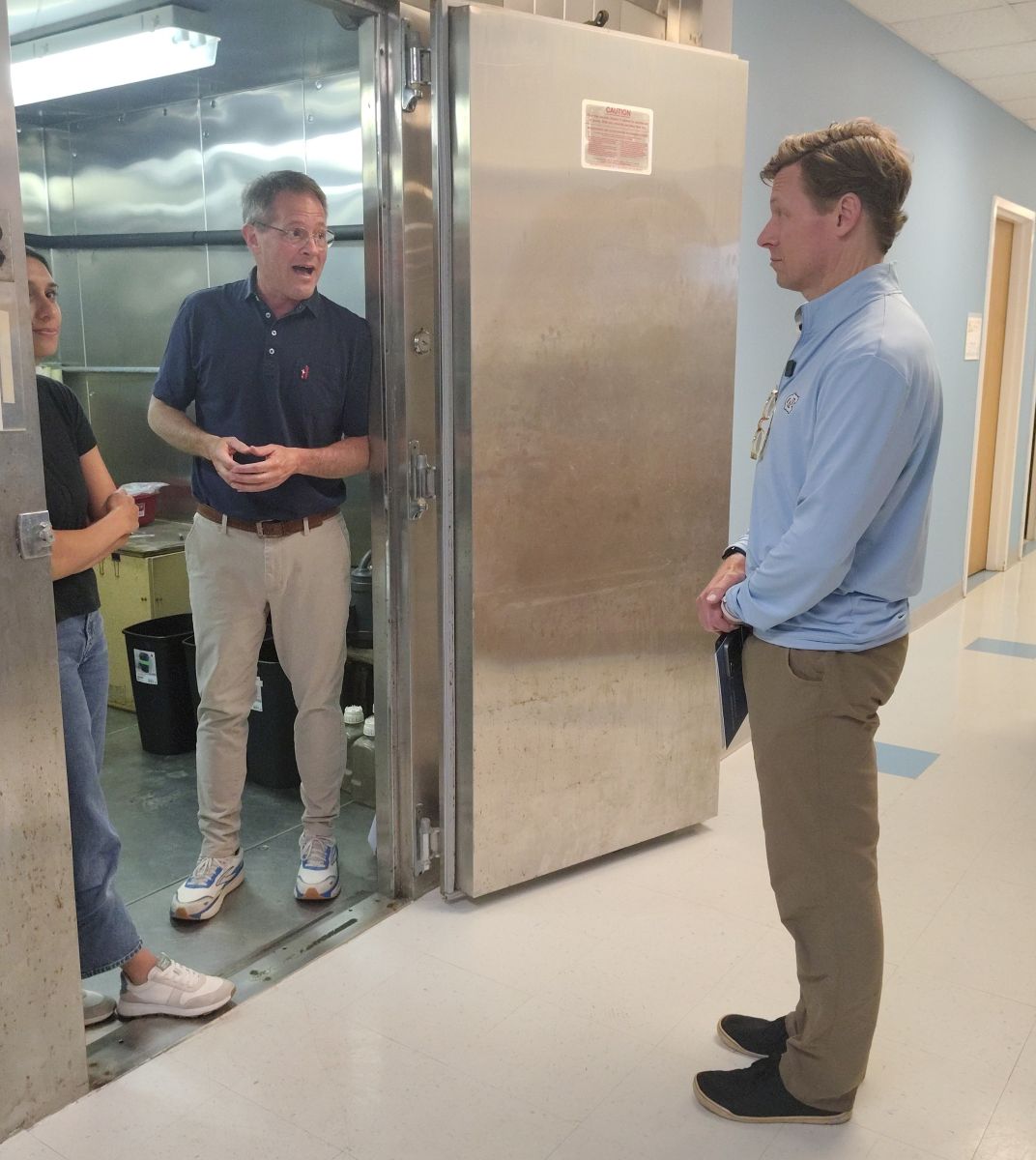
Piehler said the “experiment is working on a farm where salinity is coming in and seeing how that affects both the way that the farmers experience the soil and the way we see it as a processor of nutrients, so it’s just another great case of IMS being a beautiful thing.”
When Fodrie directed the group outside of the facility, he gestured to what looked like abstract sculptures with concrete-saturated rope as the medium.
He said these were different types of structures used to build living shorelines, and the university is collaborating with the companies that make these alternatives for hardened bulkheads and seawalls for shoreline restoration.
“We get to play a valuable role,” Fodrie said. “We’re engaging a lot of companies that are doing that to help them refine their projects and protect shorelines better, and in more environmentally friendly ways” he said about what he called the bourgeoning industry.
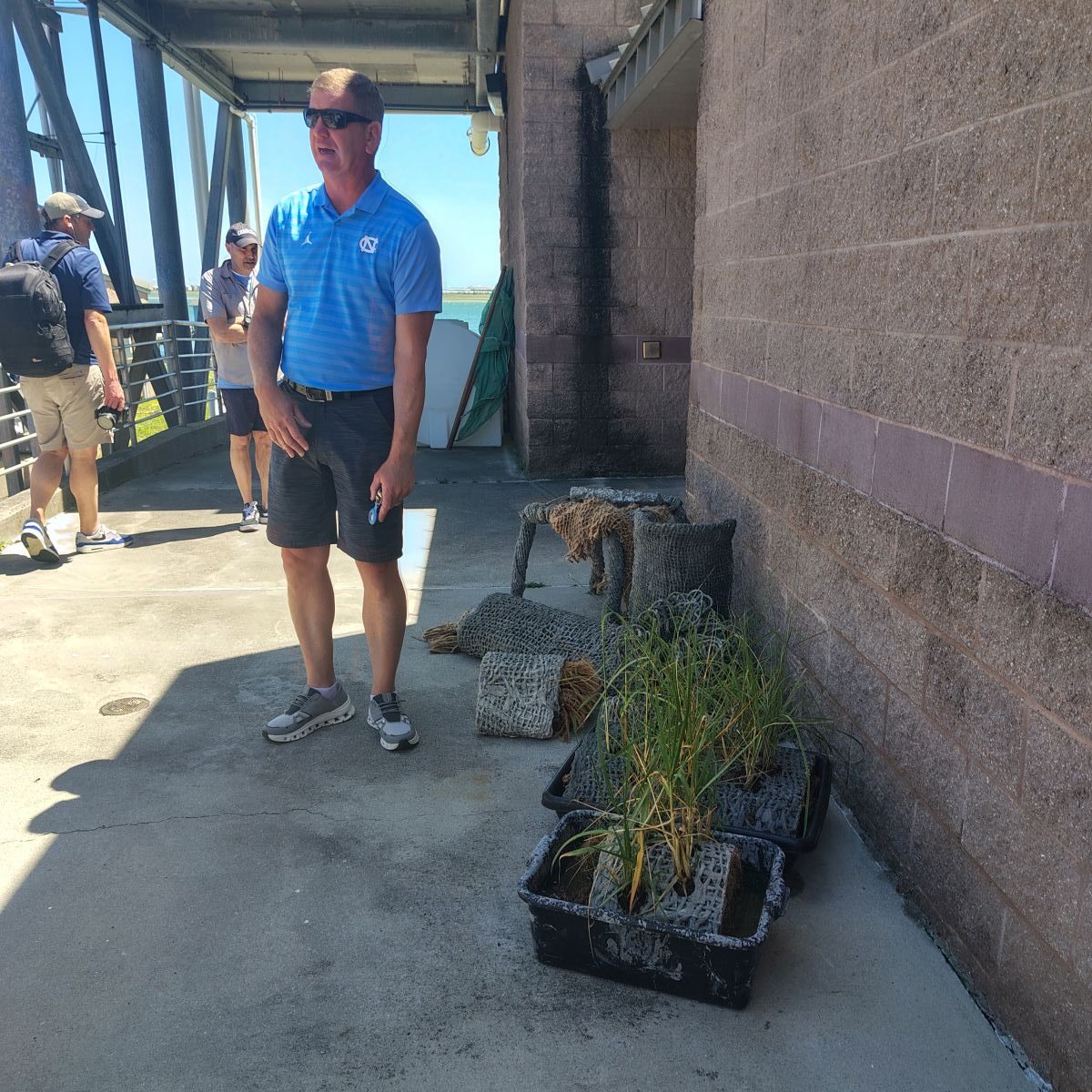
Fodrie also used the tour to show the chancellor existing needs at the research lab.
The outdoor experimental tanks are high on Fodrie’s list to be modernized and be more accessible to all students for experiments and research, and they’re looking to expand the 2,100-square-foot dormitory that sleeps about 20.
“We would love to have students here,” for the semester, Fodrie said from inside the cramped living space beside the lab, and want to expand the dorm to accommodate about 32 beds. “We have the footprint. We have the space” and plans have been drawn.
“Our grad students have had an increasingly hard time finding a place to live,” Fodrie said. They used to rent beachfront homes and “that game is over. So, we have a real housing crunch.”
In the past, students could pool their resources and together rent the larger beach houses for a reasonable amount, but the by-owner vacation business has priced the students out.
In the shorter term, Fodrie said IMS is going to invest in turning the existing dorm into four apartments that sleep four each.
“We’re going to actually reduce capacity to 16,” and the apartments will be small, but they’ll be perhaps livable for a whole semester. That only gets us to 16 and we’re trying to get to 32. It’s a good short-term fix, but not a long-term solution,” Fodrie said.
Roberts told Coastal Review after his tour of the lab that the university has had a presence on the coast for 80 years, and “when you spend time here, you realize why. How important it is to undertake the kind of research that our scientists and faculty are pursuing.”
The coast is crucial to the state and to its future, from standpoint of fisheries and the environment, the research into sustainability, oyster farms, and dozens of other areas of research everywhere you look.
“We have 75 people here year-round. It’s a remarkable effort supported by the people of North Carolina, and, and for a good reason, because what’s happening here is integral to North Carolina’s future,” he said.
In a follow-up interview, Fodrie told Coastal Review that the facility serves as UNC’s vanguard for meeting challenges facing the coast, as well as for discovering solutions in focal areas that include coastal resilience, water quality, human health, and fisheries.
“Knowing how broad and diverse the chancellor’s responsibilities are, we are very gratified and appreciative that he would choose to visit the Institute to learn more about our ongoing efforts to serve North Carolina and also explore with us ways to expand our capacity in research and teaching/mentoring,” Fodrie said.
Roberts’ choice to visit the institute also highlights the unique and high-impact role that it has played in UNC’s mission over the last 80 years, since the institute was created, Fodrie continued.
“In this regard, one telling statistic we discussed related to the Impact Awards that UNC uses to recognize graduate students that conduct research focused on serving the needs of North Carolina,” Fodrie said, explaining that IMS-based graduate students represent less than 0.2% of all UNC graduate students during the last decade but represent about 14% of all award recipients over that same period.
“In turn, we also appreciated the chance to learn more about the chancellor’s broader goals and priorities for UNC during his team’s visit, and therefore how IMS might continue to grow our impact within and beyond the university.”