Guest Commentary
To stimulate discussion and debate, Coastal Review welcomes differing viewpoints on topical coastal issues.
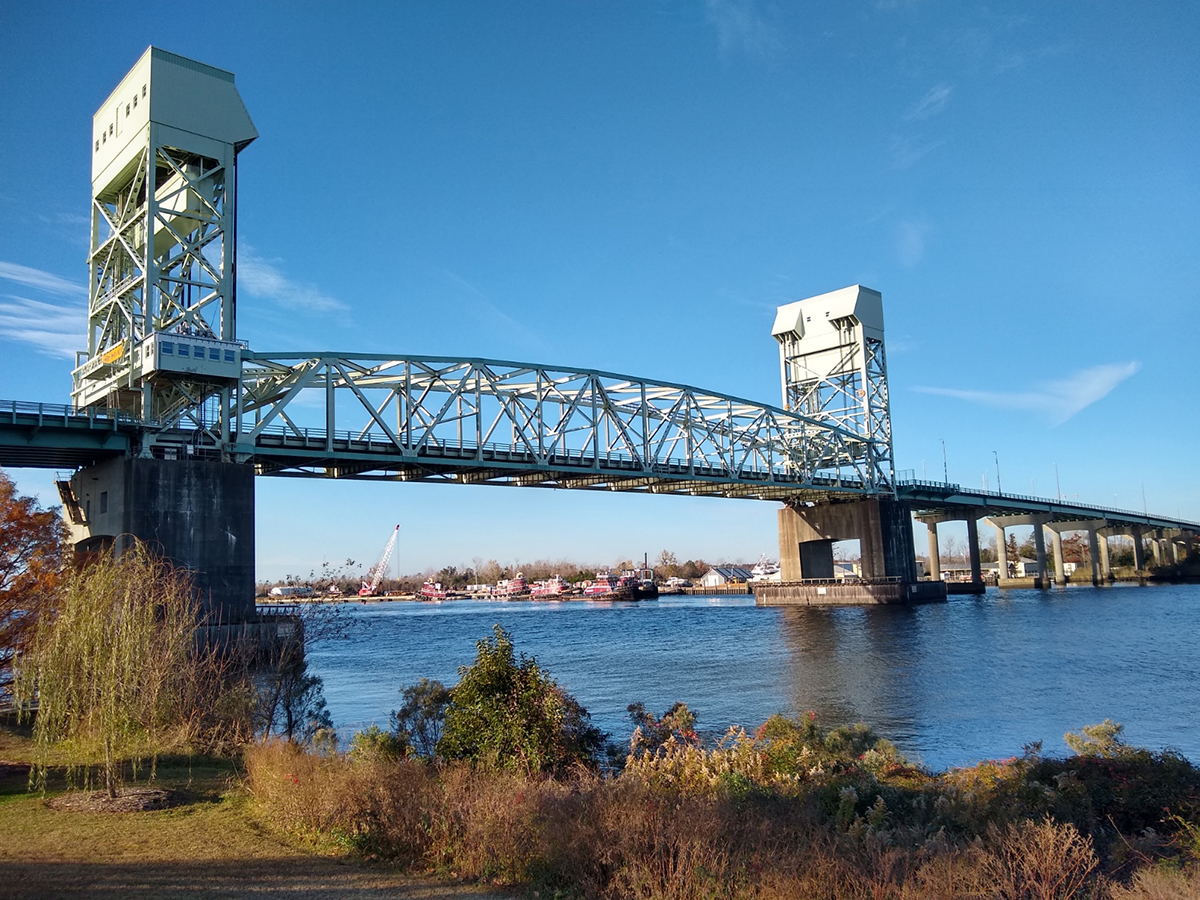
Few public projects have generated as much discussion in southeastern North Carolina as the proposed replacement of the Cape Fear Memorial Bridge. Citizens have raised thoughtful questions about the bridge’s cost, the possibility of tolls, impacts on surrounding neighborhoods, and perhaps most notably, one simple question:
Why does the replacement bridge need to be 135 feet high?
Supporter Spotlight

It is an entirely reasonable question.
Recent public discussions, including a white paper published by the Brunswick Forest Residents Civic Association (BFRCA), have suggested that the bridge could be substantially lower if Congress simply eliminated the federally authorized navigation channel north of the existing bridge. Some have argued that doing so could reduce project costs and perhaps even eliminate the need for tolls.
Those ideas deserve thoughtful consideration. Public participation has always been one of the strengths of our democratic system, and citizens should never hesitate to ask difficult questions about major public investments.
As someone who spent more than four decades with the U.S. Army Corps of Engineers working in navigation planning, environmental review, and water resources development, I welcome that conversation.
At the same time, I believe an important piece of information has been largely missing from the public discussion.
Supporter Spotlight

A federal determination that changes the conversation
Recently, the Wilmington District of the U.S. Army Corps of Engineers completed its review of the proposed bridge replacement under Section 14 of the Rivers and Harbors Act of 1899, commonly known as Section 408.
Most citizens have never heard of Section 408, yet it may be one of the most important laws affecting the future of the Cape Fear Memorial Bridge. Section 408 requires the Corps to determine whether a proposed alteration would impair the usefulness of a congressionally authorized federal Civil Works project. In this case, the authorized project is the Wilmington Harbor Federal Navigation Project.
After completing its technical review, the Corps reached a clear conclusion. A replacement bridge providing less than 135 feet of vertical clearance above mean higher high water would negatively affect the usefulness of the federally authorized navigation project.
Under the Corps’ own regulations, once that determination was made, the evaluation of lower-clearance alternatives had to stop.
Whether one agrees with that determination or not is almost beside the point. It is now part of the official administrative record.
That changes the discussion.
The debate is no longer simply about whether a lower bridge might cost less or appear more practical. Before that question can even be answered, another question must first be addressed: Should Congress change the federally authorized navigation project itself?
That is a much broader public policy question than bridge height alone. It involves navigation, interstate commerce, transportation planning, environmental review, economic development, emergency preparedness, and federal law.
Understanding that broader framework is essential if we hope to make informed decisions.
Why this matters
Many residents have moved to southeastern North Carolina only within the past decade. They understandably may not be familiar with the many decades of congressional authorizations, navigation studies, environmental reviews, transportation planning, and public investments that have shaped the Cape Fear River and the Port of Wilmington.
That history matters.
The Cape Fear Memorial Bridge was never simply a highway crossing.
It has always been part of a larger transportation system connecting maritime commerce, regional highways, railroads, emergency evacuation routes, military facilities, and the communities on both sides of the river.
Looking at the bridge by itself is a little like trying to understand an airport by examining only the terminal building.
The bridge, the harbor, the port, and the transportation network all function together.
That is why replacing the bridge is considerably more complicated than choosing a preferred height.
Understanding the federal navigation project
One of the most common misunderstandings in the current discussion involves the nature of the federal navigation project itself.
Many people understandably assume that because relatively few large commercial vessels travel north of the bridge today, the federal navigation channel above the bridge is no longer necessary.
On the surface, that seems like common sense. If the ships are not using the channel, why preserve it?
The answer lies in understanding what Congress actually authorizes.
Federal navigation projects are not created by the Corps of Engineers. They are established by Congress to serve long-term national interests, including interstate commerce, navigation, economic development, and, in some cases, national defense.
The Corps is responsible for administering those projects within the authority granted by Congress. It does not possess unilateral authority to redefine or eliminate them simply because navigation patterns change.
That distinction is critical.
Changes in vessel traffic may certainly justify future studies. They may even support recommendations for congressional action. But they do not automatically change the existing federal authorization.
Transportation infrastructure has always been planned with a long-term perspective. We do not widen highways only after congestion becomes unbearable. Nor do we abandon airports because air traffic temporarily declines.
Similarly, federal navigation projects are intended to accommodate both present and future needs.
That does not mean existing authorizations should never be revisited. It simply means that changing them requires careful analysis rather than assumption.
The relationship between bridge and harbor
The recent Section 408 determination illustrates something that planners have understood for decades. The bridge and the navigation project cannot be evaluated independently. The navigation project establishes engineering requirements that directly influence the bridge.
Likewise, the bridge affects navigation, freight movement, emergency response, regional mobility, and economic development.
This relationship is not unique to Wilmington. Throughout the country, ports depend upon highways. Highways depend upon bridges. Bridges support freight movement.
Freight movement supports regional economies. Each component influences the others. That is why transportation planning increasingly views infrastructure as interconnected systems rather than isolated projects.
When citizens ask whether a lower bridge is possible, they are really asking whether the entire transportation and navigation system should operate differently. That is an important discussion. But it should be recognized for what it is. It is not simply a bridge design question. It is a regional planning question.
Where current discussion raises important questions
One reason the current public discussion has been valuable is that it has encouraged citizens to look more closely at decisions that will shape our region for generations. Those questions deserve thoughtful answers.
The cost of replacing the bridge is substantial. Taxpayers have every right to understand why a particular alternative has been selected and whether it represents the best long-term value.
Questions about tolls are equally understandable. Thousands of Brunswick County residents depend upon this crossing every day. Any recurring toll would affect commuters, businesses, retirees, and working families throughout the region.
Neighborhood impacts also deserve careful consideration. Transportation projects influence homes, businesses, churches, historic districts, and community character.
Every reasonable effort should be made to minimize unnecessary impacts while meeting legitimate transportation needs.
These are not obstacles to progress. They are exactly the kinds of questions responsible citizens should ask.
Public involvement has improved countless infrastructure projects throughout this country. Engineers identify technical issues. Environmental scientists evaluate ecological consequences. Transportation planners assess mobility. Residents contribute local knowledge that professionals may overlook. Good public policy benefits from all of these perspectives. The goal should never be to determine which side wins the argument.
The goal should be to make the final decision better because every important question has been asked — and every answer has been grounded in evidence rather than assumption.
That is the standard our community should expect as this discussion continues.
Where I reach different conclusions
While I believe the recent public discussion has been healthy, I reach different conclusions on several important issues.
The first concerns the assumption that eliminating the federally authorized navigation channel north of the bridge would naturally result in a lower bridge and substantially lower project costs.
Perhaps it would. But no one can responsibly make that claim without first completing the technical, environmental, legal, and economic analyses necessary to support it.
Changing a congressionally authorized Federal Navigation Project is not simply a matter of drawing a new line on a map.
Congress certainly possesses the authority to modify or even deauthorize portions of an existing navigation project. However, exercising that authority has historically required far more than a legislative amendment. It would require detailed engineering studies, navigation analyses, environmental review under the National Environmental Policy Act (NEPA), economic evaluation, consultation with affected federal and state agencies, and careful consideration of the long-term interests of interstate commerce, military readiness, and the Port of Wilmington.
That process exists for good reason. Federal infrastructure projects are intended to serve not only today’s needs but also those of future generations.
The Corps’ recent Section 408 determination illustrates precisely why that process matters. Unless and until Congress changes the authorized navigation project, the Corps has concluded that a bridge with less than 135 feet of vertical clearance would impair the usefulness of the existing federally authorized navigation project. That determination does not prevent Congress from changing the project in the future, but it does establish the legal and engineering framework within which today’s bridge replacement must be evaluated.
The idea of ending the federally authorized navigation project at the bridge or eliminating the authorized navigation channel north of the bridge has become part of the public discussion. Congress unquestionably has the authority to modify or even deauthorize portions of a federal navigation project. The more important question, however, is not whether Congress can do so, but whether Congress should.
Such a decision deserves far more than a simple legislative amendment or a reaction to current navigation patterns. It would require comprehensive engineering, navigation, environmental, and economic analyses, together with consultation among federal and state agencies, the maritime industry, local governments, and the public. It would also require careful consideration of the long-term interests of the Port of Wilmington, regional transportation, interstate commerce, military readiness, and public safety.
That is not an argument against changing the navigation project if future studies ultimately demonstrate that such a change serves the public interest. Rather, it is an argument that decisions of this magnitude should be based upon a complete technical and public policy record — not upon a single objective such as reducing bridge height or construction costs.
The discussion should therefore begin not with the question, “Can we build a lower bridge?” but rather with the question, “Should the nation modify a congressionally authorized navigation project that has served the Cape Fear River for decades?”
Those are fundamentally different questions.
The question of tolls
One issue on which my position is unequivocal is tolling.
I do not support tolling the replacement Cape Fear Memorial Bridge. My opposition, however, is not based solely on the financial burden tolls would place on local residents. It is based on a broader principle of fairness.
The Cape Fear Memorial Bridge is not simply a local bridge. It is one of southeastern North Carolina’s most important transportation assets.
Every day it carries commuters between Brunswick and New Hanover Counties. It serves as a principal hurricane evacuation route for thousands of residents and visitors. It supports military readiness through its connection to Military Ocean Terminal Sunny Point. It carries a substantial share of the freight traffic serving the Port of Wilmington, one of North Carolina’s most important economic engines.
The replacement bridge will also provide something the existing bridge has never offered: a safe, dedicated pedestrian and bicycle connection across the Cape Fear River. That addition will reconnect the two counties in ways that encourage walking, cycling, recreation, tourism to our fledgling Eagles Island Park, and healthier transportation choices, while creating new opportunities for residents and visitors to experience both communities. It is an investment in quality of life as much as in transportation.
These combined benefits demonstrate that the bridge serves far more than motorists. It serves commerce, public safety, emergency preparedness, military logistics, recreation, tourism, and community connectivity throughout the Lower Cape Fear region.
The economic benefits generated by the Port extend far beyond Wilmington and Brunswick County. They benefit manufacturers, agricultural producers, retailers, businesses, and consumers across North Carolina.
When infrastructure supports statewide commerce and statewide economic prosperity, it should be viewed as a statewide responsibility. That is why I believe the Town of Leland acted wisely in adopting Resolution R-26–032, encouraging equitable participation by the North Carolina State Ports Authority in funding the replacement bridge.
The resolution does not suggest that the Ports Authority should finance the entire bridge. Nor do I. Rather, it recognizes a principle of sound public policy: When major public infrastructure produces broad statewide benefits, the costs should be shared equitably among those who benefit.
The port depends upon the transportation system. The transportation system depends upon the bridge. The bridge, in turn, supports statewide commerce, local communities, military readiness, emergency preparedness, and regional mobility. Those relationships are inseparable.
Accordingly, I believe discussions regarding project financing should include the State of North Carolina, the North Carolina State Ports Authority, and other beneficiaries of statewide commerce — not simply the commuters who happen to cross the bridge each day.
A bridge that serves the economic interests of an entire state should not be financed primarily on the backs of local motorists.
Planning for the next century
Another issue often overlooked in public discussions is time.
The replacement Cape Fear Memorial Bridge is not being designed solely for today’s traffic. It is expected to serve southeastern North Carolina for the next 75 to 100 years.
No one can predict exactly how the Port of Wilmington, regional population, freight movement, military requirements, or transportation technology will evolve during that period.
History teaches us that infrastructure frequently shapes economic growth rather than simply responding to it. The interstate highway system transformed American commerce. Container shipping transformed global trade. Ports expanded because transportation systems were built with future opportunities in mind.
Likewise, the pedestrian and bicycle facilities planned for the new bridge recognize that transportation needs evolve. Communities increasingly value safe, multimodal connections that improve mobility, encourage recreation, reduce reliance on automobiles for short trips, and strengthen relationships between neighboring communities.
Current navigation patterns are certainly relevant. But they are only one part of a much longer planning horizon. Responsible infrastructure planning requires us to think not only about today’s conditions, but about the needs and opportunities of future generations.
What every citizen should expect
Whether one supports the current bridge proposal, favors a different design, opposes tolls, or believes Congress should revisit the navigation project, every citizen should expect the same thing from government. Transparency.
Citizens deserve to understand why particular decisions are being made. They deserve to see alternatives evaluated objectively.
They deserve to understand the assumptions underlying cost estimates, traffic forecasts, environmental analyses, and funding proposals.
They deserve clear explanations — not slogans.
Likewise, public agencies should welcome informed questions.
Some of the best improvements to public infrastructure projects have come from citizens asking questions that professionals had not fully considered.
Public involvement strengthens projects. It should never be viewed as an obstacle.
At the same time, informed public discussion carries its own responsibility. Questions should be answered with documented evidence.
Engineering judgments should be supported by technical analysis.
Legal conclusions should be grounded in applicable law.
Public policy decisions should reflect long-term public interests rather than short-term political pressures.
When those principles guide the discussion, everyone benefits — even when reasonable people ultimately disagree.
Building the future together
The Cape Fear Memorial Bridge debate is about far more than bridge height. It is about how southeastern North Carolina prepares for the future.
Reasonable people will continue to disagree about navigation requirements, project costs, neighborhood impacts, and funding mechanisms. Those disagreements are healthy.
What should unite us is a commitment to making decisions based upon evidence rather than assumption, thoughtful analysis rather than speculation, and long-term public benefit rather than short-term convenience.
The recent Section 408 determination does not end this discussion. It does, however, remind us that major infrastructure decisions are shaped by decades of congressional authorizations, engineering analysis, environmental review, and transportation planning.
Understanding that framework allows us to ask better questions and make better decisions.
If North Carolina recognizes the Port of Wilmington as a statewide economic engine — and I believe it should — then the transportation infrastructure that allows that port to function should likewise be recognized as a statewide responsibility.
The replacement Cape Fear Memorial Bridge will connect neighborhoods, counties, businesses, cyclists, pedestrians, emergency responders, military installations, and one of North Carolina’s most important seaports. It will serve the people of this region for generations.
It should unite our communities — not divide them over who should bear the cost. That is not simply a transportation policy. It is a matter of sound planning, regional partnership, and fairness.
Opinions expressed by the authors are not necessarily those of Coastal Review or our publisher, the North Carolina Coastal Federation.