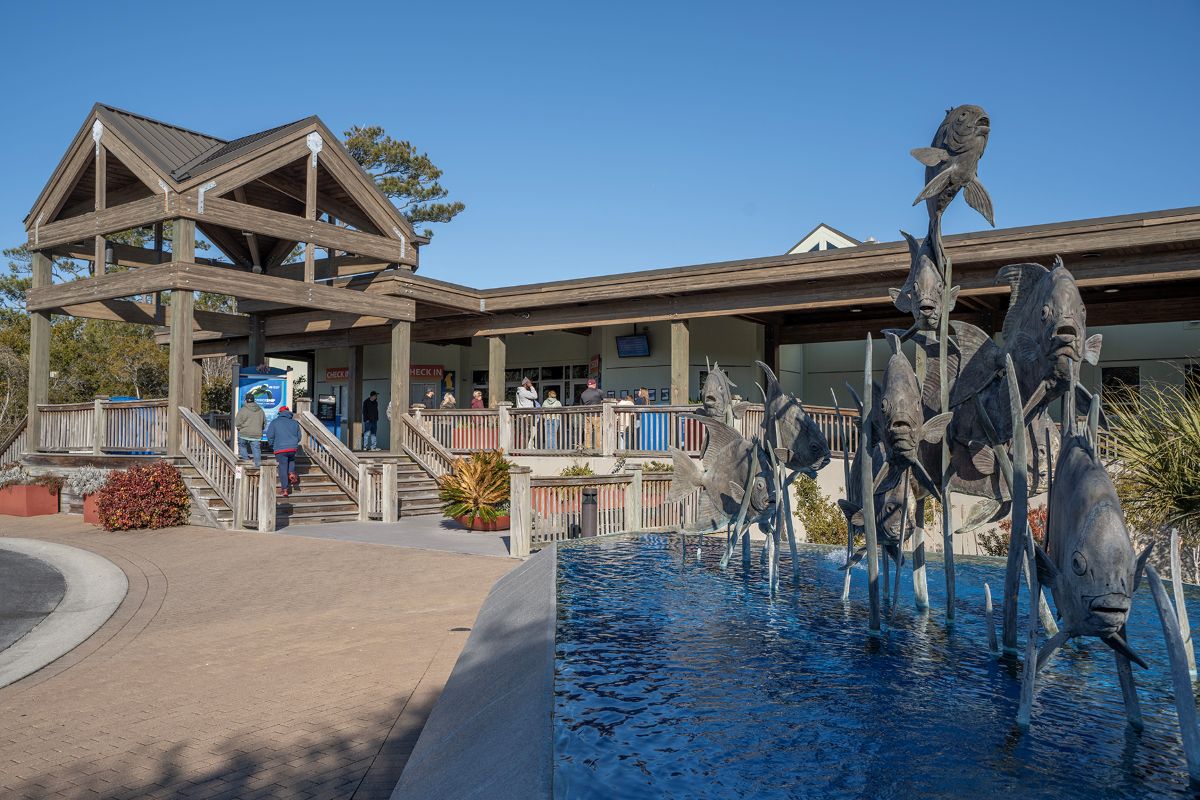
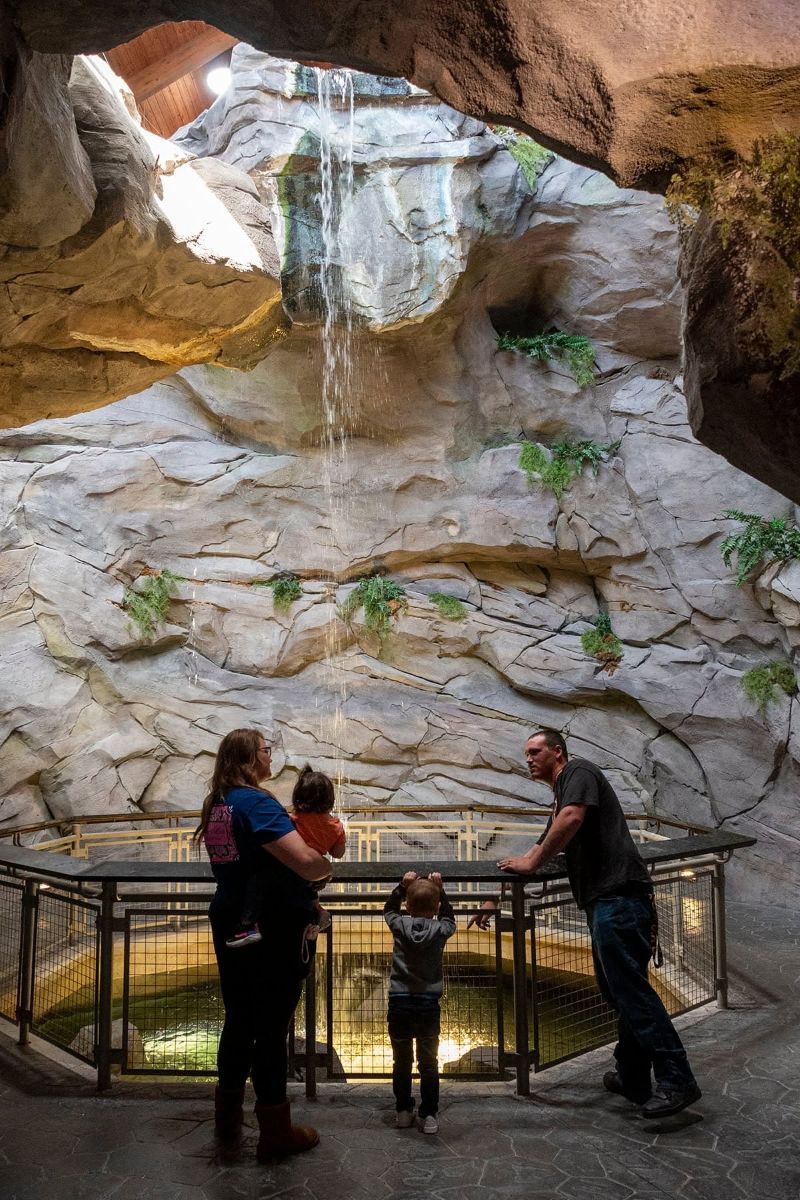
The steady rush of a 32-foot-tall Smoky Mountain waterfall is what greets the hundreds of thousands of visitors that filter each year through the North Carolina Aquarium at Pine Knoll Shores.
The impressive sight is the start of an up-close journey through aquatic habitats found from the “Mountains to the Sea,” the theme the staff came up with when the facility that opened its doors in 1976 was upgraded in 2006. As visitors walk through the aquarium, they’re able to see thousands of aquatic animals in a range of habitats.
Supporter Spotlight

“We came up with the theme of ‘Mountains to the Sea’ so that the five galleries at the Pine Knoll Shores aquarium would highlight some of the animals and features all across the state,” former director Jay Barnes said.
Compared to when the Pine Knoll Shores site opened 50 years ago, the facility is nearly unrecognizable.
Launched as the North Carolina Marine Resources Centers in the 1970s at the same time as the Roanoke Island and Fort Fisher locations, which were also revamped 20 years ago, the research hubs were rebranded in 1986 as the North Carolina Aquariums.
N.C. Aquariums Director Hap Fatzinger told Coastal Review that since its inception, the goal of the educational facilities has been to focus “on creating incredible guest experiences that create connections to people, animals and the natural world.”
Having three aquariums along the state’s coastline was a strategic measure to ensure residents would have access to learn about the treasures of our coast. The education hubs grew in popularity, and gained strong legislative support that allowed for the aquariums, which were accredited in 1990 by the Association of Zoos and Aquariums, to expand in the early 2000s into the 65,000- to 93,000-square-foot facilities they are today, Fatzinger added.
Supporter Spotlight

With the addition in 2011 of Jennette’s Pier at Nags Head to the aquarium system, the four locations see a total of more than 1.4 million visitors a year.
The aquariums today stands “as vibrant gateways to discovery, conservation and connection, bringing visitors face-to-fin with aquatic life and ecosystems,” according to the North Carolina Department of Natural and Cultural Resources, which the aquarium division is under, and “have inspired conservation action to protect the ocean and waterways through unforgettable encounters with aquatic life, while expanding access to science education and contributing to conservation research, rehabilitation, and emerging rescue work.”
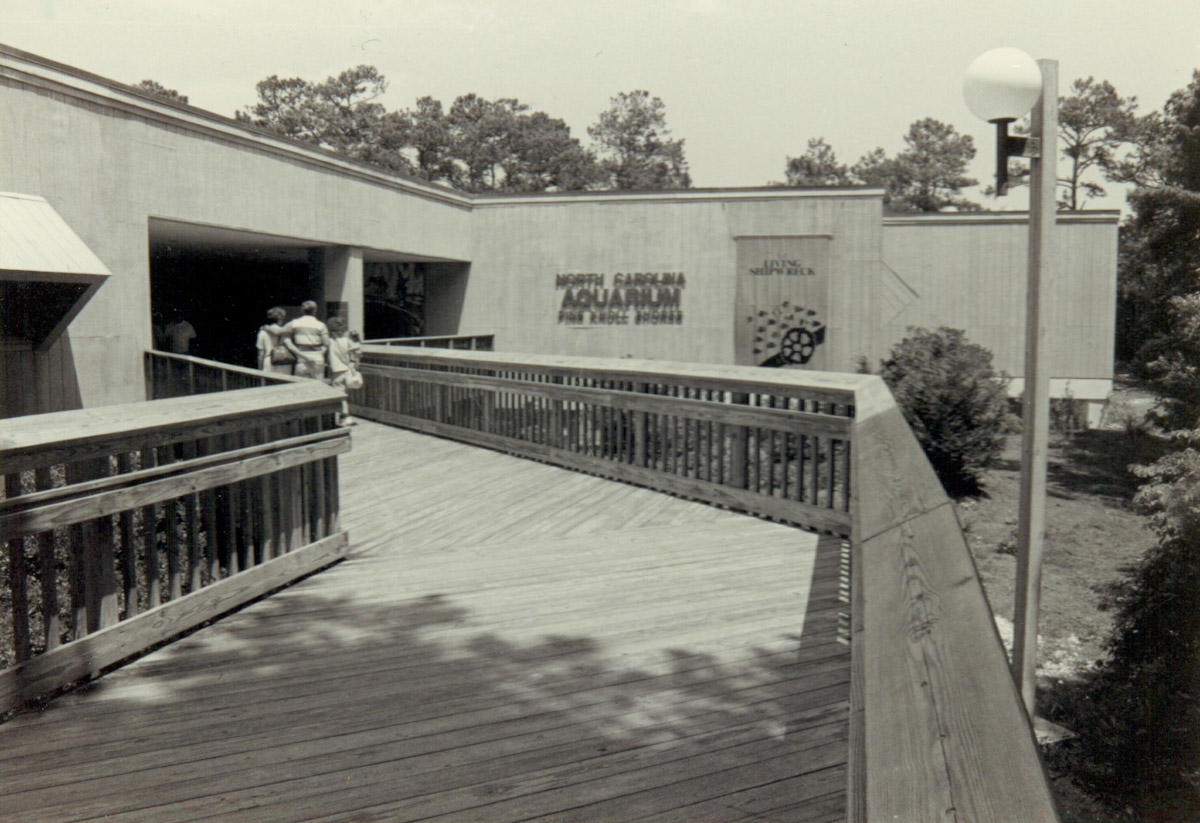
Though the three N.C. Aquariums officially turn 50 in September, there are several anniversary and birthday events happening throughout the year, including the “Birthday Splash” during regular aquarium hours 9 a.m. to 5 p.m. Saturday at Pine Knoll Shores, followed at 7 p.m. by the ticketed 70s-themed “Rock the Reef” for those 21 and older.
“For 50 years, the North Carolina Aquariums have played a vital role in inspiring visitors, strengthening coastal communities, and protecting the natural resources that make our state so special,” DNCR Secretary Pamela B. Cashwell said earlier this year in a press release. “This anniversary reflects decades of visionary leadership, sustained community support and dedicated staff who have ensured the Aquariums remain places of learning, wonder, and conservation for generations of North Carolinians.”
Barnes began his career at Pine Knoll Shores in 1980 and later was appointed as director there, a role he held for more than 20 years before retiring in 2009. He then joined the nonprofit partner organization, the North Carolina Aquarium Society, from which he retired as director in 2023.
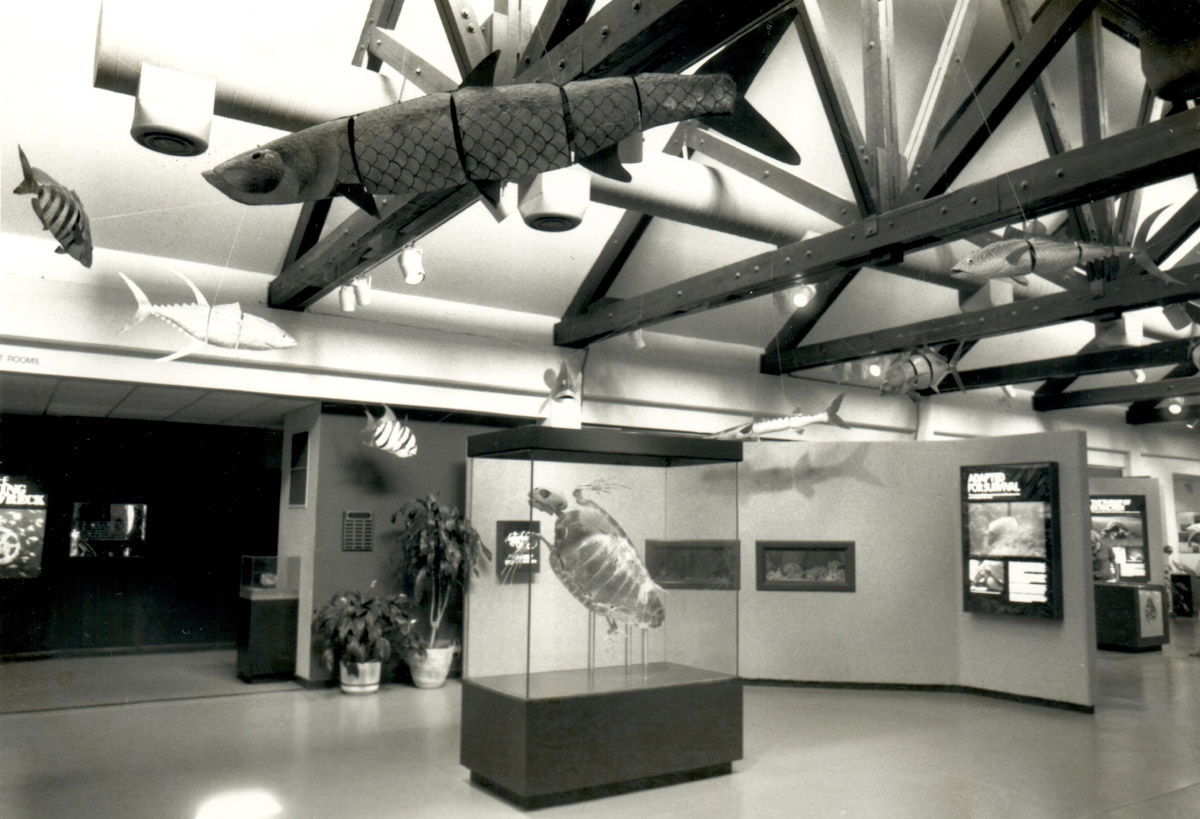
When the sites first opened in the 1970s, the centers were shoestring operations with few on staff and tiny budgets, Barnes explained about those early years. Funding was so poor that there wasn’t air conditioning at the Fort Fisher site, and there were very few exhibits, all of which were created by staff.
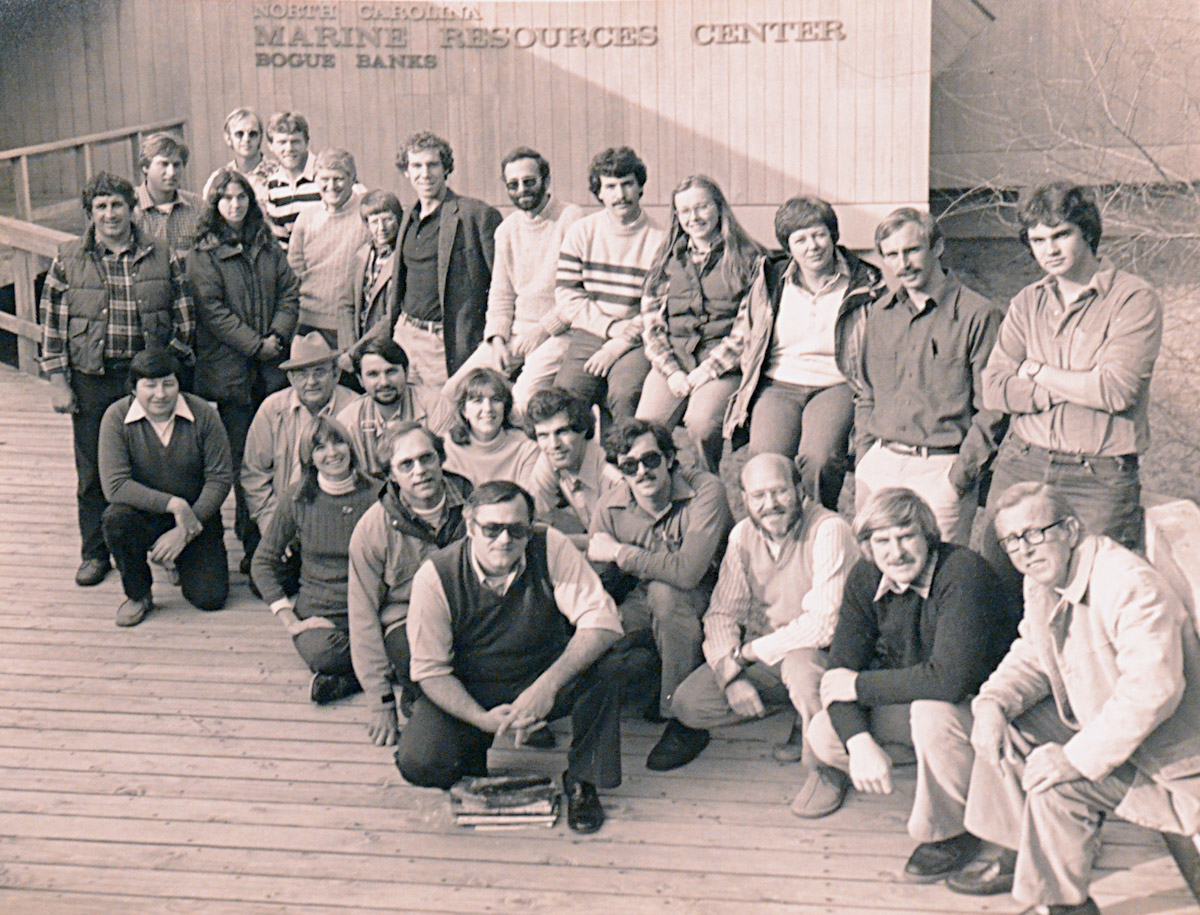
“We were open seven days a week, but we only had a full-time staff when I joined of five people,” Barnes continued.
With the help of several volunteers and some interns that came every summer, “we pieced together enough support to keep the doors open,” he said. “We were trying to build something from nothing.”
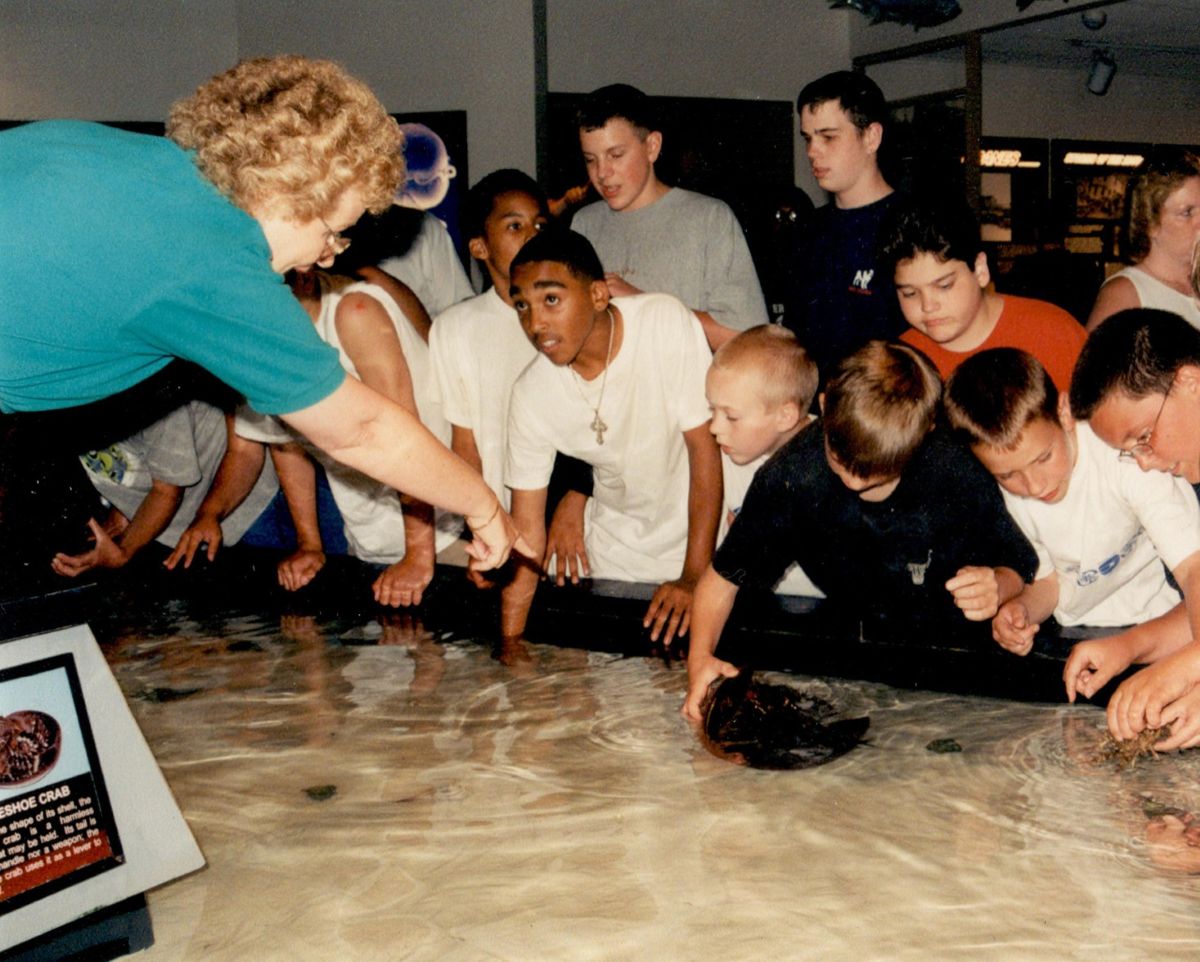
The building was there, but when it comes to the exhibits, “we had to go collect the animals, build the displays, and try to offer something to the public that was educational, and we did a lot of programming too,” Barnes said. “We started working a lot with schoolchildren, and the schools loved us, because it’s a free opportunity to bring their classes to the coast and get their feet wet in the marsh and learn a few things about sea life.”
Then, programming began to evolve, and “it’s amazing to think about this small staff that we had, the small budget that we had in those early days, and the fact that it was free admission. When you have free admission, I think that one of the things that happens is people’s expectations are not real high.”
Barnes said that after being open to the public at no charge for many years, “we realized that if we were ever going to make progress financially, we were going to have to bite the bullet and develop an admission charge,” which the legislature approved, to build a fund that would go back to the aquarium.
This was in 1986. In addition to being renamed that year as North Carolina Aquariums, the division moved from the North Carolina Department of Administration over to what is now the North Carolina Department of Natural and Cultural Resources and the nonprofit partner, North Carolina Aquarium Society was formed to support aquarium efforts.
Barnes said that the rebranding “made perfect sense” because the leadership at the time recognized that people were visiting the sites for the exhibits that featured fish, sharks and turtles.
“We changed departments, changed our name and began an admission fee, and that’s when things really started to look up in terms of the kinds of improvements we were able to make in the years to come,” he explained.
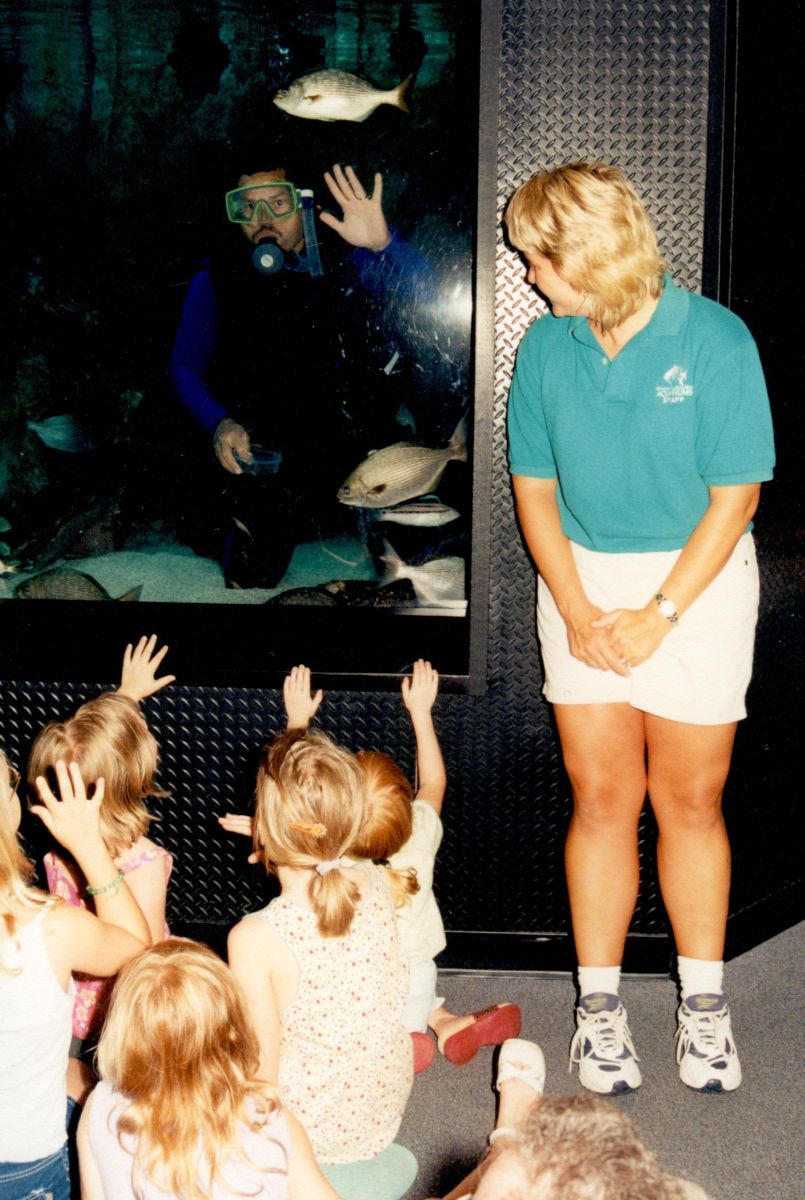
In the late 1990s, the aquarium society was successful in generating support from the General Assembly and began looking at capital funding to improve and expand the aquarium sites. Roanoke Island underwent the first round of renovations unveiled in 2000, then Fort Fisher reopened its upgraded site in 2002 and Pine Knoll Shores in 2006.
As director, Barnes said he was excited about having $15 million for a big renovation but Hurricane Floyd struck North Carolina in 1999 and as a result, the funding for Pine Knoll Shores was rescinded, “which we understood the reasons why; there were a lot of people hurting across North Carolina and that (renovation) funding went to help.”
The Aquarium Society’s Board of Directors came up with a plan the General Assembly passed to allow private financing for the renovations.
“The aquariums then essentially borrowed the money to build the renovation at Pine Knoll Shores, and we got that underway in 2004,” Barnes said.
The previous building was around 35,000 square feet, the upgrades tripled the footprint to 93,000 square feet at a cost of $25 million, according to state documents.
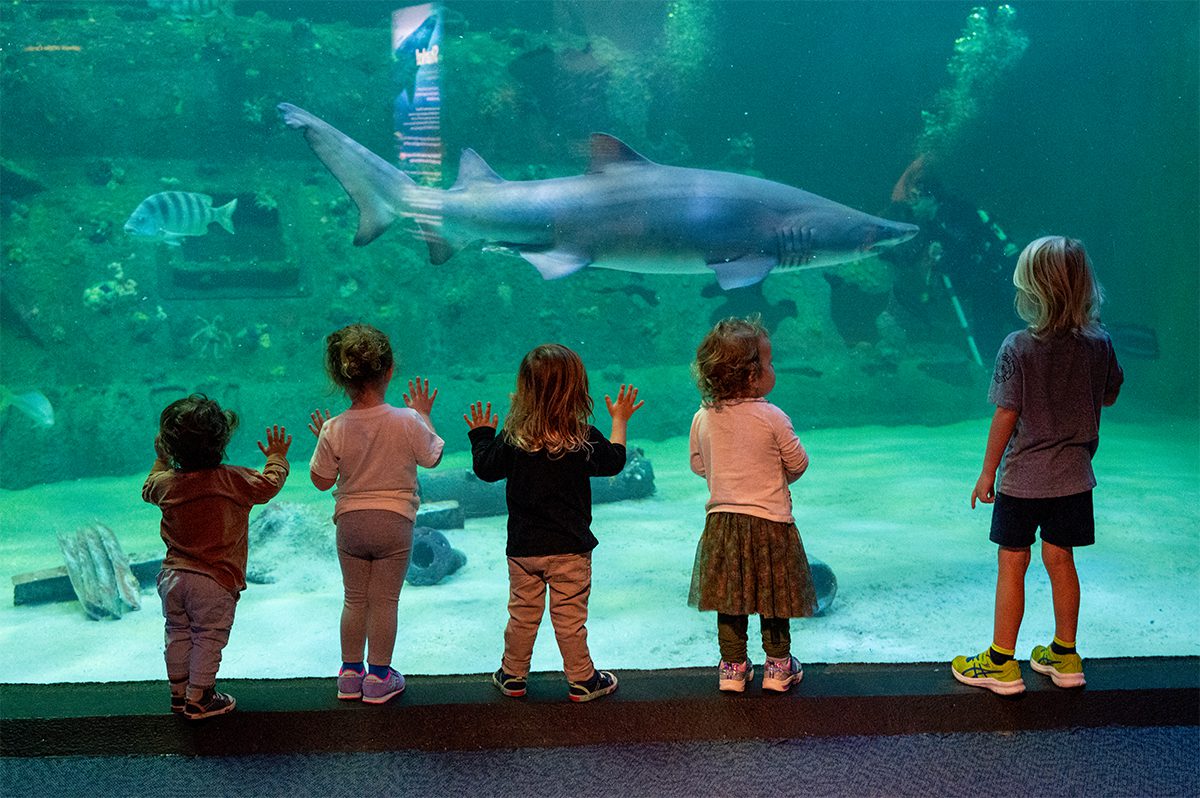
“It was a very exciting time for me as director to be able to work with our staff to come up with what we wanted the new aquarium to look like and how we wanted it to be laid out,” he said, adding they reused portions of the previous facility, redesigned the traffic flow, added lots of new exhibits and came up with the Mountains to the Sea theme.
By joining the staff just four years after the site opened, he said it was an opportunity to grow with the organization.
“And I have to say, all of us are proud of what has transpired over the years with not only increasing the funding and the staffing, but the exhibits just got better and better over time, and the work that the aquariums do now is light years beyond where it was back in those days with regard to research and conservation and the number of people that we reach.”
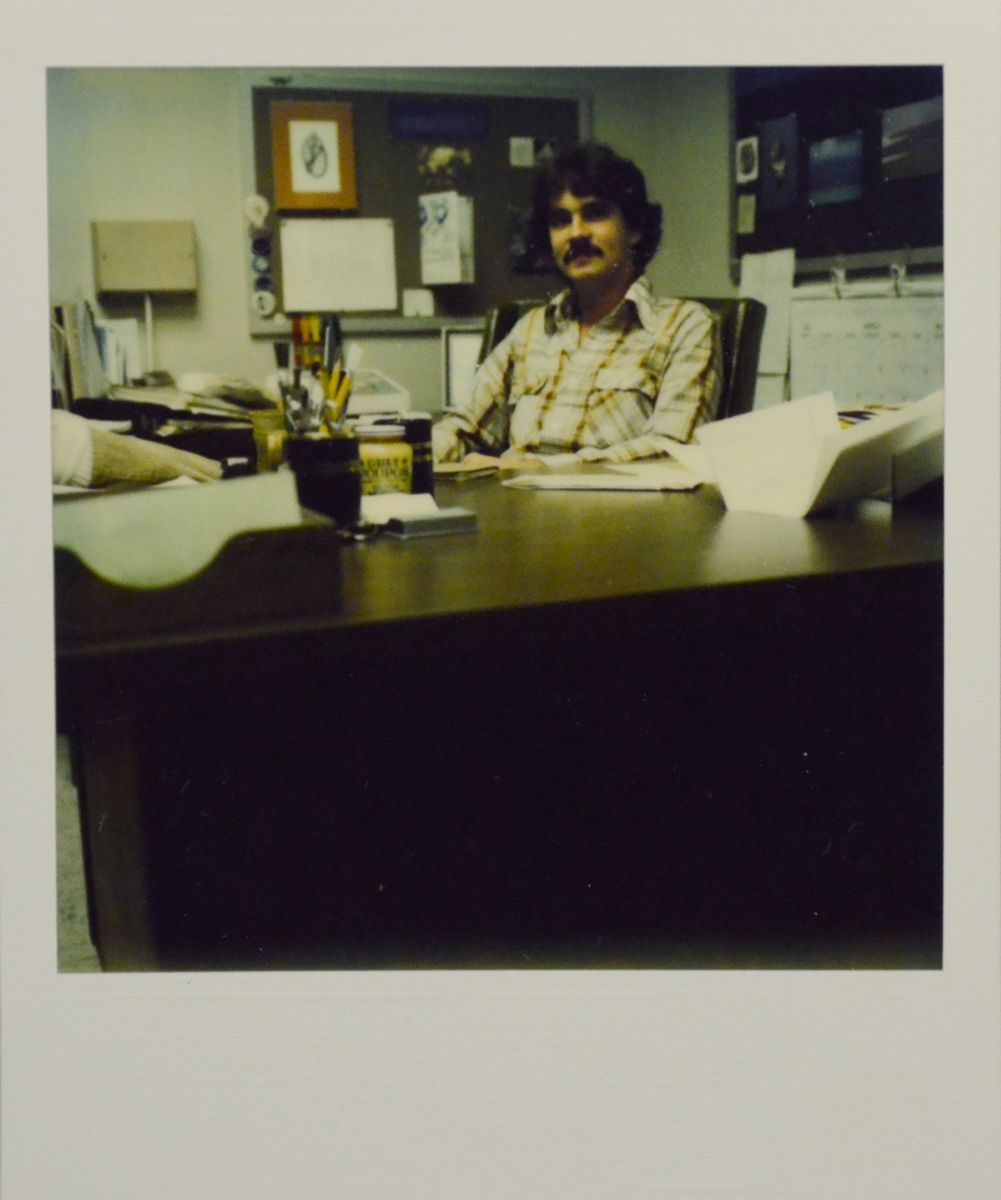
The evolution from the small, state-owned facilities to one of the most popular tourist destinations and conservation organizations in the state is really something we can all be proud of, he added.
‘Birthday Splash,’ ‘Rock the Reef’
The “Birthday Splash” on Saturday, which is included with admission, is expected to be a “vibrant ’70s-inspired day” featuring special animal encounters, hands-on themed crafts, historic photos and video exhibits throughout the aquarium, a 1970s-themed selfie photo booth, and birthday treats.
That evening, the aquarium will be transformed into retro-inspired lounge for “Rock the Reef,” which continues in the 1970s vein. Open to those 21 and older, the event will feature live dueling piano music, curated food and beverages, a ’70s outfit costume contest, and a celebratory toast with a commemorative champagne flute.
“We’d like to thank our local community for all of the support they’ve given us over the last 50 years,” Pine Knoll Shores Aquarium Director Clint Taylor said in a release. “To show our appreciation, we’re showcasing our history, sharing stories and photos, and highlighting our progress and how much we hope to continue to grow.”
Tickets are $50 per person and $40 for members. The event is sponsored by Southern Bank with all proceeds to benefit the nonprofit Aquarium Society.
Other celebrations include Roanoke Island aquarium’s Golden Gala on Sept. 9 and a Birthday Bash on Sept. 12, a birthday party at Jennette’s Pier and Fort Fisher, which is undergoing a 30-month renovation project, is to hold birthday beach cleanup events throughout the year.