WASHINGTON – Five days a week, John Richards drives the roughly 15-minute commute from his rural Beaufort County home to the Bayview Ferry Terminal or, as he calls it, the “working man’s ferry.”
The half-hour ferry ride across the Pamlico River to Aurora shaves off about 45 minutes that Richards would otherwise have to drive to get to his contracting job at Nutrien. A three-hour roundtrip commute from his home in Pinetown around the river to the phosphate plant would simply not be sustainable, he said.
Supporter Spotlight
“Working over there is the best opportunity I’ve got,” Richards said.
Like so many Americans, Richards and his wife feel the pinch at the grocery store and gas pump.
The young couple must now absorb another expense: mandatory ferry tolls.
“It’s like the man sticking it to you again,” Richards said.
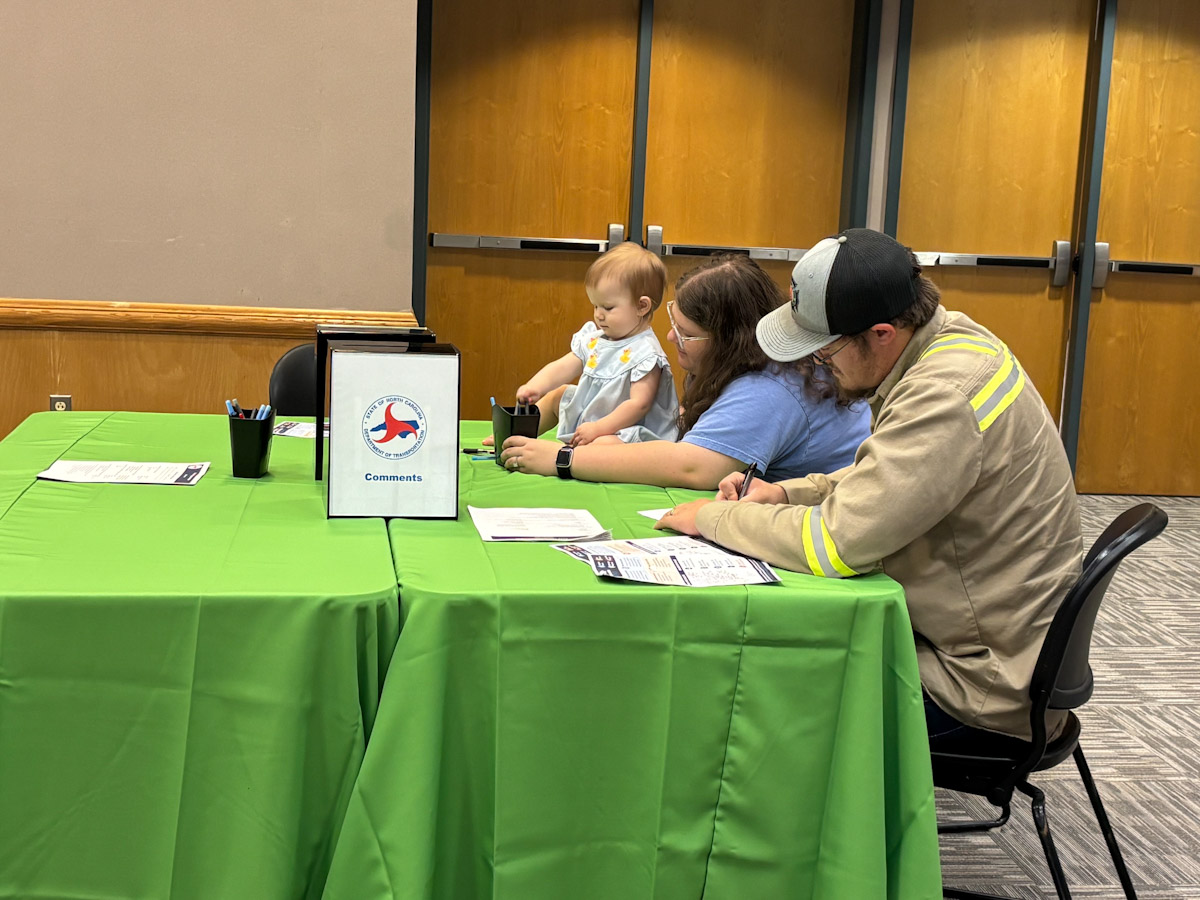
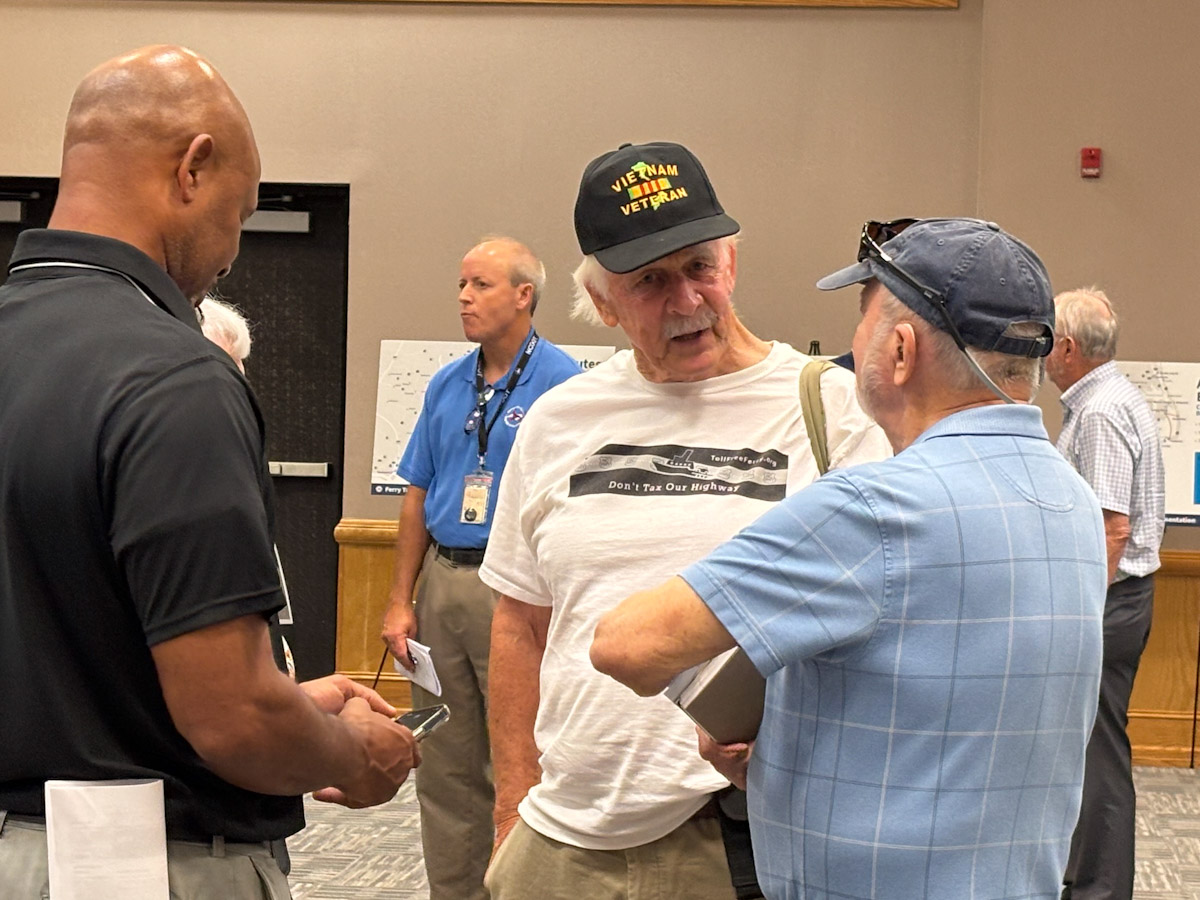
The Richards were among a little more than 30 people who flowed in and out of a public listening session North Carolina Ferry Division officials hosted at Beaufort County Community College on Tuesday evening.
Supporter Spotlight

It was the first in a series of meetings the division is holding through next week to get public feedback on the new law that mandates tolling all ferry routes by Jan. 1, 2027. Remaining meetings are Sept. 3 at Knotts Island Elementary School, Sept. 8 at the Graveyard of the Atlantic Museum in Hatteras and Sept. 9 at Ocracoke School.
Related: Officials plan public meetings to address new ferry tolls
The division operates four untolled ferry routes: Bayview-Aurora, Cherry Branch-Minnesott Beach, Currituck-Knotts Island and Hatteras-Ocracoke.
The state budget that legislators adopted earlier this summer is scant on details. Toll-generated revenue may be used only to buy new ferries.
The law does extend an offer to all permanent residents of the state’s 20 coastal counties and active-duty service members the option to buy a $150 annual commuter pass. That cost is per vehicle.
But other details, such as rates for individual trips and how payment systems will be implemented, have yet to be hashed out.
“We’re here to listen” to suggestions on those topics, N.C. Ferry Division Director Jed Dixon said at the meeting.
Residents who attend the listening sessions are given the opportunity to fill out a comment form, which asks questions including which ferry route the person most often uses, how frequently they use that route, how tolls will affect their daily travel, their preferred method of paying for tolls, the highest one-way toll they’d be willing to pay, suggestions regarding passes and accounts, and impacts they expect their community to experience.
Aurora resident Sherri Hollister said the little, historic town she calls home depends on tourists who flock to nearby beaches throughout the summer.
“We’re trying to build up the town,” she said. “If somebody has to pay for a ferry will they come to our town? The ferry is a tourist attraction in and of itself.”
But ferries are also the lifeblood for commuters going back and forth to work, taking their children to school, and going to medical appointments, she said.
“There has to be some kind of relief program for low-income families,” Hollister said of toll rates for permanent residents. “If not, they’re just pushing us away.”
Nearly a dozen coastal counties have adopted resolutions asking Gov. Josh Stein and state transportation officials to waive all tolls ferry system wide for vehicles registered in counties with ferry terminals.
Dare County commissioners on Tuesday joined Beaufort, Brunswick, Carteret, Craven, Currituck, Hyde, New Hanover and Pamlico counties in making that request.
The state ferry division operates 23 ferry vessels, which transport more than 1.4 million passengers each year.
Customers vary by route. For example, 82% of Hatteras-Ocracoke ferry riders are visitors, according to the division.
Meanwhile, 92% of riders on the Aurora-Bayview ferry route are residents, as are 80% of Cherry Branch-Minnesott Beach ferry customers.
“I vowed till my dying day to fight this thing,” Oriental resident Larry Summers said on Tuesday. “The ferries have to be sustained another way.”
He blames state funding cuts on the division’s aging ferry fleet, writing in a local publication that those funding shortfalls “appear to be, largely self-inflicted.”
“They did this to themselves,” he said. “They’ve been cutting the corporate income and individual income tax rates for about 10 years.”
Greg Piner, also of Oriental, wrote in a guest column published by TownDock.net that the simplest solution to fund new ferries is to raise the gas tax by one-tenth of a cent.
He refers to it as the “72-cent solution,” one that would generate enough annual revenue to “allow the Ferry System to focus on what they are trained to do: safely transport as many vehicles as possible every day across the rivers and sounds of North Carolina.”
Dixon said that the division will take a phase approach to implementing a tolling system ferry wide to meet the Jan. 1 implementation deadline.
The division anticipates presenting recommended rates to the North Carolina Board of Transportation at its Oct. 8 meeting. The board is expected to take action on those rates the following month, with a legislative report ready for submittal to Raleigh in December.