Almost everybody knows what mimosas are. Not the orange juice and champagne kind, although those are fairly popular in some circles, rather the plant world variety.
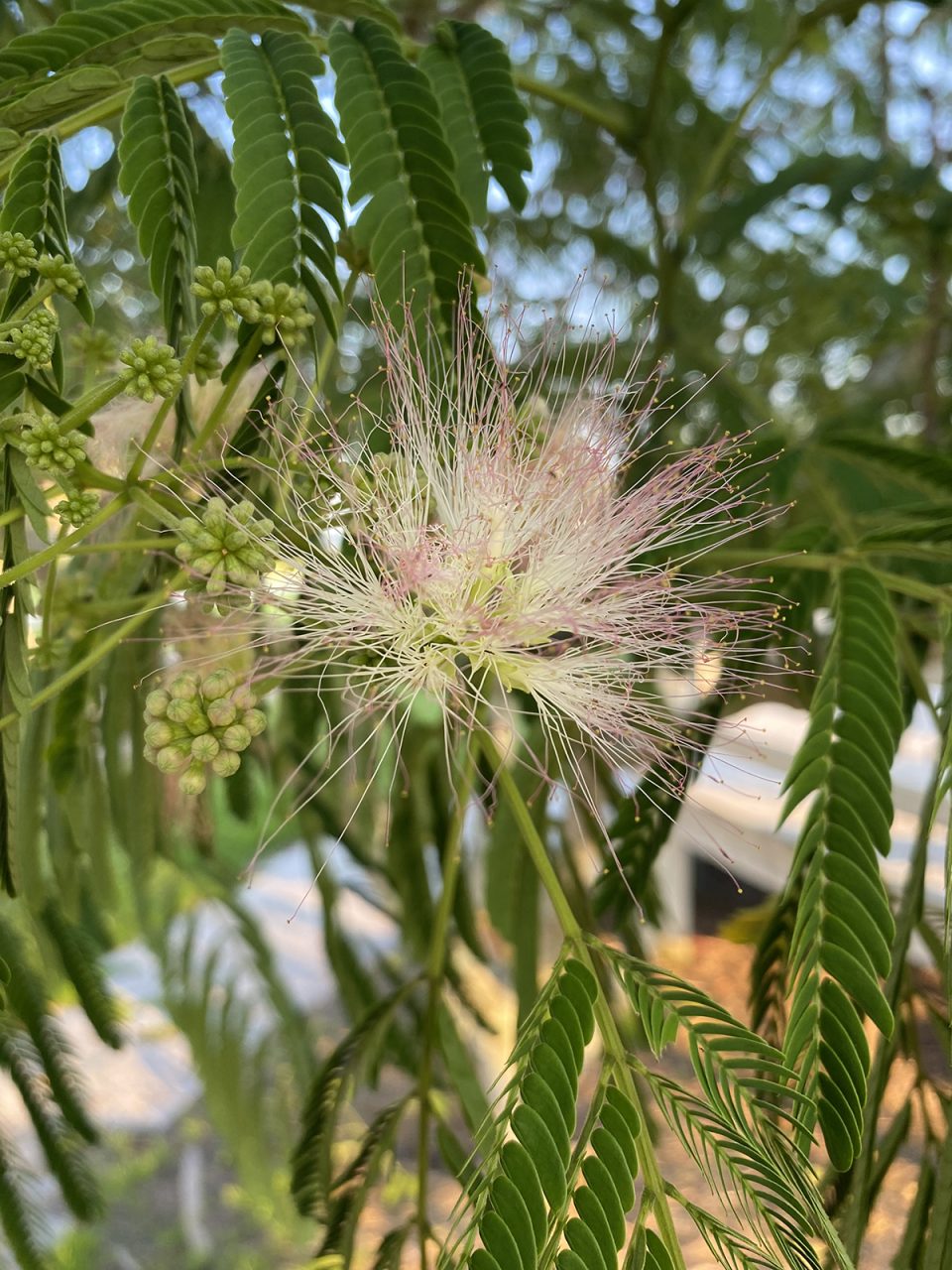
With their feathery leaves, distinct, fuzzy, pink blooms, and sweet scent, mimosas, or Albizia julibrissin, are unmistakable. Also known as Persian/Chinese silk tree or just silk tree, mimosas are native to Southern Asia from Iran to Japan. Introduced to the United States around 1745 as an exotic ornamental, it escaped into the wild.
Supporter Spotlight

And it liked its freedom. It really, really liked its freedom. Loved it so much it went wild, like the vegetative version of college kids on spring break.
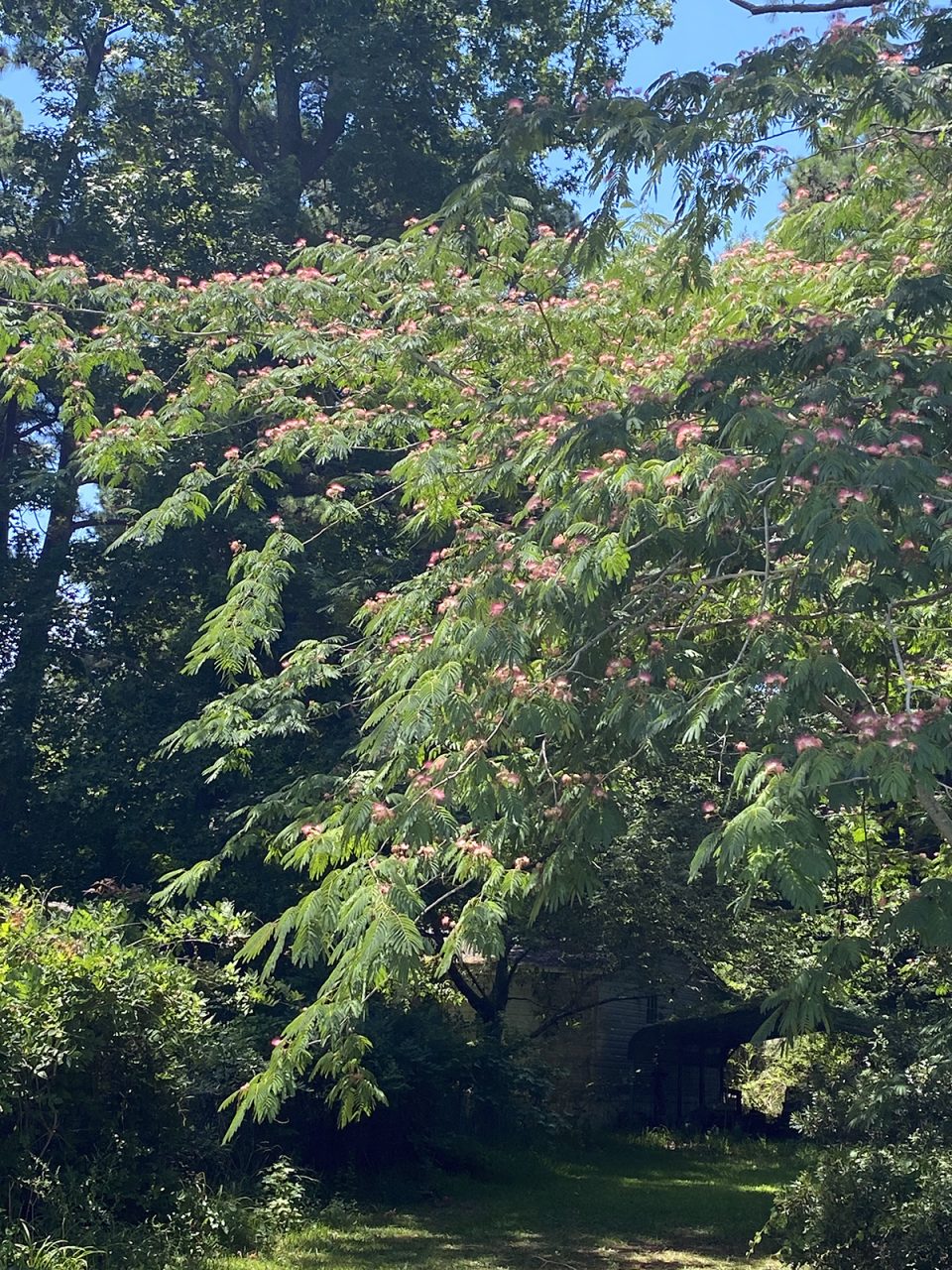
Considered invasive because of its tendencies to grow anywhere in pretty much any soil, mimosa can often be seen in the wild. It loves roadsides, vacant lots, and other disturbed places. Drought tolerant as well as salt tolerant, mimosa often forms dense groves, sometimes choking or shading out other more desirable plants. If you’ve traveled along Interstate 40 through the mountains any time lately, you’ve probably seen mile after mile of pretty pink blooms lining the highway.
Beloved for its tropical look, long bloom time during summer, and its distinctive flowers, the downside is its shedding. Lots of shedding. Shedding of branches, leaves, spent flowers, and seed pods. No matter how tempting the shade is, under their arching canopy is definitely not where you want to park your car, because of all the shedding.
As far as trees go, mimosa is short-lived, usually lasting around 30 years or so. Mimosas can spread through seeds, roots, or cuttings. In our area, they are susceptible to fusarium wilt, which often kills established trees or even groves almost overnight.
Used for centuries in Chinese medicine — known to that culture as “the Tree of Happiness” — to calm the spirit and lift the mood, the chemicals in mimosa are used to treat things such as insomnia, anxiety, cancer, and skin infections.
Supporter Spotlight

Mimosa flowers can be used to make teas or tinctures, and the inner bark can be boiled or dried for medicinal purposes. The flowers can be simmered and made into a soft, yellow dye, while the bark can be used dried, powdered or green to make light, earthy tans and soft browns.
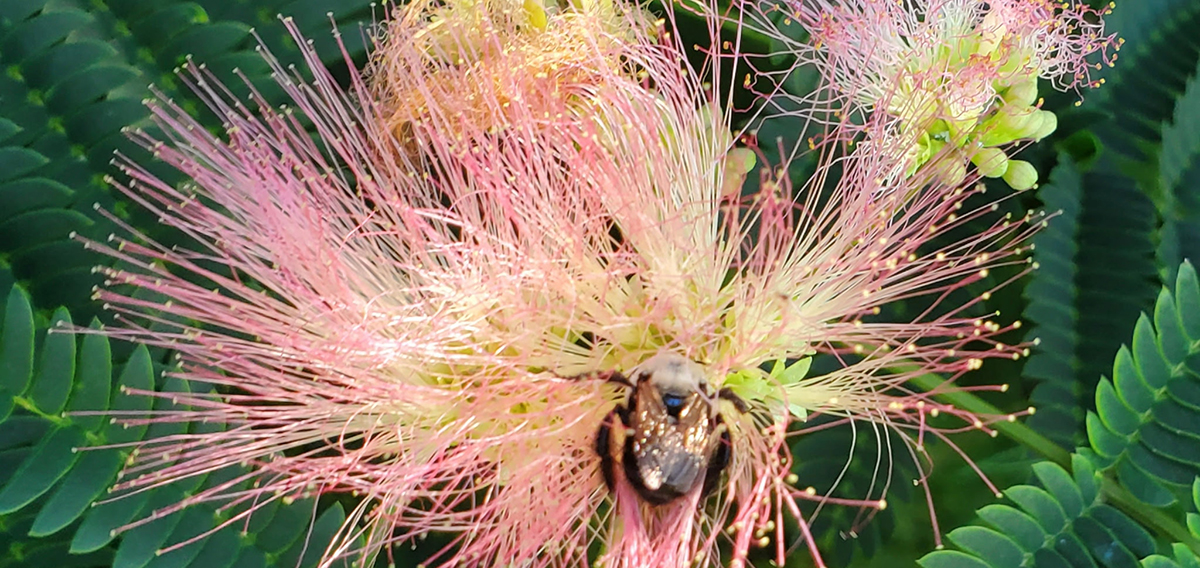
The sweet, light fragrance of mimosa flowers attracts more than just humans. Mimosa might be an invasive species, but pollinators love it. Butterflies, bees of all sorts, and not to mention hummingbirds love the powder-puff looking pink tufts of sweetness.
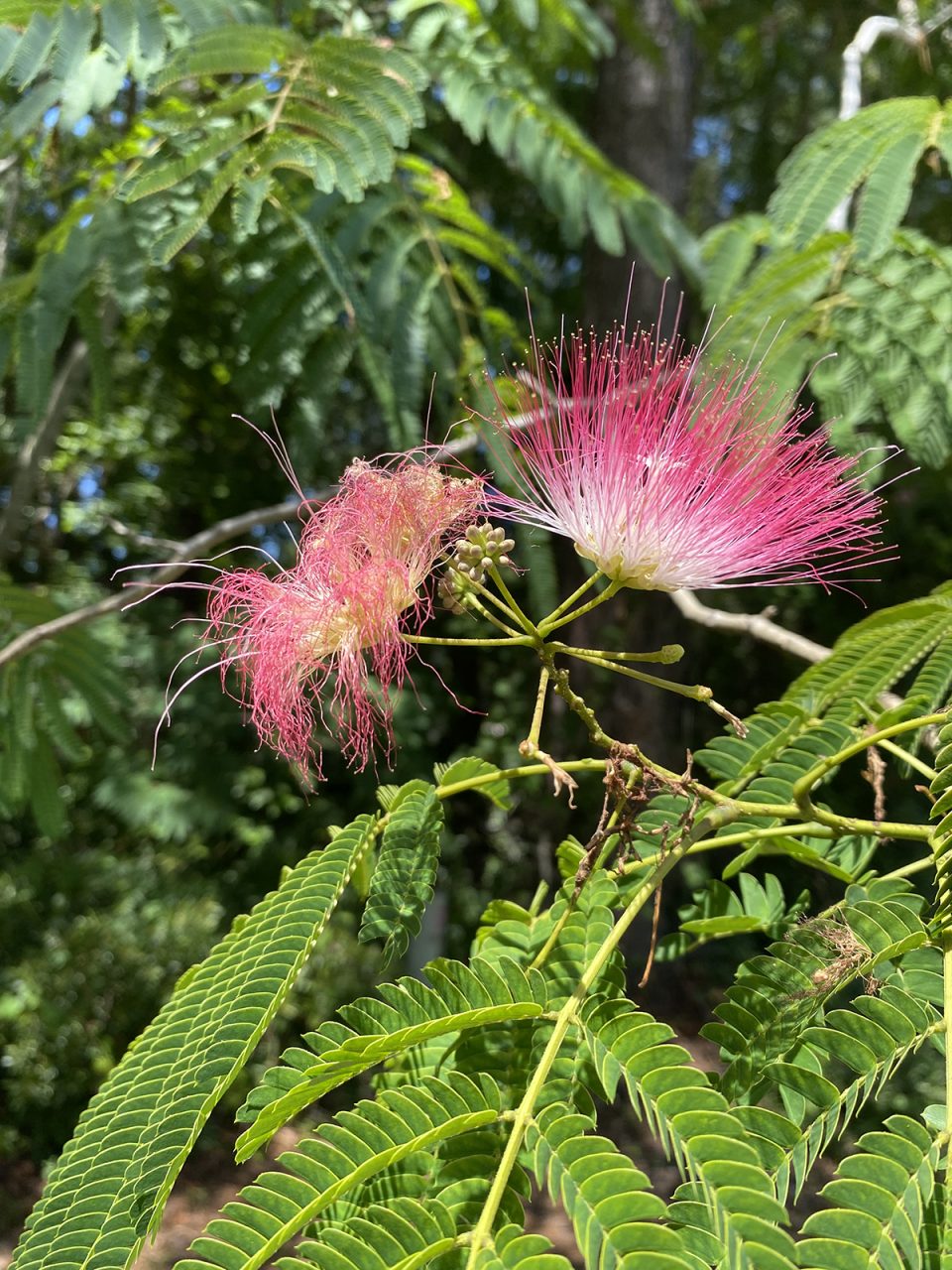
We tend to think of mimosas as being a standard pink color, but if you look closer, they can vary from light cream to darker pink to rose.
Their leaves, in a stadium “wave” type movement known as nyctinasty, fold downward and close up when it gets dark or during rains, sometimes even when you touch them. This is called turgidity, the process by which plants hold their shape. Loss of turgidity is what allows mimosa leaves to go limp and fold up. Caused by rapid movement of water and potassium ions away from the leaves by specialized motor cells called pulvini, this action is thought to conserve water and discourage hungry herbivores from nibbling.
Members of the legume family, mimosas pull nitrogen from the air and help build soil, a process known as nitrogen fixing. They also produce a chemical that inhibits other plants from growing nearby.
While mostly beloved, mimosas are classed as not merely invasive, but most sincerely invasive in North Carolina. Because they spread so easily — each one of their many legume-like seed pods can hold up to 12 or so “beans” — especially near water sources where the pods can easily be dispersed over long distances, mimosas can be extremely difficult to control. Since the seeds are also spread by wind, our coastal area is especially susceptible to mimosas popping up everywhere: in garden beds, sidewalk cracks, any available spot of soil they can find.
So how can you get rid of them? For the record, that question makes me want to cry. And yet, kind of like someone from “Off,” that geographic place name for anywhere but the central stretch of North Carolina coastline, no matter how long they’ve been here, mimosas will never be natives. No matter how many of them become established, they don’t belong.
Mimosas can be killed by girdling their trunks. Not that kind of girdle, but girdling as it pertains to trees, which simply means cutting a strip of bark all the way around the trunk so vital fluids can’t travel up and down. Small mimosa shoots will probably pop up along the roots, and often from the trunk below the girdled spot. These volunteers can then be sprayed with herbicides.
The whole tree can be cut down, just make sure to paint or spray the stump with herbicides. Sigh.
If you can’t live without the mimosa’s unique Dr. Seuss-like flowers and growing habit, try planting some — supposedly — sterile varieties, such as Merlot Majik or Summer Chocolate. Planting sterile varieties won’t get rid of the plethora of naturalized mimosas, but it can possibly cut down on the spread while allowing you to enjoy your mimosa – possibly even sitting under your mimosa while sipping on your mimosa.
In lieu of planting mimosas, try the following native trees instead: Eastern Redbud (Cercis canadensis), white fringetree (Chionanthus virginicus), sourwood (Oxydendrum aboreum) or buttonbush (Cephalanthus occidentalis). Bottlebrush buckeye (Aesculus parviflora) is another recommendation.
You will be happily amazed by just how many pollinators these natives entice to your yard. Although the seemingly indomitable mimosa isn’t a very good example, natives for the most part, are less susceptible to diseases and insects than nonnatives.
Whether you love mimosas, hate them, or just plain don’t care either way, try to be mindful of the plants you plant. If the first person who introduced mimosas had known what a plague they’d become, they might not have been so eager to try growing them here.
On the other hand, they had no way of knowing what would happen, and mimosas seem like desirable small trees, adding a tropical flair to your landscape.
The most we can do now is make the best of a bad situation. Maybe the medicinal benefits of mimosas will someday outweigh their invasive tendencies.