High tide is going to be just before dark. It gives the water in the shallows enough time to cool off. The fish will come.
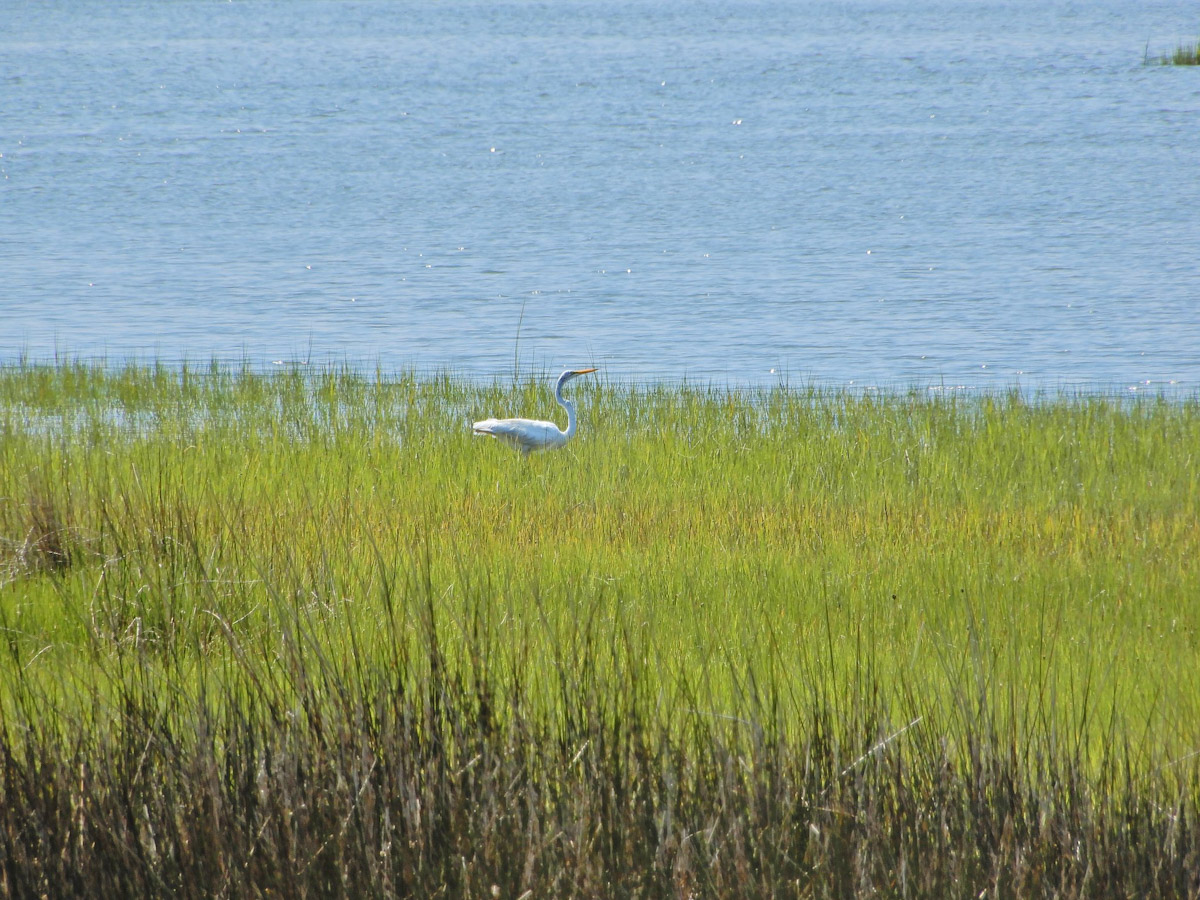
We’re going to be fishing the flooded spartina marshes. These are areas with skinny, twisty creeks and soft, muddy bottoms. On the banks of these creeks grows spartina grass.
Supporter Spotlight

Very tall grass grows closest to the creek. The bottom in these areas is extremely soft. As you go back behind the tall grass, it grows shorter and the roots are intertwined, creating firmer areas on which a person can walk.
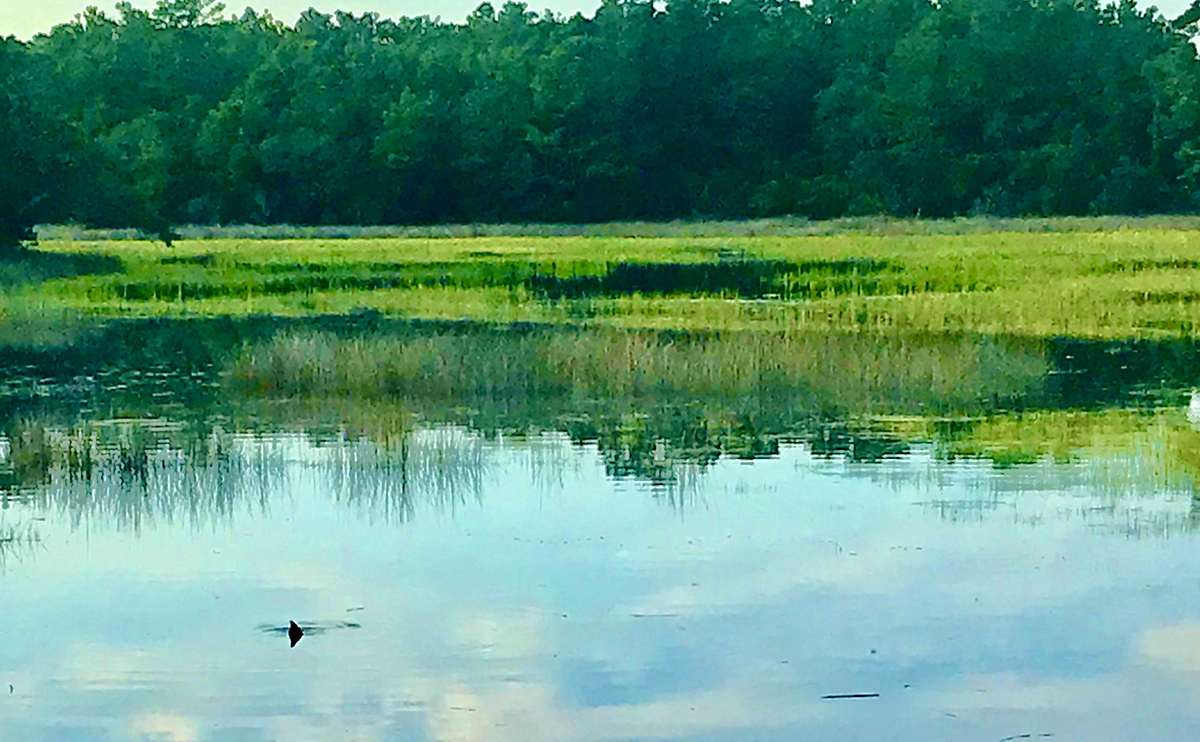
There are millions of fiddler crabs here. Most of the time, there is no water, and the crabs lead an almost idyllic life. They sift through the mud for tiny food items, they dig little holes, and they try to find a companion with which to make tiny crabs. Their only problems, most of the time, come from birds, and they do their best to stay away from them.
A few days each month, on high tides around the full moon, the water rises high enough for redfish. When they can swim up onto these spartina flats, they are only thinking about one thing: eating those crabs. The water is especially shallow, compared to the channels, but for a brief span of hours, the fish have no trouble getting around.
The cool thing for anglers is that the fish are visible from above. A shallow-draft skiff can be poled onto these flats, and savvy anglers who know what they are looking for can see them prowling. Then it’s simply a matter of presenting a tempting offering. Rig flyrods with flies that imitate small crabs.
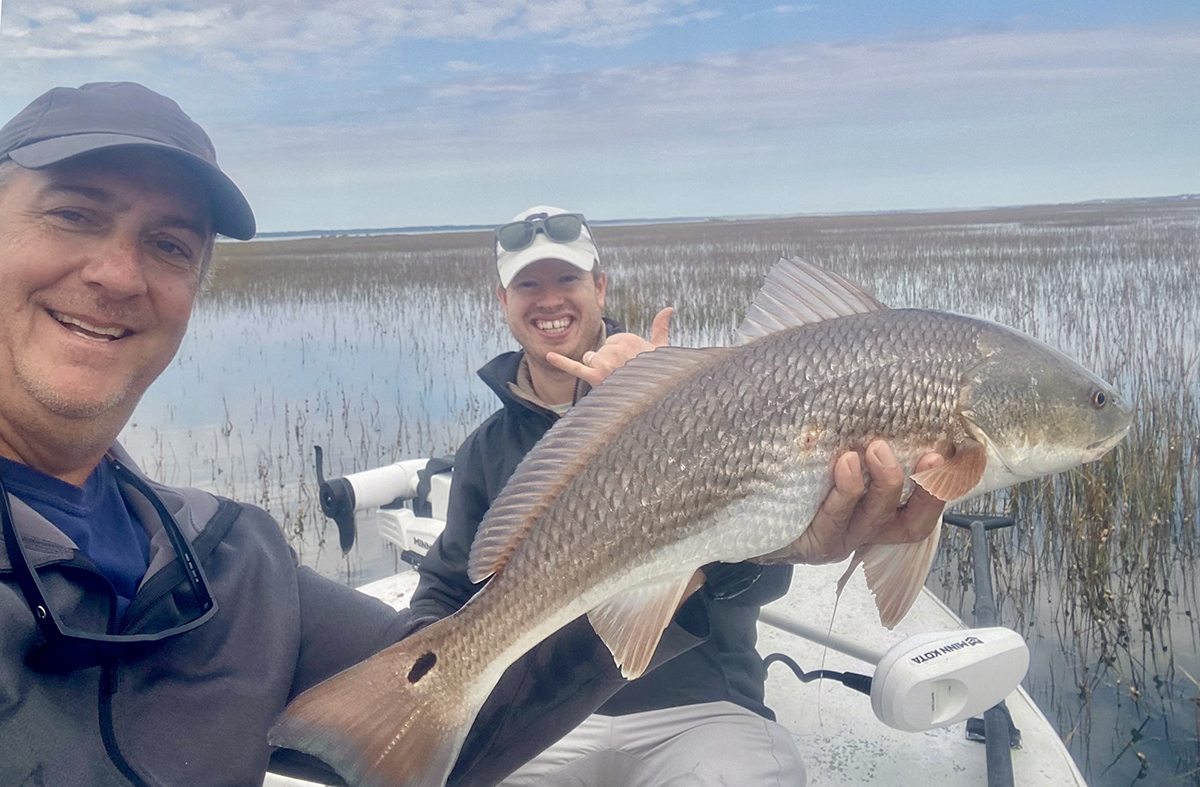
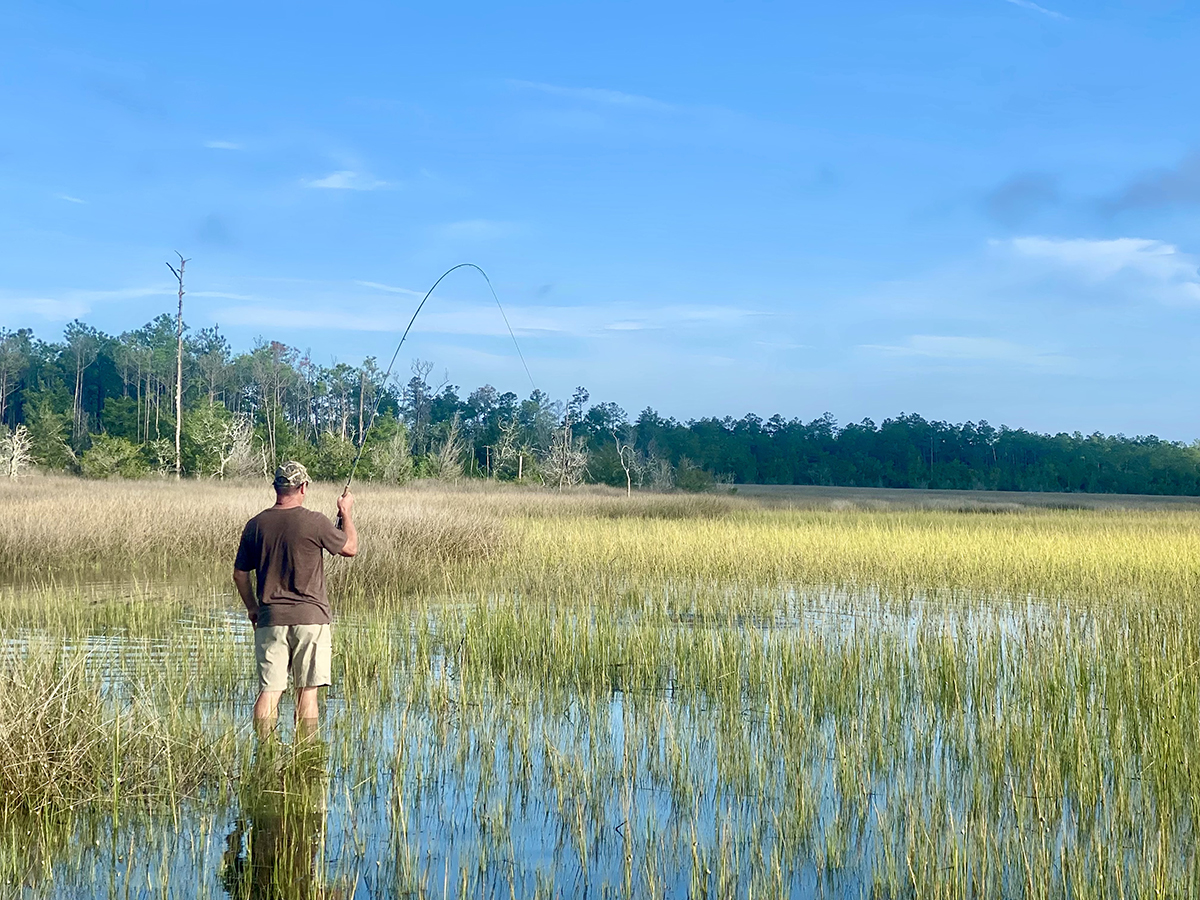
When we first get to the flat, we’re planning to wade-fish and go in different directions. As the water gets higher, after an hour or so, we will get back together and fish from the boat, with one poler and one angler.
Supporter Spotlight

After pulling into the creek, we drive the boat to the edge of the flat and pole back a ways. Stake the boat off and put on wading boots. We compare flies and decide which way each would walk. We agree to meet back at the boat in an hour. Perfect.
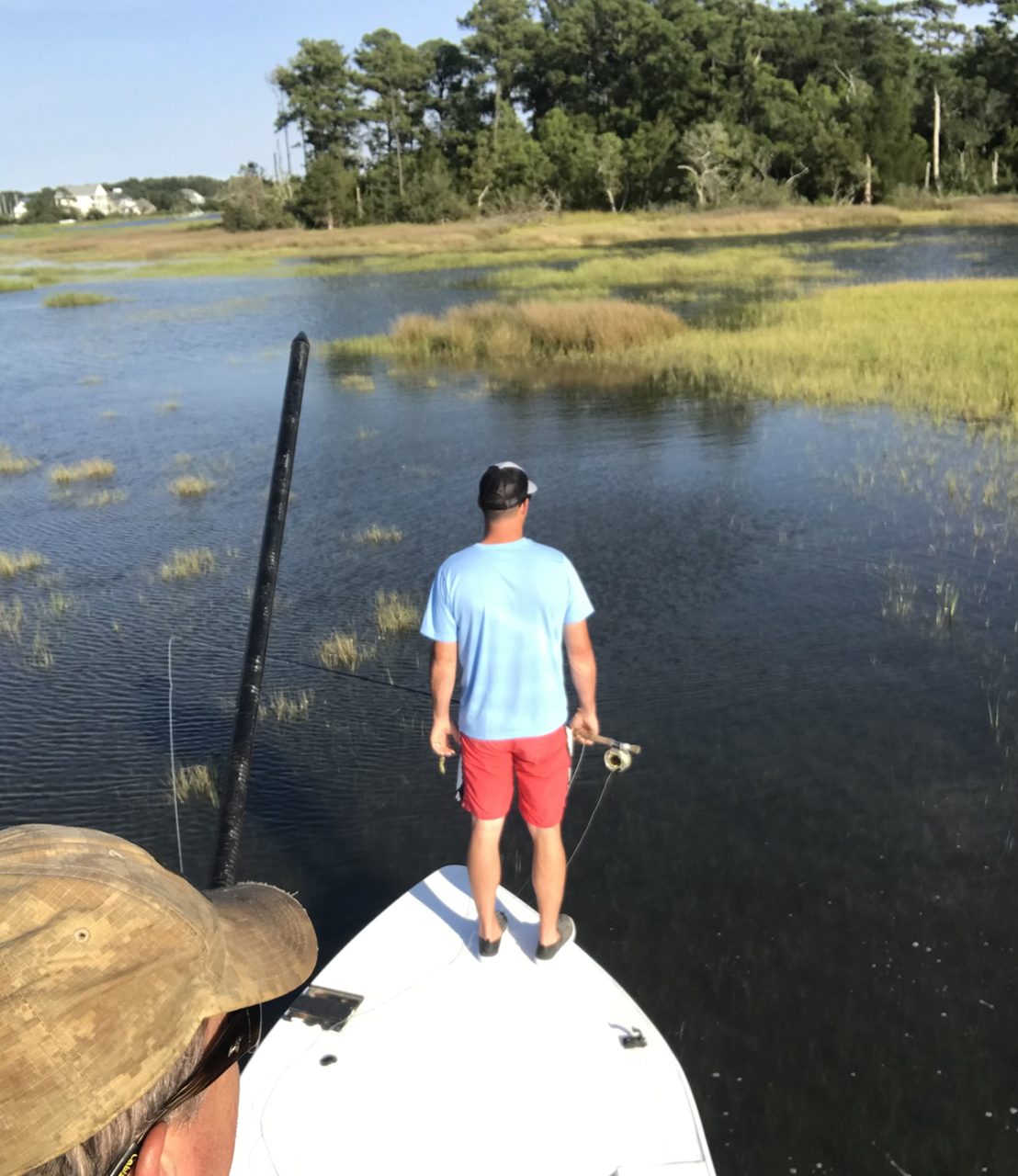
Start stalking along the flat. What we are looking for are the tails of actively feeding redfish or the backs of cruisers. The tail is easier to spot as it sticks straight up and makes a splash. The backs are tougher, but these fish are easier to present with a fly because of their horizontal body position. Their mouth is right in the perfect position to grab a fly, whereas one tailing, or “standing on its head,” can sometimes be difficult to pin down the exact body position.
There is a slight swirl. Sometimes these swirls are made by mullet or other small fish called mud minnows as they feed or swim. Often a blue crab will be seen crawling up a grass stalk trying to get a hold of one of the small snails clinging there. This swirl was the right shape and size to indicate that it was made by a redfish. Someone less experienced might not have even noticed it.
Immediately stop.
The fly is between the left thumb and index finger. It’s a crab imitation of a unique design. To avoid fouling in the shallows it swims with its hook pointing upwards. A weed guard made of two strands of stiff monofilament fishing line helps keep any gunk off. Sixty feet of line is ready to go. All that’s left to do is determine which direction the fish is moving.
Then we see the back and the very tip of the tail, not even an inch of it. From this, we can tell it is facing from left to right. It sits there, about 50 feet away.
Just wait.
When the fish begins to move, you slowly begin to false cast. Once, twice. There is enough line out. Land the fly about 2 feet in front of where the head is, and just far enough beyond its line of travel to make the fly appear to be a crab struggling to get away from its predator. It lands perfectly with hardly a sound, about 4 feet past and 2 feet beyond.
Begin a slow retrieve. Try to imitate that struggling little crab needing to get back to safety. The distance narrows. With a strong burst from its tail, the redfish closes the gap, inhales the fly.
Pull the fly line tight and set the hook. We know right away it is nicely sized fish, over 30 inches probably. It takes off, heading toward the creek channel and perceived safety. Deep water. This is going to be a problem, because the closer we get to the edge of the flat, the softer the bottom becomes. The only chance is to stay back from the edge and then try to work the fish back to where we can stand safely.
It’s quite a distance out. The whole fly-line is off the reel and there is the fish as its tail flops. Slowly we’re able to get the fish turned back and start to regain line. As it gets closer, we get a better look. It’s definitely big. We’ve caught a 32-inch fish on the grass flats years before and had caught a few over 30 inches over the years in different ways.
This is bigger than all of those.
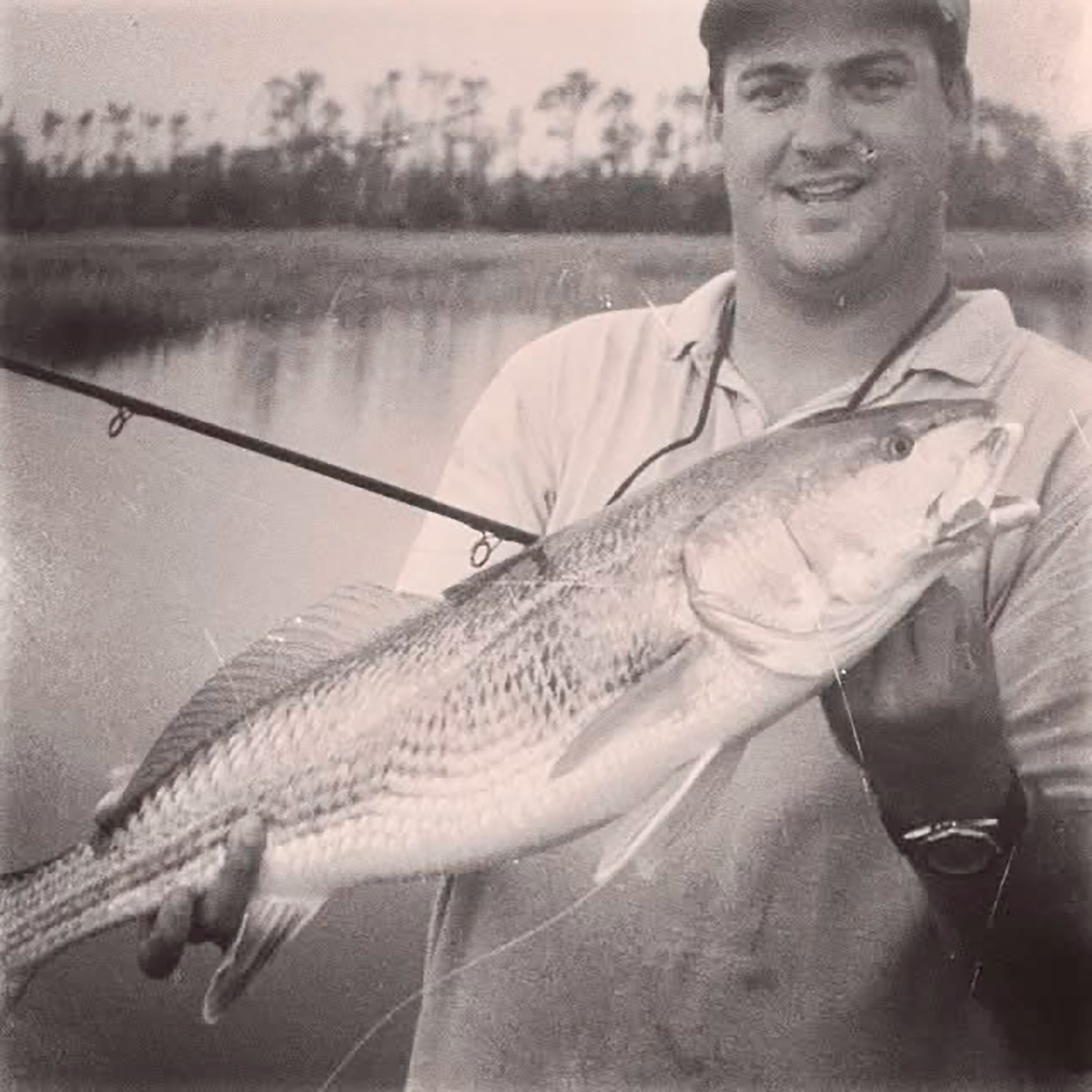
As it approaches the mud bank, there is some worry about getting it up and over. Another step forward and we will sink in mud up to our armpits.
We get it coming toward us with a combination of fast reeling and side-lifting the rod, and it’s just able to get its head up and over the bank. This is pretty much the end of the fight as the fish is out of energy and the shallow water doesn’t give the tail any purchase. Reach down and cradle it under its belly and lift.
Hold it up alongside the rod and see that the fish is longer than 32 inches, more than 15 pounds. It’s the biggest Carolinas flyrod redfish ever. Quickly take a couple of photos. Get the hook out. Carefully lay the fish back into the water and hold it there. It’s a little tired and at first it’s not sure what it to do. Support it and help it get water over its gills by gently pushing it back and forth. When she starts to sweep her tail with some authority, let her go. With three or four nice moves, she’s back into the deeper water.
She’ll be okay and go on to make some nice redfish babies this year.
Catching a fish like that is pretty rare. It’s a moment to savor.