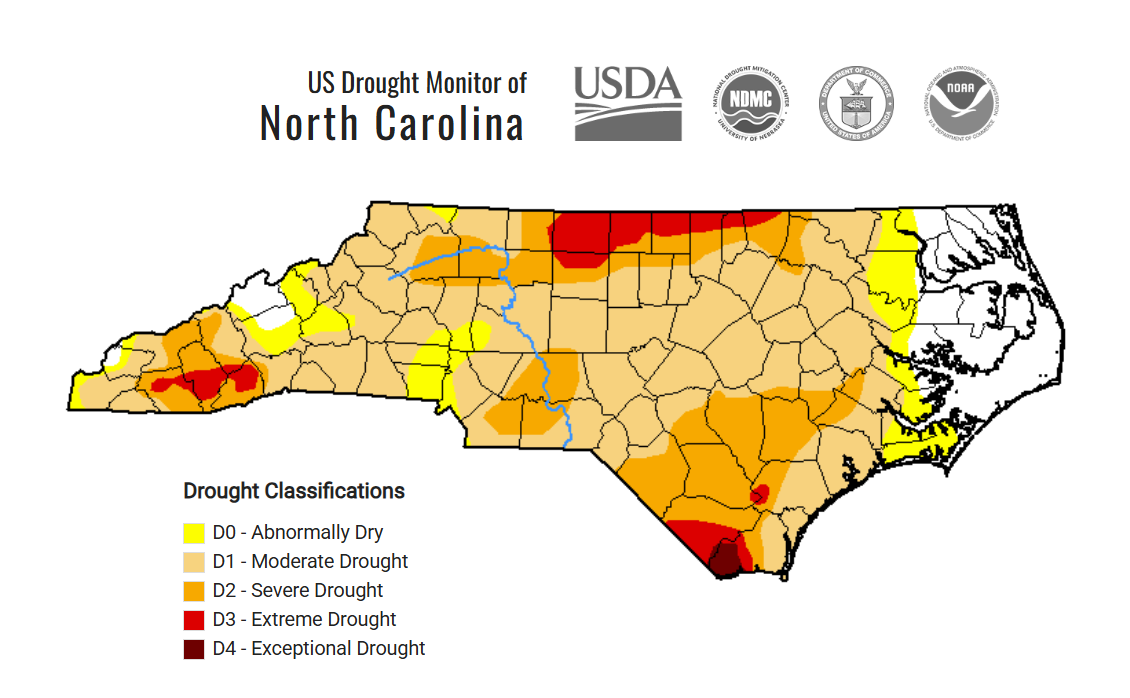
A portion of Brunswick County continues to experience the worst drought conditions in the state.
According to the U.S. Drought Monitor report released Thursday, widespread drought throughout much of the state has been eased by recent rainfall, but “most of the state is still in moderate to severe drought.”
Supporter Spotlight
Between July 28 and Tuesday areas in eastern North Carolina received more than 2 inches of rain, which helped ease drought in the Coastal Plain.
The public is encouraged to continue to conserve water because many reservoir levels are still below normal.
Near-normal rainfall of about 1 inch fell in some areas of the state last week. It is estimated that nearly 1 foot of rain fell in Surry County throughout last weekend. Rainfall in that county, which is in the northwestern part of the state, caused the worst flooding that area has seen in nearly 50 years, according to the release.
Waterways including Tanasee Creek, Wolf Creek and Bear Creek lakes in western North Carolina, and Lake Norman and Lake Wylie in the Catawba basin remain below target elevations. Falls Lake in Durham, Wake and Granville counties is nearly 3 feet below normal. W. Kerr Scott Reservoir and Jordan Lake are at their target levels.
“A rainy July brought steady improvements in drought conditions across most of North Carolina,” Klaus Albertin, chair of the North Carolina Drought Management Advisory Council and Water Resources Engineer with the N.C.Department of Environmental Quality’s Division of Water Resources, stated in a release. “Groundwater and reservoir levels have been slower to recover. It’s only the beginning of August so we expect higher temperatures and increased water demand for at least another month.”
Supporter Spotlight

State officials advise water systems in counties in exceptional or extreme drought to follow their water shortage response plans and water use reduction measures. Water systems in those areas are required to report weekly water use and conservation status on the Water Use Reporting website.
Residents may check with their local water supplier for information on use restrictions and for tips on ways to conserve water.
The N.C. Drought Advisory Council meets weekly and submits drought condition recommendations to the National Oceanic and Atmospheric Administration, U.S. Department of Agriculture, and the National Drought Mitigation Center for updates to a map of the nation’s drought conditions.
The council’s map is updated every Thursday, based on conditions through the previous Tuesday.