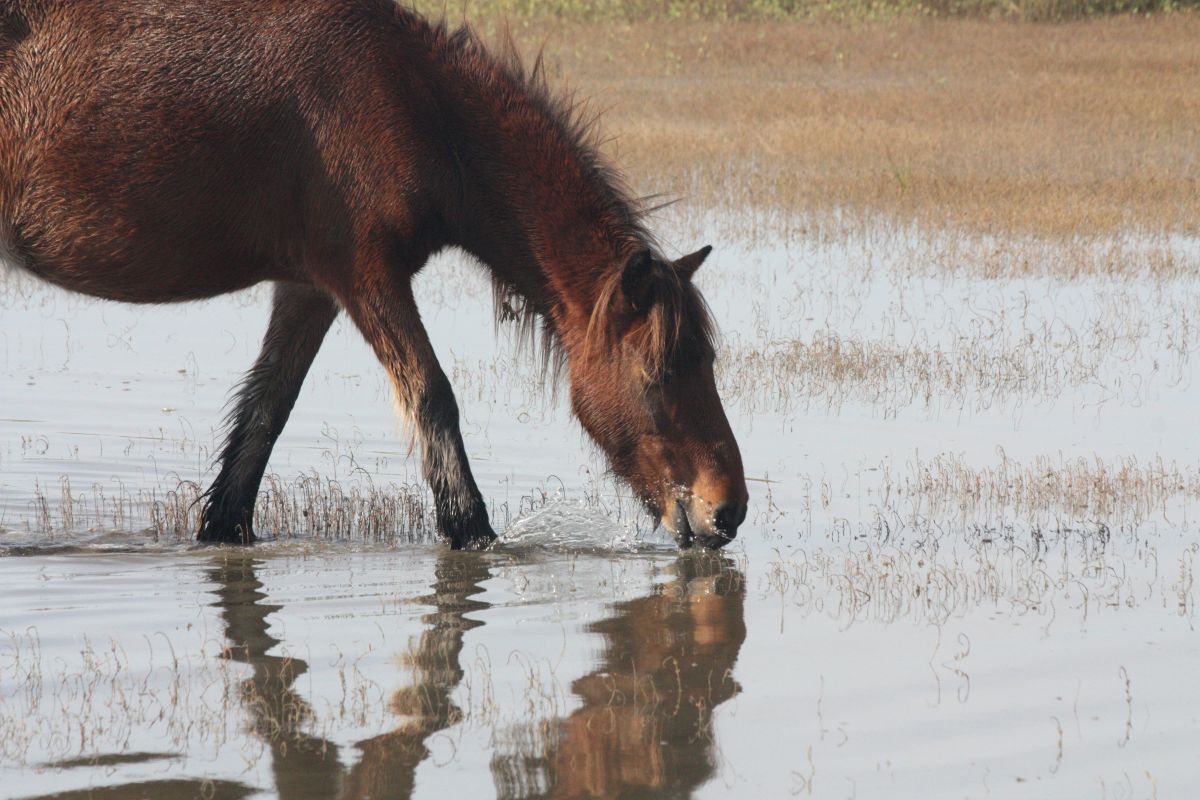
The hundreds of thousands of visitors who come to Carteret County each year to observe the wild herd roaming free on Shackleford Banks wouldn’t have much to see if the National Park Service’s proposal in the mid-1990s to dramatically reduce the herd had come to pass.
But when talk began in 1995 about removing a large portion of the wild horses to preserve island vegetation on the undeveloped barrier island, a part of Cape Lookout National Seashore, a group created a nonprofit to fight on behalf of the horses and won.
Supporter Spotlight

According to the grassroots nonprofit, the Foundation for Shackleford Horses, formed on Aug. 9, 1996, the park service’s plan to reduce the herd was detrimental, “Because you are talking about something that people identify with this place as much as they do the lighthouse or fishing or the beaches. The horses are an intrinsic part of this place, and this place is an intrinsic part of each one of us that loves it and calls it home.”
Foundation President Margaret Poindexter said the nonprofit evolved after a handful of concerned residents first gathered at public meetings, and then at public protests, in 1995. The foundation members consulted with scientists and collected data, research, and historical information, and approached then-Congressman Walter B. Jones Jr. to help protect the herd.
“Together, they stood up to the government’s ill-conceived policy proposal and blatant disregard for local interests, cultivated public, and eventually, bipartisan political support for their issue, which ultimately resulted in the enactment of unprecedented federal legislation in 1998, the ‘Shackleford Banks Wild Horses Protection Act,’ to ensure preservation and protection of a treasured resource, an ideal, a value,” Pondexter wrote in an email.
Since the legislation passed in 1998, the foundation has been cooperating with the National Park Service to make decisions about contraception, remove horses from the herd, veterinary intervention and humane euthanasia to end a horse’s suffering. DNA testing is also conducted to maintain the records documenting their lineage, and to monitor the overall genetic health of the herd, she continued.
The foundation is commemorating is 30 years at 5:30 p.m. Saturday, Aug. 15, at Core Sound Waterfowl Museum and Heritage Center on Harkers Island. Attendees are asked to bring a covered dish to share during the 6 p.m. dinner before the 7 p.m. program with special guest, behavioral ecologist Dr. Dan Rubenstein, who has studied the herd for decades and was one of the scientists consulted back in 1995. RSVP for planning purposes to shackhorsemail@gmail.com.
Supporter Spotlight

Poindexter said that Rubenstein’s “study of the horses has been instrumental in their protection and preservation” and the foundation “believes that, without the study and work of Dr. Rubenstein, the wild herd of Shackleford Banks would not exist today.”
The Princeton University professor and his graduate students have been studying and documenting the social behavior of the Shackleford horses for decades. He was named in 2008 Princeton’s Class of 1877 Professor of Zoology, an endowed professorship, and transferred to emeritus status in 2023.
Rubenstein, who had just returned to the United States from Kenya where he studies zebras, told Coastal Review last week that he remembers when the foundation’s founder and former president, Carolyn Mason, called him out of the blue 30 years ago about his decades of research on the herd.
“She said, ‘You don’t know me. I’m a librarian at Cherry Point, and we have a problem,’” Rubenstein said, “and she explained the problem, and we became friends. And the foundation was started. And long story short, the horses are still there.”
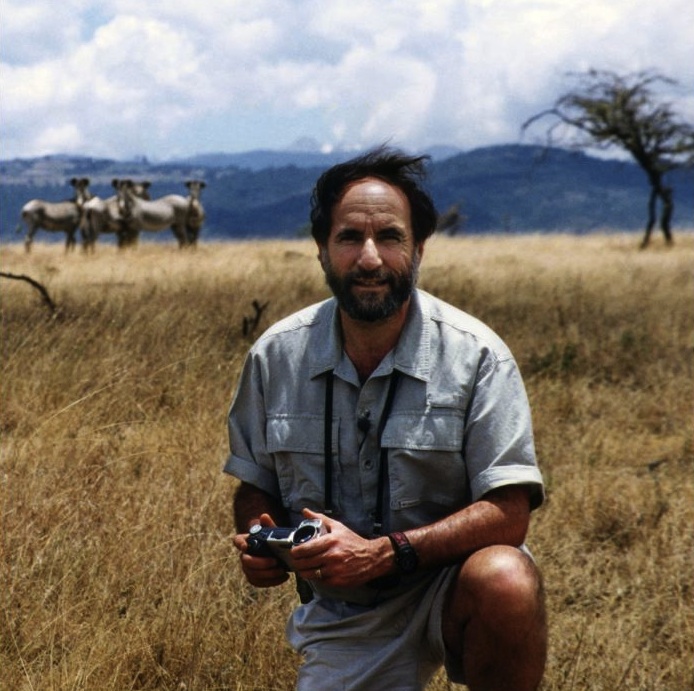
The equine ecologist learned about Carteret County’s wild horses almost by accident, he said, because of his interest in animal behavior while a zoology graduate student at Duke University in the early 1970s.
“I was on main campus, and I was at the beginning of this emerging field called behavioral ecology,” which Rubenstein explained as “behaviors related to the ecology, and it can go both ways. The behavior can change the ecology, or the ecology can impact the behavior.”
But, his interest in animal behavior started a few years before this while an undergraduate at the University of Michigan. He read a study on the family structure of the herd in the Pryor Mountains on the Montana-Wyoming border. The scientist who observed wild horse behavior looked at how the horses organize their social lives.
“I read his papers and said, ‘I want to study those horses’ and the one reason I did is that we were learning in our classes that animals live in groups largely because they have relatives in those groups,” even though “there’s no automatic benefits to living in groups, only costs.” This is because of competition for resources. The cost can be minimized through kin selection, the evolutionary theory that animals help their relatives survive so their shared genes are passed to the next generation.
“Virtually all animal societies are based around mothers staying with their daughters or sons staying with their fathers. So there’s a kin relationship. Horses and bats are unique in the sense that they’re like Western humans. Everybody leaves home,” he said. “Horses represented the toughest case to understand why animals live in groups because the genetic connectedness was not there. So I was interested in that.”
He had planned to head west and study the wild horses on Pryor Mountain but while on a visit to Beaufort in 1973 he learned that there were wild horses on Shackleford Banks.
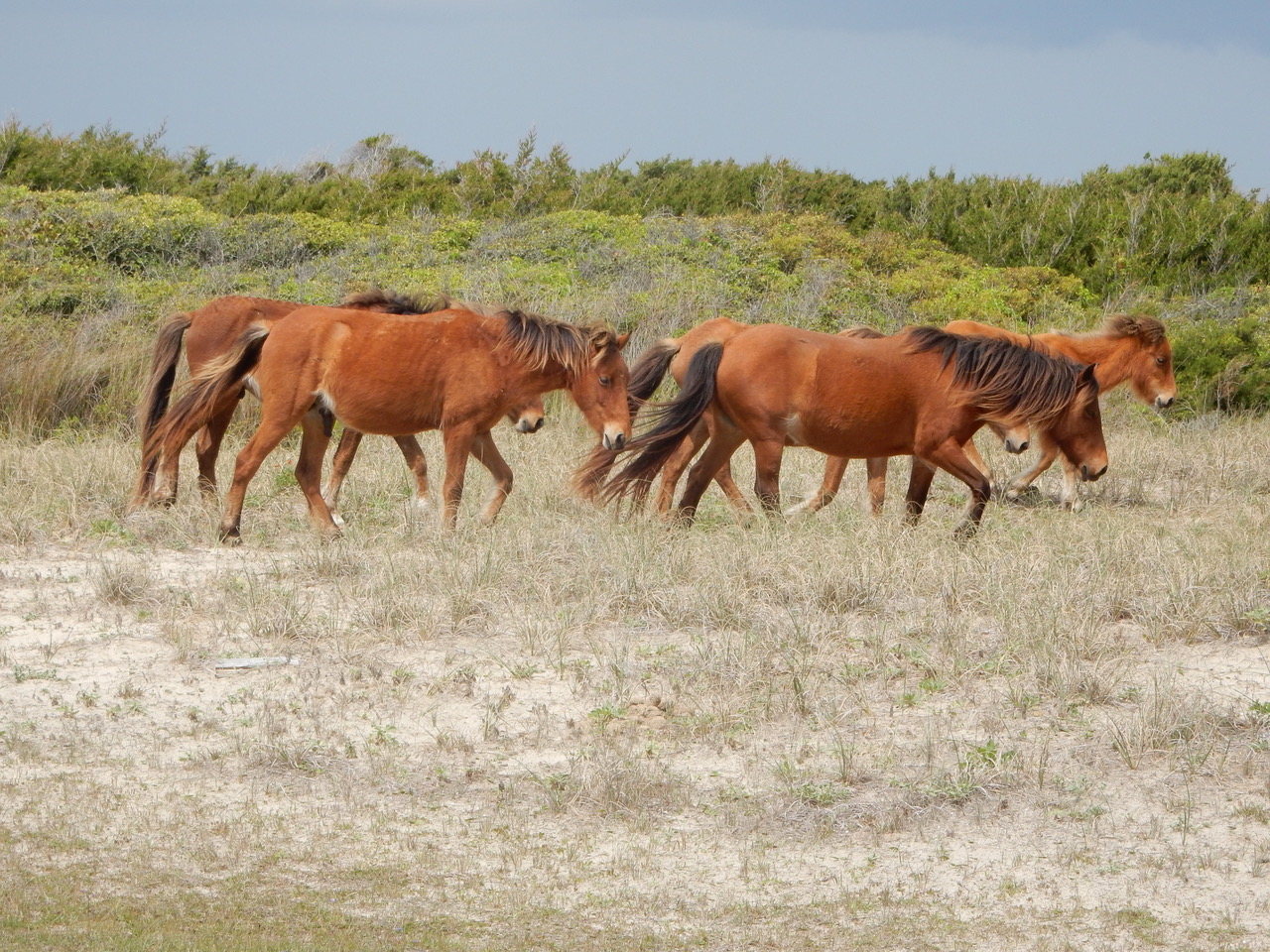
“I decided I’d go out and camp on the island for a week and learn how to study horses because I’d never studied horses. I didn’t have horses when I was growing up. I didn’t ride horses. I worked on crayfish for my undergraduate thesis at Michigan. I was in the river all the time, snorkeling, cold, miserable,” but with the horses, you can study the behavior.
“And that week was miserable. In the spring, it rained every day. The tent I borrowed had holes in the top. Didn’t have a fly,” but he met a local who had a fish camp on the island and told Rubenstein all about the Shackleford horses, including the myths surrounding the wild herd.
Calling the horses beautiful, he said it was fascinating how they were culturally connected to people from Harkers Island, one of the 13 unincorporated communities making up Down East in Carteret County.
“I also learned on my first trip that they were not behaving like horses should be. They were being territorial, and that has to do with the structure of the island. There are all these channels of water that come in, and the horses used those as boundaries that they didn’t have to mark. That would be dividing lines between groups, and so I got fascinated by that and that’s how I got started studying the horses. And one thing led to another, and the numbers that I had before they took the cows, sheep and goats off the island became the basis for the legislation,” he said, referring to when the park service removed the livestock but left the horses in the early 1980s.
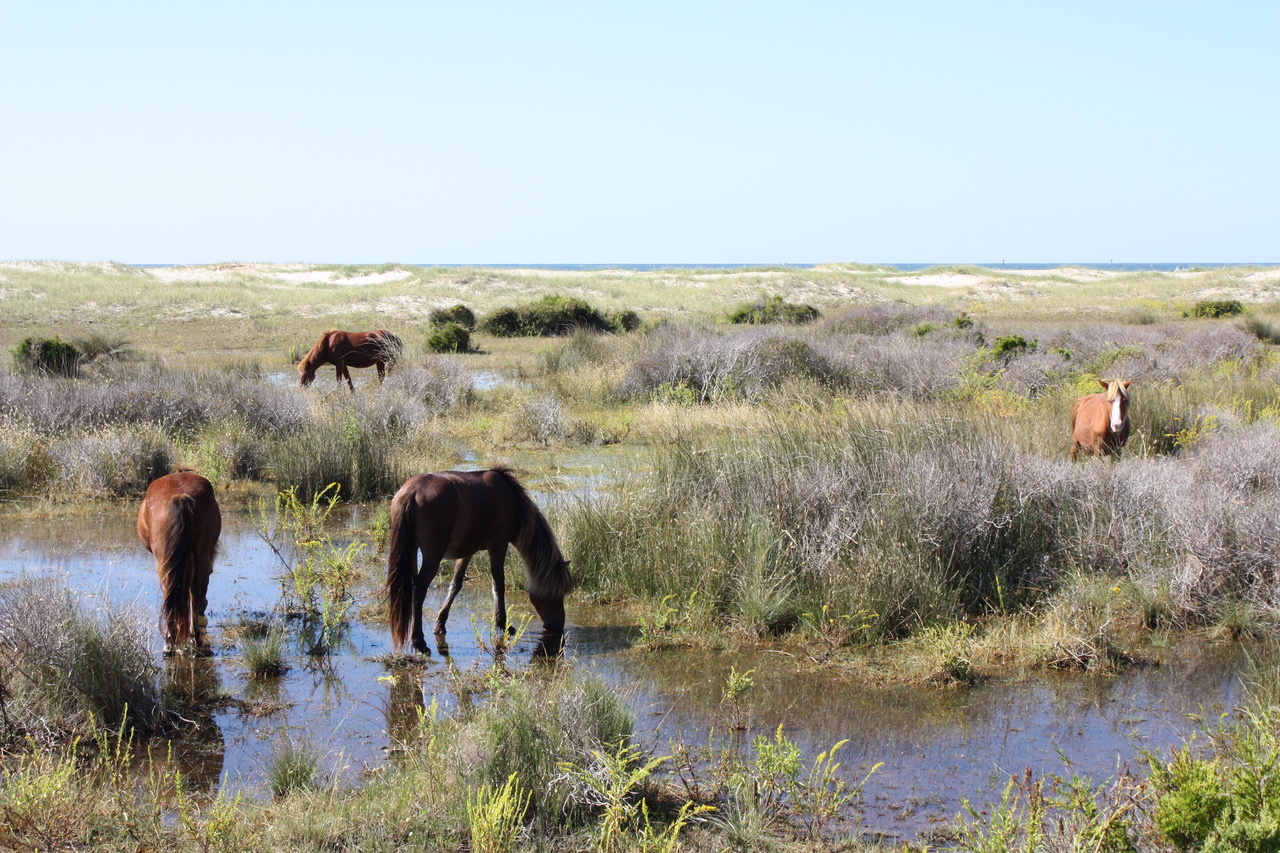
Rubenstein said he’s looking forward to his visit to Carteret County and talking about the process of coming up with the management plan. “I’ll talk on the secret lives of horses, but I’m also going to talk about the secret lives of management,” and how the conservation program was built.
The park service is mandated “to open the land up for the public, but it’s to have land that is stable, sustainable, protected,” Rubenstein said Wednesday. “And horses do have an impact. You know they graze; they’re going to change the plant composition. But by having the numbers at a low enough level, their impact is very minimal, and so the process by which we came up with the management plan is what I’ll talk about to the public next Saturday night.”