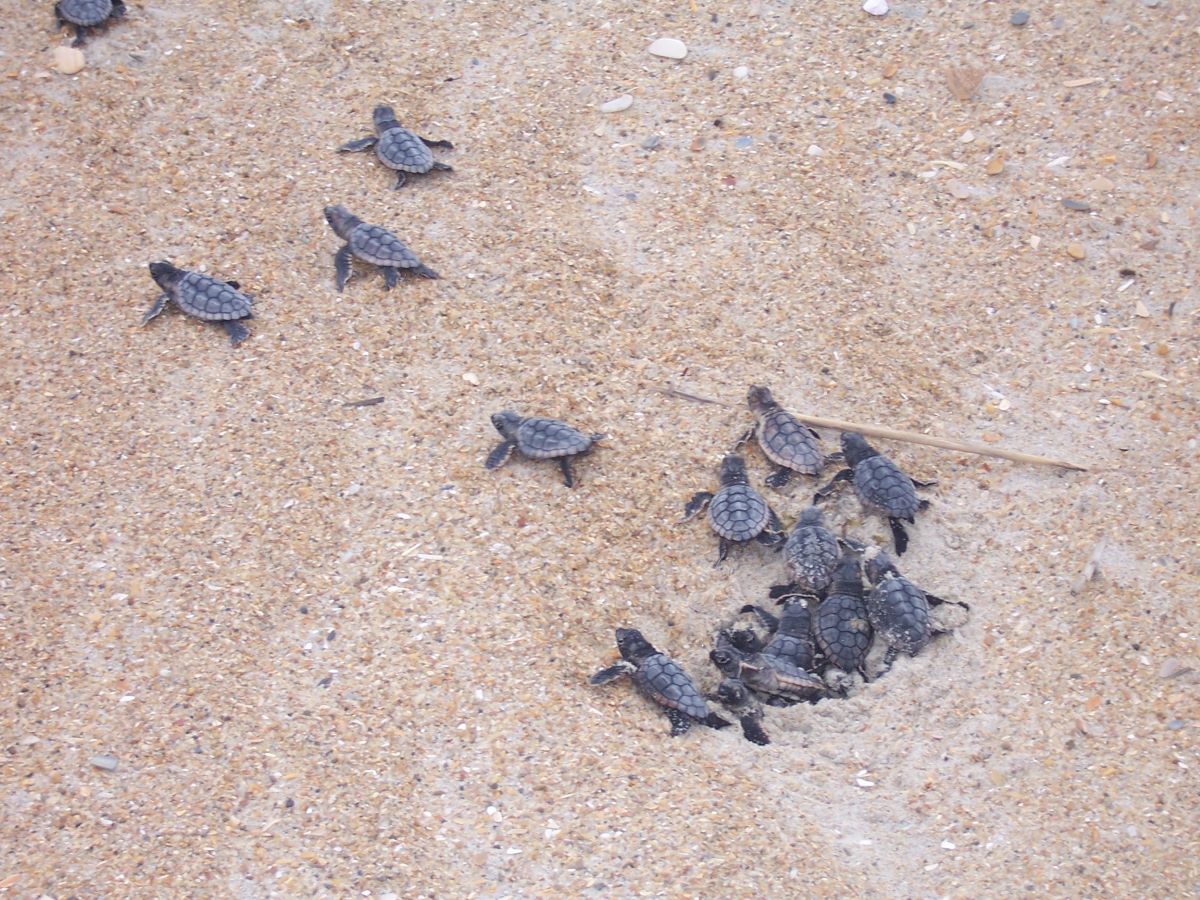
Driving to the coast in the hopes of witnessing freshly hatched sea turtles crawl their way to the ocean? Looking forward to sitting on the water-view porch of your beach rental to watch the birds?
If so, the North Carolina Wildlife Resources Commission is requesting five minutes of your time to complete a survey about your experience viewing birds and sea turtles on your visit to the southern coast.
Supporter Spotlight

The online survey is part of an ongoing study in which state wildlife officials hope to learn how wildlife viewing contributes to coastal communities and the state economies.
About three-quarters of roughly 3 million in North Carolina who identify as “wildlife viewers” take trips to experience the state’s wide array of animal species, according to the agency.
“We want to determine economic contributions from visiting bird watchers, folks who visit our coast during sea turtle nesting season, and other wildlife enthusiasts,” Wildlife Resources Commission Social Scientist Elizabeth Pratt stated in a release. “Results could shed light on the importance of wildlife-related tourism to coastal communities and the need to continue to conserve these species.”
Information gathered from the survey will be used in a study that will aid the agency in developing stronger wildlife conservation policies on the coast. The agency is also collecting resident feedback and collaborating with partners to gain a better understanding of coastal wildlife issues to act as a guide for future protection initiatives.
The agency has posted signage and placed postcards with QR codes at different wildlife viewing locations and visitor centers. The survey will be available through the fall.
Supporter Spotlight

“Whether visiting a waterbird colony, witnessing a sea turtle nest excavation, or seeing less common birds that only visit the state during migration, we know that the public values the wildlife viewing experiences available along the coast,” Eastern Wildlife Diversity Supervisor Hope Sutton said in the release. “This study will help us understand the importance of wildlife viewing and ensure future visitors continue to benefit from our wildlife conservation efforts.”