Fibonacci!
Say what?
Supporter Spotlight

Sounds like the correct response to that would be, “Bless you!”
Leonardo Fibonacci was a mathematician who lived in Italy hundreds of years ago. Although the sequence was known to non-Westerners long before, during the 13th century it’s thought that Fibonacci introduced the golden spiral to Western mathematics.
The basis of the Fibonacci sequence is what creates spiral patterns. The mathematical pattern is thus: each number is the sum of the two preceding numbers. For example, 1+1=2, 1+2=3, 2+3=5 and so on. The rest of the math part is way above my paygrade, something about dividing numbers and seeing how close they come to 1.618, or the golden ratio.
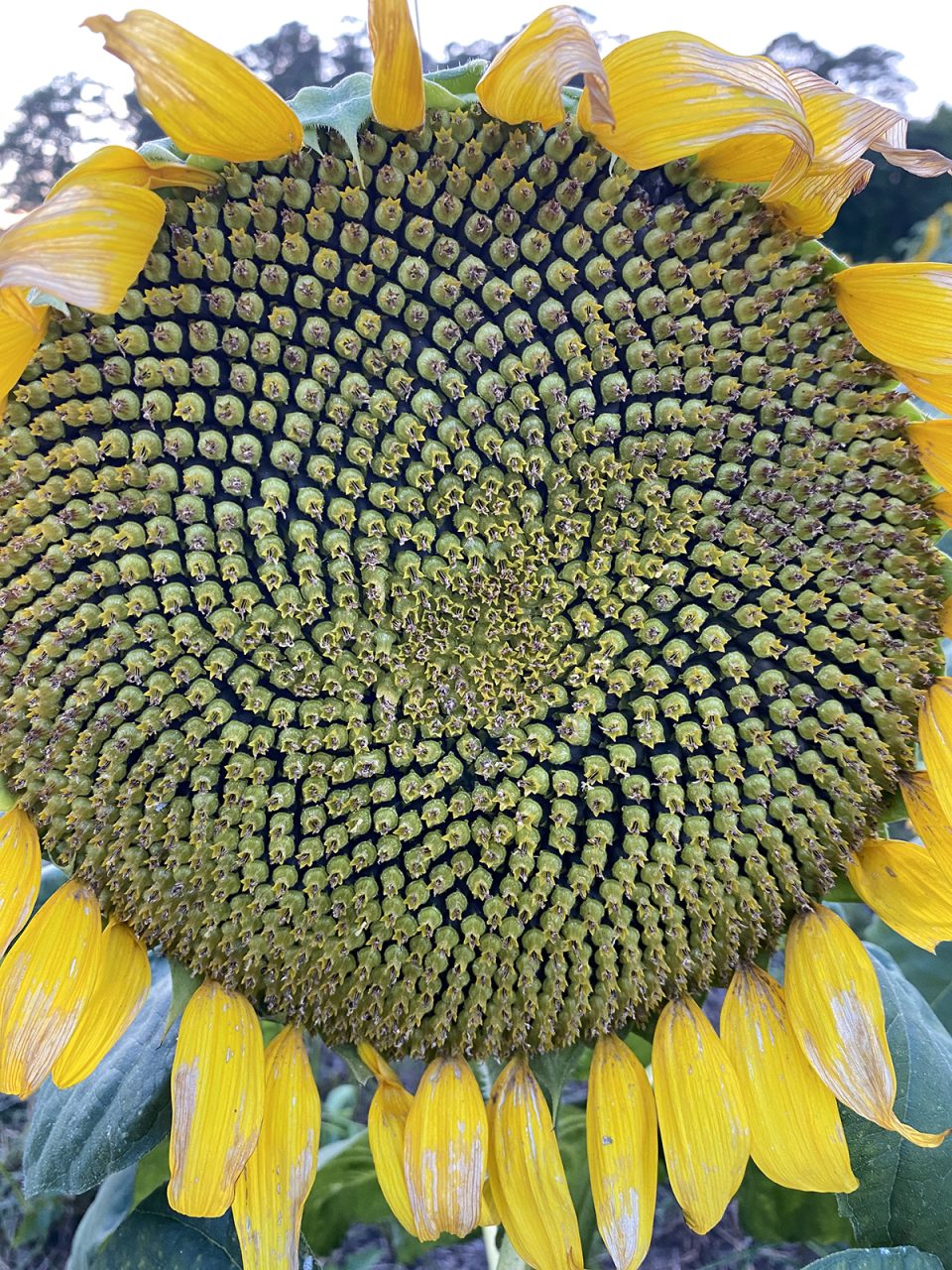
Like most other people who are numerically challenged, I’ve always just looked at spirals and patterns and thought, “that’s really beautiful,”never mind the science behind it.
Other than creating beauty, the Fibonacci spiral allows plants to cram the maximum amount of seeds and leaves into a space without overcrowding. Algorithms use it to see how to handle scaling. Investors use it to analyze price trends in stocks. The spiral is what allows artists and architects to create visually balanced compositions and spatial layouts. It also frequently appears in things like unfurling fern fronds and the branching of trees, in the spiral curves of storms.
Supporter Spotlight

The so-called golden spiral is especially noticeable in sunflowers. In pinecones. In seashells. In the way the outside of pineapples swirl amid their helixes. In galaxies.
Sunflowers (Helianthus annus) are beloved North American natives, now naturalized throughout the world. Growing anywhere from 1 foot tall to 12 feet or more (the record as of 2025, courtesy of Alex Babich in Fort Wayne, Indiana, is 35 feet 9 inches) these radiant summer annuals always make a splash. Whether growing in fields or flowerbeds, nestled in a bouquet or tucked in a vase, they brighten our lives. While the most well-known color is the distinct yellow they’re famous for, sunflowers also come in a range of colors, including reds, burgundies, oranges, whites and bicolors.
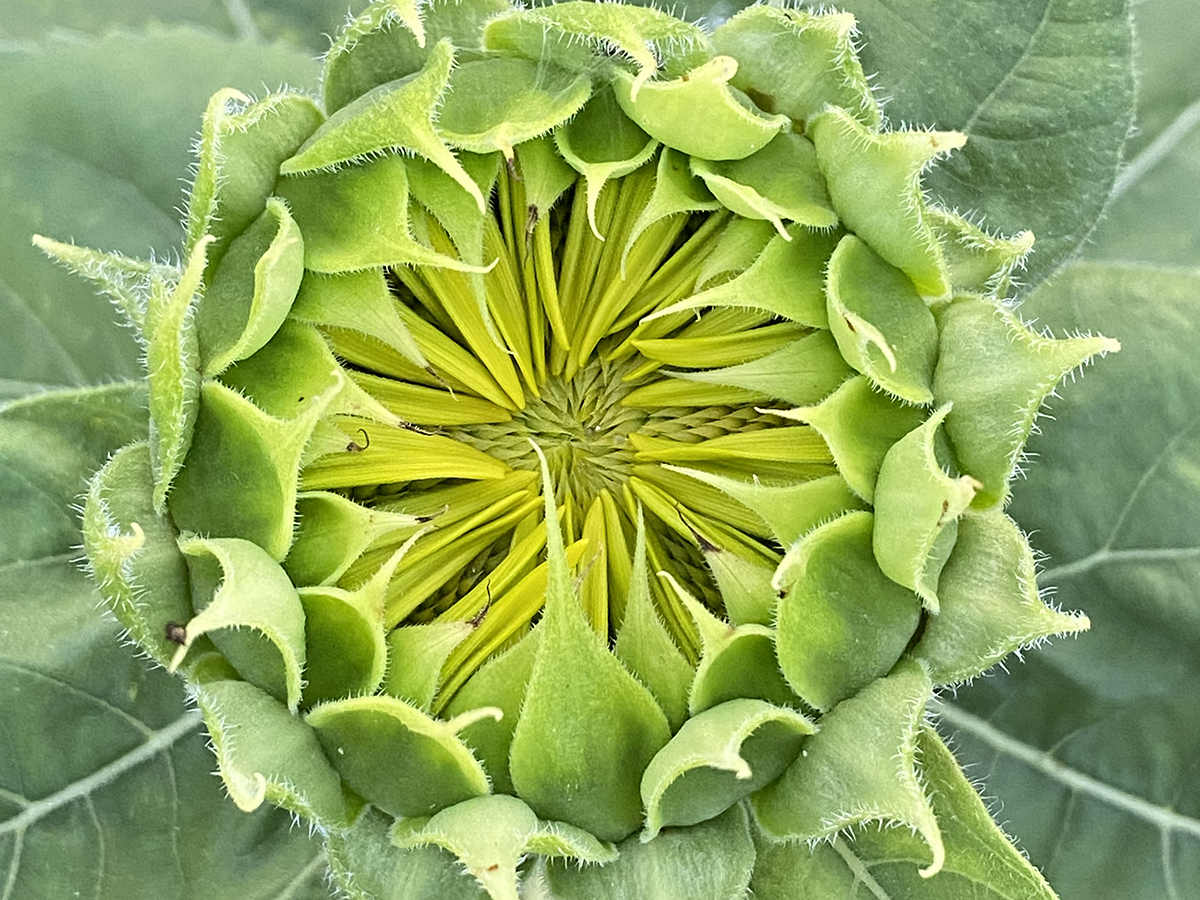
While each sunflower looks like a single flower, it is instead a conglomeration of hundreds or even thousands of tubular florets arranged in … you guessed it, a Fibonacci (gesundheit!) spiral. What we call the flower is more precisely the flower head (pseudanthium). What we call petals are, aptly enough, called ray flowers.
Beyond their amazing beauty, sunflowers serve countless other purposes. Sunflowers are a pollinator magnet, particularly for bees. Many species of birds feast on the mature seeds, not to mention squirrels and other small mammals.
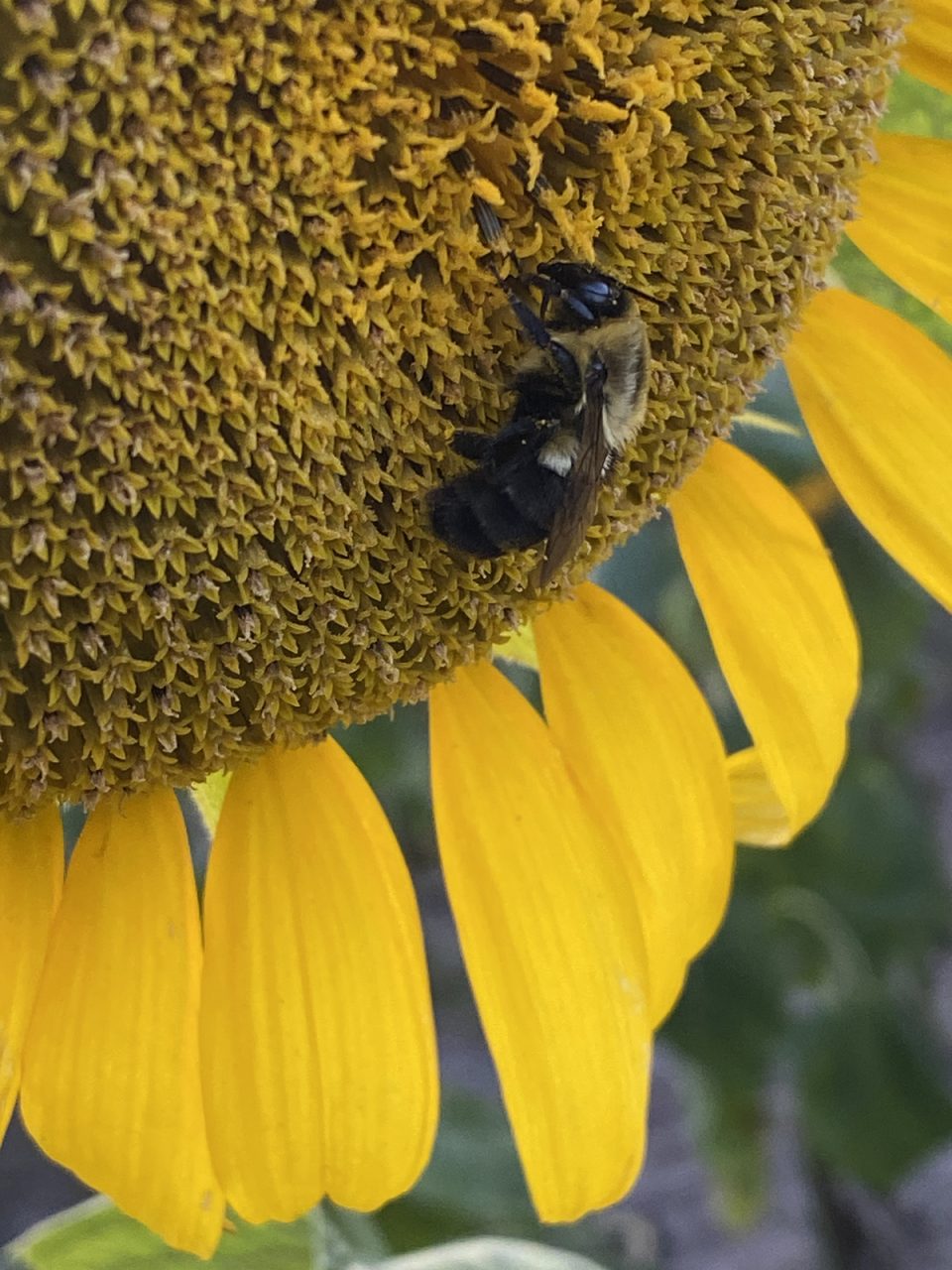
The seeds themselves are quite beneficial for humans as well. Many people enjoy snacking on them like peanuts, salted and roasted. High in nutrients such as vitamin E, magnesium, and healthy fats, sunflower seeds can be pressed into oils or made into sun butter.
There are two types of sunflower seeds. Oilseed sunflowers are used for, well, oils. Sunflower seed oil is the fourth most widely used vegetable oil in the world. Confectionary sunflower seeds are used for snacking and baking. Sunflower seeds can also be used as birdseed or livestock feed.
Besides being good for your tummy, sunflowers are good for your soul. Their cheery yellow faces are sure to make the grumpiest grump smile. Their heart-shaped leaves add another layer to the feel-good vibes.
While some immature sunflowers might track the sun in a process known as heliotropism, despite popular belief, once the bloom is fully open, mature sunflower heads no longer follow the sun. Instead, most of them consistently face east in order to catch the early sun and entice the most pollinators.
Depending on the variety, sunflowers can be a single flower atop a solitary plant, or they can look like a sunflower bush with multiple smaller heads flowering from top to bottom.
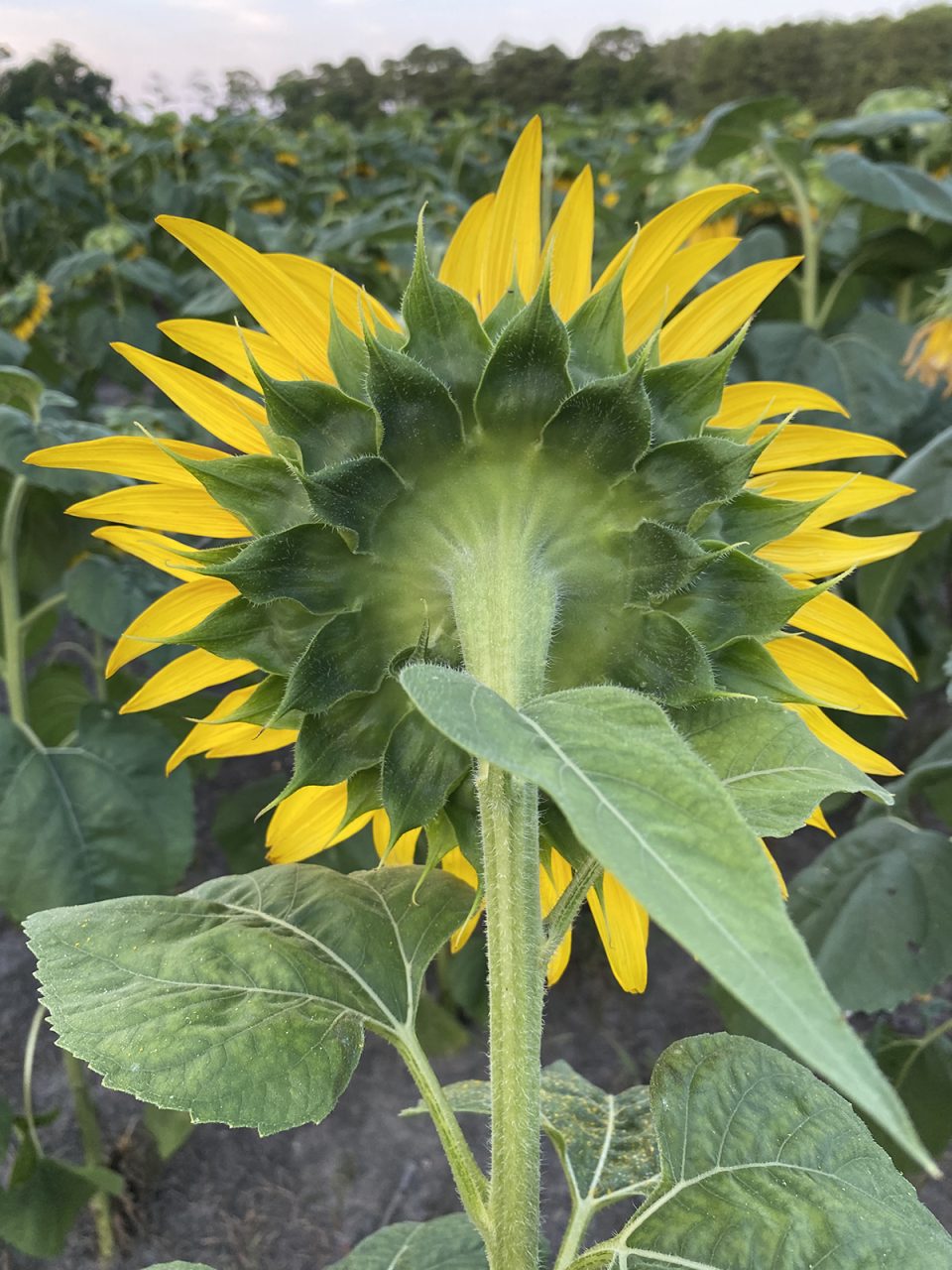
Because they are hyperaccumulators, in a process known as phytoremediation, sunflowers can be planted and used to pull radiation and heavy metals out of soil. Obviously, these plants then need to be destroyed after growing.
Are there any downsides to growing sunflowers? Their fast growth rates can deplete soil nutrients, and sunflowers are allelopathic. They release chemical toxins that can stunt nearby plants, so don’t plant them close to your potatoes and beans. Taller varieties are especially susceptible to wind damage, although sunflower tepees make super cool hideouts for the kids.
Also, the blooms don’t last all summer. For continuous blooms, plant successively about every two weeks.
Don’t have room for giant sunflowers? Try some black-eyed Susans. Some varieties are perennial, and small birds love the seeds. Rudbeckia hirta is a native and can be a biennial or short-lived perennial. Rudbeckia fulgida Goldstrum is a long-lived perennial that spreads via rhizomes.
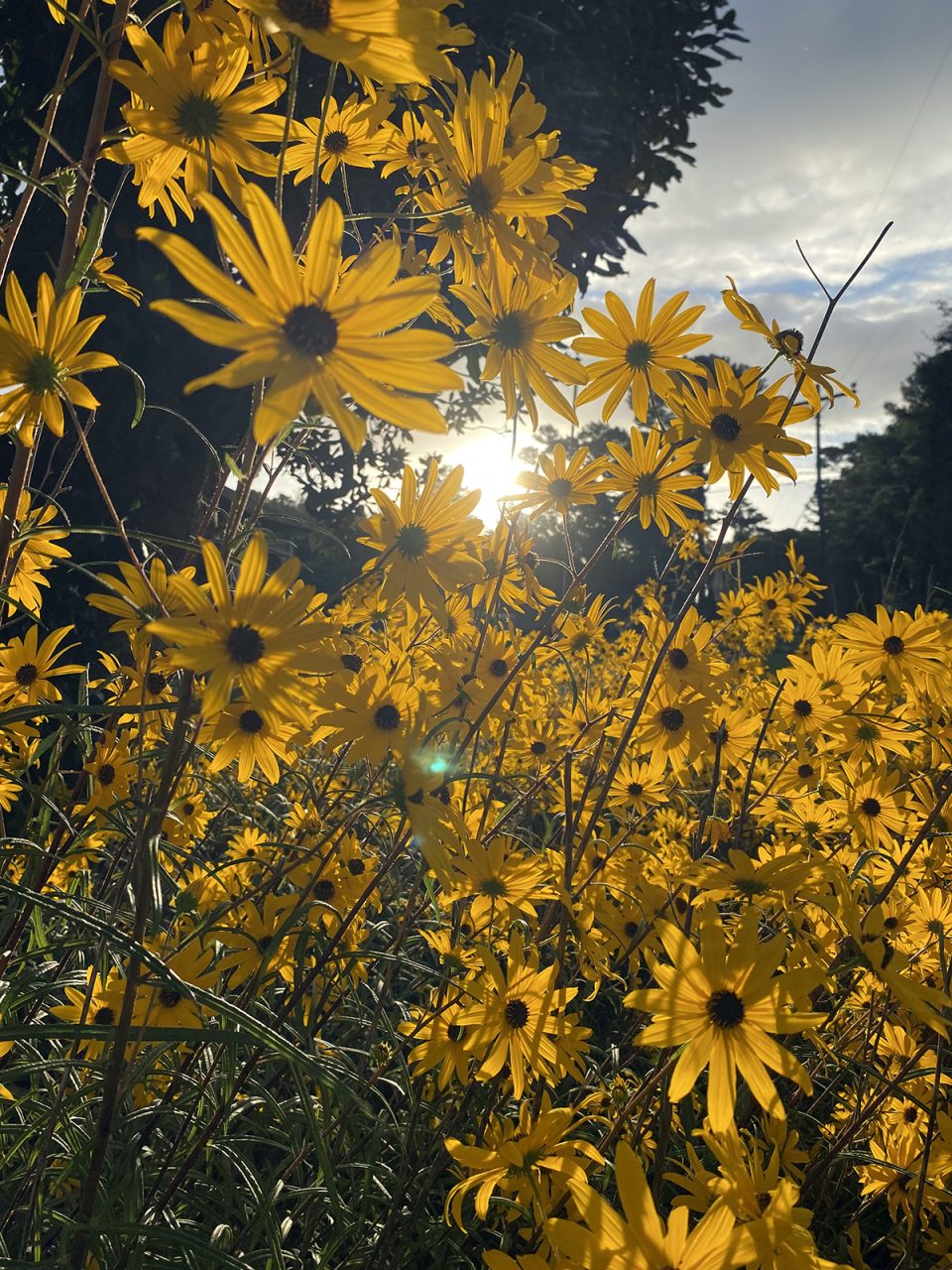
Want something that grows a larger plant with multiple smaller flowers? Try swamp sunflower (Helianthus angustifolius). A native perennial found from New York to Florida to Texas, it can get up to 8 feet tall. Be prepared, these plants look like the weeds they are all summer. Then come fall … wowsa! A group planting of these will light up the neighborhood. They require a lot of water, thus the “swamp” part of their name. These spread by rhizomes, so plant them in the back of your flowerbed and give them lots of room. And a firehose.
Whether you enjoy eating hulled sunflower seeds on your salad or in baked goods or just snacking on them, shelled or unshelled, or whether you just plain love sunflowers … enjoy!
Even though he wasn’t the first to paint sunflowers, Van Gogh turned what appears to be a simple summer pleasure into works of art, and other painters followed. What could possibly shout “summer” louder than bright yellows and bold blues mimicking the sun in the sky?
Such an exotic word for simple spirals, but our world would be a much duller place without the Fibonacci sequence and its attendant loops and whorls. And the true beauty of it is, you don’t have to be able to do higher math to appreciate the beauty.