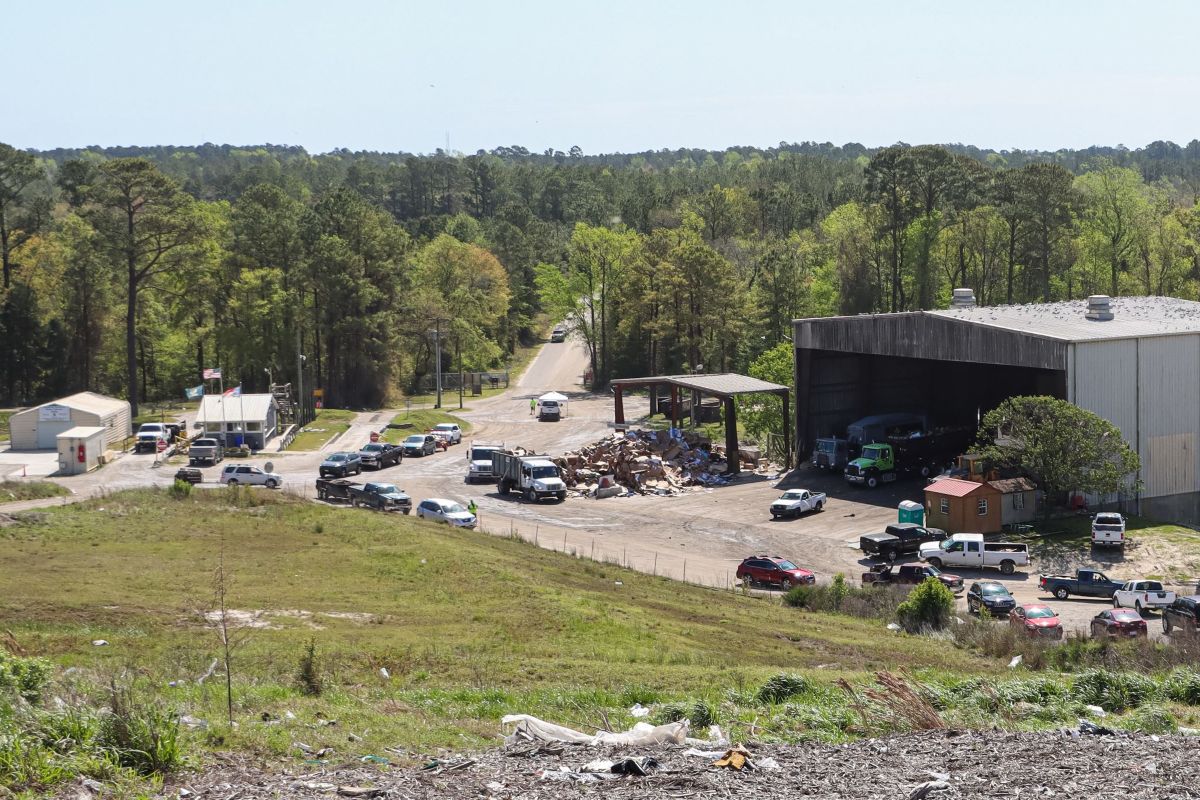
State Auditor Dave Boliek’s office released its performance audit of the Department of Environmental Quality’s Pre-Regulatory Landfill Program on Monday, revealing what the report called a shortfall in the statewide monitoring of former landfill sites.
The report found that 78%, or 534, of the 688 identified landfill sites where municipal solid waste disposal occurred without regulatory oversight have never been investigated under the DEQ program. Eleven of the list of top 100 of 629 program sites prioritized for investigation because of risk are in coastal counties.
Supporter Spotlight

The audit noted that, for most of the pre-regulation sites, it’s unknown what contamination may be present, whether it has spread to nearby properties or water supplies, or whether current conditions pose a risk to nearby residents. More than 80% of the landfill sites are within 1,000 feet of what are described as “vulnerable areas,” which includes homes, schools, daycares, churches, or drinking water wells.
“The Pre-Regulatory Landfill Program is a complex issue that creates challenges from a regulatory, legal, funding, and administrative standpoint,” said Boliek in the news release accompanying the audit. “But the bottom line is there are hundreds of potentially hazardous landfill sites across North Carolina, and despite tax dollars supporting a program meant to investigate these sites, 78% haven’t been examined. This audit lays out the facts, giving taxpayers a reliable update on a longstanding government issue.”
The program was established as part of the Division of Waste Management in 2007 to identify, assess, and remediate sites that accepted a wide range of waste prior to 1983. That’s before when modern environmental regulations were adopted. The list includes public and private sites near homes, schools and drinking water sources that could contain hazardous materials that pose health and environmental risks.
The risk ranking reflects scoring as of April 2025. In addition to the risk ranking, the audit includes an appendix listing all landfills alphabetically by county, then by risk priority rank within each county, if applicable. Another appendix identifies sites where issues related to property access have prevented or delayed investigation or cleanup and shows how long those delays have persisted in years.
The average estimated cost to investigate, assess and remediate a site is about $1.9 million. That would put the total cost, if applied to the remaining sites, at close to $1 billion. According to the report, of the 97 sites investigated since the program started, DEQ has secured 370 acres of waste, sampled 1,642 water supply wells and provided an alternate water supply to 30 homes.
Supporter Spotlight

According to the announcement, the DEQ Division of Waste Management agreed with the findings and the auditor’s recommendations. The audit lists all landfill sites, including sites pending access permission and sites that have been addressed, prioritized according to risk.
Among the ranked priority list’s top 100 sites in coastal counties are the following:
- No. 5, Jacksonville Wastewater Treatement Plant Landfill at Sturgeon City in Jacksonville, Onslow County.
- No. 9, Burnt Mill Creek Landfill in Wilmington.
- No. 11, Buxton Dump in Dare County.
- No. 30, Belltown Road Dump in Craven County.
- No. 44, Winnabow Landfill in Brunswick County.
- No. 53, Bolivia Refuse Disposal in Brunswick County.
- No. 67, Otway Community Refuse Dump in Carteret County.
- No. 73, Pantego Refuse Disposal in Beaufort County.
- No. 84, Rural Garbage Service in New Hanover County.
- No. 92, Ray’s Rural Dump in Onslow County.
- No. 98, Carolina Beach Refuse Disposal in New Hanover County.