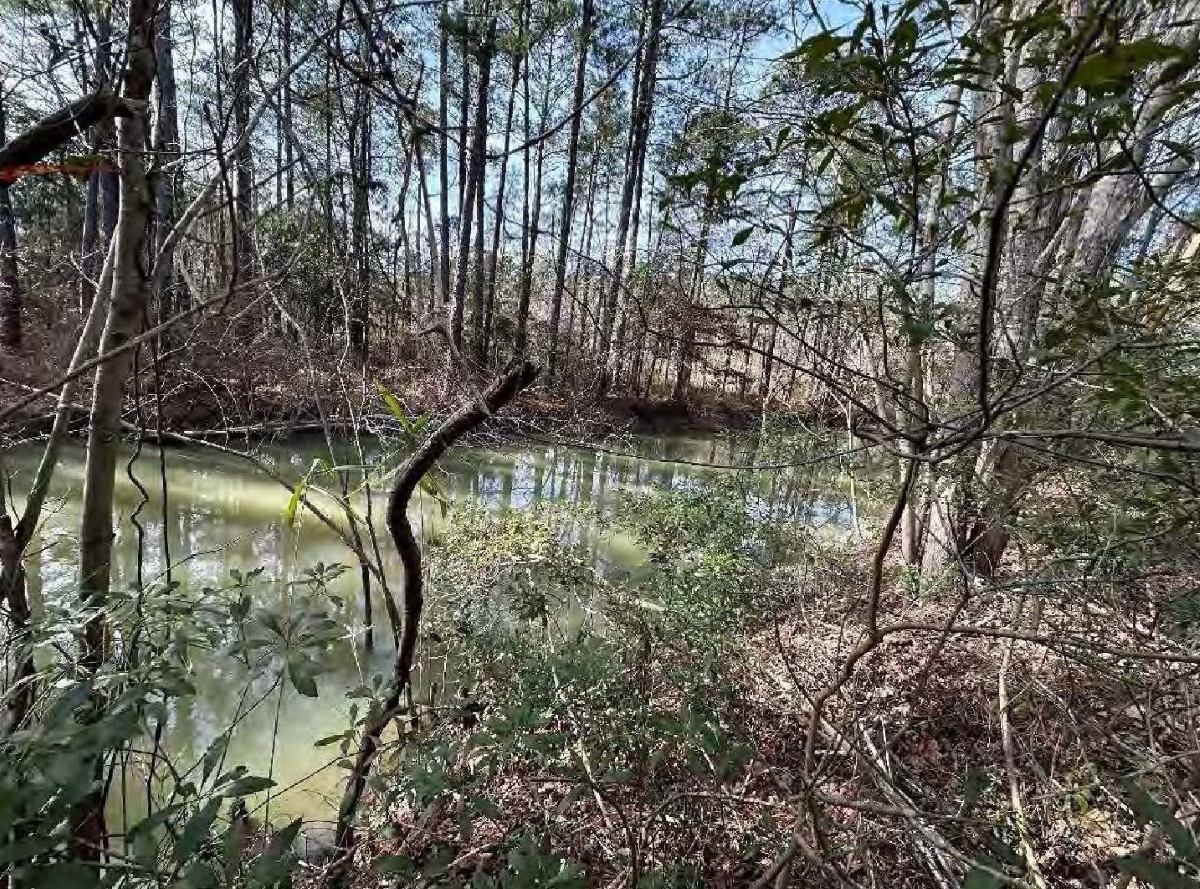
A construction materials company’s proposal to expand its limestone quarry in northern New Hanover County threatens more than 140 acres of mostly high-quality wetlands and vital fish habitat, environmental groups say.
Martin Marietta’s preferred plan to enlarge its Castle Hayne quarry would permanently destroy 143.46 acres of pristine wetlands and 9.7 acres of open water that connect to those classified as primary nursery area, strategic habitat area, and essential fish habitat, the groups argue.
Supporter Spotlight

The proposed expansion of the 1,700-acre quarry that sits between the Northeast Cape Fear River and Holly Shelter Road could also decrease natural flood defenses, environmentalists say.
Advocates are pushing regulators to deny the company’s first-choice plan, arguing that other options Martin Marietta has identified to source limestone to meet the demand of future construction needs carry fewer ecological consequences.
They’ll get their chance to voice their concerns on water quality impacts from the proposed 358-acre expansion in northern New Hanover County during a public hearing hosted by the North Carolina Division of Water Resources on July 14. That hearing is scheduled to begin at 6 p.m. at Heide Trask Senior High School auditorium, 14328 N.C. 210 in Rocky Point. Speaker registration will open at 5:30 p.m.
More than half a dozen environmental groups have asked the U.S. Army Corps of Engineers to deny Martin Marietta’s Clean Water Action Act Section 404 permit application. A federal 404 permit regulates discharges of dredged or fill material into waters of the United States, including wetlands.
In a May 22 letter to the Corps, those groups, including the Southern Environmental Law Center, Cape Fear River Watch, Carolina Wetlands Association, Coastal Plain Conservation Group, North Carolina Sierra Club, North Carolina Wildlife Federation, and Save Sledge Forest, said Martin Marietta’s permit application does not include a thorough analysis of the project’s impacts to environmental resources, including wetlands.
Supporter Spotlight

Those groups also argue that the company’s other project alternatives, including expanding mining operations at the company’s Rocky Point quarry, would be “less damaging” to wetlands and waterways.
“Where Martin Marietta is proposing to expand its Castle Hayne quarry, it’s just closer to so many sensitive and high-quality waters,” said Julie Youngman, a senior attorney with the Southern Environmental Law Center. “The Rocky Point quarry is not very far away. It could provide the same value to the local community and provide the same source of building supplies, but still cause far less environmental damage. I think that’s what all of us are focused on ‘why aren’t you thinking about that location.’”
Martin Marietta’s application details six potential project alternatives, alongside a no-action alternative.
The possible expansion of the company’s Rocky Point quarry, which sits about 3½ miles away from its Castle Hayne site, would destroy a little more than 152 acres of wetlands and 13.28 acres of freshwater ponds, according to environmental groups.
“At first glance, this alternative would result in the net loss of more wetlands than Martin Marietta’s preferred alternative,” the May 22 letter states. “However, the quality and function of the wetlands at the Rocky Point or any other major waterway. Unlike at the Castle Hayne Quarry, an expansion of the Rocky Point site would not pose the same concerns about runoff and water quality. Likewise, this off-site alternative is not located near important fish habitat or a nationally significant floodplain.”
The letter urges that any expansion of the Rocky Point quarry be conditioned on Martin Marietta maintaining a 100-foot minimum internal buffer zone to protect adjacent wetlands from the direct effects of mining activity.
“The Cape Fear River in New Hanover County is already suffering from enough sources of degradation that if an additional one could be avoided, the state and federal agencies should think hard about doing so,” Youngman said. “The Castle Hayne community is also shouldering more of an environmental burden than maybe is fair between a proposed development and various industrial operations around them. They don’t need more mining to cause more water quality and noise and traffic hardship for them.”
Later this month, lawyers for several Castle Hayne residents are expected to go before the New Hanover County Board of Adjustment to appeal Hilton Bluffs, a proposed 1,800-home development covering 600 acres of a 4,000-acre tract that includes Sledge Forest. The forest includes ancient trees, vast wetlands, and riverine habitat.
If Martin Mariett’s preferred alternative to expand its Castle Hayne quarry is approved, the groups are urging regulators to require the company to produce an environmental impact study.
DWR is accepting written comments on the proposed expansion through 5 p.m. Aug. 13 using an online form for project No 20260387, version 1 with the project name listed as “Castle Hayne.” Mailed written comments may be submitted to Stephanie Goss, 401 Permitting, 1617 Mail Service Center, Raleigh, NC 27699-1617.