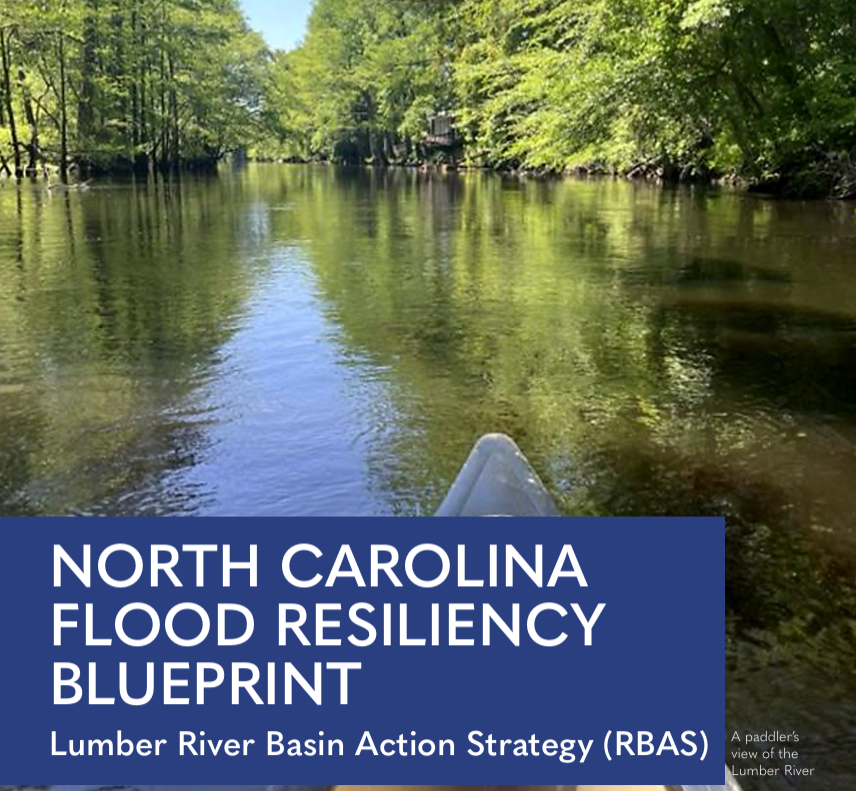
The recently released Lumber River Basin Action Strategy identifies 17 prioritized actions to help communities within the basin reduce flood risk and strengthen resilience.
The strategy was created to support long-term flood resilience planning and decision-making across the basin. It was developed by the North Carolina Department of Environmental Quality’s Flood Resiliency Blueprint program with local input and informed by existing flood planning efforts and vulnerability assessments.
Supporter Spotlight

Actions identified in the strategy include structural and nonstructural projects such as stormwater system and roadway improvements, protecting critical infrastructure and expanding nature-based solutions.
The strategy also identifies building-level mitigation projects to include elevating or floodproofing buildings, and it recommends five high-priority actions to help guide investments by implementing a range of projects from floodplain and stream restoration, critical infrastructure upgrades, floodproofing and elevating critical facilities, and other stormwater and flood mitigation measures.
A collaborative of experts from state agencies, local and regional governments, nonprofits and academic institutions known as the Lumber River Basin Advisory Group provided technical expertise and guidance and helped identify flood risks, understand local needs and capacity, and prioritize actions to reduce flooding impacts now and in the future.
“Flooding in the Lumber River Basin is getting more frequent and more severe, and this strategy gives communities actionable steps to reduce the damages from flooding,” DEQ Secretary Reid Wilson stated in a release. “The extensive destruction from storms that Lumber River communities have experienced underscores the importance of a coordinated strategy to increase resilience for the next storm, saving lives, homes, businesses and money.”
Resilience actions identified for the Lumber River basin are stored and maintained in the Flood Resiliency Blueprint tool, DEQ’s online decision-making tool, which provides users with data-driven flood risk and vulnerability assessments. This tool lets users develop and evaluate flood resilience actions and allows communities to update localized flood plans with the support of DEQ Blueprint staff as new information and opportunities develop.
Supporter Spotlight

Action strategies for the Cape Fear, White Oak and French Broad river basins are to be released in the coming months, according to DEQ officials.