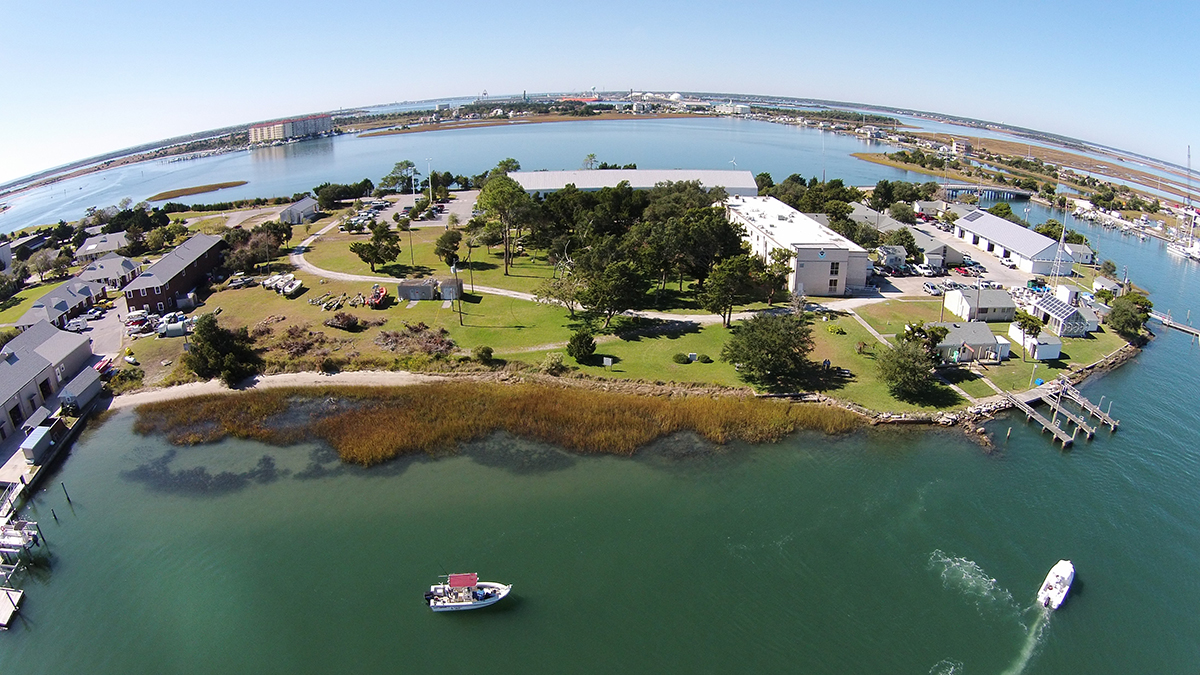
Dr. Ford “Bud” Cross said he was “elated” to learn that the nation’s second-oldest federal marine science laboratory is getting a new home to replace its old one on Pivers Island in Beaufort.
The National Oceanic and Atmospheric Administration announced on Aug. 27 that it plans to use $64 million from the 2025 Disaster Relief Supplemental Appropriations Act to pay for construction of a new facility for the Beaufort Laboratory.
Supporter Spotlight

Cross has a right to be elated.
He was director of the facility from 1986 until his retirement in 2000, the culmination of a career that he began there in 1967 as a fisheries biologist.
“It was great news to all of us who have worked there,” said Cross, who is 86 and lives in Morehead City, where he served for many years on the planning board.
“I didn’t expect it in the current administration.
“I’m tickled pink,” he continued. “It’s a nice sum of money, enough to build something incredibly good, big enough not just for the lab itself but also for the state estuary reserve program.”
Supporter Spotlight
Cross said the lab has always done important fisheries research, intended to enhance protection of marine species and preserve economically important commercial and recreational fishing.
“I think we all left a great legacy of service to the community, and I believe that helped in the decision to fund construction,” he said.
The building closed in October 2024 after significant hurricane-related structural damage was discovered during a routine inspection of the building’s foundation.
“Now there’s a great opportunity to have a new facility that can meet today’s needs,” Cross said.
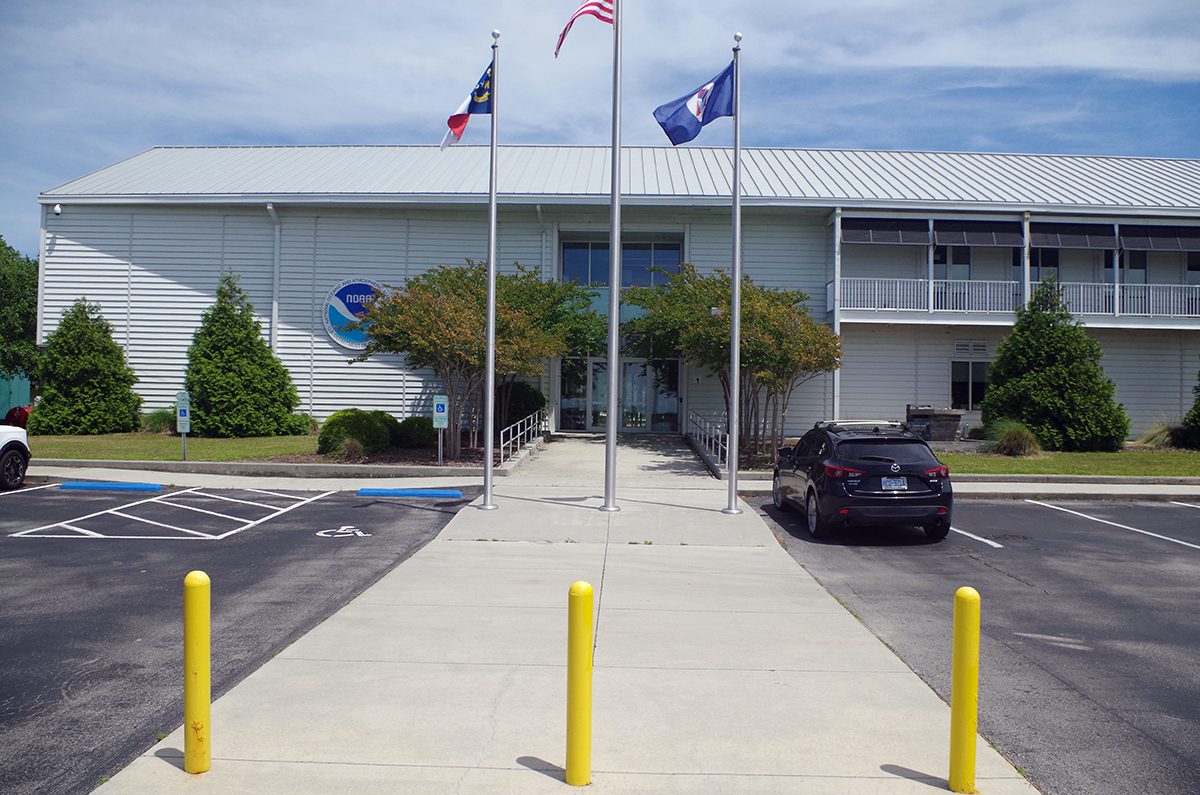
The Beaufort Lab was established in 1899 and predates NOAA by more than 70 years. It has housed what is now known as National Ocean Service and National Marine Fisheries Service’s Southeast Fisheries Science Center, and the North Carolina Coastal Reserve and National Estuarine Research Reserve.
“For more than a century, the dedicated experts at NOAA’s Beaufort Laboratory have produced world-class science that supports our economy, advances national priorities, and enhances coastal resilience,” Dr. Neil Jacobs, NOAA administrator, said in a press release on Aug. 27. “This state-of-the-art facility, located within the country’s second-largest estuary and adjacent to the Gulf Stream, will enable NOAA to continue its groundbreaking research while strengthening collaboration with industry and academic partners.”
Cross has lived a life dedicated to preserving and living with nature. For many years, he and his wife spent part of each fall and early on a 200-acre tract they owned in the frigid, wild Upper Peninsula of Michigan.
“It was just us and the owls and wolves,” he said. It was a quiet, serene life. We had an ATV and used it to clear some of the snow. We hated to sell it, but we were getting older.”
Back in Morehead City year-round now, Cross still conducts research and periodically gets together with mates from his time in the lab.
“There’s about 30 of us,” he said. “We get together for lunch twice each year. It’s a pretty tight-knit group.”
Numerous other lab employees have also served local governments in advisory positions.
One member of the lunch group is Dr. Don Hoss, who began at the lab in 1958. He succeeded Cross as lab director and held the post until his retirement in 2002.
“I think it’s just wonderful,” he said of the funding for the new facility.
“It’s a historic place, and a great research place and there is a need to keep it going.
“I had a great career, and we did a lot of good things.”
Dr. Hans Paerl, a retired professor and researcher at the University of North Carolina Institute of Marine Sciences in Morehead City, welcomed the planned full-scale return of the Beaufort facility.
“We’ve always collaborated,” he said. “In fact, since they closed down, we’ve had some of their researchers in our building.
“There is a lot of overlap with our interests, especially on harmful algal blooms.
“It’s been very good having them here. And this (construction) announcement is great news for the entire marine science community.”
In its Aug. 27 press release, NOAA says the new lab will expand its scope in the following ways:
- Researching, monitoring and forecasting harmful algal blooms.
- Deploying uncrewed systems for underwater habitat mapping and coral restoration.
- Serving as a research hub to support South Atlantic fisheries management and stewardship of marine resources.
- Evaluating the performance of natural infrastructure for coastal protection. Managing the Rachel Carson National Estuarine Research Reserve and providing opportunities for education, research and compatible traditional uses.
Design and preconstruction work on the new facility is to begin in early 2027. The new structure will be above the floodplain and designed to withstand storms and flooding.
Learn more about the lab
- Listen to an interview with Dr. Don Hoss and Dr. Ford “Bud” Cross recorded in 2018 for a NOAA Fisheries oral history project.
- Explore the Beaufort Lab’s history in the context of its 125th year celebration in 2024.