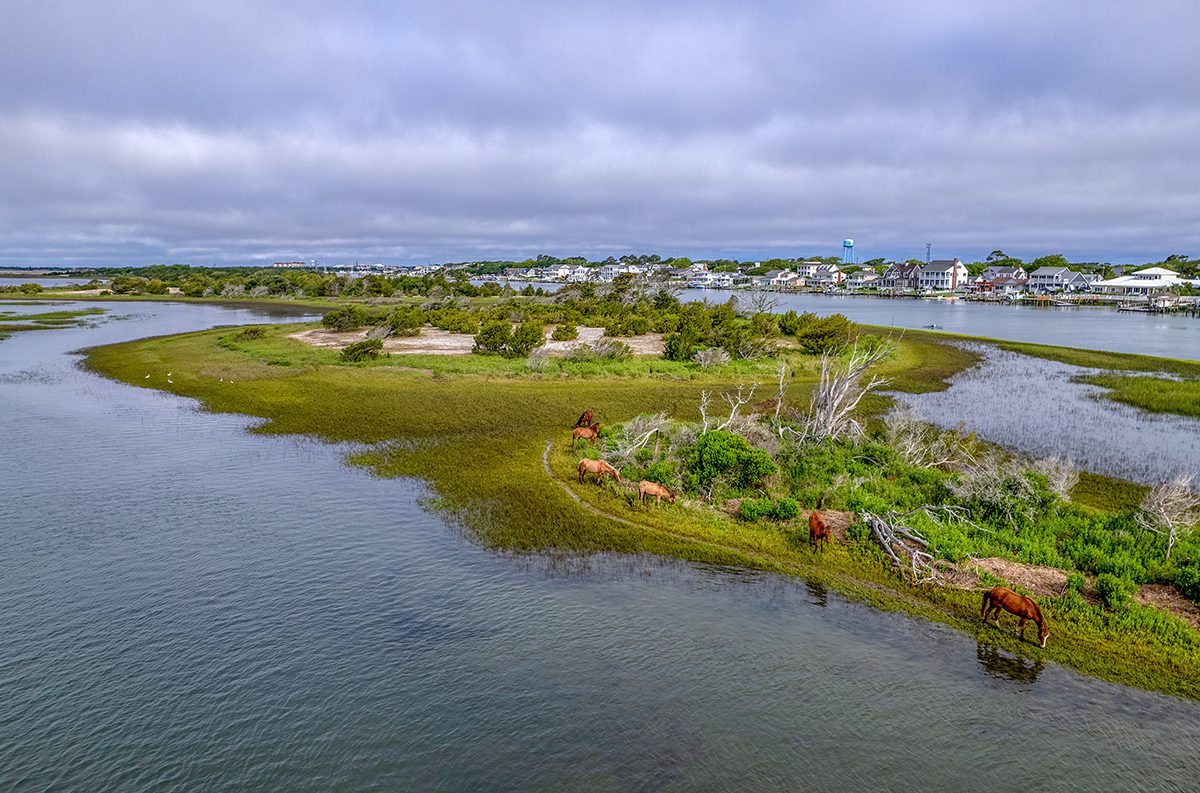
Since the late 1980s, the country’s more than 50,000 miles of estuarine shoreline has been highlighted each year with National Estuaries Week.
Held the last full week in September – this year Sunday to Sunday, Sept. 20-27 — the campaign is to raise awareness for “these incredible ecosystems and the benefits estuaries provide, including recreational opportunities, which are especially important to physical and mental health,” according to the National Oceanic and Atmospheric Administration.
Supporter Spotlight

“Estuaries are often called the ‘nurseries of the sea,’ because so many animals rely on these areas to reproduce and spend the early part of their lives. Most of the fish and shellfish we eat—including salmon, herring, crabs, and oysters—spend some or all of their life in estuaries,” NOAA explained. “Bays, harbors, sounds, and other estuaries include habitats like marshes, mangroves, seagrass beds, and oyster reefs. Each of these habitats are populated with creatures that thrive in that setting. With so much variation, it’s no wonder that estuaries are among the most productive ecosystems on Earth.”
Coastal economies rely on estuaries, too, a 2025 analysis by Restore America’s Estuaries found. These ecosystems generate more than half of the U.S. Gross Domestic Product, support more than 69 million jobs, and provide vital ecosystem services that reduce climate risk and support thriving communities. “Coastal regions supply habitat for over 75% of commercial and 80–90% of recreational fish catches. They are responsible for 40% of U.S. employment and contribute over $214 billion annually through leisure and hospitality sectors,” the analysis states.
North Carolina estuaries programs
The state has no shortage of estuaries or programs to protect its 12,000 miles of estuarine shoreline, including the North Carolina Estuarium in Washington, which has been celebrating North Carolina’s estuaries since 1998, Director Tom Stroud told Coastal Review.
The “world’s first Estuarium” is an environmental center on the Pamlico Sound housing more than 200 exhibits featuring aquariums with estuarine life, artwork, interactive displays, artifacts from the Pamlico River, exploration of hurricanes and sea level rise, and special programming, the website states. The Partnership for the Sounds, a nonprofit, member-supported organization, manages the site.
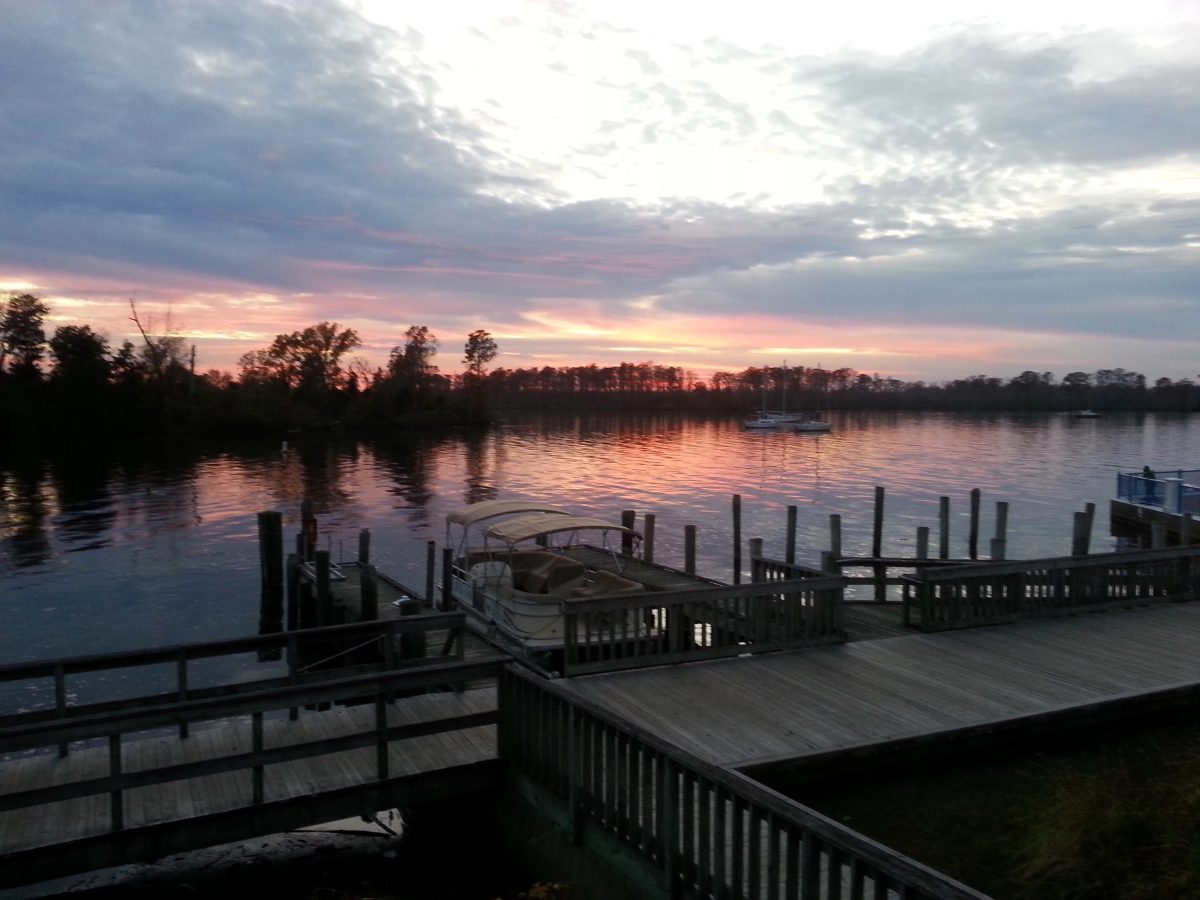
Stroud said that the estuarium most recently opened its new Estuarium Seafood School that highlights the importance of healthy estuaries by emphasizing their connection to the state’s deep-rooted seafood culture.
Supporter Spotlight
“The future for the natural world is as bleak as I can remember,” Stroud said. “Safeguards for vital ecosystems are being eroded away at every level. It’s surreal to think that the small bit of attention our estuaries got in the 1990s was actually a high tide for their protection, but it seems so. We’re going to keep telling the story of the Albemarle-Pamlico estuary’s importance, though. People need to understand that if you love a crab or shrimp or oyster on your plate, you have to love where it comes from.”
The North Carolina Department of Environmental Quality manages a handful of estuaries and programs to protect the habitats including the N.C. Coastal Reserve & National Estuarine Research Reserve.
The National Estuarine Research Reserve System, established through the Coastal Zone Management Act of 1972, is a network of 30 coastal sites designated to protect and study estuarine systems and is a partnership program between NOAA and coastal states. North Carolina Coastal Area Management Act was passed in 1974 to manage development in the state’s 20 coastal counties. The state plan was in response to the federal CZMA.
As CAMA rules and regulations were implemented in the late 1970s, “it became clear that an effective coastal management program must include land acquisition. To fill this gap, the coastal reserve program, along with the public beach access program, were incorporated into CAMA in the early 1980s,” NCDEQ website states.
The state initiated the project in 1982 to establish the National Estuarine Research Reserve, made up of Currituck Banks Reserve in Corolla, Rachel Carson Reserve in Beaufort, Masonboro Island Reserve near Wilmington, and Zeke’s Island Reserve near Southport.
North Carolina began a state program to parallel the federal that was formally established in 1989. The Coastal Reserve acquired Permuda Island in Stump Sound, Kitty Hawk Woods in Dare County, the Emily & Richardson Preyer Buckridge in Tyrrell and Hyde counties, and Bird Island Reserve near Sunset Beach.
The program is managed through a federal-state partnership between NOAA and NCDEQ’s Division of Coastal Management and made up of 10 protected sites totaling more than 44,000 acres of estuarine land and water along the coast to offer long-term research, education and stewardship opportunities.
“Estuaries are among North Carolina’s most valuable natural resources, providing essential habitat for wildlife, supporting coastal communities and helping buffer our shorelines from storms” Coastal Reserve Program Manager Rebecca Ellin told Coastal Review. “Through the N.C. Coastal Reserve, we protect these special places not only for the plants and animals that depend on them, but also as living laboratories where research, education and stewardship help us better understand and care for our coast. National Estuaries Week is an opportunity to celebrate these remarkable places and recommit ourselves to protecting them for generations to come.”
The Albemarle-Pamlico National Estuary Partnership, often referred to as APNEP, is another cooperative effort to protect estuaries and is a partnership of NCDEQ, the Commonwealth of Virginia and the Environmental Protection Agency.
“The Albemarle‑Pamlico National Estuary Partnership works across ecological boundaries to protect one of America’s most productive and ecologically significant estuarine systems,” APNEP Partnership Coordinator Natalie Ivey told Coastal Review.
The Albemarle-Pamlico estuarine system includes more than 3,000 square miles of estuarine waters and 28,000 square miles of land area across the two states making it the second-largest estuarine system in the country, the website states. There are six river basins that flow into the sounds. The Pasquotank, Chowan and Roanoke basins flow into Albemarle Sound, while the Tar-Pamlico and Neuse empty directly into Pamlico Sound. Rivers of the White Oak basin flow to the Albemarle-Pamlico estuary’s southern sounds, including Core, Back, and Bogue sounds.
APNEP focuses on research, ways to protect or restore ecosystems, environmental monitoring programs, and education and outreach efforts for the program that area extends from the headwaters in the Virginia mountains and North Carolina Piedmont, through a broad coastal plain and out to the string of barrier islands bordering the sounds.
“The 28,000 square miles of northeastern North Carolina and southeastern Virginia that compose the Albemarle-Pamlico region include a vast network of rivers, sounds, and wetlands that serve as a vital nursery for fish along the entire Atlantic coast and provides exceptional opportunities for outdoor recreation,” she said. “By collaborating with partners across states and communities, APNEP helps ensure that these waters continue to sustain abundant wildlife, thriving fisheries, and the cultural and economic well-being of the region.”
National Estuaries Week, Public Lands Day
First celebrated as National Estuaries Day in 1988 to promote the importance of estuaries and the need to protect them, the National Estuaries Program, National Estuarine Research Reserve Association, Restore America’s Estuaries conservation group, and many other organizations partnered to expand the celebration from one day to an entire week. The theme for the annual celebration is “Wade In.” Tag photos with #EstuariesWeek or #WadeIn to join the conversation on social media.
Organizers are working with the National Park Service’s official partner, the National Environmental Education Foundation, to promote both National Estuaries Week and National Public Lands Day taking place Saturday. The nation’s largest single-day volunteer effort for public lands has been held since 1994 on the fourth Saturday of September. Volunteer opportunities are listed on volunteer.gov for National Park Service opportunities. Share photos on social media using #NPLD or #NPSVolunteer.