What’s the first thing native Southerners warn newcomers about when they move to the North Carolina coast from … “Off?”
“Watch out for fire ants and sandspurs!”
Supporter Spotlight

Giving you that disbelieving side-eye that says they’ve been invited on a snipe hunt before, and they’re not falling for it again, they generally nod and say, “Uh huh.”
Southerners just grin. They’ll figure it out.
Meanwhile, Southerners learn early to watch out for anthills and suspicious-looking grass.
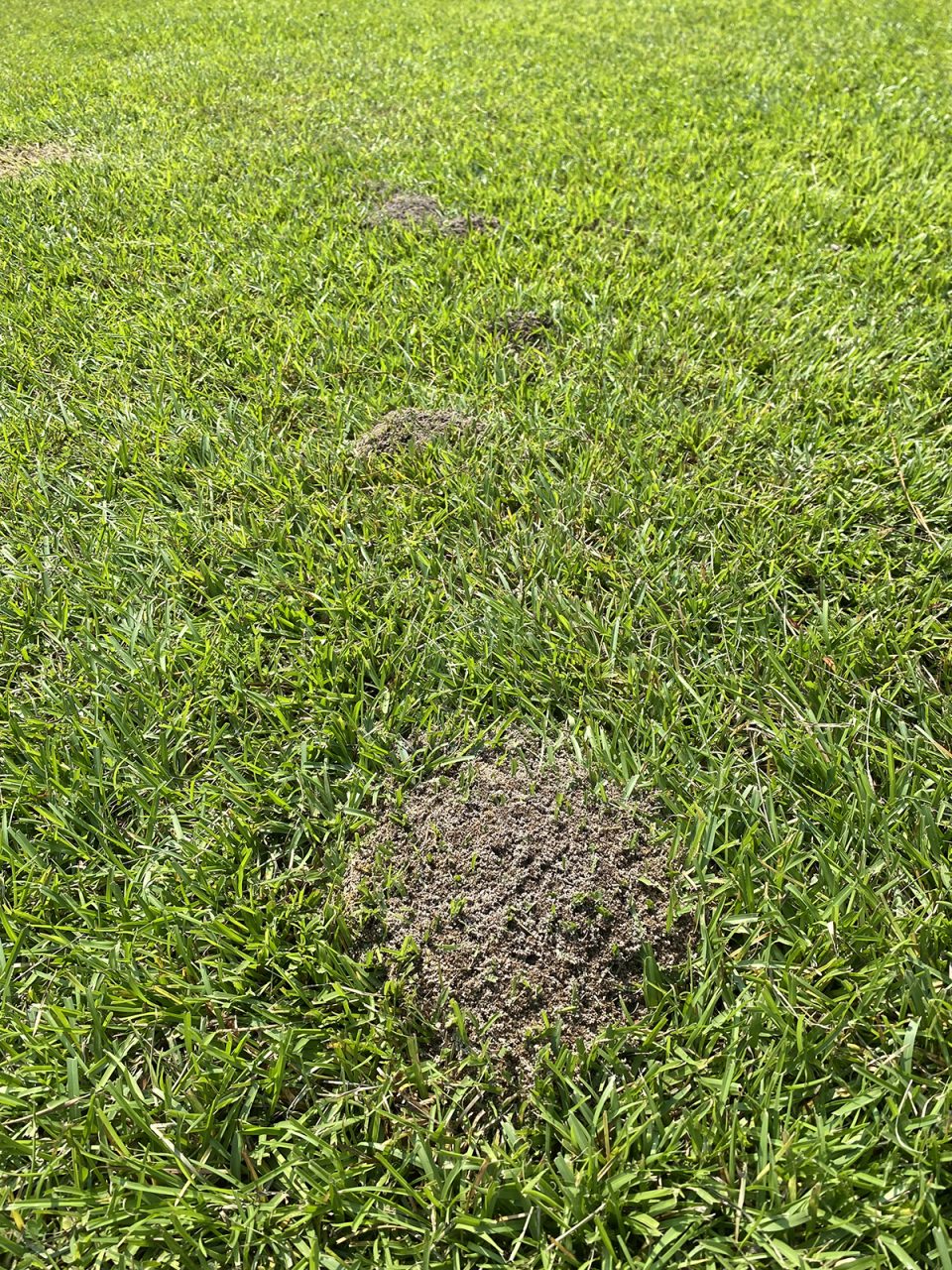
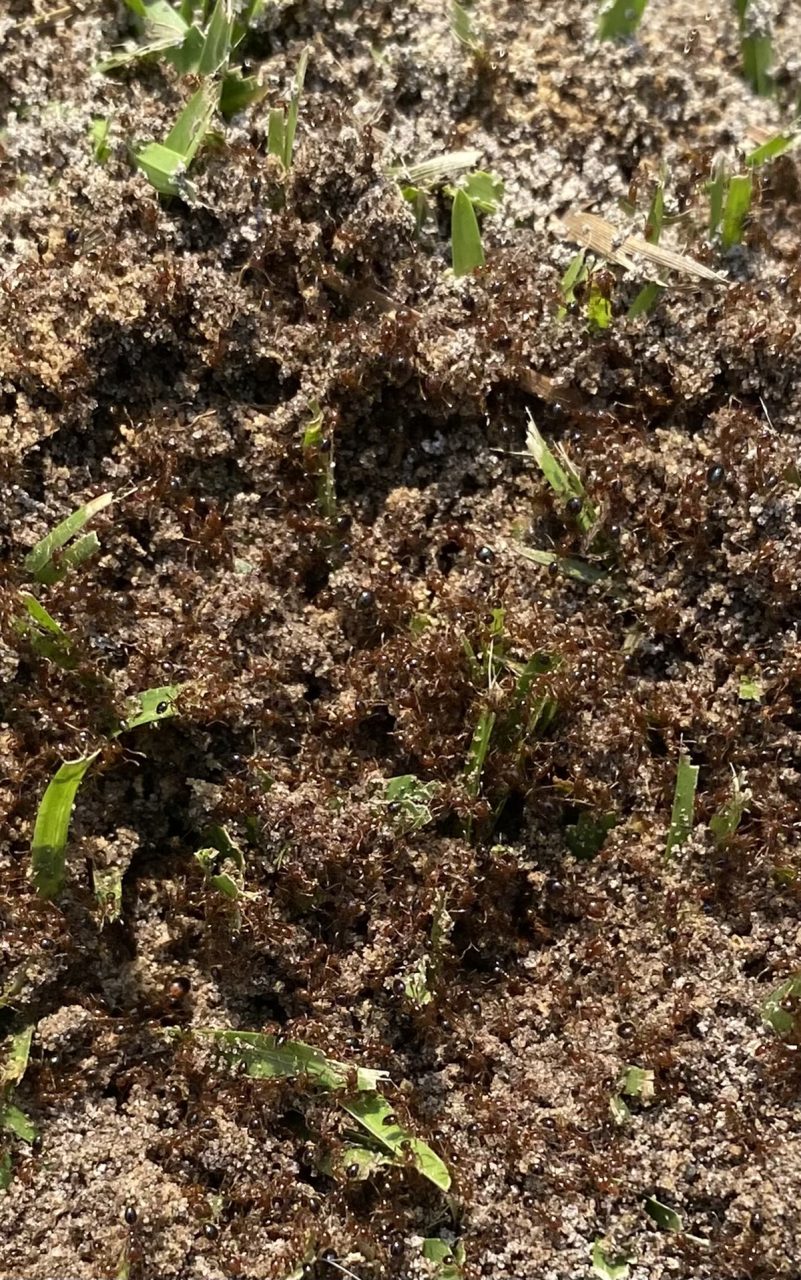
On the other hand, it’s nearly impossible to walk past a fire ant mound without jabbing a stick into it, kicking it, or even gleefully running over a giant mound with the lawnmower. That’s the worst thing you can do.
Fire ants (Solenopsis invicta) are always around. Dry weather drives them deeper underground. Rain brings them springing to the surface — like an inflatable raft held underwater and then released. Hurricane rains send them scurrying for higher ground, aka your porch, car, house, or even your outside heat pump unit. Heat pump casings — when the heat pump isn’t running because there’s no electricity — are like Dubai for fire ants.
Supporter Spotlight

Every fire ant mound has multiple spare queens. Any disturbance to the mound causes soldiers to grab those spare queens and head for the hills. That is why, even when you kill the original mound, if you disturbed it beforehand, more mounds will pop up in a couple of days. Some sprays will instruct you to disturb the mound first, and depending on the chemical and the application, sometimes that’s the best method. Baits, on the other hand, work in the opposite way, and you need to be sneaky in your application.
I wonder if anteaters would go after fire ants … a question to explore another time.
While fire ant mounds are conspicuous and fire ants probably the most-hated insects ever, many other ants out there are most beneficial.
Almost everyone is familiar with the pepper-flake-sized black ones known as sugar ants, or Tapinoma sessile. These are the ones that love to congregate on your kitchen counters. On your kitchen table. In your pantry.
Their other, more common, name comes from a 14th century term, pismire, and for the strong formic acid scent some of them release when crushed. Or maybe it’s just because they annoy the pee out of you.
Annoying as all get out, these ants are usually attracted to sweets, hence their common name. Baits such as Terro, a sticky syrup laced with boric acid powder will usually get rid of them – because there’s nothing like biting into a cookie or other sweet and finding out it has extra protein. Or like pouring a bowl of cereal only to watch the little buggers trying to surf the tsunami of milk. Bleh!
Ants of any variety annoy humans to no end, especially when they invade our homes.
But why is this the case? Ants are just doing their job. Think of them as the janitors of the insect world. Ants are hardwired to find the tiniest crumbs of anything edible and then clean it up by taking the food back to their nests, crumb by crumb.
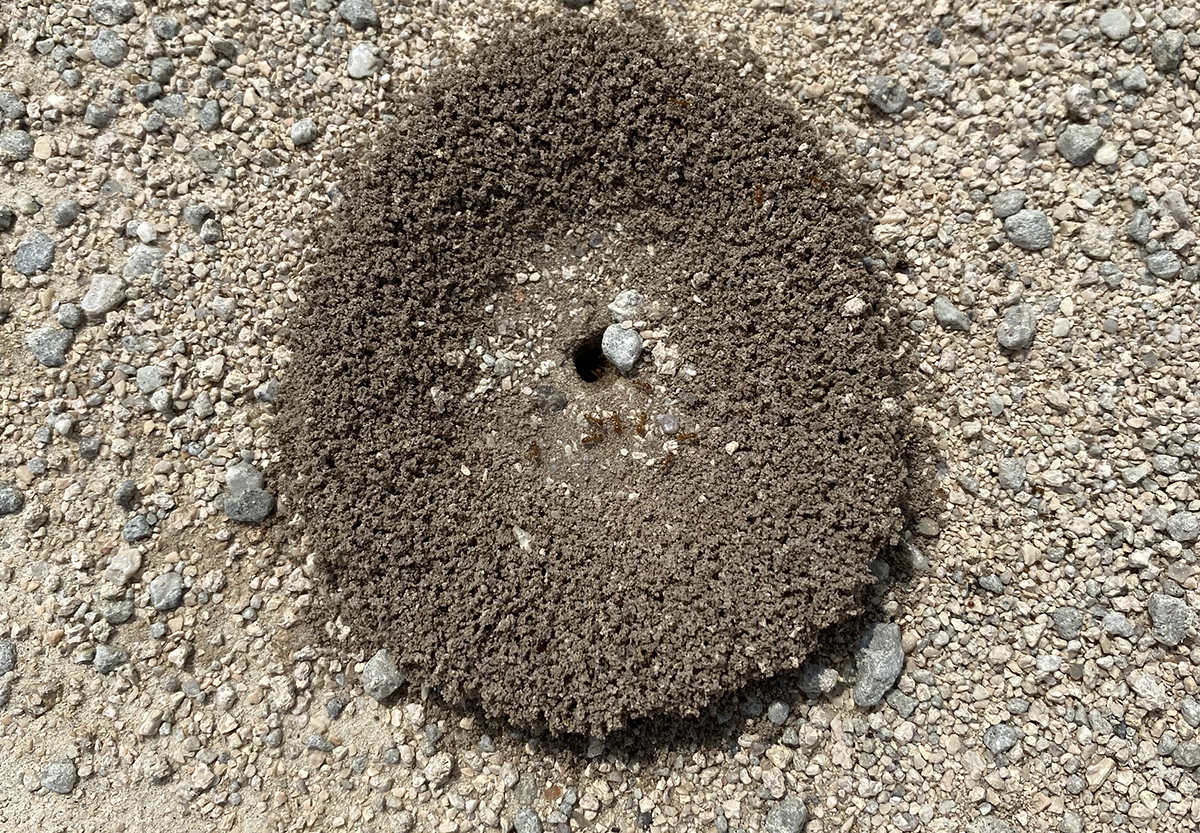
Once they find food, they will scout and scour the entire surrounding area. Outdoors, that’s a great thing. Inside, not so much.
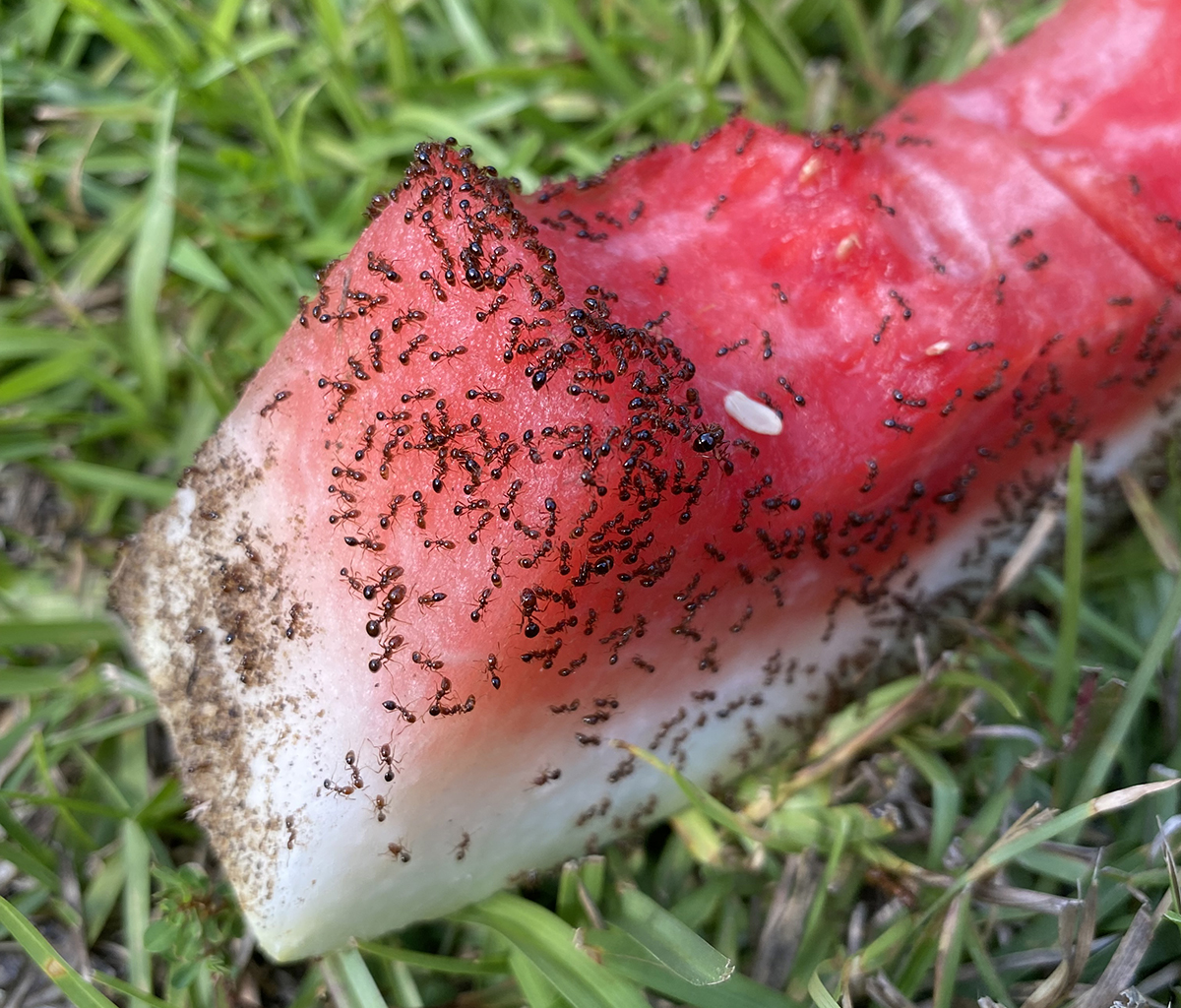
Fire ants are probably the most well-known in the ant kingdom, simply because they’re invasive and nasty. How do they swarm your hands or feet without you noticing them, and then upon some silent-to-humans command, they all start biting at the same time? Grrr.
For the most part, ants just go about their tiny ant lives and do their tiny ant jobs. Fascinating to watch, ants come in multiple colors and sizes.
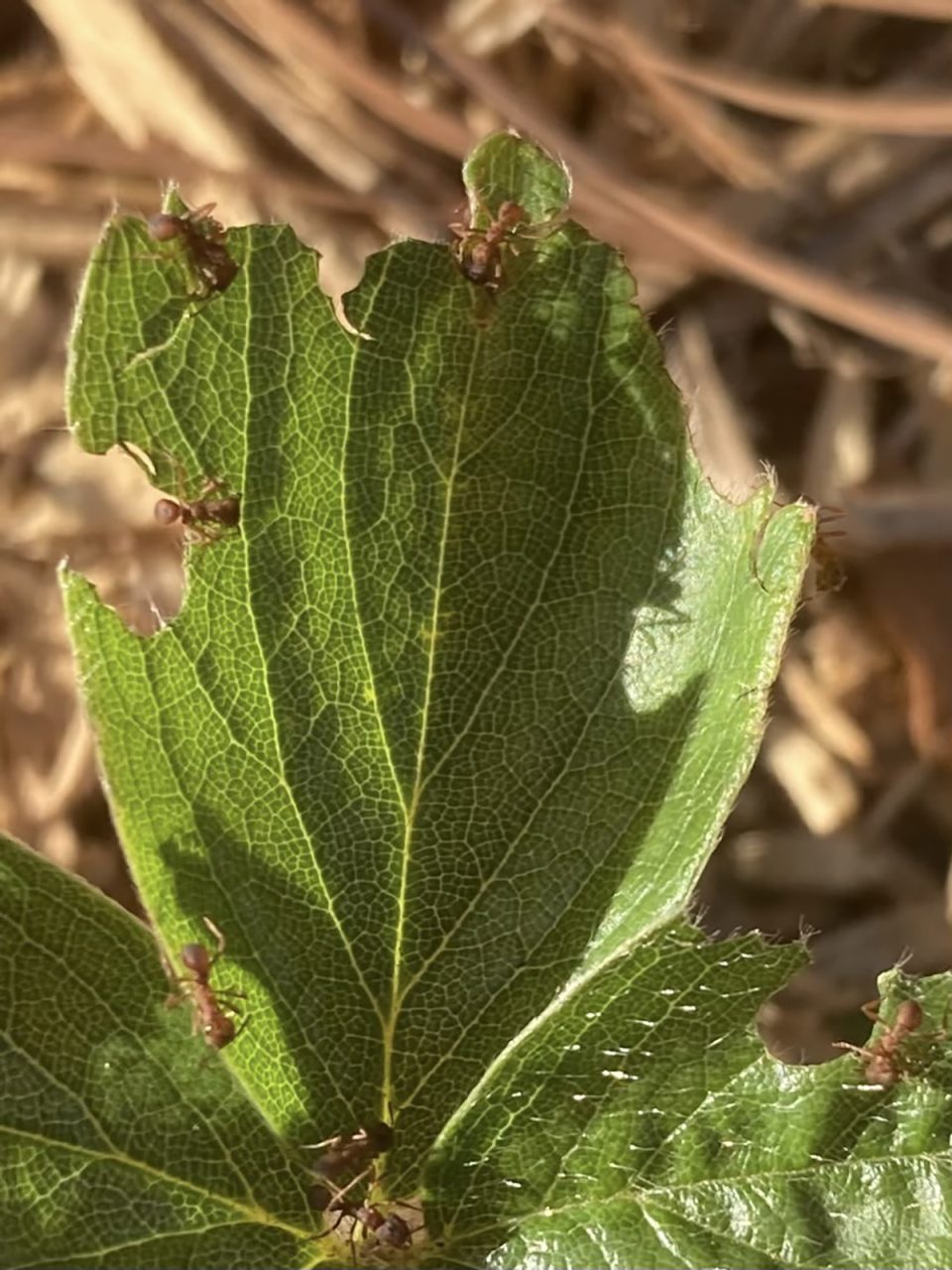
If you have ever just watched ants anting, you’ll see how incredibly strong they are for their diminutive size. Ants can be fascinating for adults as well as children, and their antics can offer a glimpse into exotic worlds. We have leafcutter ants here. They’re not just a South American movie plot device, or a scene in a nature documentary, and they are really cool to watch.
Large populations of ants on your plants are often good indicators that a plant has mealy bugs or aphids or scale. The ants will protect the bugs attacking your plant because the insects produce a sticky sap called honeydew that the ants like to eat.
If you’ve ever seen an animal skeleton or turtle shell picked clean? Thank the ants! And beetles, but that’s a subject for another time.
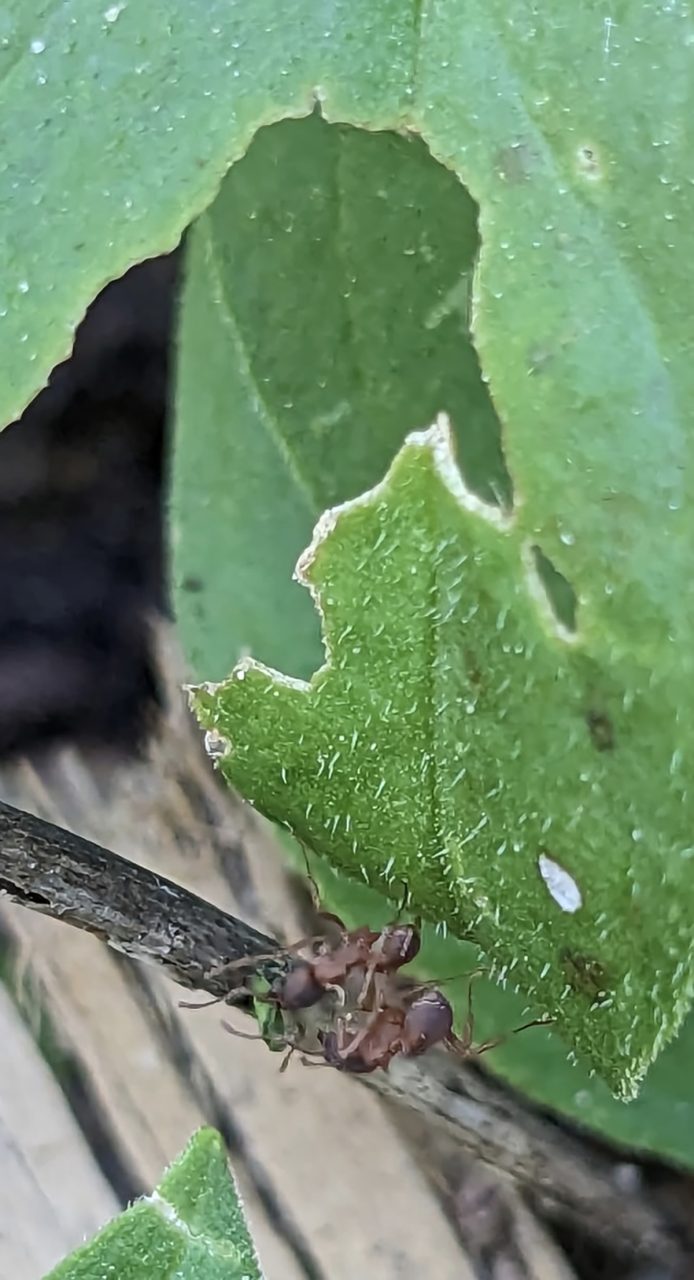
Humans tend to lump ants into a general, one-size-fits-all category of icky bugs that need to die, but ants are valuable for many ingenious purposes.
Ants aren’t generally very good pollinators, because even though they’re attracted to sweet nectar, they have naturally occurring antibiotics that kill pollen grains. Still, some plants are seeded by ants. Such plants, including trilliums (Trillium), bloodroot (Sanguinaria canadensis), violets (Viola), and many others, have nutrient-dense coatings called elaiosomes on their seeds.
In a process called myrmecochory, ants scrounge the seeds for food and carry the seeds back to their nest. Once the coating is eaten, the seeds are discarded to the ants’ midden, or trash, pile. Everybody wins! The plants get their seeds dispersed, planted, and fertilized while the ants get food.
Excellent scavengers and foragers, ants can be found on every continent except Antarctica and a few islands such as Greenland and Iceland. Mostly nesting underground, with their tunneling and moving things about, ants play a vital role in aerating and enriching soil. Depending on the type, ants can also nest in trees, under rocks, in rotting wood, or among leaf debris.
They’re everywhere!
In fact, it’s been estimated that for every human on Earth, there are about 2.5 million ants. Talk about being vastly outnumbered!
Communicating mostly using chemicals, which they scent with their antennae, ants can express to other ants every kind of message, from “food!” to “intruders!” They can leave scent trails for other ants in their colony to follow once the scouts have found something edible.
If you’ve ever wondered how the ants manage to find a hummingbird feeder hanging multiple feet above ground, it’s because, once an ant detects the most minuscule trace of sap, in this case hummingbird nectar, they keep spiraling outwards and upwards until they locate the source. Curious and resourceful, ants excel at what they’re designed to do.
Fascinating creatures, ants can be a nuisance, but they play an invaluable part in our wonderful world.