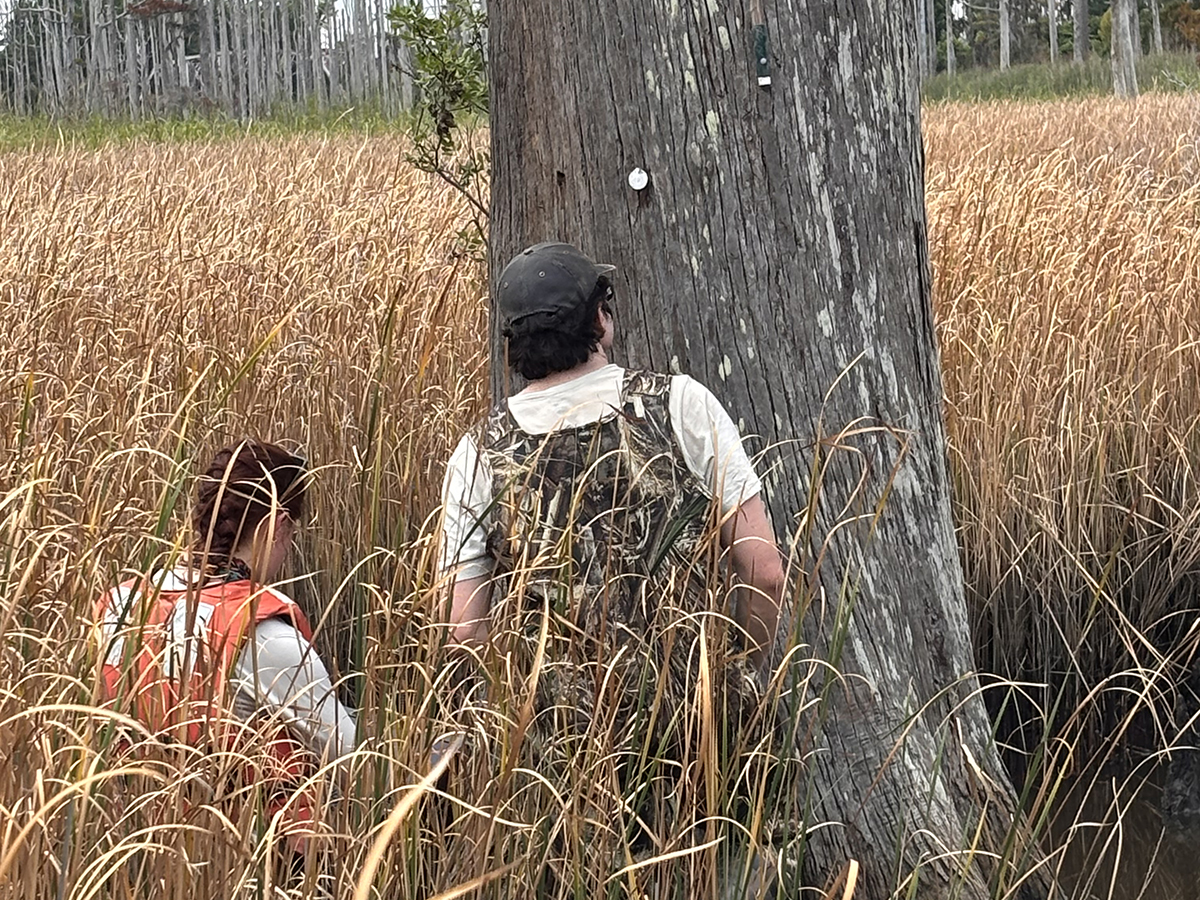
Standing in Smith Creek, a tributary of the Cape Fear River, a bald cypress has weathered nearly nine centuries of change. The tree is at least 871 years old, making it the oldest documented tree in the Wilmington area, and it may even be older.
But the ancient tree and the old-growth stand around it could face the same fate as trees downstream: death from saltwater intrusion, leaving behind what researchers call a ghost forest.
Supporter Spotlight

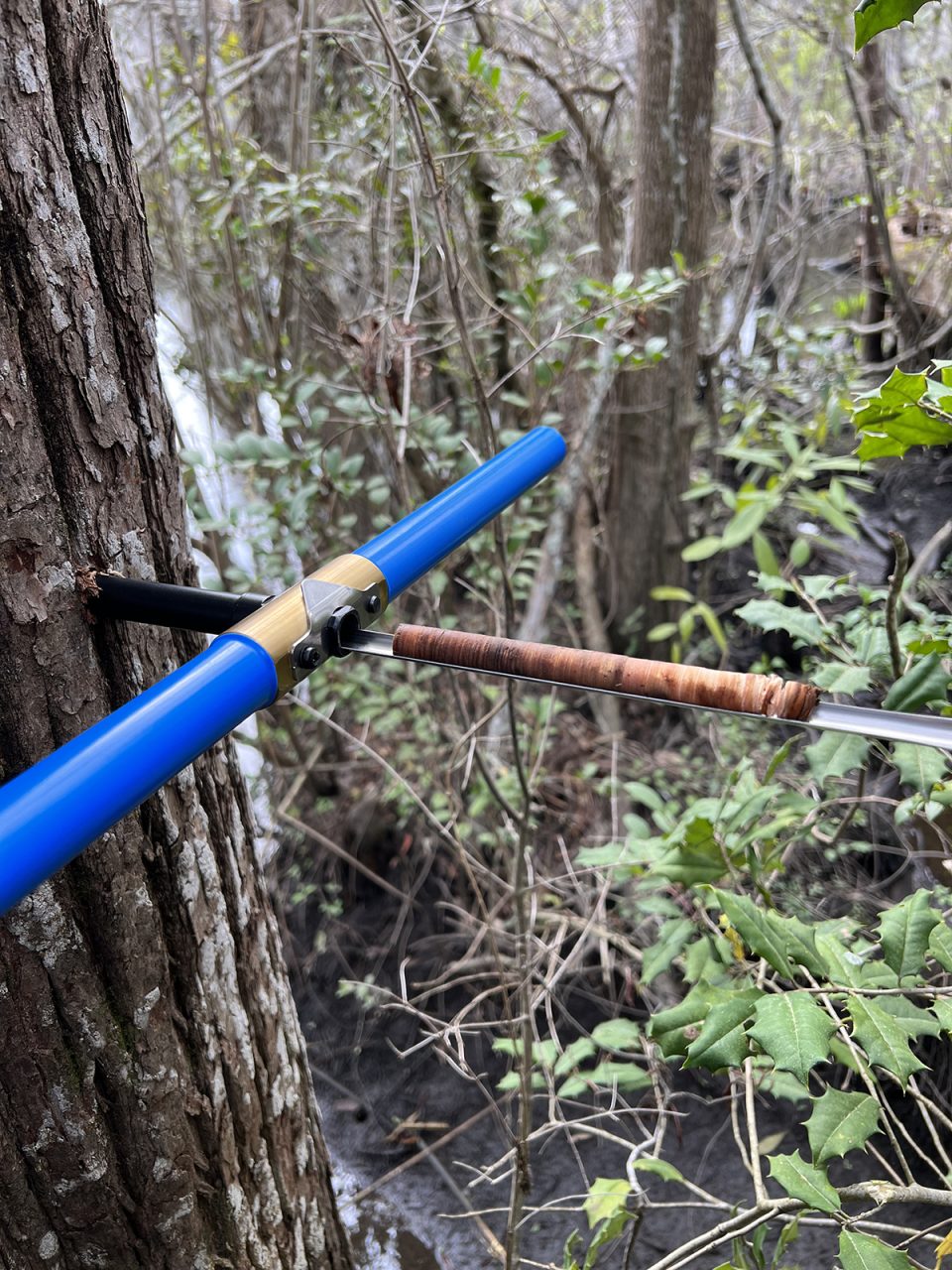
To uncover the tree’s history, researchers extracted narrow cores from living bald cypresses at an upstream section of Smith Creek, where salinity remains relatively low. Using an increment borer, a tool that removes a pencil-thin cylinder of wood without killing the tree, they studied the rings that mark each year of growth.
Their findings are detailed in a new preprint paper that has not yet been peer reviewed.
By comparing patterns of wider and narrower rings across multiple trees, researchers built a chronology stretching back 871 years, making it the longest tree-ring record documented for this community. Each ring offers a window into the conditions the trees experienced as they grew.
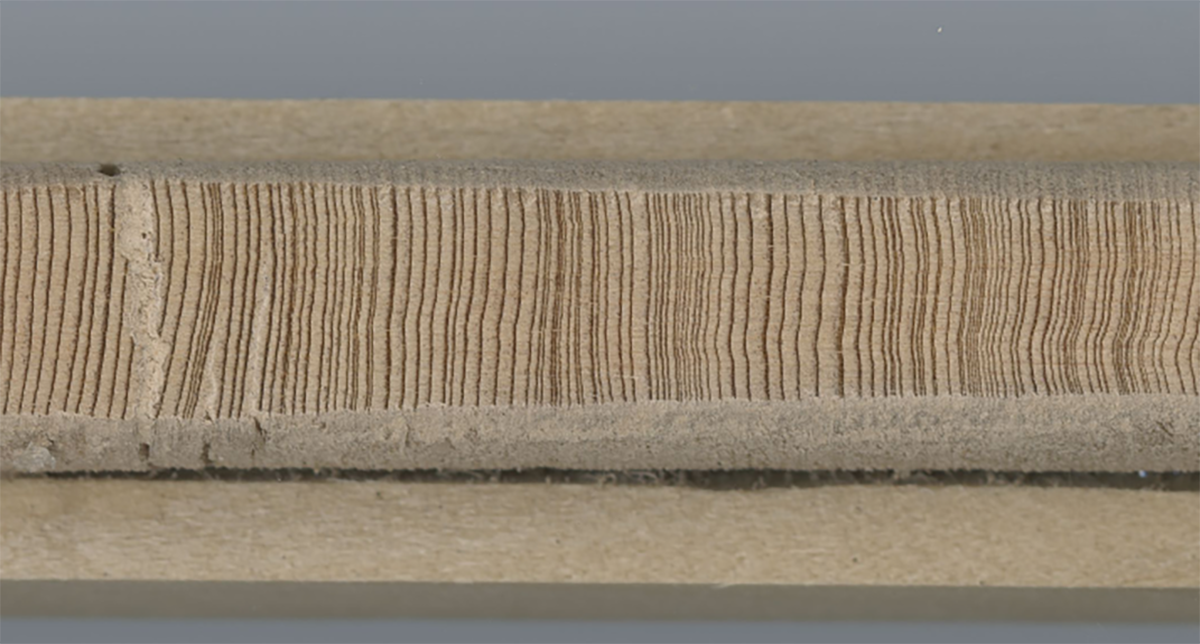
“We can do this kind of environmental storytelling with these trees,” said Madison Gerdes, the study’s lead author, who completed the research as a master’s student at the University of North Carolina Wilmington.
The oldest tree in the chronology, identified as SMC012, may be even older. Researchers could not reach its center, likely because part of the trunk is hollow.
Supporter Spotlight

The study also documented the age of the broader stand. Fifteen of the sampled trees were more than 500 years old, according to Monica Rother, a forest ecologist at UNCW who advised the research.
“These are the oldest scientifically dated trees in the Wilmington area,” Rother said.
The tree rings revealed a history of environmental stress that Gerdes said surprised her. An analysis covering 675 years revealed multiple periods of growth suppression, when unfavorable conditions caused the trees to produce narrower rings. Gerdes said some events affected all the sampled trees represented in those years.
Gerdes and her colleagues found that several periods of suppressed growth correspond with drought and low precipitation. Drought, measured partly through an index of soil moisture conditions, was a major influence on tree growth at the study site.
“Look at everything that they have endured, but now they’re facing this new threat from saltwater intrusion and humans,” Gerdes said.
Bald cypress trees are among the more salt-tolerant tree species in southeastern tidal freshwater wetlands, allowing them to survive in an environment where freshwater flows meet incoming tides. But that tolerance has limits.
The cypress trees form the forest canopy and provide habitat for wildlife. The wetlands also store carbon and help buffer surrounding areas from flooding and storms.
“The bald cypress are the forest. Without the cypress there is no forest environment,” Gerdes said.
When the trees die, the landscape can transition from a forested wetland to marsh. That change does not mean the marsh loses ecological value, but it does mean the loss of a distinct habitat and the functions the trees provide.
“Both of those systems have value to them,” Rother said. “But there are things that trees provide that a marshland wouldn’t.”
Farther downstream along Smith Creek, researchers have already documented the transition from living forest to ghost forest. Earlier research by Gerdes’ colleagues studied sites with differing levels of salinity to better understand what happened to the trees.
At the downstream site, researchers found evidence that salinity had increased by the mid-20th century. Sediment cores contained foraminifera, microscopic organisms that can indicate brackish or saltwater conditions.
By the 1960s, salinity at the site may have been high enough to stress the trees, Rother said. Tree-ring records also showed increasingly frequent and prolonged periods of growth suppression. The most recent suppression period extended from 1985 through 2022, the end of that study’s tree-ring record.
Researchers have linked the forest’s decline to prolonged saltwater exposure, with relative sea level rise and decades of dredging in the Cape Fear River contributing to changing tidal conditions that push saltwater farther inland. The researchers could not determine how much each factor contributed to the decline, Rother said.
As saltwater pushes into freshwater wetlands, trees can face persistent stress rather than a temporary period of unfavorable conditions.
Rother said there may be a threshold beyond which trees can no longer recover from repeated suppression.
“There must be a threshold where if the trees are suppressed too often and for too long, then eventually they’ll die,” Rother said.
The upstream stand remains relatively healthy, Rother said. But the new study suggests recent years of slowed growth could be an early warning sign. Researchers say it is too soon to tell whether rising salinity is contributing.
Bald cypress tolerance can vary depending on a tree’s age and growing conditions. Some younger trees can survive in areas where older trees have died, suggesting that the oldest trees may be particularly vulnerable.
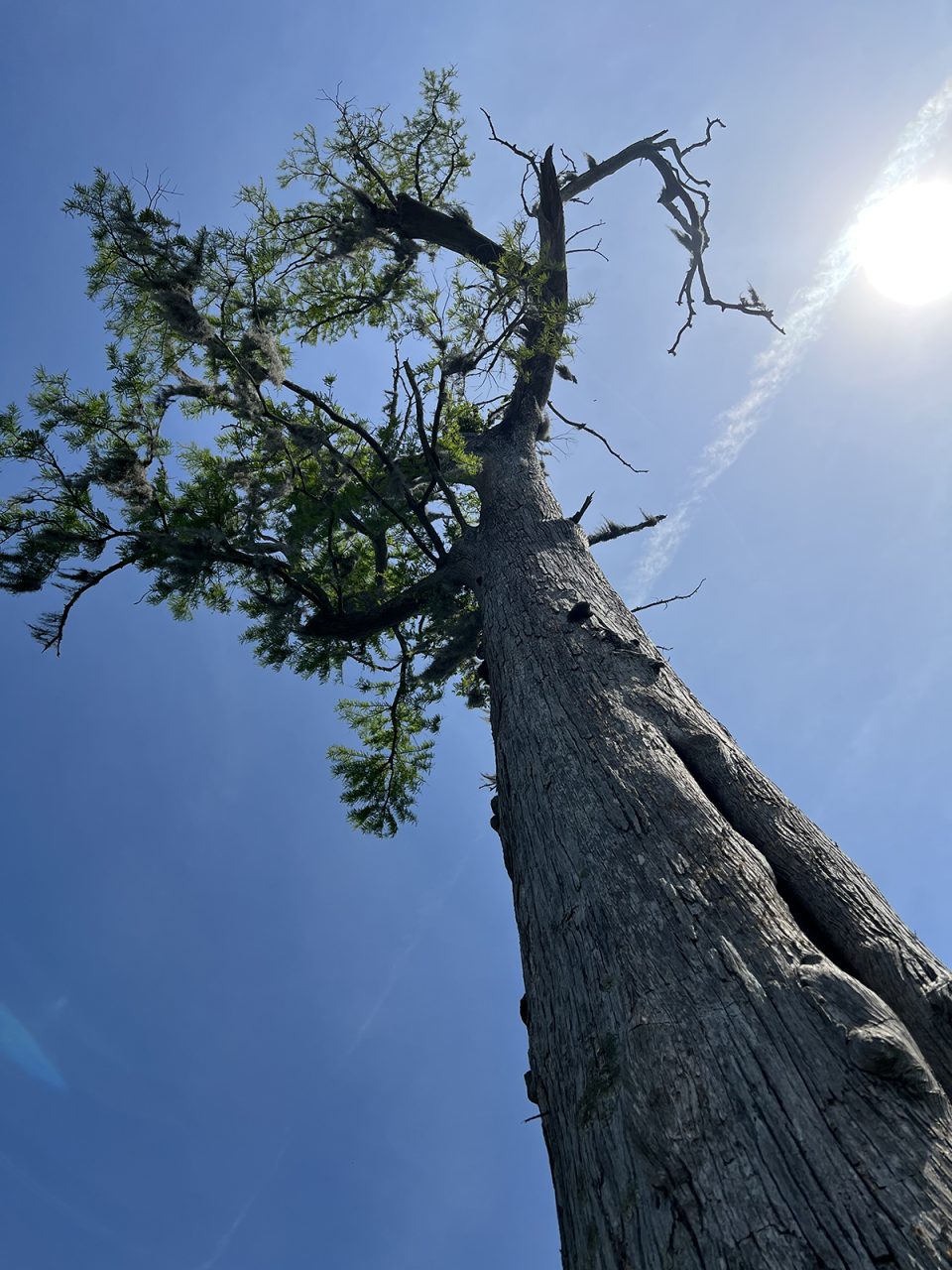
Gerdes said the contrast is unsettling. The trees have lived through centuries of environmental change, including periods when growth slowed across the sampled trees. Now, a changing coastline presents a threat that may be harder to overcome.
“It’s a little scary to be like, look at everything that they can survive, but maybe not this,” Gerdes said.
Researchers are continuing to monitor conditions at Smith Creek using sensors that measure salinity and water levels, along with instruments that track changes in tree growth. The sensors let them track how the trees respond to droughts, storms and saltwater exposure over much shorter periods than tree rings can show.
“It hasn’t rained in two months. What is that doing to the trees?” Rother said. “Or there was a tropical storm that came through. Can we see these reflections?”
Comparing those measurements could help researchers understand how much saltwater exposure the trees can withstand before growth slows or they begin to die. Their survival through centuries of change offers no guarantee that they can weather rising salinity.
For Gerdes, part of protecting the forest includes helping people understand what is at stake.
“There’s a lot of value in that they are still there, and they are still there for their stories to be interpreted,” Gerdes said.