SNEADS FERRY — Nearly a dozen abandoned marine vessels left to rot in North Carolina’s coastal waters are expected to be removed by July.
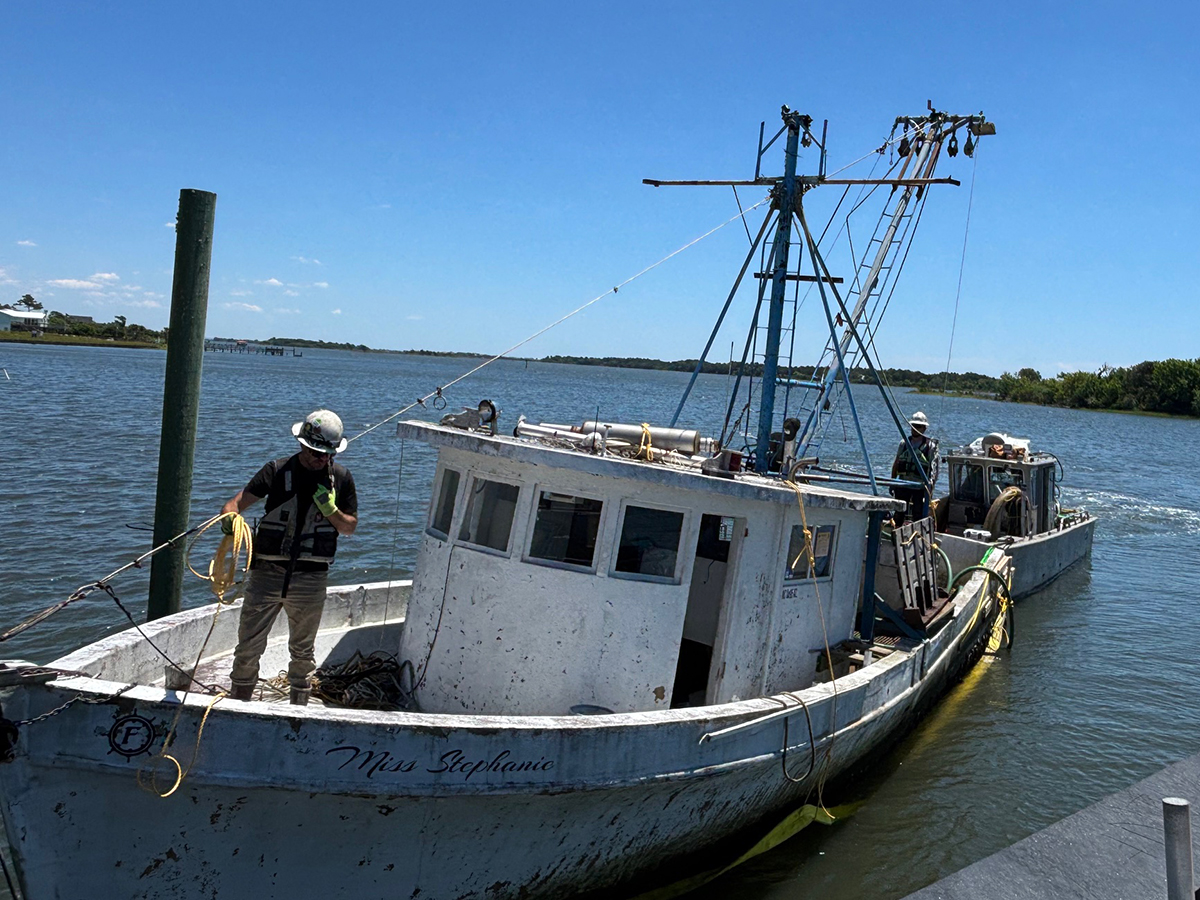
Crews this week pulled a dilapidated commercial fishing trawler and a sunken cabin cruiser from Wheeler Creek, a working waterway nestled off the New River in Sneads Ferry.
Supporter Spotlight
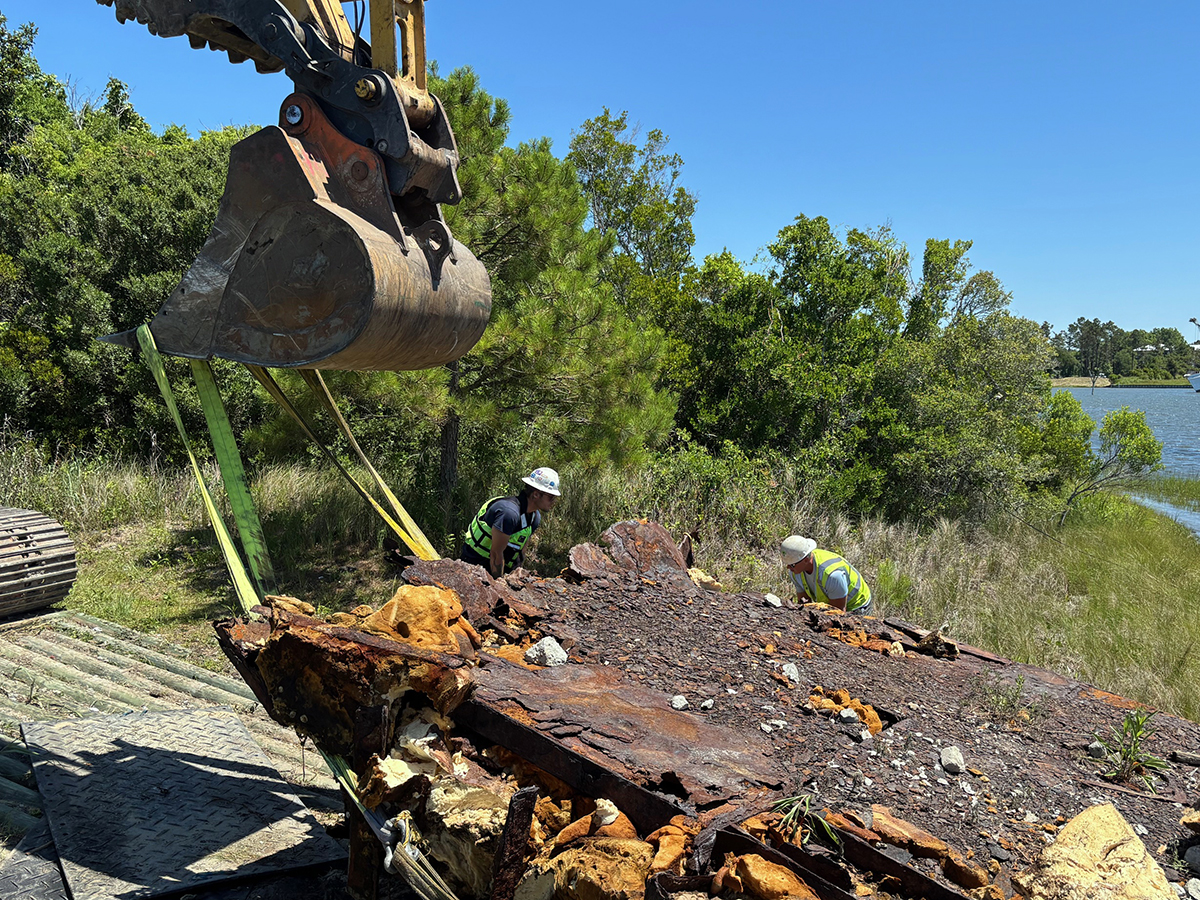
Mainstream Commercial Divers Inc., an underwater construction, maintenance, inspection and commercial diving company headquartered in Murray, Kentucky, also removed two rusted, battered barges from waters in the Onslow County fishing village.
On Monday, crews removed two vessels from the waters around Carolina Beach. Removal of the stranded commercial shrimper Claire Skye is scheduled for later this year. The vessel, currently stranded in Stump Sound near Morris Landing Clean Water Preserve in Holly Ridge, cannot be moved until its resident osprey chicks leave their nest built atop one of the trawler’s outriggers.
This marks the latest wave of abandoned and derelict vessel, or ADV, removals spearheaded by the North Carolina Coastal Federation through a $450,000 grant from the BoatUS Foundation, a nonprofit that focuses on safe, accessible recreational boating for all Americans and promotes environmental stewardship.
The Coastal Federation, which publishes Coastal Review, was awarded the grant earlier this year to oversee the removal and disposal of 12 ADVs littering waters in Carteret, Chowan, New Hanover and Onslow counties.
Ted Wilgis, the Coastal Federation’s marine debris program manager, said Wednesday that the organization is actively working to remove another 30 ADVs.
Supporter Spotlight

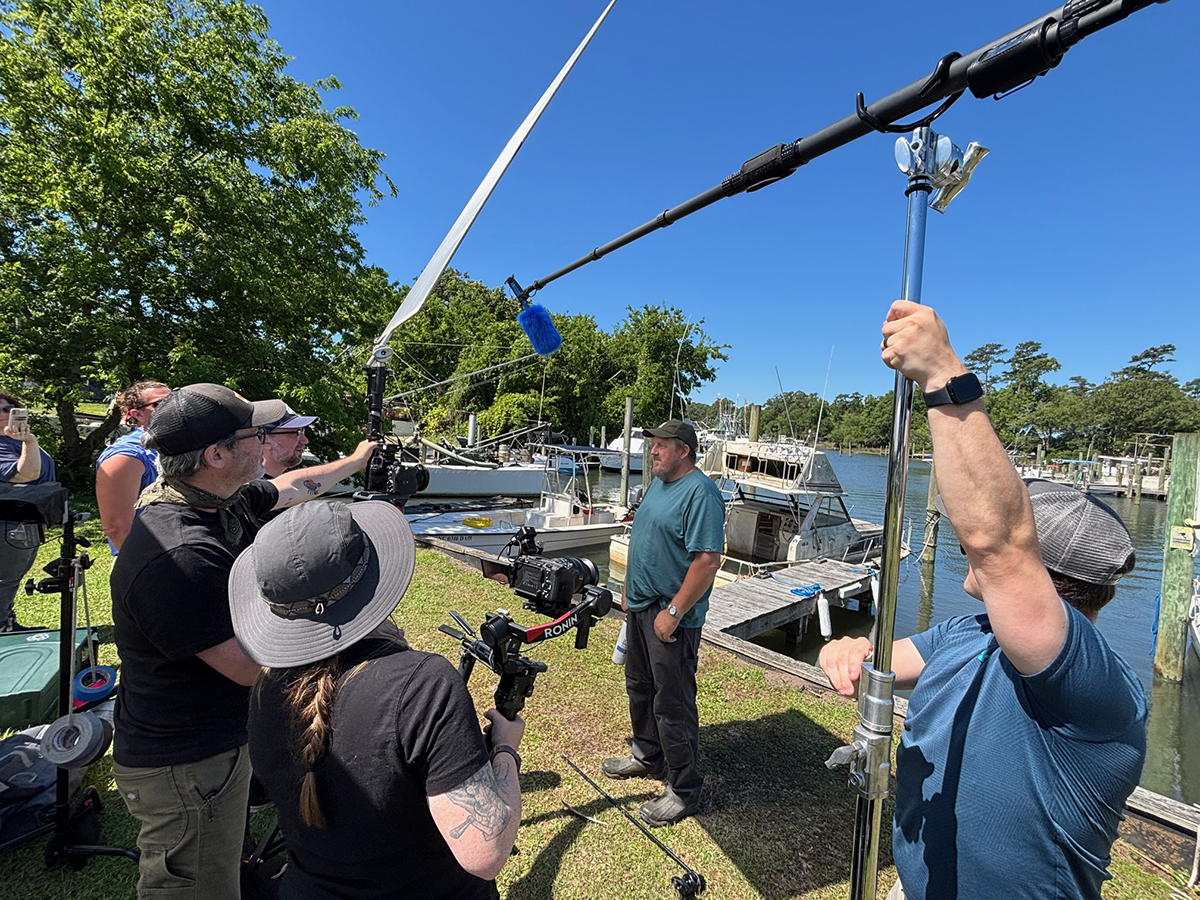
“There’s probably another 10 to 20 more that we know of that we can’t get funding for,” he said, noting that money the organization has received through a four-year, $4.5 million federal grant, state appropriations, and BoatUS Foundation for ADV and marine debris removal is expected to run dry by late summer.
Along with seeking state funding for ADV removal, the organization is working with state lawmakers on legislation to establish a formal North Carolina Wildlife Resources Commission abandoned and derelict vessel program, grant liability immunity to the commission, it’s agents and contractors, and other state agencies during removal operations, and permit emergency removals during declared emergencies.
“There are hundreds of vessels out there that haven’t been investigated yet,” Wilgis said. “There are areas where there are a lot of vessels that are kind of in a limbo state. There’s a big demand for removals and, especially in this economy, there’s going to be more and more.”
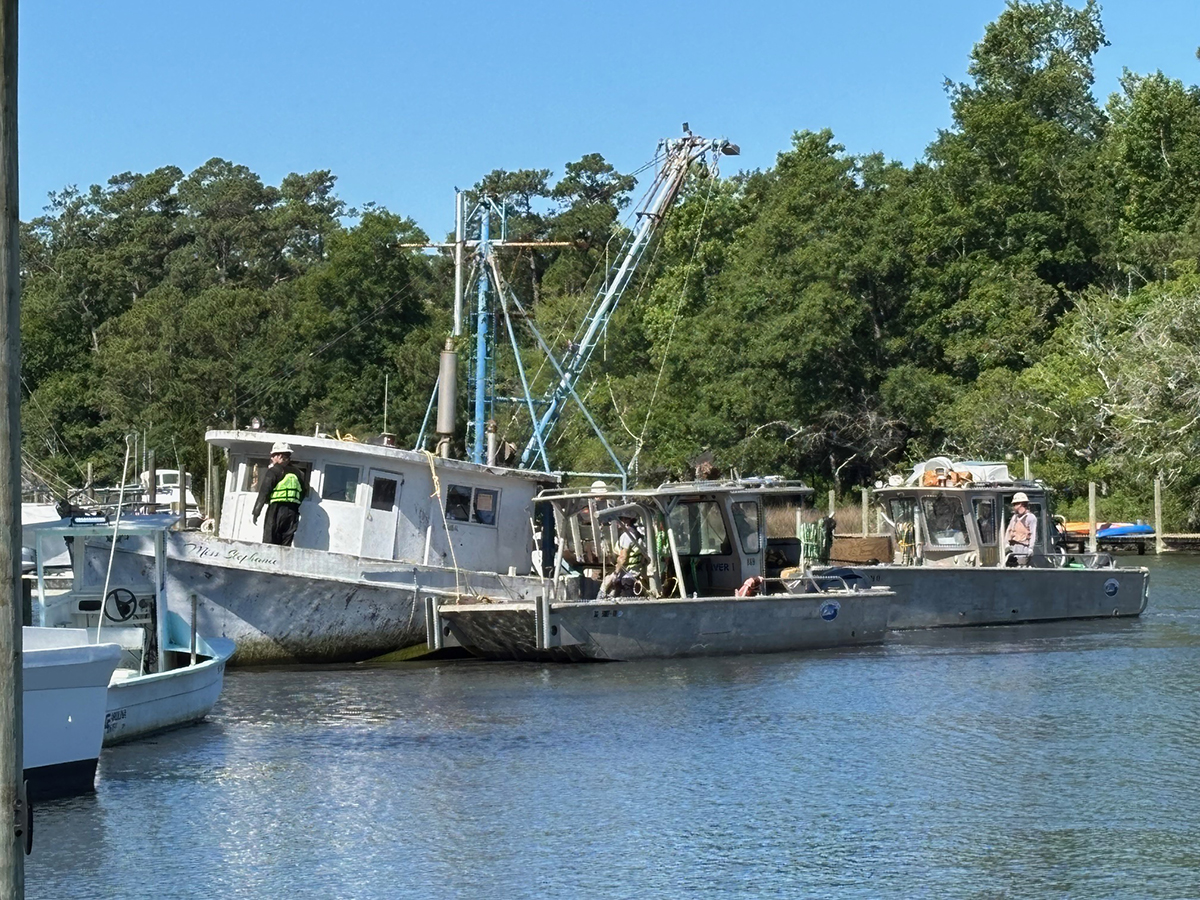
Unwanted and derelict vessels are often left by owners who can no longer afford to maintain them. During severe storms, some vessels break from their moorings and are either left adrift only to sink in tidal areas or strand in marshes, on shorelines or in reefs.
ADVs obstruct waterways and pose serious pollution risks because of their potential to leak fuel and other hazardous materials such as hydraulic fluid and oil. Most recreational boats are made of fiberglass, which can break down over time in the water.
ADV removal is usually a painstaking process that in some cases can take up to a couple of years to complete, depending on the location and condition of the vessel. Removal can cost anywhere from a few thousand dollars for smaller recreational vessels to more than $100,000.
“It varies on where it is and how long it’s been out there,” Wilgis said.
BoatUS Foundation launched a national initiative supported by the National Oceanic and Atmospheric Administration Marine Debris Program to remove hundreds of ADVs from coastal waterways. The project also includes the development of a national database to track ADVs.
More than $7 million in grants have been awarded to cover the costs of direct ADV removals in Alaska, Guam, Oregon, Washington, Louisiana, Maine, the U.S. Virgin Islands and North Carolina, according to BoatUS Foundation Project Coordinator Michael Moore.
The organization is hosting in early December its Turning the Tide Summit, a four-day event where government agencies, environmentalists, marine professionals and recycling and waste management experts from across the country will gather to discuss ways to responsibly and sustainably remove and dispose of ADVs and boating-related debris, and share new technologies and innovative recycling programs.
More than 450 ADVs have been removed from North Carolina’s coastal waters either through the Coastal Federation’s marine debris removal program, local governments, the North Carolina Division of Coastal Management or the Wildlife Resources Commission, Wilgis said.
In 2020, the North Carolina General Assembly authorized and funded the commission to inspect, investigate and remove ADVs associated with Hurricane Florence and other coastal storms. The agency also publishes a database that identifies ADVs and prioritizes their removal.
Beach towns and coastal counties have also in recent years taken steps authorizing their law enforcement agencies to remove abandoned vessels within their jurisdictions.