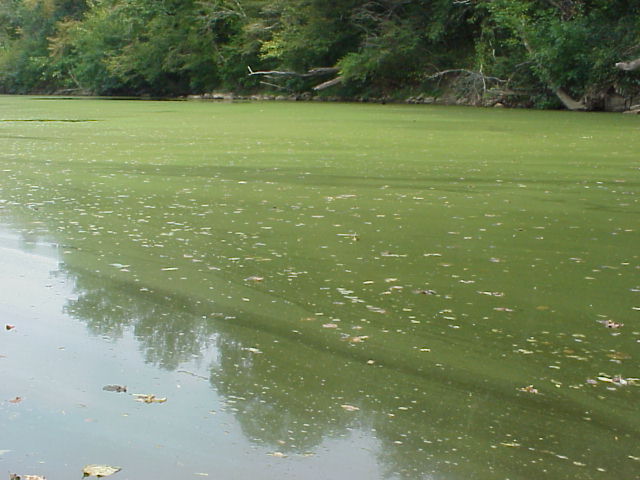
Whether tempted to dip your toe or cannonball into a pond, lake or other waterbody this summer, check the color of the water first.
Elevated temperatures, increased sunlight, low or no water flow, and increased nutrient loads create a recipe for harmful algal blooms, which can be toxic to humans, pets and aquatic organisms.
Supporter Spotlight

The N.C. Division of Water Resources is reminding people to avoid contact with discolored water, which could indicate the presence of an algal bloom.
While algae naturally occur in all waterbodies, certain environmental conditions can cause rapid algal cell growth, which leads to blooms, according to the division.
“You cannot tell for sure by looking at a bloom whether it is harmful or not,” according to a division release.
Algal blooms may be reported to the nearest state Department of Environmental Quality regional office or via an online report. Reported algal bloom events may be viewed at the division’s Fish Kill & Algal Bloom Dashboard.
DEQ may collect water samples for further testing to an algae lab for analysis based on preliminary reports received through the reporting tool if an investigation is needed and resources are available.
Supporter Spotlight

To help staff, please provide detailed reports with a high-quality photo, contact information and a description of the bloom.
The public should steer clear from coming in contact with large accumulations of algae and children and pets should be prevented from swimming or ingesting water water in an algal bloom.
The N.C. Department of Health and Human Services Division of Public Health suggests safeguarding against algal blooms through the following steps:
- Keep children and pets away from water that appears bright green, blue, discolored or scummy.
- Do not handle or touch large mats of algae.
- Avoid handling, cooking, or eating dead fish that may be present.
- If you come into contact with an algal bloom, wash thoroughly.
- Use clean water to rinse off pets that may have come into contact with an algal bloom.
- If your child appears ill after being in waters containing an algal bloom, seek medical care immediately.
- If your pet appears to stumble, stagger, or collapse after being in a pond, lake or river, seek veterinary care immediately.
For tips on water safety, heat protection and food safety visit the health and human service’s website.