Joan Collins is a regular Coastal Review contributor on topics related to Outer Banks history.
In January 2024, I shared a photograph believed to have been taken some time in the 1930s of a time when the historic Pea Island Station was commanded by a white officer in charge. I had heard my father speak of having served under a couple of white officers when he first reported to the station in February 1940.
Supporter Spotlight

This also was before his uncle, Maxie M. Berry Sr., shown standing on the far left in that image and who began his career there several years earlier, would later assume this role. The story has always fascinated me, as it represents a time when even those most familiar with the inspiring story of the historic station don’t often think about or even realize occurred. Still today, many incorrectly believe that after Keeper Richard Etheridge took command in January 1880, the station remained staffed with an “all-Black” crew for 67 years, until March 1947 when my father, Herbert M. Collins, closed the doors for the very last time. Yet, this stunning photograph reflected otherwise.
Although the photograph I shared then did not include my father, one of the two men seated is Palmer Midgett, a name identified as being an officer in charge in my father’s early U.S. Coast Guard records of his service at Pea Island. These records also reflect the name William Scarborough, the man believed sitting on the right, as being an officer in charge while my father was there. At various times, both signed my father’s performance ratings. So, you can imagine my delight when the photograph published in my earlier January 2024 column first came to my attention. Although my father is not shown, it is an important reminder of his service at Pea Island and the service there of those before him, including his beloved uncle, Maxie M. Berry Sr.
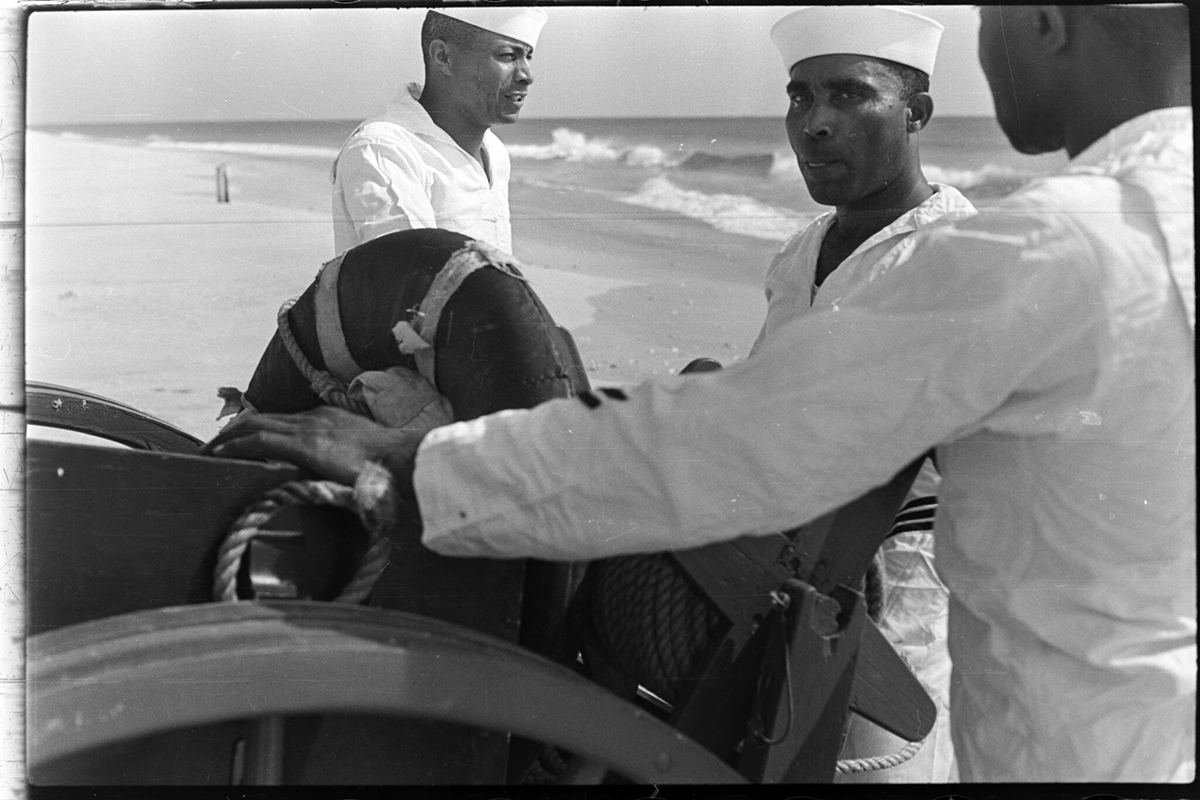
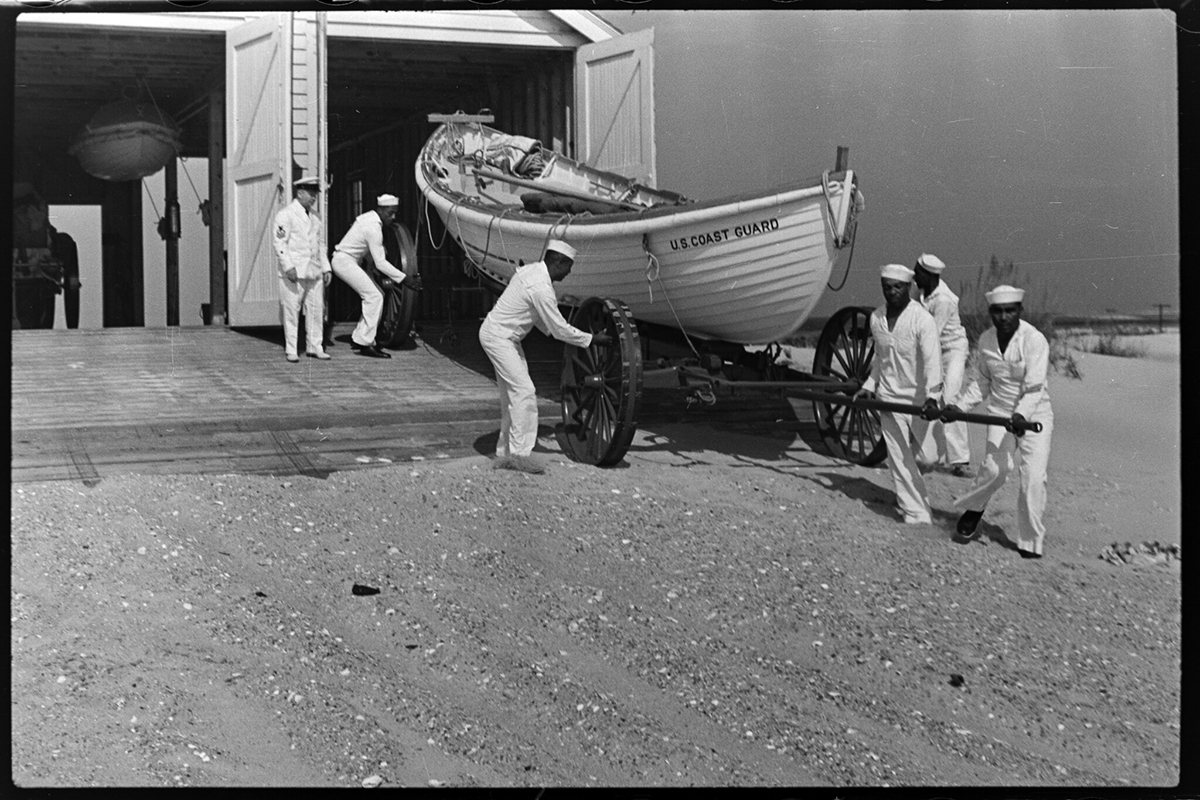
With that background, imagine how delighted I was to learn of these newly discovered images from an unprocessed portion of the “SR.44.47 Conservation and Development Travel Photograph Collection, State Archives of North Carolina.” These photographs were discovered after an inquiry I had made when noticing a recent State Archives Facebook post of a 1938 photograph that is part of this collection. I quickly recognized the photograph as something I had never seen. My excitement was apparent when I telephoned Rebecca Stubbs, audiovisual archivist at the Division of Natural and Cultural Resources and urged her to dig deeper. I wanted to learn what additional photos might be on hand that I had never before seen in my years of researching this topic.
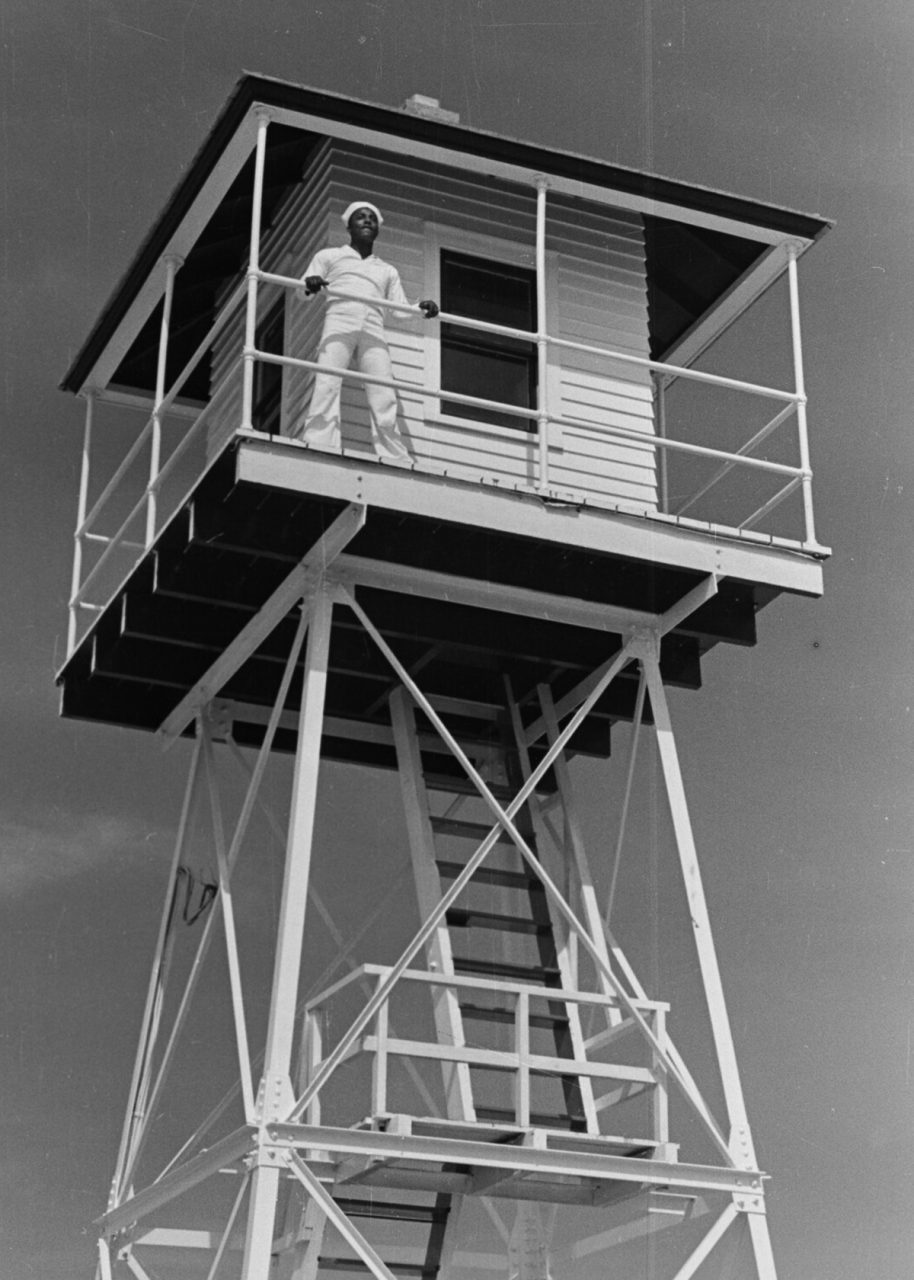
You can also imagine my shock to learn not only one additional photograph existed depicting a time when a white commander was in charge, there were several more – 19 images in total. The white commander shown in several of the images also appears to be William Scarborough, one of the two officers in charge and mentioned in my January 2024 article. Although the photograph in my earlier article was not among these new photographs found, it appears to have been taken on the same day. Palmer Midgett is missing from any of the new photographs found.
I am thrilled to have been granted permission by the DNCR to share this exciting news and this link, Pea Island US Coast Guard Station|Flickr, a digital album created for these 19 images. However, like the photograph published in my January 2024 article, the who, when, and why these newly discovered photographs were taken is not known. The newly found images were discovered in tins and then digitalized to reveal what was enclosed. They are being made available to encourage continued awareness and research about the historic Pea Island station.
Supporter Spotlight

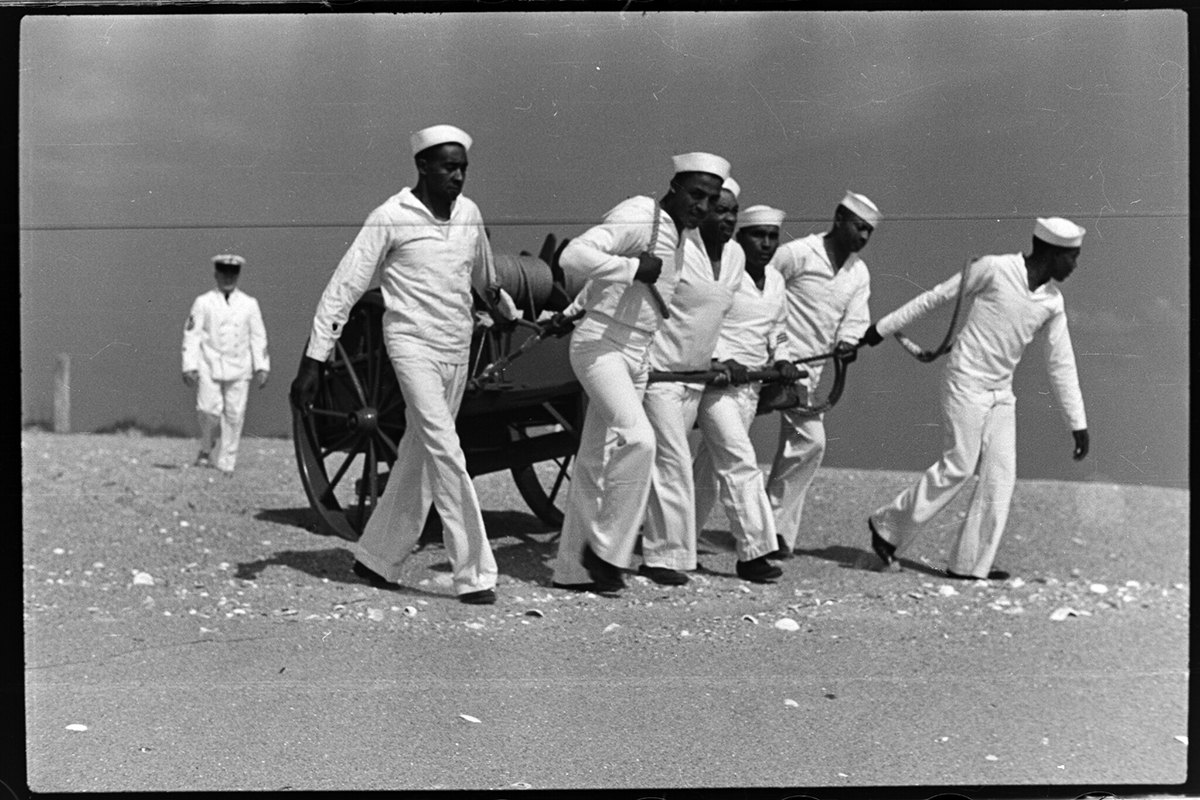
Today, while many now know the inspiring story of Keeper Richard Etheridge and the Pea Island Lifesavers about their most famous rescue, the harrowing Oct. 11, 1896, rescue of the shipwrecked E.S. Newman’s crew, there are more stories to tell.
The story of why my father reported to white commanders during his early service at Pea Island is something I have been attempting to unravel in recent years, along with the story of “Checkerboard Crews,” racially mixed crews that existed on the Outer Banks during the Pea Island station era.
Look here for more soon on this and the fascinating story of George Pruden, the individual also mentioned in my earlier article. Pruden’s retirement in 1937, which he would later allege was forced, broke the continuous cycle of Black men being placed in command at the Pea Island station after Etheridge’s command.