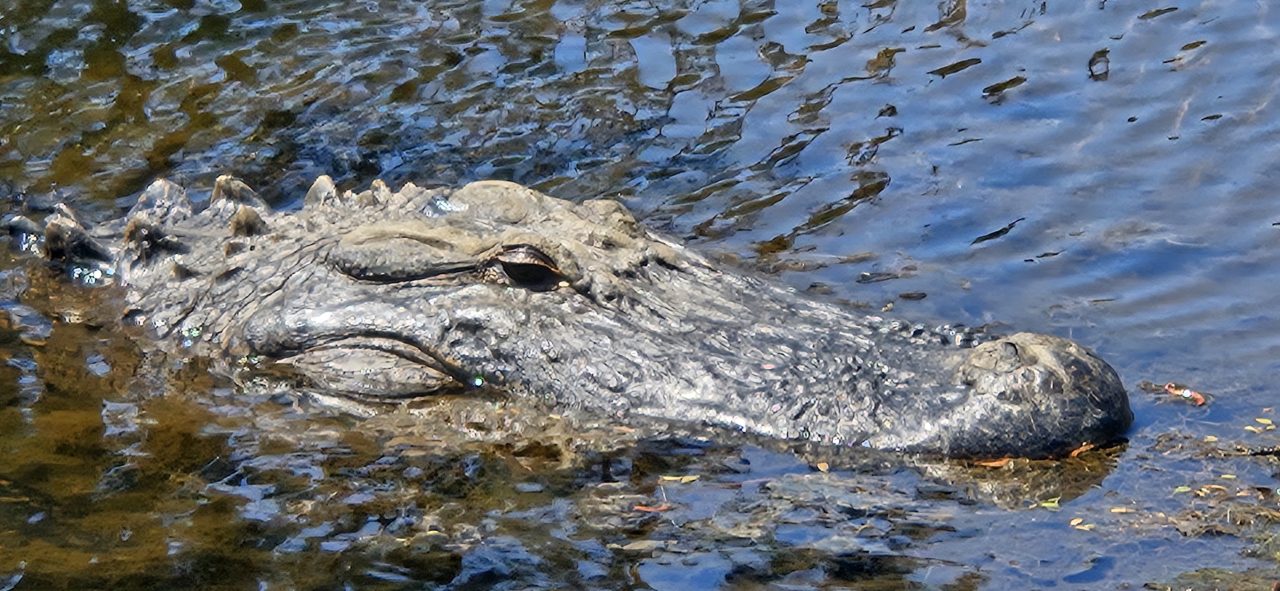
North Carolina biologists are already receiving numerous daily calls from residents and visitors encountering alligators in several coastal counties, where the native species are on the move during their mating season.
“May and June are mating season for alligators which means they are moving around more,” Alicia Wassmer, a North Carolina Wildlife Resources Commission alligator biologist, stated in a release. “Warmer weather also brings more people outside, so reports of encounters increase.”
Supporter Spotlight

Residents and visitors should not feed alligators, officials warn, because that teaches the animals, which are naturally fearful of and avoid close encounters with humans, to associate people with an easy meal. It is also against state law.
State wildlife officials advise residents and visitors to check out GatorWise, a multi-state project that offers tips on ways to safely coexist with the reptiles.
WRC Wildlife Management District Biologist John Henry Harrelson, who works in nine counties, including Brunswick and Columbus, said in a release that he is increasingly encountering alligators exhibiting a diminished fear of humans as he conducts several site visits each week within areas of the district he serves.
“People feeding alligators ultimately leads to those animals seeing humans as a potential source for food,” Harrelson stated. “Naturally alligators are shy, but through feeding, alligators can lose their fear of humans and that leads to a possible negative interaction between people and wildlife. Communities are reaching out to us concerned about animals that are approaching or being ‘aggressive’ towards humans. Most of these behaviors are directly linked to animals being fed by people.”
Biologist Chris Kent, who serves District 2, which includes Carteret, Craven, Jones, New Hanover, Onslow, Pender and Pamlico counties, said he is receiving more calls reporting alligators in neighborhood retention ponds and ditches this time of year.
Supporter Spotlight

“We typically do not relocate as many alligators do not survive the relocation or they try to find their way back and sometimes get hit by vehicles in the roadways,” Kent stated in the release. “For emergency situations like in a swimming pool, against a house, under a vehicle in a parking lot, in a garage, or obstructing a public roadway, we will attempt to capture and release an alligator into the closest natural waterbody.”
To the north, where alligators are most likely to be spotted in Dare, Tyrrell, or Hyde counties, most human-gator interactions are within wildlife refuges, especially Alligator River National Wildlife Refuge, according to District Biologist Dallas Shoemaker.
“We’ve had issues with visitors there feeding alligators and bears,” he stated.
Development throughout the Southeast, including along coastal North Carolina, is crowding out alligators’ natural habitat, increasing human-gator encounters, and driving up the number of calls each year to the N.C. Wildlife Helpline.
“This loss of natural habitat and constant influx of newcomers, including many who have never lived in places with alligators, has amplified the need for state wildlife resource agencies to connect residents and visitors with vital information on how to live responsibly with alligators,” said Wassmer.
To protect people and alligators throughout the southeast, GatorWise offers six basic guidelines, which include:
- Assume alligators are present.
- Never feed alligators.
- Do not dispose of fish or food scraps in water.
- Never harass, capture, or handle an alligator.
- Be responsible for people and pets in your care.
- Maintain awareness anytime you are in or near water.
“I encourage people to enjoy the opportunity to see an alligator in the wild but view them from a safe and respectful distance,” Wassmer stated. “The only thing you should try to catch is a photo but use the zoom and give them room.”
American alligator are federally protected. Only authorized state wildlife employees or licensed agents can legally remove an alligator in the case of it requiring immediate action, such as one getting trapped in a swimming pool or wandering onto a public road and refusing to move.
N.C. Wildlife Helpline biologists may be reached at 866-318-2401 between 9 a.m.-5 p.m. Monday through Friday with questions or concerns about alligators.
Violations or after-hours emergencies may be reported to Wildlife Enforcement at 800-662-7137.