
Historian Glenn Blackburn, professor emeritus of history at University of Virginia’s College at Wise, has written his second book about Coastal Review’s publisher, the North Carolina Coastal Federation and the nonprofit’s history, people and accomplishments.
Released earlier this year, “A Spectacular Coast and Its Guardians” tells the Coastal Federation’s story and examines, according to the book’s subtitle, “its conservation, restoration, education, and advocacy work to protect and restore the North Carolina coast.”
Supporter Spotlight

The book chronicles the changes that have occurred on the coast since the organization was founded in 1982 to protect coastal water quality, with a shift toward helping coastal residents and the natural areas here adapt to the increasingly extreme weather that climate change has fueled.
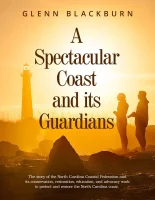
“Through hundreds of interviews with staff, volunteers, fishermen, scientists, and community leaders, Blackburn’s books tell the story of the North Carolina Coastal Federation’s grassroots beginnings and its coastwide work to protect and restore the places we love,” according to the Coastal Federation. The book is a follow-up to Blackburn’s 2018 volume, “Saving Great Places,” which focuses on five projects the Coastal Federation and coastal residents took on to protect the coast, including the organization’s first big win, stopping a proposed peat mining operation that put at risk wetlands and fisheries in the Albemarle-Pamlico peninsula.
Blackburn will be on hand 5:30-7 p.m. July 14 at the Coastal Federation’s Wrightsville Beach office, at 309 West Salisbury St. for an evening of coastal stories, history, and conversation. Learn more and register online.
Guests will have the opportunity to meet the author, get a copy of his book personally signed, and learn more about the people and places that shaped the Coastal Federation’s history. Light hors d’oeuvres will be served. You may purchase the book online.
An Advocacy Organization That Saved Land and Water
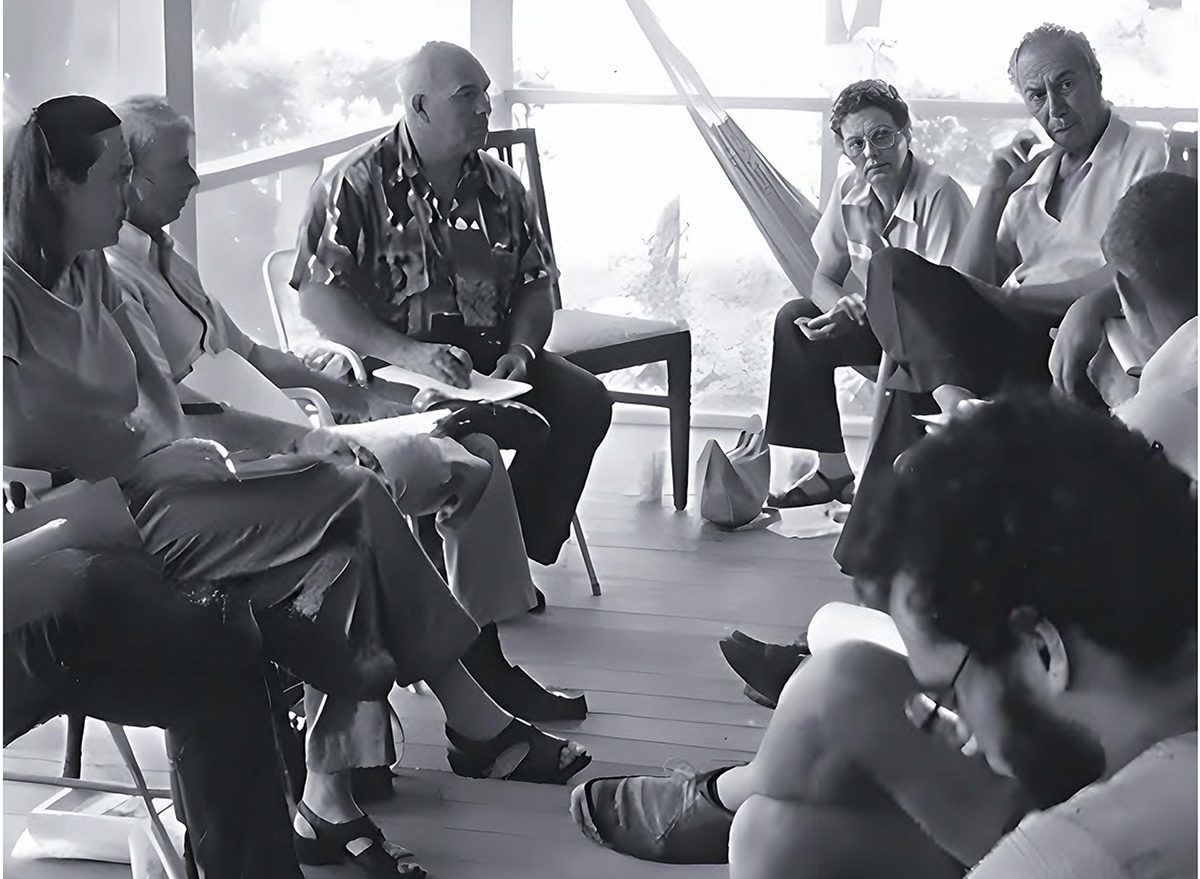
The Coastal Federation was a small but very effective advocacy organization in the 1980s and 1990s. Led by Todd Miller it was a polite but persistent advocate that worked in alliance with large numbers of ordinary people on the coast.
Supporter Spotlight

A very popular advocacy campaign was the Federation’s strong support for the right of all people to have access to North Carolina’s beaches. Another was a long-term, still ongoing campaign to keep our coastal waters clean and safe. Three others focused on specific places on the coast where commercial or housing development threatened the well-being of a beautiful place and the people who lived there.
First, was the 1982-1984 alliance with local fishermen that blocked a peat mining operation in the Albemarle-Pamlico peninsula that would have destroyed 120,000 acres of wetlands and undermined fishing waters.
Second was the 1983-1987 Stump Sound fight in which the Federation and local fishermen worked together to stop a condominium development that would likely have ruined the fishing waters in a lovely sound.
Third was a 1992-2002 struggle by the Federation, local residents, and other environmental groups to prevent a housing development from taking over valuable wild land on Bird Island near Sunset Beach. Full accounts of these three public fights are in Saving Great Places found online at nccoast.org.
And there was a very small beginning of advocacy about the threat of sea level rise.
Advocacy in Defense of Public Access to Sandy Beaches
The most popular policy the Federation has ever had is its ongoing advocacy that everyone should be able to enjoy our sandy beaches and all our public trust lands and waters, particularly the salt marshes. A huge number of North Carolinians are beach lovers, people who want to go to the beach to play. They want to play in the water, on the sand, in their boats, and on their surfboards. They want to see the beauty of the world on a spectacular coast. They want to feel the wonder and majesty of the ocean. They want to smell saltwater and hear birds sing. And a large number are fishermen who want to enjoy the riches of salt marsh habitats, particularly oystering.
From the 1980s on, the Federation has continually worked to educate North Carolinians about their legal right to use the state’s beaches. This work aligns exactly with long-established state policy stipulating that North Carolina’s beaches are held in public trust for everyone. The public owns and has the right to use any part of a beach up to the mean high tide mark. The dry sand area between the mean high tide mark and the base of the first line of sand dunes may be owned by individual property owners, but the public has the right to use this dry sand area so as to have access to the wet beach. These two rights are public trust rights protected by the state.
The right of public access to beaches is generally supported in North Carolina, although there is one gated island — Figure Eight — that keeps the public out and a few private housing developments that provide little if any, public access to beaches in front of them. And there are some chronic problems — not enough walkways for visitors to get to the beach, not enough parking spaces and toilet facilities for people wanting to spend a day at the beach. The Federation constantly pushes state agencies and beach town governments to provide more walkways, more parking, and more toilets.
The Federation also strongly opposes the building of oceanfront seawalls, because seawalls lead to the destruction of the beaches that belong to everyone. When sea level rise and hurricanes cause ocean waves to crash across beaches into the foundations of oceanfront houses, the instinct of property owners is to build something — a seawall or a row of sandbags — to block the ocean. But when waves hit a wall, the wave energy explodes and the explosion begins to eat out the sand in front of the wall. With explosion after explosion over days and months, the eaten-out sand is pulled back into the ocean bit by bit, and the sandy beach slowly disappears. A property owner may gain some protection, but the public loses its beach.

In the 1970s state policymakers began to realize that oceanfront seawalls do more harm than good, and in the 1980s the Federation, along with Duke University coastal scientist Orrin Pilkey and many others, began to push for a ban on all hardened structures on oceanfronts. In 1985, the Coastal Resources Commission (CRC) imposed a ban on seawalls and groins on the oceanfront (a groin is a wall perpendicular to a beach that is designed to capture sand from ocean currents thereby helping to restore an eroding beach). The ban eventually became state law early in 2003 after the Federation pointed out to Senator Marc Basnight that too many variances were being issued to the state’s seawall ban regulations by the CRC.
Within a few years of the original ban, a number of wealthy people who owned beach property allied with some developer organizations and began to try to find a way to circumvent the ban. Pressure on the CRC to modify the ban became so intense that in the early 1990s, the Federation had to organize a major letter-writing campaign leading to thousands of messages being sent to the CRC to demonstrate public support for the ban. The campaign succeeded in blocking the political pressure.
A few years later in the late 1990s, the Shell Island Resort on the northern end of Wrightsville Beach made another attempt to get around the ban. The Resort was built so close to Mason’s Inlet that inlet waters were threatening to erode the foundations of buildings, so the Resort’s owners (many of them out-ofstate investors) sued the state seeking to get the right to build a permanent seawall. In 1998, the Federation joined the state in a legal defense of the ban on oceanfront seawalls on the grounds that a seawall would destroy the public beach. A court upheld the state ban, and the Resort was able to resolve its problem only by paying for a dredging operation to move the inlet away from its buildings.
The ban on oceanfront seawalls remained in place into the 21st century, but environmental attorneys believe that sea level rise will lead to more challenges to the ban. John Runkle, an attorney on the Federation’s Board, says bluntly: “If sea level rise speeds up, wealthy people who own oceanfront property will push hard for the right to build seawalls to protect their property” (John Runkle, July 18, 2009). Geoff Gisler of the Southern Environmental Law Center says the same thing in different words: “The conflict between nature and development will not go away. The desire to build terminal groins will be a continuing issue, as people will want to protect development in dynamic coastal areas through the use of hardened structures. These issues will be amplified by sea level rise” (Geoff Gisler, August 3, 2014).
Orrin Pilkey, the Duke scientist who has written numerous well-regarded books on barrier island beaches, is a long-time ally of the Federation. He insists that the most important thing we need to do on the coast is “preserve the beaches for future generations.” The Federation is very sympathetic to PiIkey’s argument (Dr. Orrin H. Pilkey, September 22, 2008).