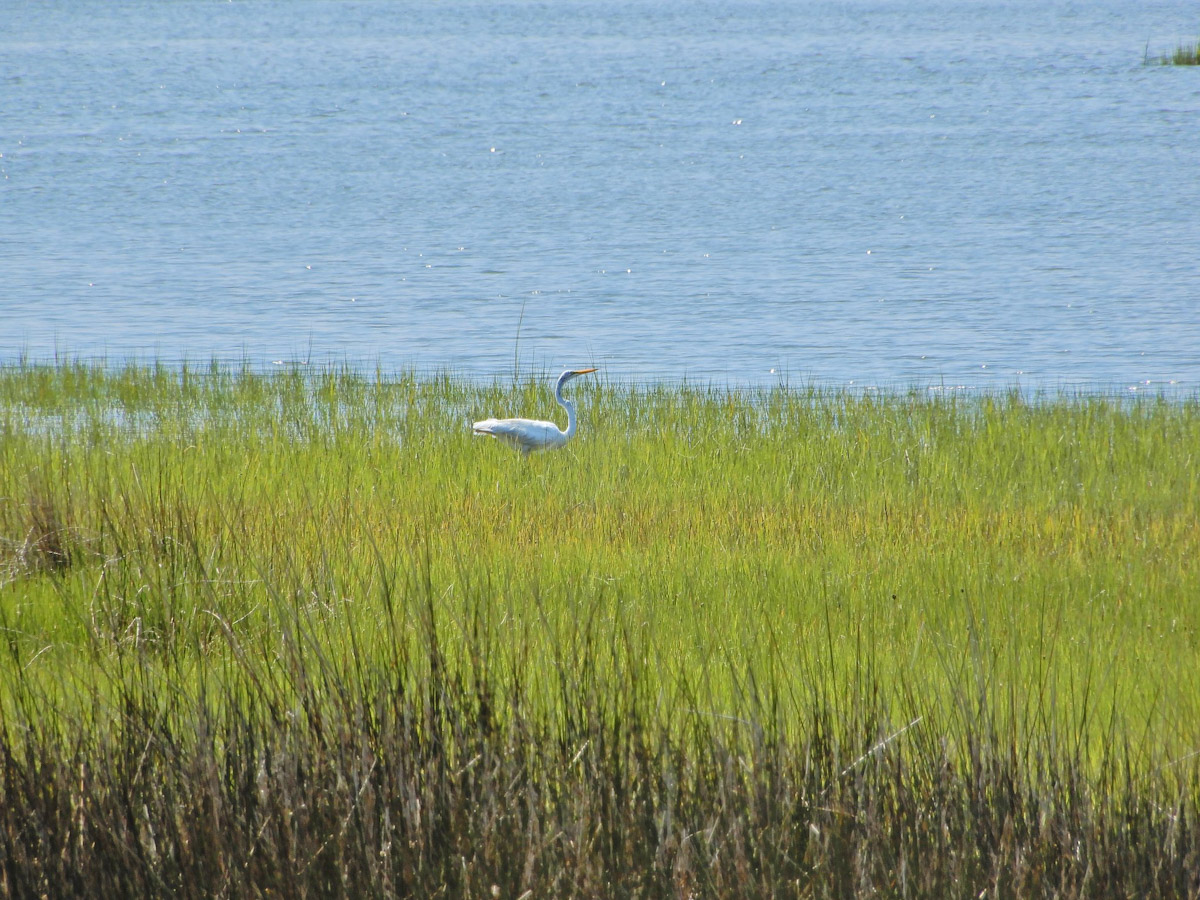
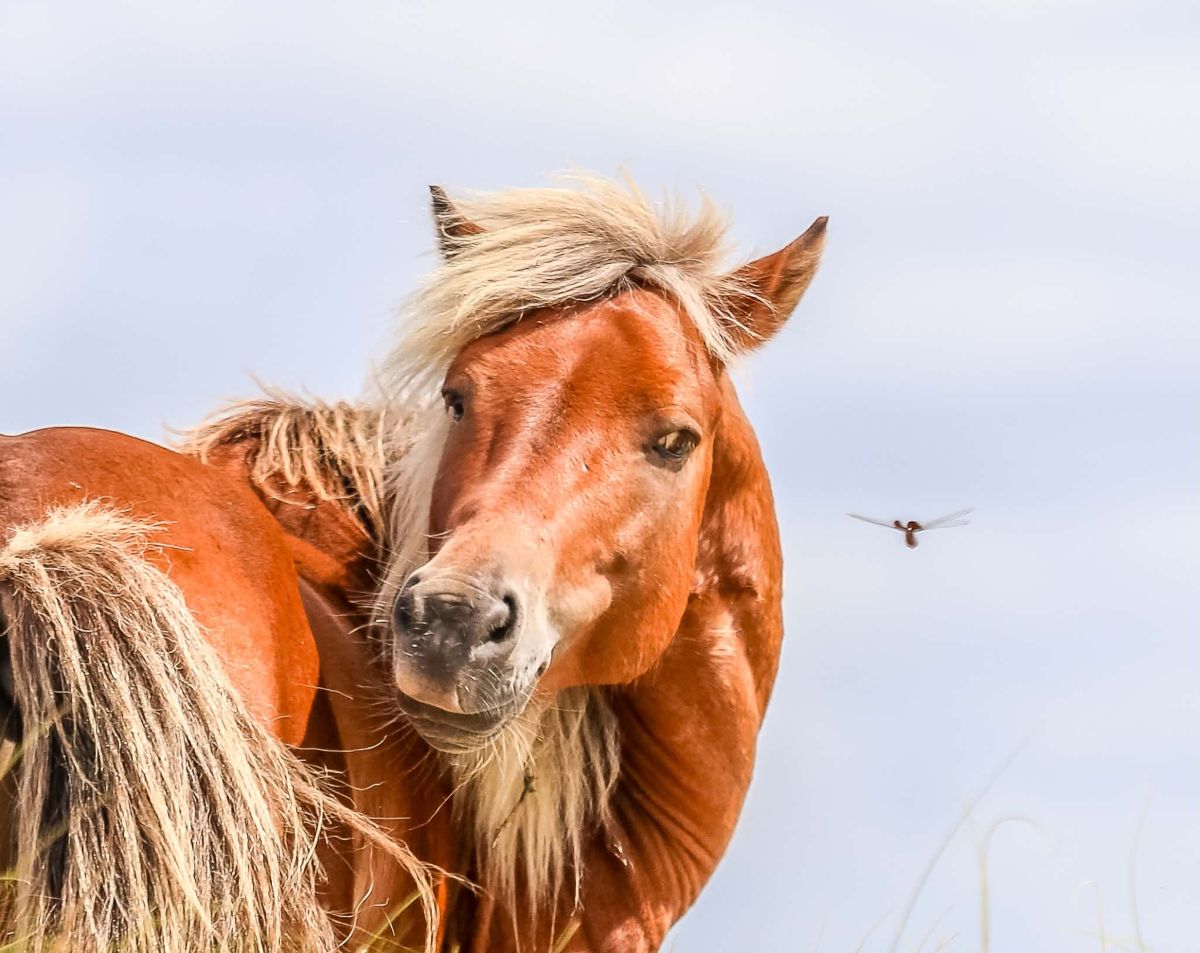
The scorching sun, nearly unbearable humidity and the impenetrable clouds of insects are no deterrent for the thousands who spend the day exploring either Shackleford Banks or the Rachel Carson Reserve, the natural environment for Carteret County’s wild horse herds.
Once visitors board the passenger ferries on the mainland that head to the undeveloped barrier islands, they are forsaking modern conveniences to observe the protected species as they graze in the marsh, feast on sea oats or, if the stars align, witness the extraordinary moment when a newborn foal attempts its first steps on wobbly legs.
Supporter Spotlight

Shackleford Banks is the 8-mile-long southernmost barrier island of Cape Lookout National Seashore, part of the National Park Service, that has a herd of more than 100 wild horses. The Rachel Carson Reserve, which is visible from the Beaufort waterfront, protects a herd of between 20 and 30.
The National Park Service co-manages its herd with the nonprofit Foundation for Shackleford Horses Inc. that was formed in 1996 since the Shackleford Banks Wild Horses Protection Act was signed in 1998. The Rachel Carson Reserve is one of 10 sites under the North Carolina Coastal Reserve and National Estuarine Research Reserve, part of N.C. Department of Environmental Quality’s Division of Coastal Management.
The organizations have rules and guidelines in place that allow visitors to make the most of their experience while also preventing the animal from becoming habituated, and losing its “wild lifestyle.”
In an effort to help protect the public and the herds, the two agencies and the foundation have partnered for the fourth year on the Pony Patrol program. The trained volunteers, identifiable by their bright yellow T-shirts or vests, commit to spending three or four hours a few times a month during peak season at either location to help manage wildlife and visitor interactions.
“As residential growth and tourism surge along the Crystal Coast, more people than ever are encountering the wild horses that define this place,” the reserve’s Stewardship Coordinator Paula Gillikin said. “Protecting the wildness and well‑being of these iconic animals — while also ensuring public safety and enjoyment — has never been more important. The Pony Patrol volunteer program offers a powerful way to safeguard the horses, educate visitors, and create safe, respectful experiences for everyone.”
Supporter Spotlight

Foundation President and Chairman Margaret Poindexter told Coastal Review last week that this year’s group 50 or so volunteers, referred to as the “Pony Patrollers,” is the biggest yet and “We’ve been blown away by their enthusiasm.”
All Pony Patrollers, both new and returning, went through training in April and began May 14 their three- and four-hour shifts, giving the organizations and volunteers time to smooth any wrinkles ahead of the notoriously busy Memorial Day weekend.
“The new folks have paired with veterans to get the benefit of their experience and insight. We’ve had coverage that exceeds what’s required, and we were well-staffed over the holiday weekend, which can be crazy sometimes,” Poindexter continued. “Going into June, signups for shifts outpaces the minimum commitment from the volunteers.”
Poindexter said that in conjunction with the foundation’s 30th anniversary celebration this year and to recognize the service of the Pony Patrol volunteers, the foundation is sponsoring a photography exhibit and competition to be on display at the Core Sound Waterfowl Museum and Heritage Center’s gallery at 806 Arendell St. in Morehead City. Core Sound is a community-focused history museum and gathering place on Harkers Island. The gallery is part of its outreach programming.
The opening reception is from 2 to 4 p.m. Saturday, June 6, at Core Sound’s Morehead City gallery. The exhibit will be on display all summer.
Poindexter said the foundation wanted this exhibit to be different from others the organization has hosted in the past.
“We wanted to create an opportunity to recognize the service and dedication of our Pony Patrol volunteers, and we have some really gifted photographers among them,” Poindexer said.
“We thought an exhibit of photos, showcasing not only their talent, but more importantly, demonstrating their passion and love for the wild horses would help us show the public how fortunate we are to have this unique group of folks serving on Pony Patrol,” she continued. “As the Foundation turns 30, it’s gratifying to know that we have such a committed group of volunteers looking out for the wild horses going forward.”
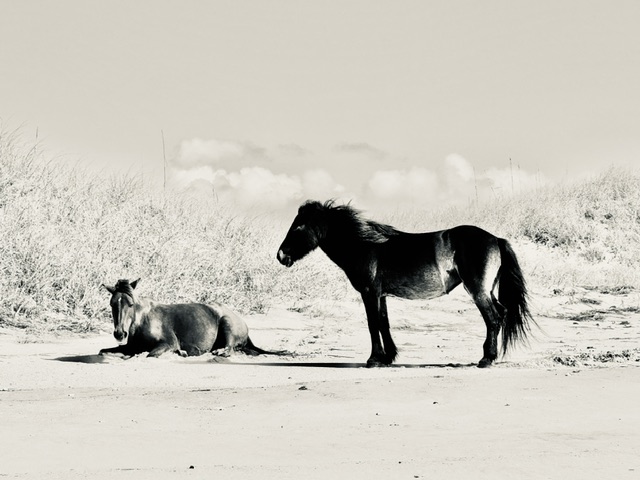
Mark and Lynn Golitz, owners Bluesail Golitz Studios in downtown Morehead City, are judging the competition. Winners will be announced at the reception.
“Mark is a potter and Lynn is a painter, and together they are a creative force in our community. They are advocates for our local wild horses, they have wholeheartedly supported the work of the Foundation for years, and we are so grateful for their support,” Poindexter said.
There will also be a chance for folks to vote for People’s Choice while exhibit is up and the winner will be announced at the end of the show.
Pony Patrol began as an idea in the late 2010s but didn’t take off until four years ago.
“We started meeting in 2019 about the program details, scheduled it for its first season in 2020, and then it was shelved because of the pandemic. We were able to get it back on track and launched it in 2023,” Poindexter explained.
The all-call for volunteers for the 2026 season went out early in the year and those selected were required to take part in a training session held April 15 in the N.C. Maritime Museum in Beaufort.
The volunteers learned the history and goals of the program, heard from representatives of the National Park Service, NCDEQ, local law enforcement, how to speak with visitors and what is needed to prepare for the shifts that require being able to trudge through sand while dealing with extreme sun, heat, humidity, wind, and bugs.
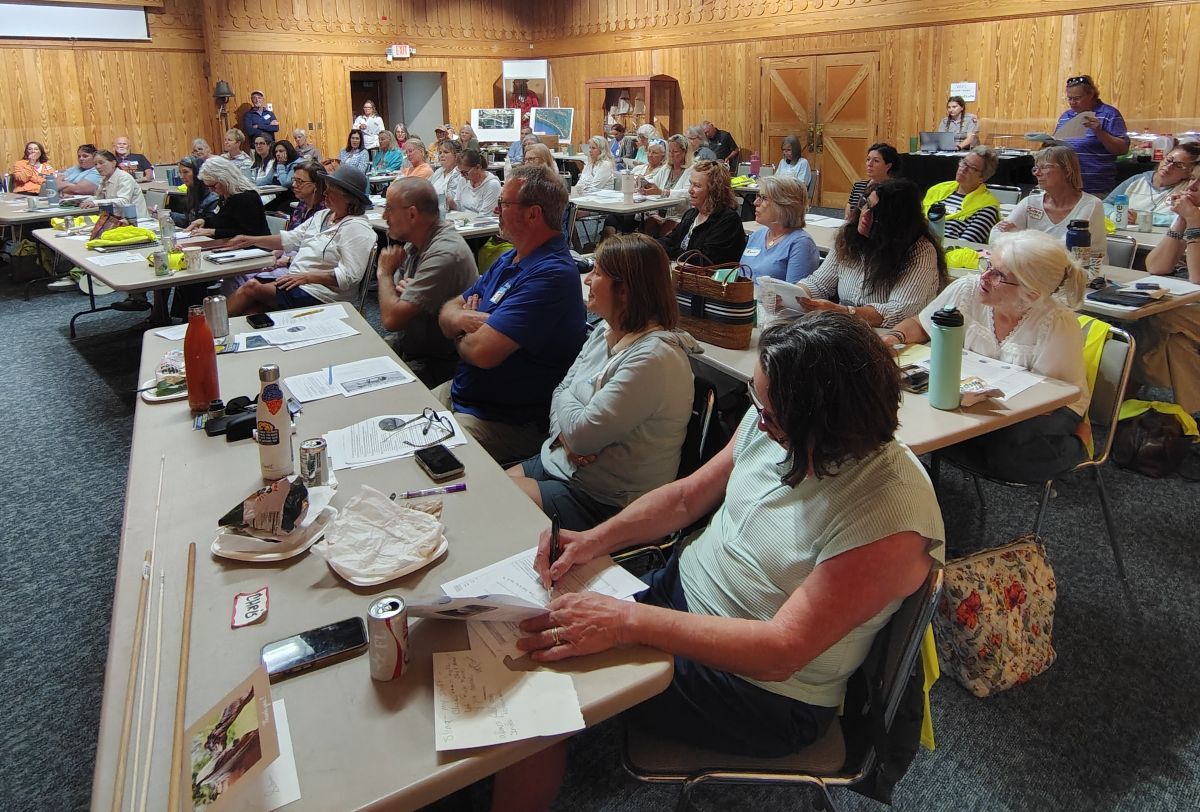
There were a lot of new faces at the training, including Kim Ridel, a resident of Morehead City.
She said in an interview that she volunteered for the program when a friend who’s been a Pony Patroller since it started shared information with her about its purpose.
“I have been coming to this area all of my life, and I’ve been fortunate enough to live here full-time for the last several years. The ponies have always been a part of my best Carteret County days, and I’m really excited to share what I’ve learned about them through Pony Patrol, with visitors and locals alike,” Ridel said. “I’m also very committed to educating people about how important it is to let these incredible animals continue to live their best natural lives, by watching from a safe distance, keeping pets on leashes and not interfering with them — which will hopefully allow us to continue to coexist in the best way.”
When Ridel first spoke to Coastal Review on May 15, she said she expected to be “flying solo” during her first shift May 21, but was paired with an experienced Pony Patroller. Ridel said in a follow up email asking about her first shift, that the afternoon “went great.”
“The weather was beautiful,” Ridel said Wednesday in a follow-up email. They spotted nine horses during the shift, “all of which seemed to be doing well. The people we talked to were curious and respectful and it was a great first time.”