Those in the real estate business can learn more about the pros, cons and processes associated with living shorelines for erosion control via an online workshop set for next month.
The North Carolina Coastal Reserve and National Estuarine Research Reserve in partnership with the Brunswick County Association of Realtors will present “Promoting Living Shorelines for Erosion Control – A Virtual Workshop for Real Estate Professionals” 9 a.m. to 1 p.m. via Webex. Connection details will be emailed once registered, which is required.
Supporter Spotlight

Real estate professionals will receive four elective continuing education credits from the North Carolina Real Estate Commission.
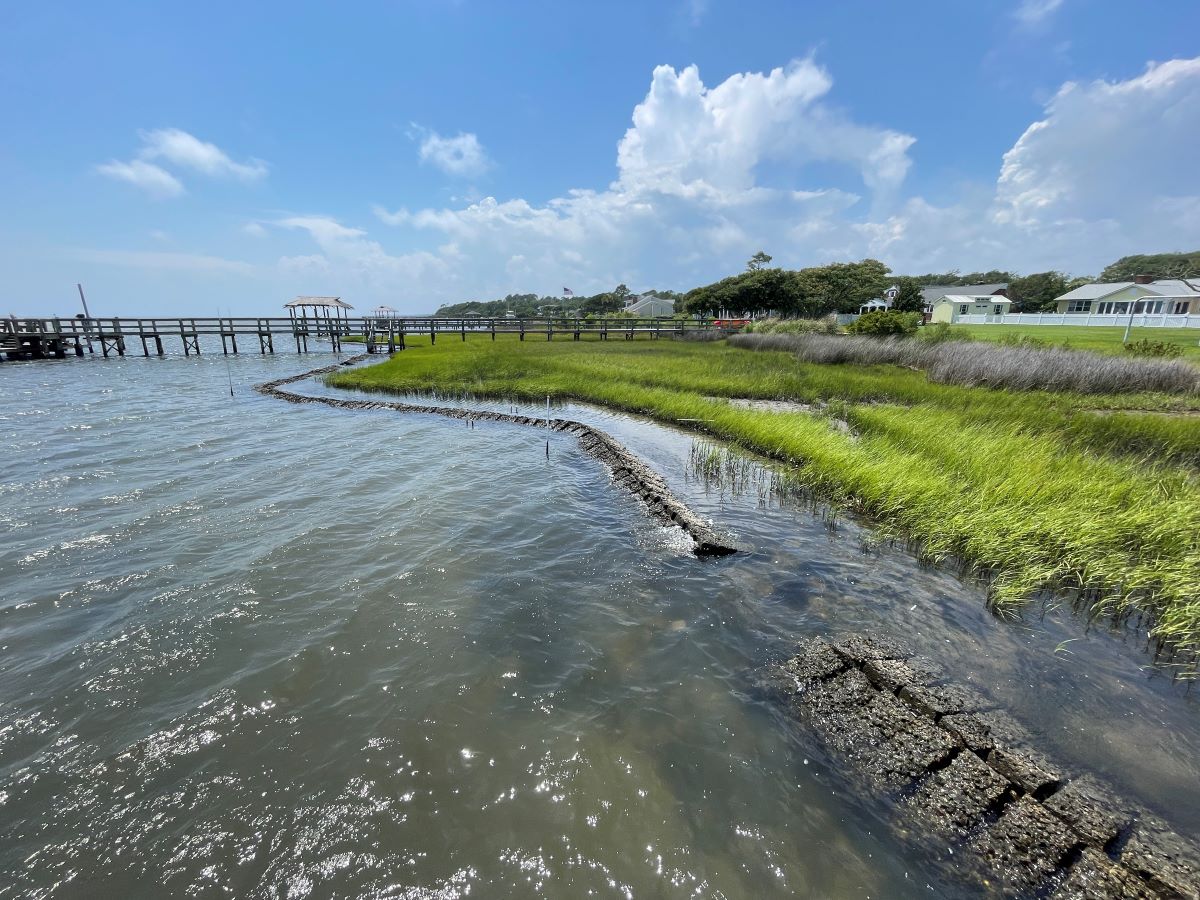
Workshop participants will also learn about different shoreline stabilization techniques, including living shorelines, the permitting process, the use of marsh plants and oyster shell to prevent erosion. The session will also cover a toolkit for designing and building more storm-resilient docks and piers.
Whitney Jenkins, training coordinator with the Coastal Reserve, which is part of the Department of Environmental Quality’s Division of Coastal Management, will present “Living Shorelines: Benefits and Limitations,” according to the session agenda.
The reserve’s training program, since 2003, has provided “coastal leaders and professionals with science-based training opportunities to promote informed decisions regarding our coastal resources,” according to its webpage. This access to relevant scientific research and training is presented to improve understanding of the coastal environment and the impact of local decisions on coastal resources.
Also on the agenda, Mariko Polk, a coastal policy specialist with North Carolina Sea Grant, will present estuarine shoreline-stabilization design techniques.
Supporter Spotlight

Genny Ivec, a marine fisheries technician with the Division of Coastal Management, will cover living shoreline permitting details.
Georgia Busch, coastal specialist with the North Carolina Coastal Federation, will discuss best practices for working with marsh plants and oyster shell.
Coastal Federation Coastal Advocate and Coastal Management Project Director Kerri Allen will cover the organization’s Resilient Docks and Piers Toolkit, which was developed in 2025 for homeowners, contractors, and local governments in response to the reinstatement of standards for residential docks and piers in the state building code.
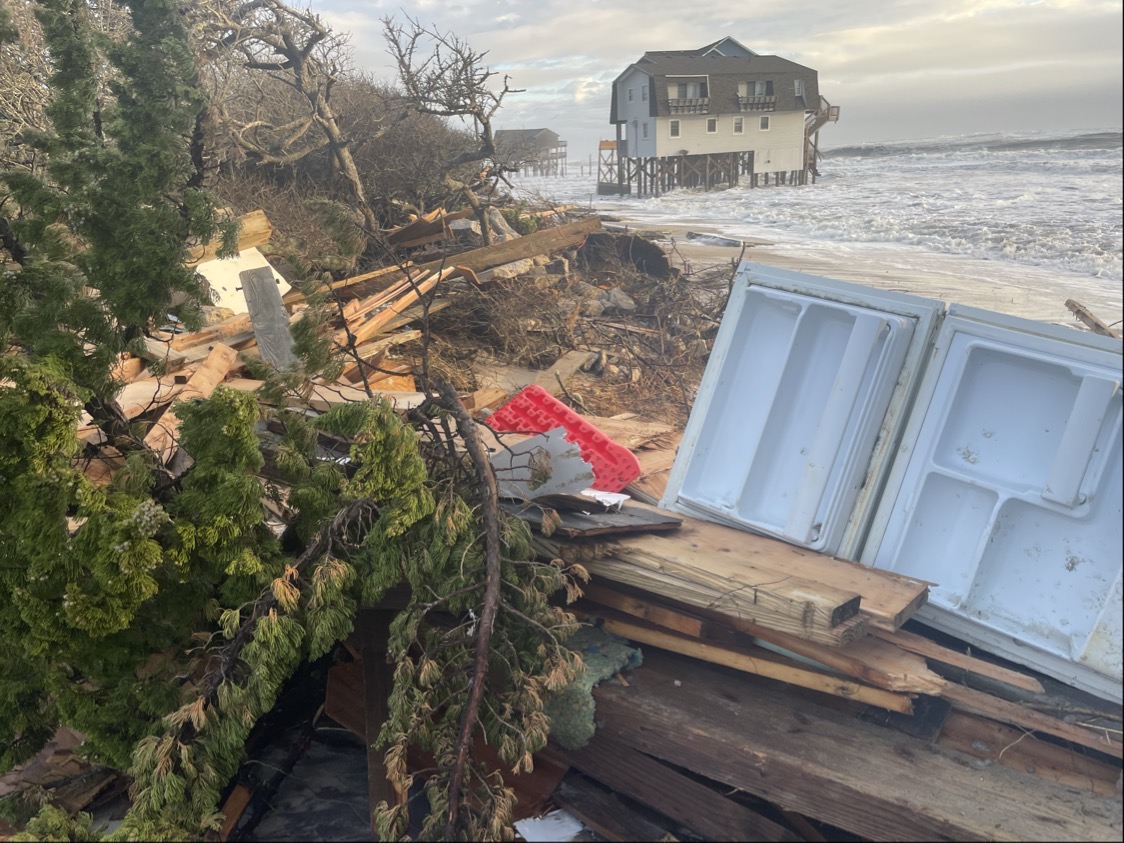
“This resource combines practical guidance with real-world examples from communities across the state to make resilience achievable and relevant for all coastal areas,” according to the Coastal Federation, which also publishes Coastal Review. The organization said these standards for residential docks could be crucial in helping reduce marine debris during storm seasons, because most debris is attributed to poorly built docks and piers.
“The majority of the debris we see after storms comes from broken-up docks and piers that were never built to withstand serious weather,” said Allen in a press release at the time. “These new codes give us a real opportunity to protect our coastlines, our wildlife, and our neighbors from the impacts of that debris.”