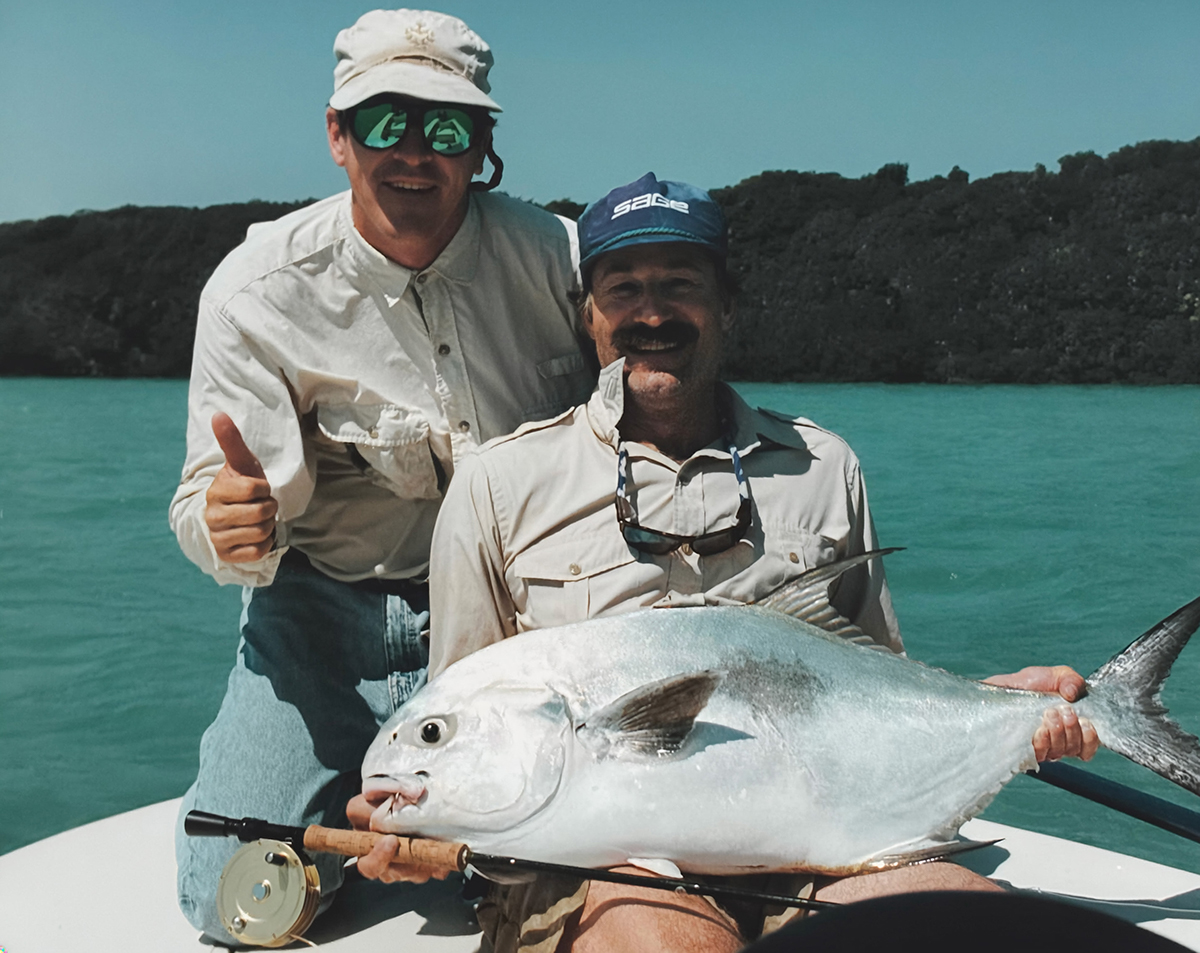
If we’re lucky enough to ever meet one or even two people who have had incredible impacts on the way we go about our day-to-days, we might consider ourselves blessed. For me, fly-fisherman, conservationist, publisher and techno whiz Marshall Cutchin is one of those people.
Cutchin’s influence on fishing and how we use information technology as a learning tool to get better at it for the betterment of us all is immeasurable. The irony is that most of you reading this now may not have heard of him, and the fact you’re reading about it at all is in large measure due to the work he has done.
Supporter Spotlight

But let’s take it back to the beginning. This recent resident of the Wilmington area has had a long and varied life in fishing, both as a guide and as an “influencer.” Let’s take a look at where he’s from, where he’s been, and what he’s done for all of us.
He was born on a farm near Charleston, South Carolina, and Cutchin’s early experiences were shaped by his grandparents Joe and Frances Cutchin.
“My grandmother Frances’ house on Isle of Palms was in the family for 40 years or more. We spent most of our summers there fishing, crabbing, and shrimping,” Cutchin said.
Cutchin loved fishing from an early age. “My biggest influence in those years was my grandfather Joe, whose favorite thing in the world was to fish from our dock,” he said.
In later years, he counts two influential Key West-based fishing guides as prime examples.
Supporter Spotlight
“Jan Isley, the Key West guide whom I first booked while I was still in college, was the one who eventually convinced me to get my captain’s license,” Cutchin said. “Then, once I had really committed to being a skiff guide, Steve Huff was a big inspiration: He set a standard for the work that I spent the rest of my career measuring myself against.”
For the next 11 years, Marshall spent more than 300 days on the water poling a flats skiff for, “… permit, tarpon, and bonefish, with additional trips guiding and fishing in Belize, Mexico, and the Amazon. I once counted my daily poling distance during permit season, and it averaged out to 13 miles a day.”
While Cutchin’s never been much for joining committees, “I’d rather add my voice where it’s directly useful,” he did get involved with conservation organizations in which he could see how they involved the water he was working on directly.
“A couple of years into my guiding career I became a founding board member of Reef Relief, the Key West reef-conservation group that was instrumental in the push for what became the Florida Keys National Marine Sanctuary.”
This effort was met with influential recognition, “In 1991 we received a Point of Light Award from President George H. W. Bush.”
In 1997, Cutchin left Key West, and eventually ended up in the tech industry hub of Cary, where he began the life that he’d become known for and the work that would change the fishing community as we know it.
“May of 2003,” Cutchin explained, “I started MidCurrent, an online fly-fishing media channel, back when ‘blog’ was still a word you had to explain to people. Within a year, it had become the most-read fly-fishing site on the web, and I’ve been involved with it for more than two decades now.”
Midcurrent is still a powerhouse publication for fly-fishers, and it has outlasted numerous competitors. Cutchin said that this success stems from being committed to the founding core principles: “Staying focused on service to fly-anglers and always trying to provide consistently helpful information.”
These days, Cutchin is still the publisher of Midcurrent, “but I no longer own the media company. I help steer it, including our membership community, Midcurrent Plus.”
From a technology standpoint, Cutchin is closely watching the development of artificial intelligence. AI is still in a transitional era, he said.
“I’ve been helping small businesses and nonprofits figure out how to put AI to work, which turns out to be the same kind of translation job I did in the early days of the web,” Cutchin said. And while it may be a great technology leap, we need to be careful, he said.
“There are obvious downsides in terms of environmental impact, and it remains to be seen how much good can come out of having intelligent models help solve our most difficult problems. But the potential is there.”
Cutchin has been in publishing for a long time and sees AI usage in publishing as an almost inevitable future but, “As someone whose first publishing project was set in hot metal type on an old German Linotype machine, it’s been fascinating to watch.”
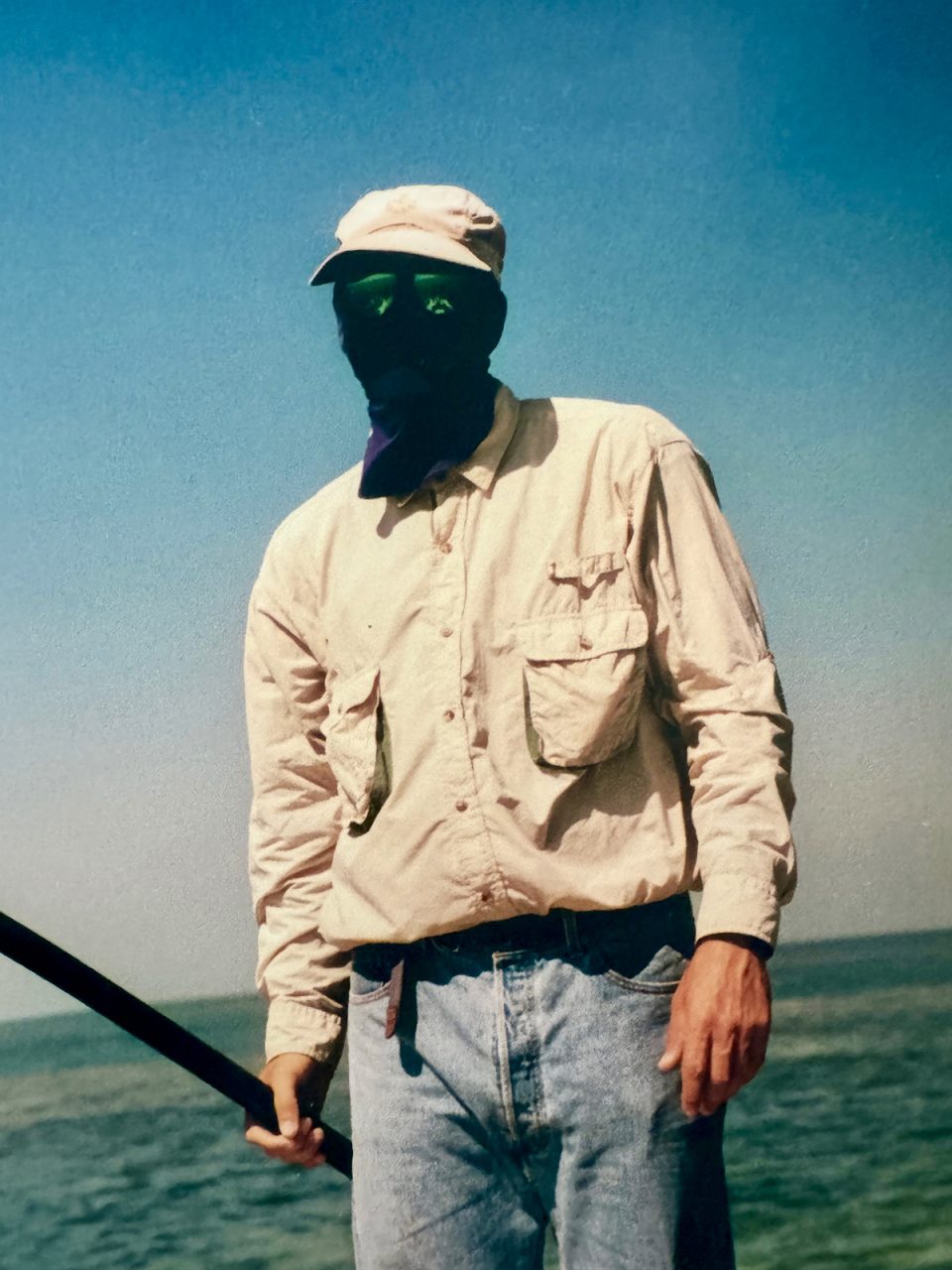
As for fishing, he still fishes the Keys several times a year.
“I do miss it like crazy,” he said.
Cutchin also has been trying to get settled in at his new home near Wilmington.
“We’ve only been here a year, so I’m doing what I tell everyone else to do by learning one piece of water slowly,” he said.
There’s a good chance he’s going to have as much help as he wants from some guy he knows.
“You rarely get the chance to learn a new area from scratch more than once in a life. I intend to enjoy it,” he said.
Cutchin is a fly-fisherman first, he said. “My favorite way to fish is sight-fishing in shallow water, either poling or wading, one fish at a time, where you see everything happen — or fail to.”
It’s the ability to see things that counts.
“There’s no place I’d rather be than up on a big grass flat with a bright sun and strong breeze hunting for permit, or pushing a skiff with laid-up tarpon around,” he said, explaining that careful attention to details is the most important skill to have.
“The anglers who catch fish consistently are the ones who notice things, like what the tide is actually doing versus what the chart says, which way the light is working, where the bait went, and what changed in the last 20 minutes. At some point, fishing stops being long stretches of boredom punctuated by excitement, and becomes something better: a state where every moment might be about to show you something, and deserves a calm, clear focus.”
The best days are the ones in which we decide what the day means, he said.
“What I remember from almost 12 years of guiding are hardly ever the big-number days. It was the days in which we read the conditions right, worked hard, trusted each other, and got what the day was willing to give,” said Cutchin. “If a successful day means a specific fish of a specific size, you might have a few good days a year. If it means paying real attention to a piece of wild water with people you like, you’ll rarely have a bad one.”