And, we’re live!
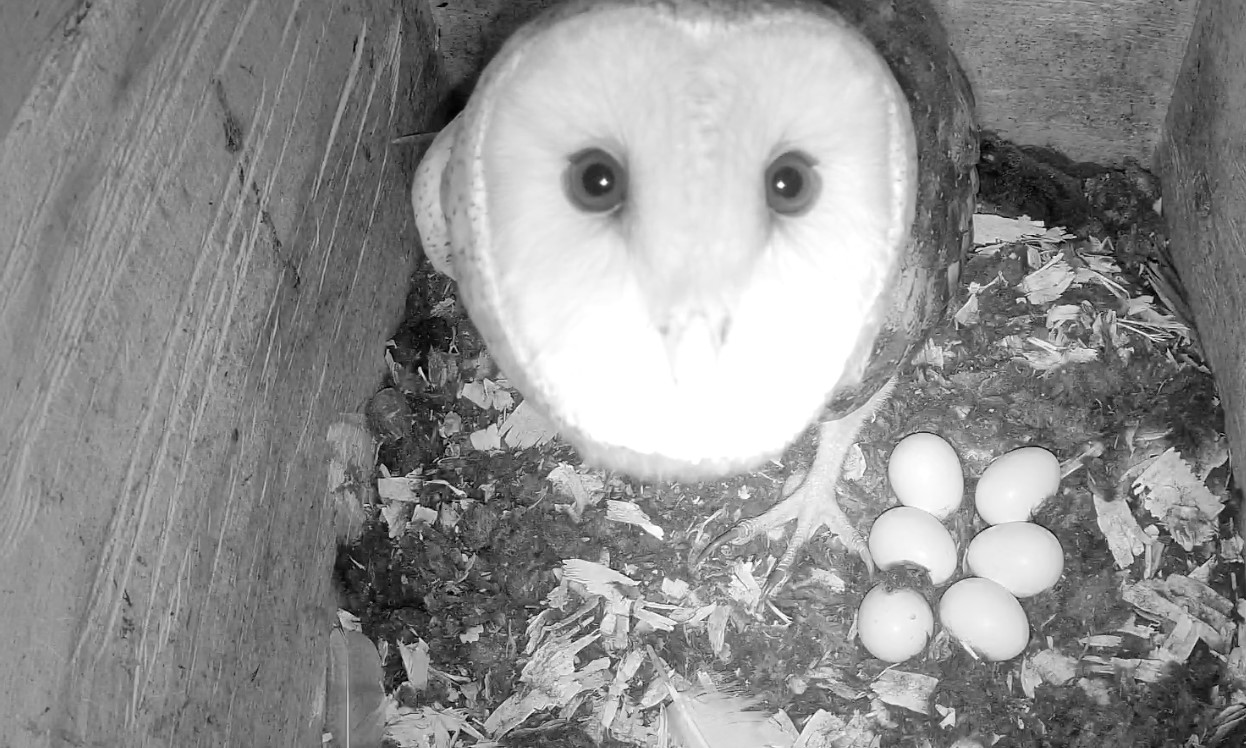
With the expected hatch date just around the corner, the public now has 24-hour access to the North Carolina Wildlife Resources Commission’s live cam, with audio, for Barn Owlet Watch 2026.
Supporter Spotlight
Watch all the action inside a nest box that’s housing six barn owl eggs for a chance to welcome hatchlings into the world sometime April 8-15.
“The Barn Owl Live Cam is our newest conservation adventure,” Wildlife Resources Commission Education Development and Evaluation Supervisor Sydney Brown stated in a release. “What began as a dream quickly grew, thanks to our incredible internal partners, into a 24/7 window into the secret life of barn owls for North Carolinians who may never see these birds in their own backyards.”
The nesting pair closely guarding their eggs are believed to have previously used the nest box the agency installed in western North Carolina in 2011.
After the pair returned to the nest last December, the female laid the first of her six eggs March 11.
Commission Conservation Biologist Joe Tomcho estimates the first egg will hatch April 12, based on a normal 32-day incubation period, according to the release.
Supporter Spotlight

“Usually once the first egg hatches, the others start hatching at about an every-other-day timeframe,” Tomcho said. “Barn owls typically lay around four to five eggs. Six eggs is an indication these are an experienced pair. It’s a really exciting experience to watch them hatch, but then to also watch them hop around in the nest as they prepare for life outside the nest.”
The nest box has been used by barn owls six times in the past 16 years, possibly by the same nesting pair, according to the WRC.
Man-made nesting boxes allow biologist to study nesting behavior, chick development and the species’ seasonal patterns.
In some regions of the state, the barn owl population has declined as a result of habitat loss and some agricultural practices. Barn owls are in the the commission’s Wildlife Action Plan, a comprehensive planning tool the agency developed to help conserve and enhance the state’s full array of fish and wildlife species and their habitats.
Solar-powered live cameras were installed at the nest box in August of last year “and, so far, have operated steadily since December with minimal interruptions,” the release states.
This is the commission’s first live camera experience, but officials hope to offer more in the future.
“We’re excited to keep expanding this project with fun educational content, conservation updates and plenty of owl magic,” Brown said in the release. “And we assure the public that owls are completely wild. We do not intervene or interfere with their natural behaviors or nesting process.”
Contact the commission’s wild observer program for more information about barn owls and nest boxes.
Additional information about barn owls is available on the agency’s website.