An Outer Banks nonprofit has a two-day program planned for next weekend that digs into historic and modern-day agricultural practices as part of its mission to honor the indigenous Earth ethic.
The Secotan Alliance … and Beyond’s “In the Spirit of Wingina 3: Seeds of Wisdom and Sustenance,” begins at 9 a.m. Friday, May 29, and continues starting at 9 a.m. Saturday, May 30, in the Virginia S. Tillett Community Center in Manteo.
Supporter Spotlight

There is no charge to attend, but organizers ask those interested in attending to register online through the website. There are also volunteer opportunities listed as well.
Gray Parsons of Frisco is a descendent of the Machapunga-Mattamuskeet, and is president of the Secotan Alliance … and Beyond.
Parsons founded the Outer Banks-based nonprofit in 2023 to honor Chief Wingina and indigenous environmental history. Wingina was chief of the Roanoke-Secotan tribe that inhabited Roanoke Island and the nearby mainland. Wingina established the Secotan Alliance with other village leaders to resist English colonization. The alliance territory included current-day Dare, Hyde, Beaufort, Washington and Tyrrell counties and its inhabitants were of Algonquin culture and spoke what has been called a “Carolina Algonquin” dialect. The chief’s attempt to expand the alliance farther inland resulted in his beheading by the English military in 1586, the website explains.
The mission of the nonprofit “is to educate the public on the traditional indigenous principles of the Secotan Alliance under the leadership of Chief Wingina specifically in terms of their application and value in today’s world…and to educate the public regarding the need and the methods to protect Mother Earth through individual, community, corporate and government actions based on the traditional indigenous earth ethic.”
Parsons explained to Coastal Review that this year’s program is following a similar outline as the first two events, though the focus has changed a bit.
Supporter Spotlight
The dual mission doesn’t change, “that will always be paramount, but the focus of how we accomplish that will change from year to year,” Parsons said. The inaugural program in 2024 focused on indigenous environmental history and last year’s program emphasized the unique leadership roles of women.
“This year it’s on Seeds of Wisdom and Sustenance,” Parsons said, and will focus on agricultural patterns with an emphasis on ancient, indigenous agricultural methods on May 29, and modern-day gardening with some connectivity to the ancient on May 30.
The keynote speaker for the two-day event is retired professor Dr. Tom Shields, who will speak Friday morning about the “Images of Sustenance: Writings and the Archaeology of Foodways from the 1580s.”
Shields taught early American and frontier literature, at East Carolina University. His publications focus on the Spanish and English literature of colonial North America, particularly the “Lost Colony” and 17th century English explorer and writer John Lawson. Shields helped establish the Roanoke Colonies Research Office at ECU in 1993, according to the university.
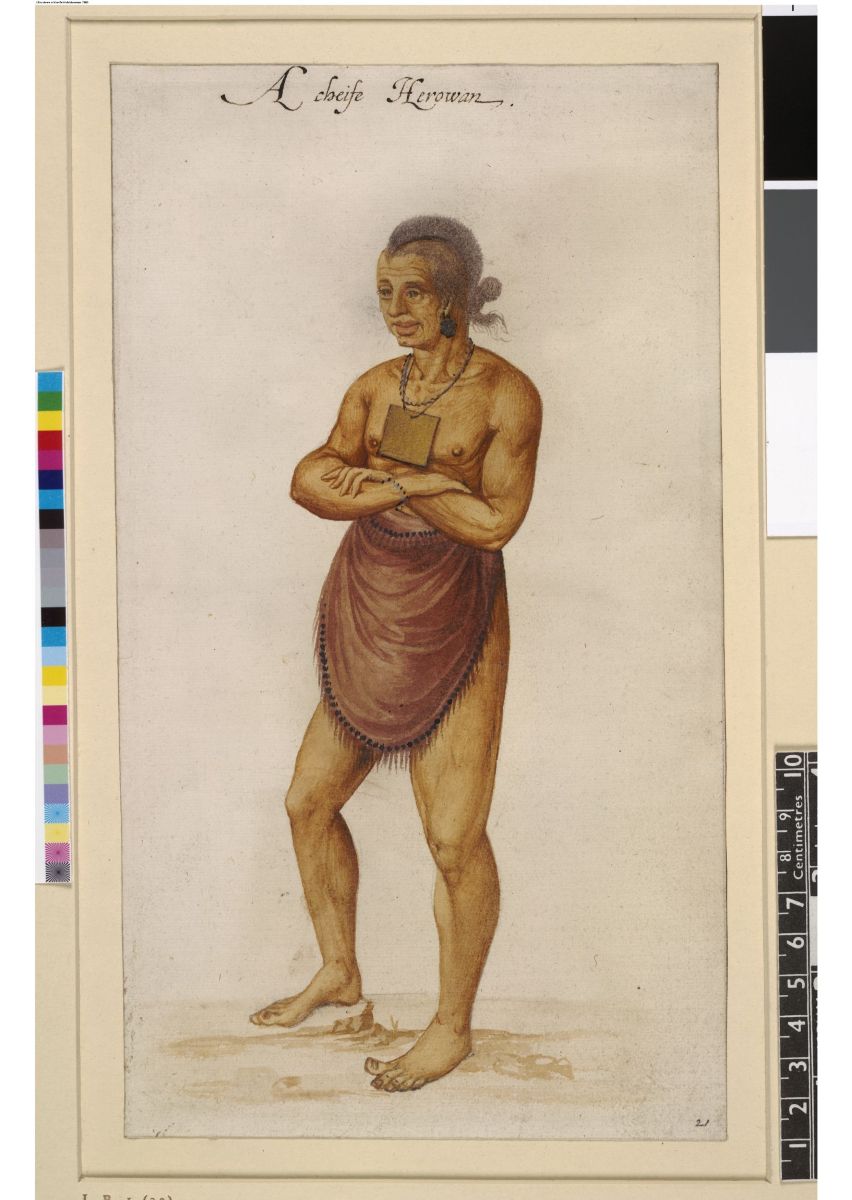
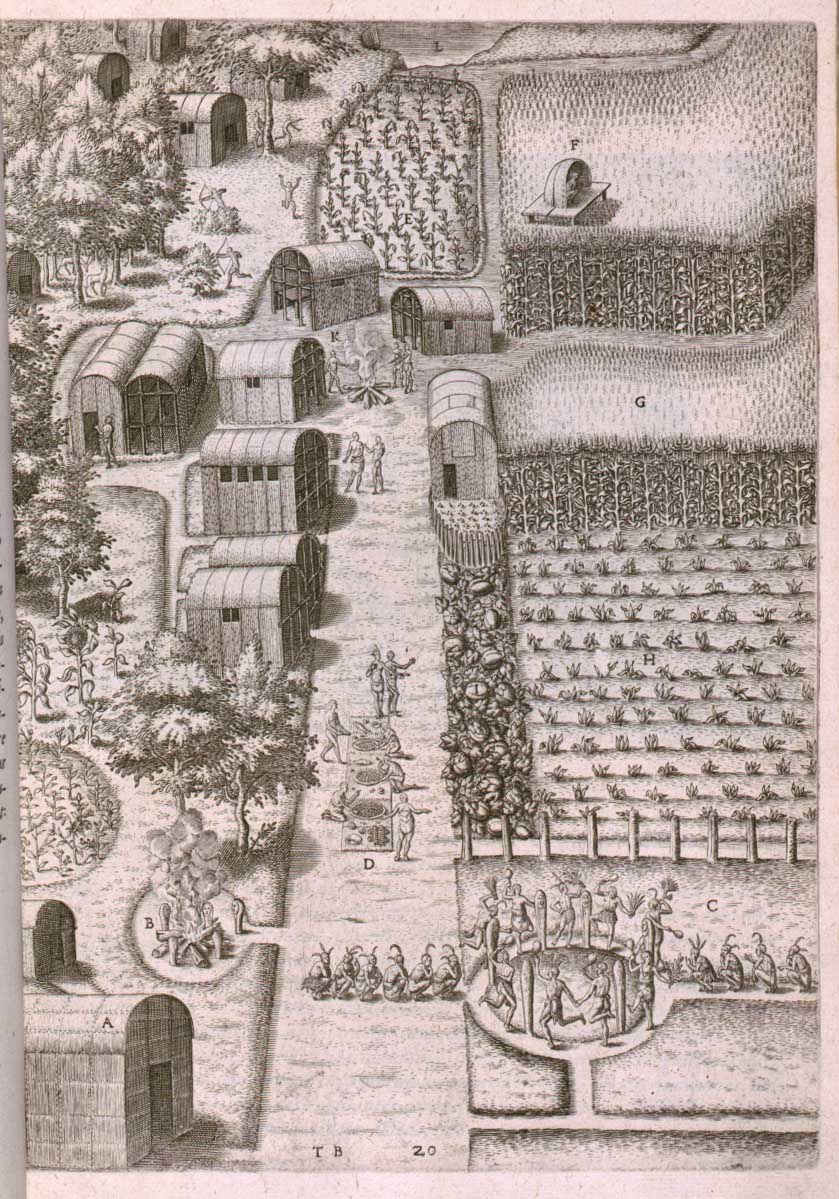
Shields told to Coastal Review that the first idea that many of us had of what Native American life was like along the Outer Banks in the 1580s came from the John White watercolors and the Theodore de Bry engravings based on those drawings. He referenced the website, Virtual Jamestown, where the watercolors and engravings are indexed and compared.
John White, who was eventually made governor of the “Lost Colony,” was an English artist and cartographer who accompanied Sir Walter Raleigh on his voyage to the Americas in 1585. He was brought along to create a “visual representation of the people, plants, animals and way of life in the New World,” according to the National Park Service. Based in Germany, de Bry engraved a set of plates to illustrate scientist Thomas Harriot’s account of the 1585 journey to the Roanoke colony, “A Briefe and True Report of the New Found Land of Virginia,” published in 1595.
“These were done about the same time that Ralph Lane, governor of the 1585-86 English colony on Roanoke Island, wrote the line promoters of North Carolina still like to use, that this is ‘goodliest soil under the cope of heaven,’” he said, adding it’s just as often given as “the goodliest land under the cope of heaven.”
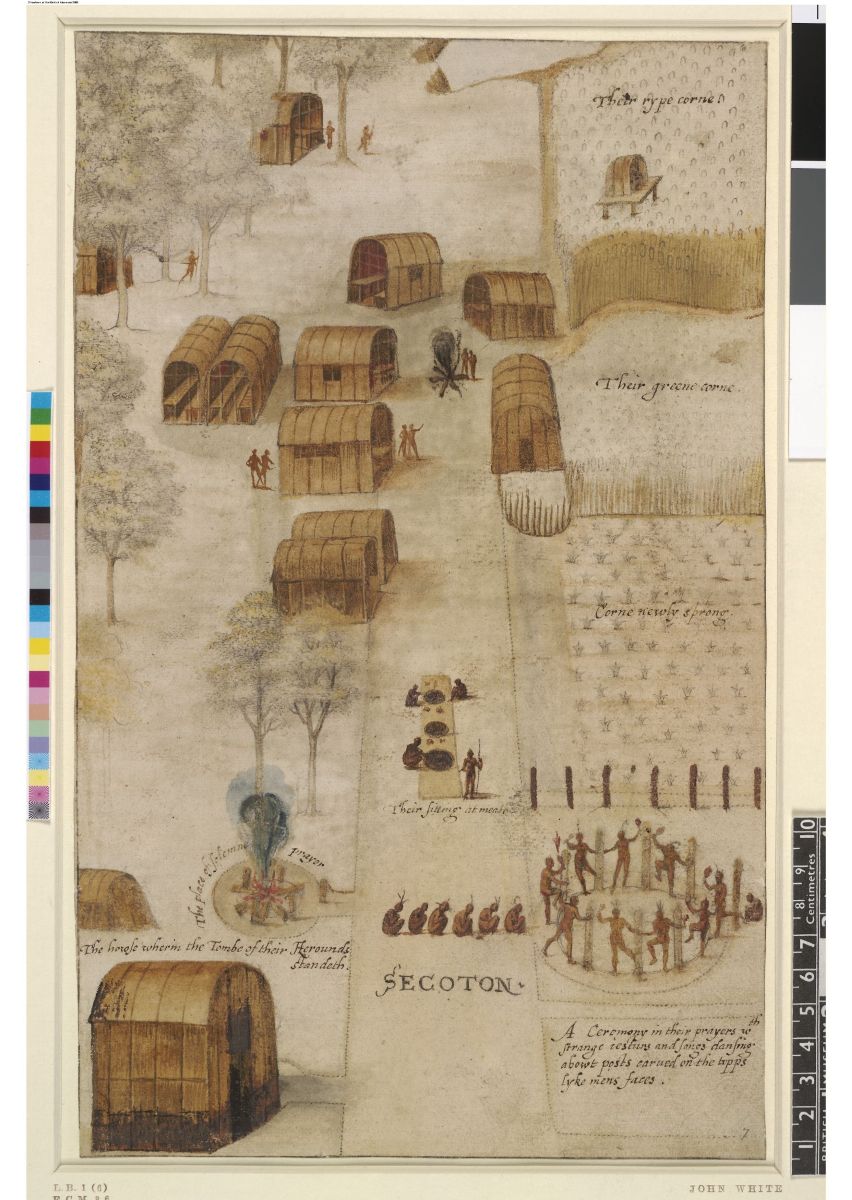
“Whether ‘soil’ or ‘land,’ the emphasis tends to be agricultural — how well maize (corn) grows, sometimes along with beans and squash, the classic Native American Three Sisters companion planting,” he continued.
“The idea of a North American agricultural paradise created in these works influenced how Europe viewed Native America back then, and it continues to influence how people think of that past even today. The pictures and writings from the 1580s English expeditions are still important primary sources about the Algonquian tribes that lived in the region.”
However, Shields explained, archaeological work along the Outer Banks and “throughout the inland Sound Country of northeastern North Carolina paints a more complex picture. The various Algonquian settlements of the inner and Outer Banks shared a language and culture. At the same time, the foods that dominated people’s diets — an important part of any culture — differed according to where the various settlements were located in the region,”
New to the lineup is North Carolina Extension Master Gardener Cheryl Anby of Manteo. She will speak the second day on “A-Maizing Corn.” Anby is the alliance’s secretary and is of French-Canadian indigenous ancestry.
Parsons said that there are a handful of return speakers this year, including Dr. Gabrielle Tayac, associate professor at George Mason University and Piscataway tribal citizen, will speak about “Gourds and Thunders: A Piscataway Return to the Water.”
Dr. Arwin Smallwood, of Tuscarora descent, is Dean of the College of Arts, Social Sciences and Humanities at North Carolina Central University, and will present, “War, Enslavement and Migration: The Tuscarora Diaspora and its impact on the Tuscarora Nation 1711 to 1722.”
David Rahahę́·tih Webb, a member of the Tuscarora Indians of Kahtenuaka Territories, will present on “Relational Living: Lifeways Rooted in Responsibility.” The Kahtenuaka Territories include the Roanoke, Neuse, Trent, Tar, Cape Fear and Pee Dee river basins, Lake Mattamuskeet territory, archeological sites and traditionally occupied lands throughout the coastal plains of present-day North Carolina and South Carolina, according to the territories website.
Sara Hallas, education and outreach director for the North Carolina Coastal Federation will give a talk on “Environmental Stewardship: Future Engineers and Innovators.” The Coastal Federation publishes Coastal Review.
Her focus has been to bring in public school students who have achieved either recognition or some type of honor within the scope of environmentalism, Parsons explained.
Parsons added that presenter, Sound Rivers Pamlico-Tar Riverkeeper Katey Zimmerman, will speak about the effects of agricultural runoff into the water in her presentation, “The Impacts of Modern Agriculture on our Rivers and Communities.”
“Because of our geography, because we’re surrounded by water, water will always be part of the theme or the content, but each year, there will be a theme that sort of expands that,” he said.
Last year, organizers brought in the jazz band, the Benjie Porecki Trio, based in the Washington, D.C., area, and invited the band to return this year. The performance is scheduled for 6:30 p.m. Friday at Jennette’s Pier in Nags Head.
Alliance Board Member Erica Lewis said about this year’s programming that she feels everybody can get something out of the concept of seeds and how it connects with their own family history that of the region.
“People should be able to walk away with newfound information about the parallels of a seed like a native plant in the Outer Banks, and then the seeds of their family,” Lewis said.