There’s something almost poetic in how Thomas Marcinowski describes his plans for his final farewell.
Whenever that time comes, the U.S. military veteran wants to be cremated and put to sea.
Supporter Spotlight

“That way my ashes touch every continent my boots walked on,” Marcinowski said.
That long-carried thought surfaced when Marcinowski, on a commercial flight returning to Wilmington from an organizational event in 2019, read an article about people taking the ashes of their loved ones to be interred in an artificial reef off the Miami coast.
By that time, several years had passed since he’d retired from service, rounding out a military career spanning more than 20 years that began when he enlisted in the Air Force as a teenager and ended after becoming an officer in the Army National Guard.
Marcinowski, a physician assistant at Wilmington Veterans Administration Health Care Center, wasted no time after reading the article. He began bouncing an idea to friends and colleagues about a nonprofit organization that would build a living legacy beneath the waves where those who’ve honorably served would be memorialized, their stories preserved and their mission of service continued.
“The motto that I like to use is, ‘Those who served continue to serve,’” Marcinowski said. “They’ve passed away, but yet they’re still giving back to the nation and to the world by being out there to create something even greater and protect for future generations.”
Supporter Spotlight

Just two years after he first pitched his idea around, Veterans Memorial Reef held its first ceremony honoring veterans whose cremains were interred in eco-positive reef modules that were placed on the seafloor about 5 miles off the coast of Carolina Beach.
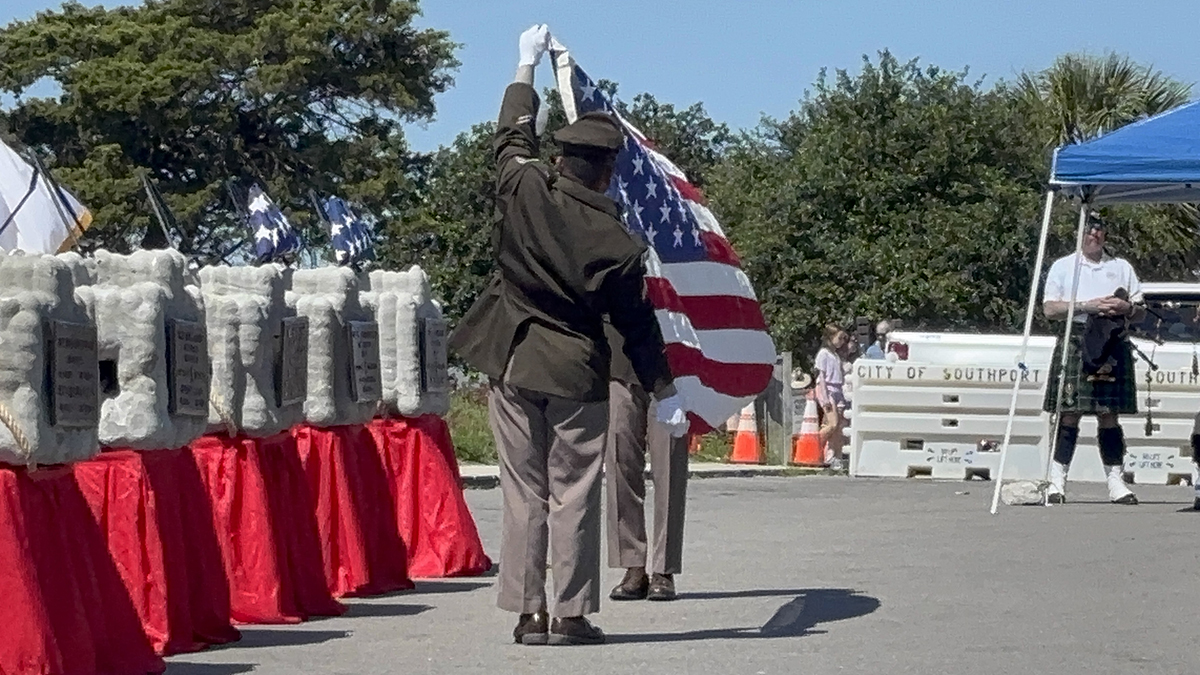
The nonprofit hosted its sixth annual three-day event this past weekend at the Fort Johnston Museum and Visitor Center in Southport, interring the ashes of nine people – six veterans and three spouses of veterans – in memorial markers to be lowered into the sea on Monday.
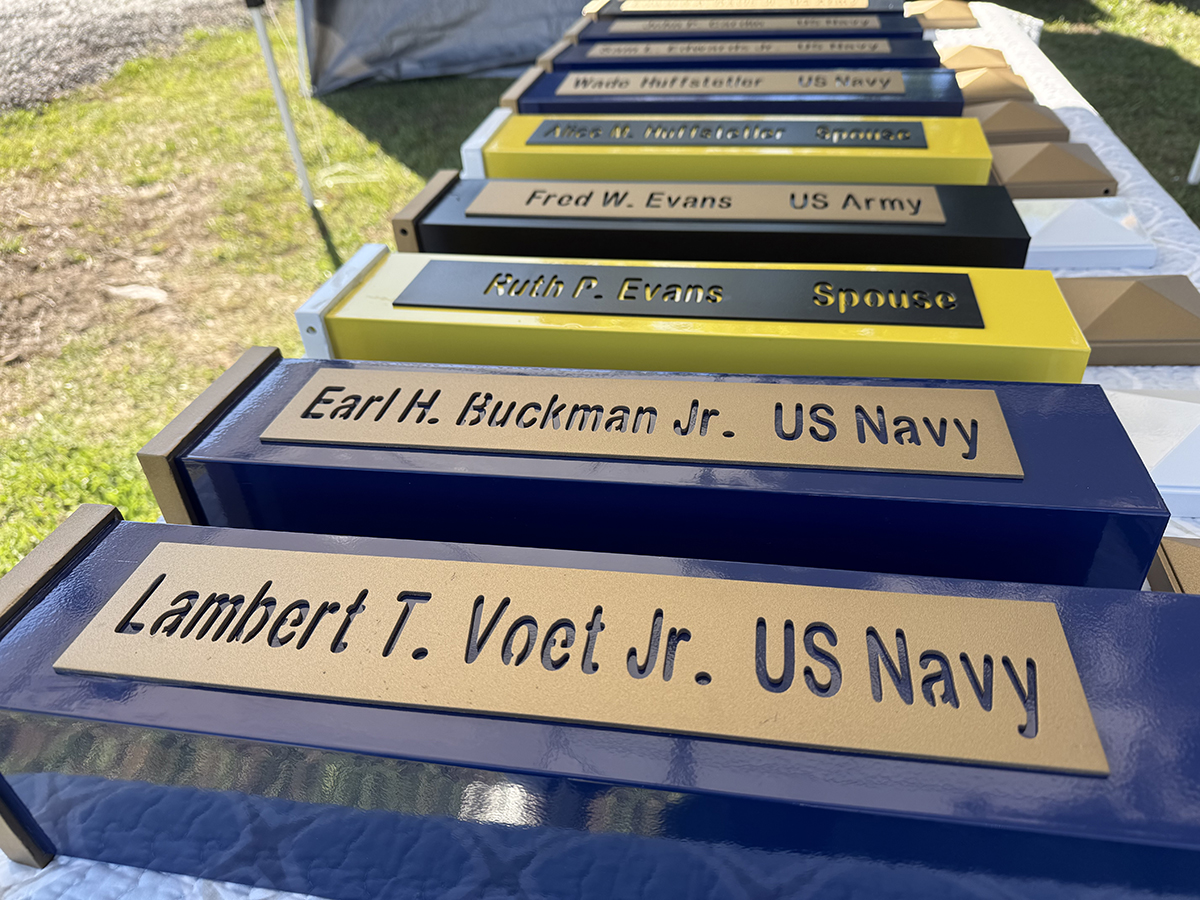
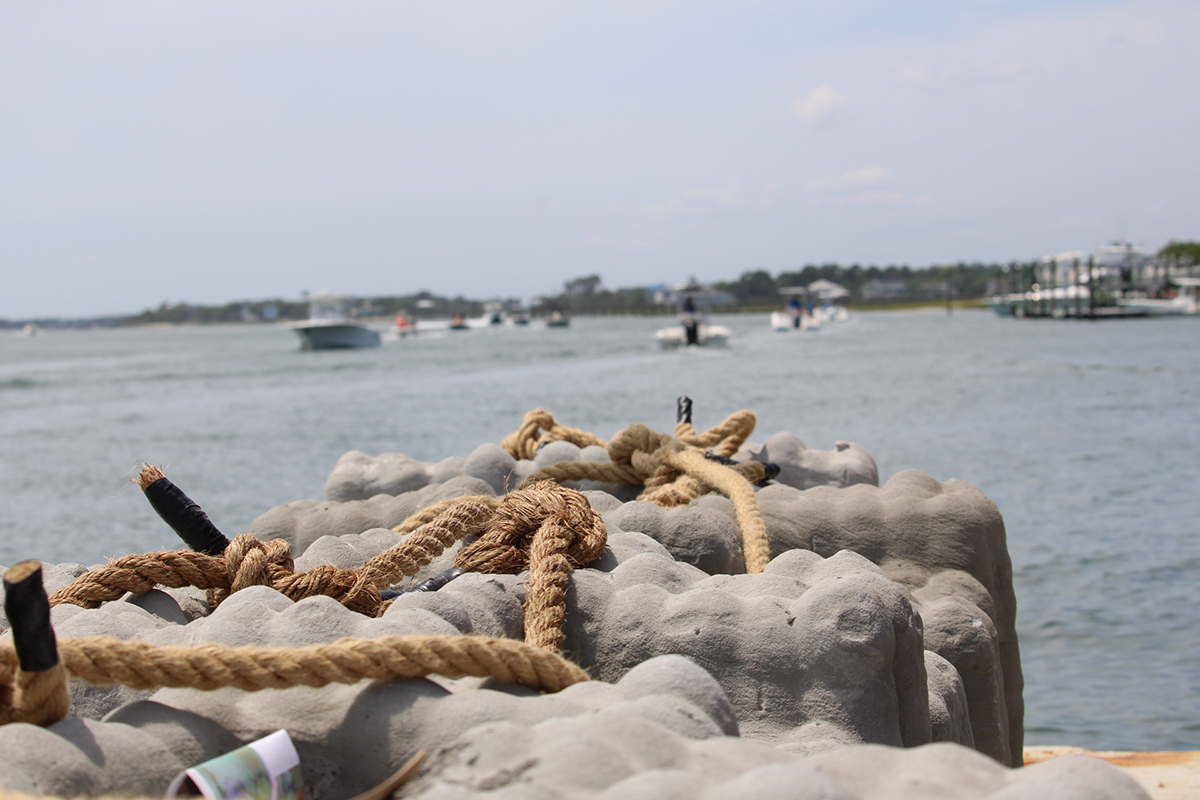
Those memorialized Saturday joined 30 others whose cremated remains are preserved in aquatic urns that are sealed into the square-shaped markers, each of which has a plaque engraved with the name, branch of service, and birth and death dates.
Veterans whose cremations are interred in the reef represent every branch of service – Army, Navy, Air Force, Marines and Coast Guard. Some served decades. Others, like Marine Corps Pfc. Ethan Eldrige, who died at age 21, served only a matter of months.
Several served in combat, veterans of World War II, Korea, Vietnam and Desert Storm.
Then there’s Felix Bigalke, a Coast Guard service K-9, also memorialized at the reef.
This is Marcinowski’s passion project, one that goes beyond recognizing veterans to educate the general public about the military, rehabilitate and protect natural ocean reef ecosystems, and provide researchers opportunities to study how the environment and the organisms that live within it respond to an artificial reef.
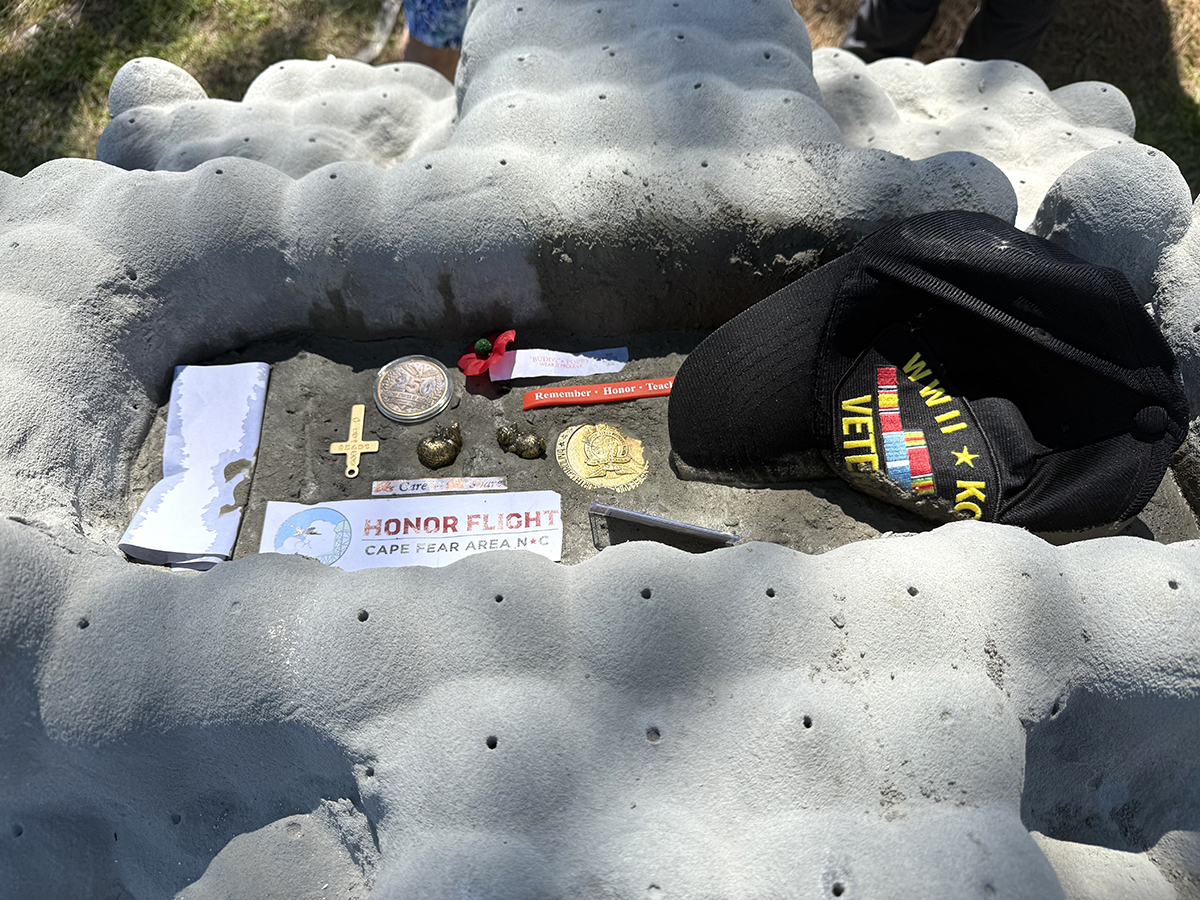
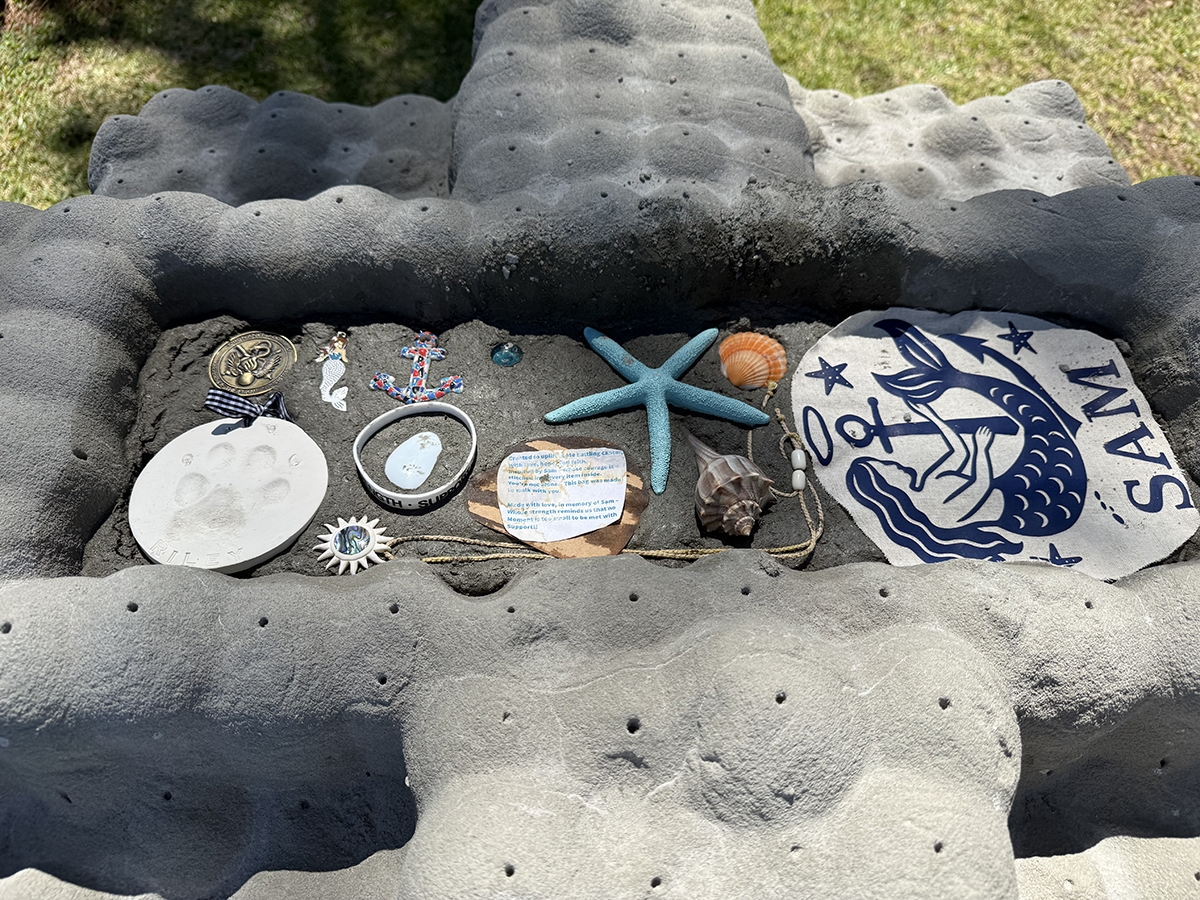
“Working at the VA, just hearing the stories and having served in battle, having lost me of my own in battle, brings it home for me because I see the internal scars that they bear. It’s moving to me because I understand those scars,” Marcinowski said. “So, to be able to give them honor and share their stories that they may never have told their families, it is very rewarding.”
And, for the veterans memorialized at the reef who either have no family or are estranged from family, “It becomes really important that they not be forgotten,” he said.
The Veterans Memorial Reef website includes a Fallen Heroes tab where viewers can read veterans’ biographies, along with any medals awarded to them. Users can simply scroll over a ribbon bar or medal and click to learn more about that award.
“Those are things people don’t understand the meaning behind what they do, the risks they take to earn something like that or to be recognized for that,” Marcinowski explained.
Today, fewer than 1% of the country’s population serve as active-duty military.
“It’s dwindling,” said University of North Carolina Wilmington Director of Military Affairs Bill Kawczynski. “As our population grows and less and less folk either consider going in the military or even qualify for the military, it’s getting worse each year. And so, as director of the office of military affairs it gives me great satisfaction when I can connect students and others to things such as VMR or other military and veteran resources.”
On Saturday, Armed Forces Day, the nonprofit hosted in Southport a “Fallen Heroes Ceremony” for those whose remains will be placed in the sea. The honors-packed military tribute typically includes honor guards, the presentation of a 13-fold American flag to one member of each veteran’s family, taps, and a bagpipe rendition of “Amazing Grace.”
In a final sendoff, usually two days after the ceremony, families are invited to board the Vonda Kay, a 72-foot head boat based in Carolina Beach, to watch their loved one’s memorial marker get submerged and placed onto the Veterans Memorial Reef.
To honor and to serve (research)
The North Carolina Division Marine Fisheries determines where the memorial markers will be placed on a large, open sandy bottom anywhere below 30 to 50 feet of water.
Veterans Memorial Reef has partnered with Raleigh-based Natrx that creates artificial reef structures called ExoForms, which are designed to promote habitat growth and ecological benefits and produced using 3-D printers.
The memorial reef is in what Troy Alphin, a senior research associate with the University of North Carolina Wilmington’s Center for Marine Science, describes as a dynamic environment with strong currents. Alphin was one of the people Marcinowski initially contacted for validation of his memorial reef idea. The two have known each other for several years and Marcinowski knew Alphin had studied the effects of underwater structures on the environment off other coasts.
Alphin thought an offshore monument for veterans a novel, innovative idea, one that not only honors veterans, but also offers a host of research opportunities.
“This is a passion project to meet the needs of veterans that’s providing us with an opportunity to address some questions that are really relevant for local marine science and in our coastal area,” he said. “This provides an interesting palette for researchers to come in and propose different questions. Are fish going to be attracted to it? Are other organisms going to be attracted to it? What’s that development through time? The Center for Marine Science and UNCW are well positioned to address a lot of those questions.”
This year, students in the university’s coastal engineering program launched a capstone research project to try and answer the question of what the wave energy is like around the Veterans Memorial Reef.
Students used the university’s wave flume, 9,500-gallon-capacity glass and steel tank that can be programmed to imitate varying degrees of wave energy, to collect data that will help in future studies of the artificial reef site.
“We’re going to put some sensors on some of these monuments that are being deployed and start gathering data on what that looks like in the real word,” said Alphin, who sits on the Veterans Memorial Reef board of directors. “We want to know what that flow environment around these structures is really going to be.
“We’re really at the very beginning,” he continued. “There’s a lot of potential right now. I’m hoping that we’ll get a lot of students in the future and a lot of researchers that will be able to go out there and do some work around these structures.”