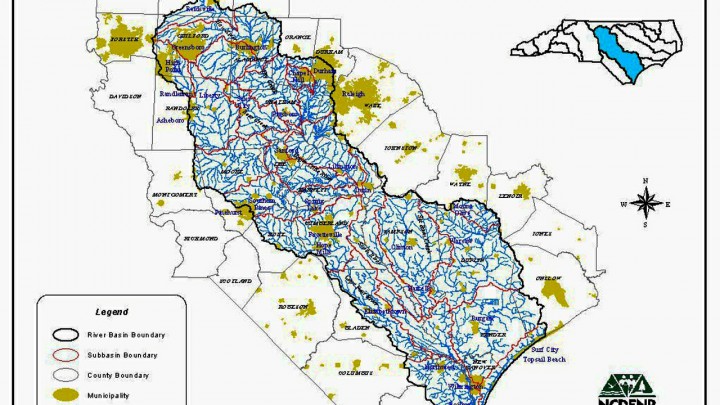
The draft 2026 Cape Fear River Basin plan, one that highlights areas that need additional protection, restoration or preservation within the state’s largest and most populous river basin, is out for public comment.
The North Carolina Department of Environmental Quality’s Division of Water Resources is accepting comments through Aug. 4 on the draft plan, which focuses on water quality data collected between 2000 and 2020.
Supporter Spotlight

The plan includes an overview of water use and availability in the basin, a brief discussion of changes in water quality over a 20-year period, existing management strategies and approaches for addressing point and nonpoint sources of pollution, and addresses ongoing studies and actions to manage and reduce pollution from emerging compounds, including per- and polyfluoroalkyl substances, or PFAS, and 1,4-dioxane.
Waters in the basin, including the Haw and Cape Fear rivers, have been found to be contaminated with these compounds.
PFAS, which are used in the manufacturing in a host of consumer goods including waterproof clothing and disposable food containers, do not break down in the environment and can build up in humans and animals. There are more than 15,000 of these substances today, according to the Environmental Protection Agency. While their effects on human health continue to be studied, PFAS exposure has been linked to adverse health effects including thyroid disease, high cholesterol, and increased risks of certain cancers, including kidney and testicular.
The EPA classifies 1,4-dioxane, a synthetic industrial chemical, as a likely human carcinogen.
The basin covers more than 9,300 square miles and includes portions of the urban population centers in the Triad as well as the Triangle, and the cities of Fayetteville and Wilmington. Major rivers in the basin include the Haw, Deep, Cape Fear, Black, South and Northeast Cape Fear.
Supporter Spotlight

The basin has experienced increased growth, poultry production and stormwater and wastewater discharges, all of which have boosted nitrogen and phosphorus levels that simulate plant and algal growth.
Written comments may be submitted by email to DEQ.DWR.BasinPlanning@deq.nc.gov or by mail to NCDEQ Division of Water Resources ATTN: Nora Deamer, Basin Planner 1611 Mail Service Center Raleigh, NC 27699-1611.
Based on the 2022 U.S. Department of Agriculture Census of Agriculture, agriculture in the basin has seen an overall decrease in cattle and swine numbers but a substantial increase in poultry production.
Information on the division’s basin plans are available at Basin Planning Branch | NC DEQ.