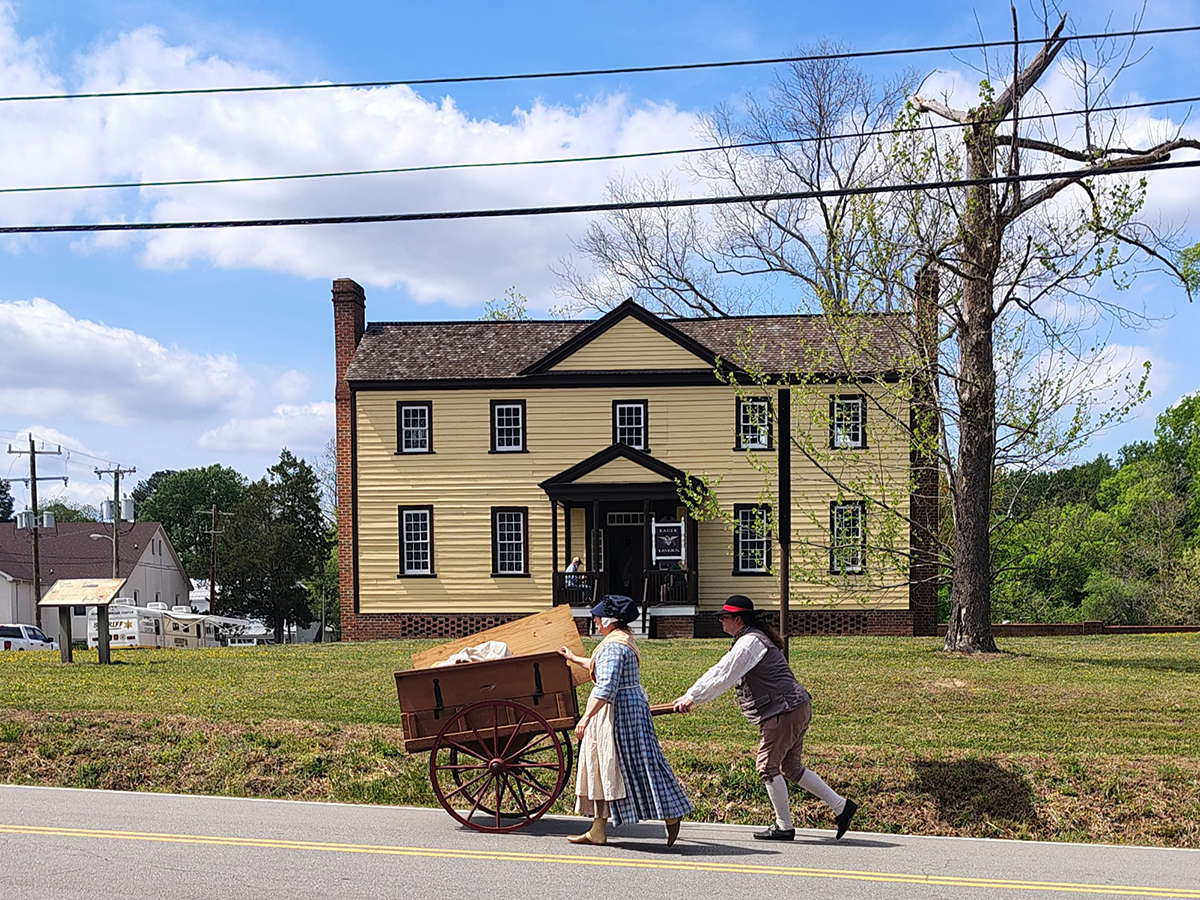
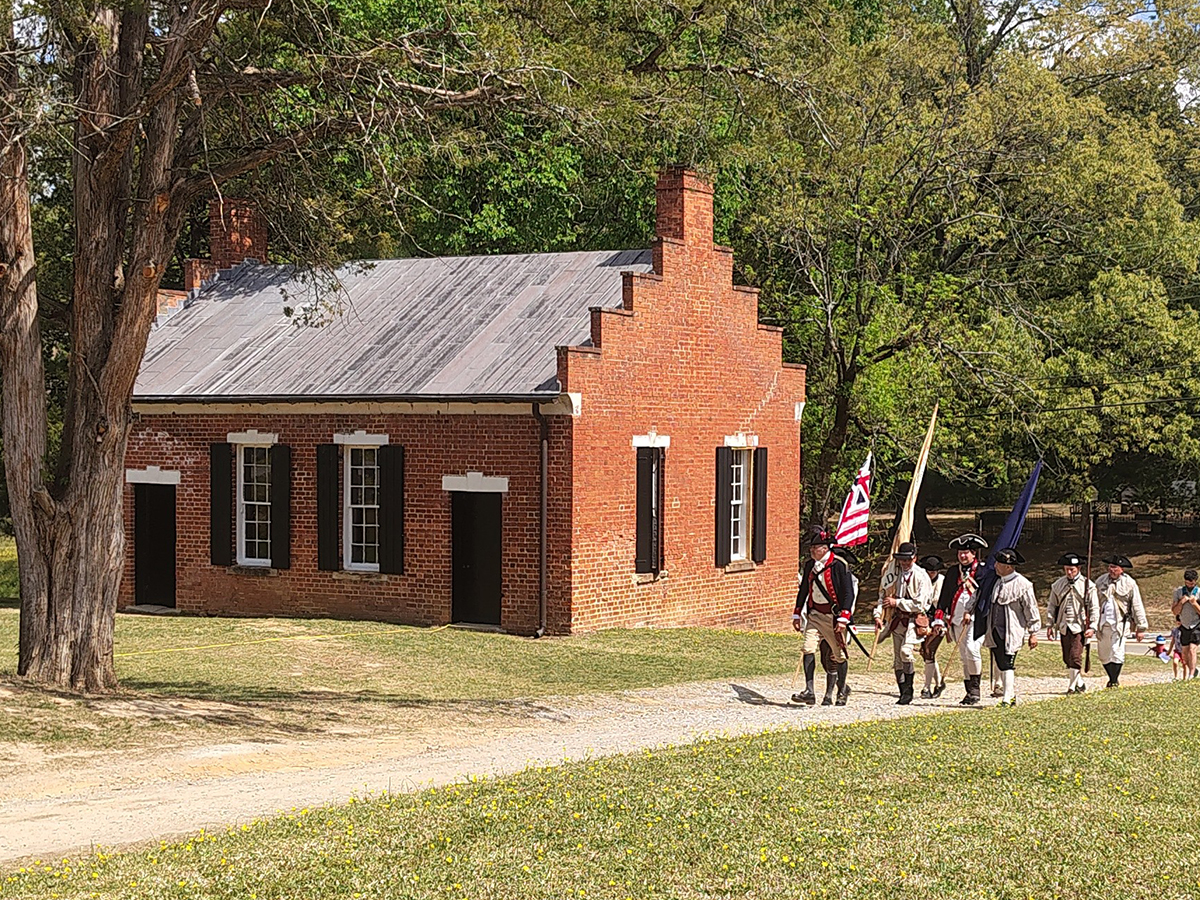
Despite the utility poles connecting the network of overhead cables along the paved, two-lane road and other obvious signs of the 21st century, Historic Halifax State Historic Site transported visitors to April 12, 1776, during “Halifax Resolves Days,” a weekend commemoration of North Carolina taking the first step toward freedom.
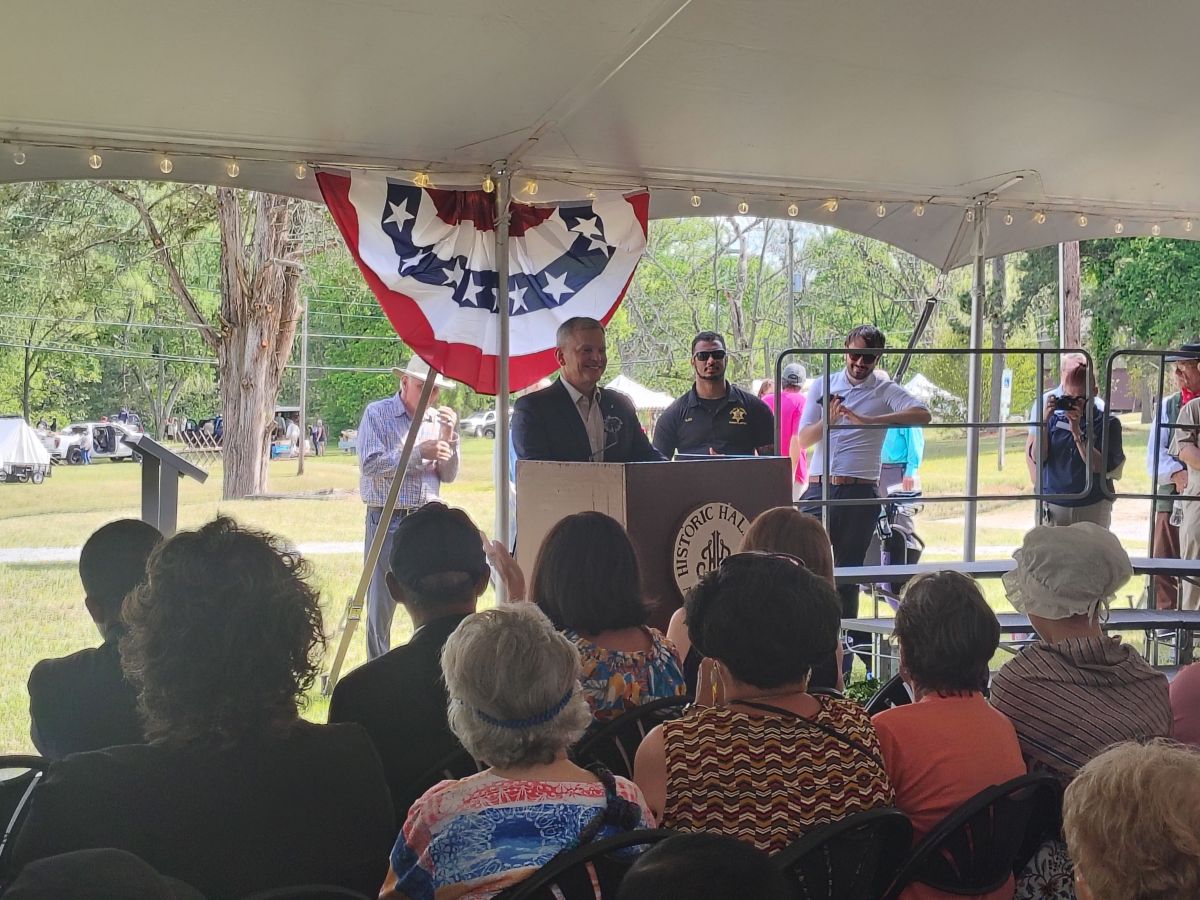
“Today is a huge day for North Carolina. Two hundred and fifty years ago today, the Fourth Provincial Congress of North Carolina met here in Halifax and adopted the Halifax Resolves, the first official action by any colony to declare independence from the king,” Gov. Josh Stein said Sunday afternoon to the more than 300 gathered for the Halifax Resolves Ceremony.
Supporter Spotlight

Held under a sizable party tent near the Colonial Courthouse Site, where the 1760s wooden building once stood, the 250th anniversary ceremony wrapped up the April 10-12 event. Visitors were able to watch living history reenactments, colonial life demonstrations, musical performances, and a ceremony led by the state-recognized Haliwa-Saponi Indian Tribe based in Halifax and Warren counties.
North Carolina Department of Natural and Cultural Resources Secretary Pamela Brewington Cashwell introduced Stein before he took the podium.
During her brief comments, she explained that the department is responsible for organizing America 250 NC, the state’s celebration of the 250th anniversary of the signing of the Declaration of Independence, and Halifax Resolves Days is a signature event of that celebration.
“We will also have a major event at the capitol in Raleigh this Fourth of July titled ‘Capitol 250: North Carolina Freedom Fest.’ We hope that if you don’t have something going on in your local community, that you will join us in Raleigh for another massive event,” she said, then directed the audience to visit the A250 website that details 700 events taking place this year as part of the celebration, from dramatic presentations, festivals, murals that have been painted in various communities.
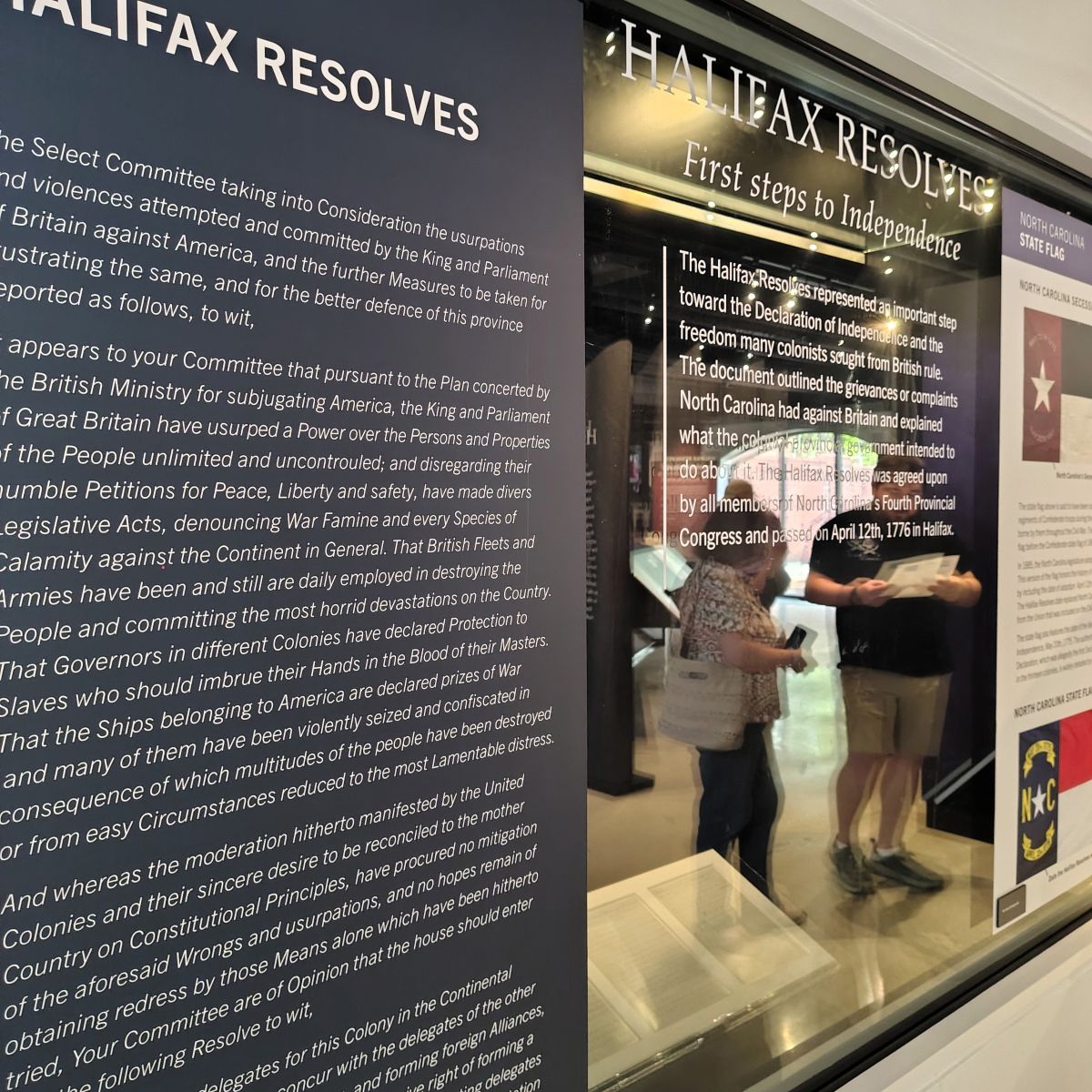
When Stein welcomed the audience, he encouraged them to see the Halifax Resolves document on display in the new visitor center that officially opened that week. The governor and other state officials made a trip to Halifax April 7 for a ceremonial ribbon-cutting and to view the document that will be on loan from the National Archives until October.
Supporter Spotlight

Stein explained that leading up to the delegates meeting in Halifax, there was tension in the colonies between those who wanted to reconcile with the crown and those who wanted to rebel.
Even after the Battles of Lexington and Concord on April 9, 1775, a large portion of the colonial population wanted to make accommodation with England. When the Second Continental Congress met in Philadelphia in July of that year, they did not declare independence. Instead, they petitioned the king for more favorable terms. From 1775 to 1776, “the tide began to turn in favor of rebellion, but that path was by no means a certainty,” stein continued.
Then, Thomas Paine published “Common Sense” in January 1776, the pamphlet that Stein said made a “powerful argument for an independent, democratic nation founded on equality. Truly a radical notion.”
Then on Feb. 27, 1776, “a militia of patriots skirmished with loyalist troops at the Battle of Moores Creek Bridge,” located just west of Wilmington. “The Patriots soundly defeated the Loyalists, putting an end to English rule in North Carolina, blocking an English invasion of the south and lighting a flame of liberty within North Carolinians,” Stein continued.
As these events were taking place, North Carolina’s provincial delegates met with residents across the colony, and brought all those perspectives to Halifax in April 1776 when the fourth North Carolina provincial Congress gathered.
The delegates in the Halifax Resolves detailed their neighbors’ grievances, “or in their words, the ‘usurpations and violences’ committed by the king. They wrote that the ‘king and Parliament of Great Britain have usurped the power over the persons and property of the people, unlimited and uncontrolled and disregarding their humble petitions for peace, liberty, and safety. They made diverse legislative acts denouncing war, famine and every species of calamity daily employed in destroying the people and committing the most horrid devastations in the country.’”
By adopting these resolves, Stein said that these 83 delegates “did something radical, something revolutionary, something patriotic. They unanimously empowered North Carolina’s representatives at the Second Continental Congress up in Philadelphia to vote to declare our nation’s independence from the crown,” he said. “With these Halifax Resolves, North Carolina became the first colony to take any action declaring our nation’s independence.”
Though the document set the colonies on a path of expanding freedom in this nation, Stein acknowledged that the resolves were “far from perfect,” but still encouraged reading the text, even though parts will make the reader “feel very uncomfortable.”
“It’s easy, when you look back at history, to assume some sort of inevitability, like of course, it happened, but this historic action and the fact that it was unanimous was by no means a foregone conclusion,” Stein said, noting that rebuking the world’s greatest superpower “would have been considered treason, a crime punishable by death.”
The colonists depended on England for military protection and economic security. “Failure objectively was likely, and failure could have been fatal,” Stein said. “With these stakes and these odds, this vote for independence was brave and truly incredible.”
The British Empire could have easily subdued a “ragtag militia or a single colony, but a united force at least stood a chance.” With every single delegate voting in favor of the Halifax Resolves, “it was a precursor of the unity that the revolution would require.”
Less than three months later, at the Second Continental Congress in Philadelphia, Pennsylvania, “the 13 British colonies, so incredibly diverse and different from one another, declared that we were no longer 13 separate colonies. We are the United States of America,” Stein said.
And while “250 years ago, internal division was one of the greatest threats to our nation’s success. 250 years later, I would venture that that is still true,” Stein said. “There are so many forces seeking to divide us that profit from our distrust for one another. There are so many forces making the American Dream feel out of reach, telling us that our success requires others to fail, and too often, we hear crudeness, not civility and experience division, not decency. It does not have to be this way.”
Americans can chart a different course, lust like our forebears in Halifax, “After all, we are not red. We are not blue. We are red, white and blue,” Stein said.
“We have so much to gain from bridging our differences, not glossing over them, but having the confidence to find common ground and the patriotism to remember that we are all Americans, that we all love this place,” he concluded. “It is a revolutionary idea, and it is the North Carolina way.”
Rep. Don Davis, R-N.C., who represents the 1st District ecompassing 22 northeastern North Carolina counties, was among the handful of officials who spoke in addition to the governor.
Davis said that the day “shines a light on a true treasure from our great state and nation.”
“Right here in eastern North Carolina, 250 years ago, brave souls took courageous steps towards independence. Their actions remind us of our resilience and grit, illustrating what we can achieve together when we unite for common cause. The Halifax Resolves aren’t just a chapter in our history. They are evidence of hope for our future.”