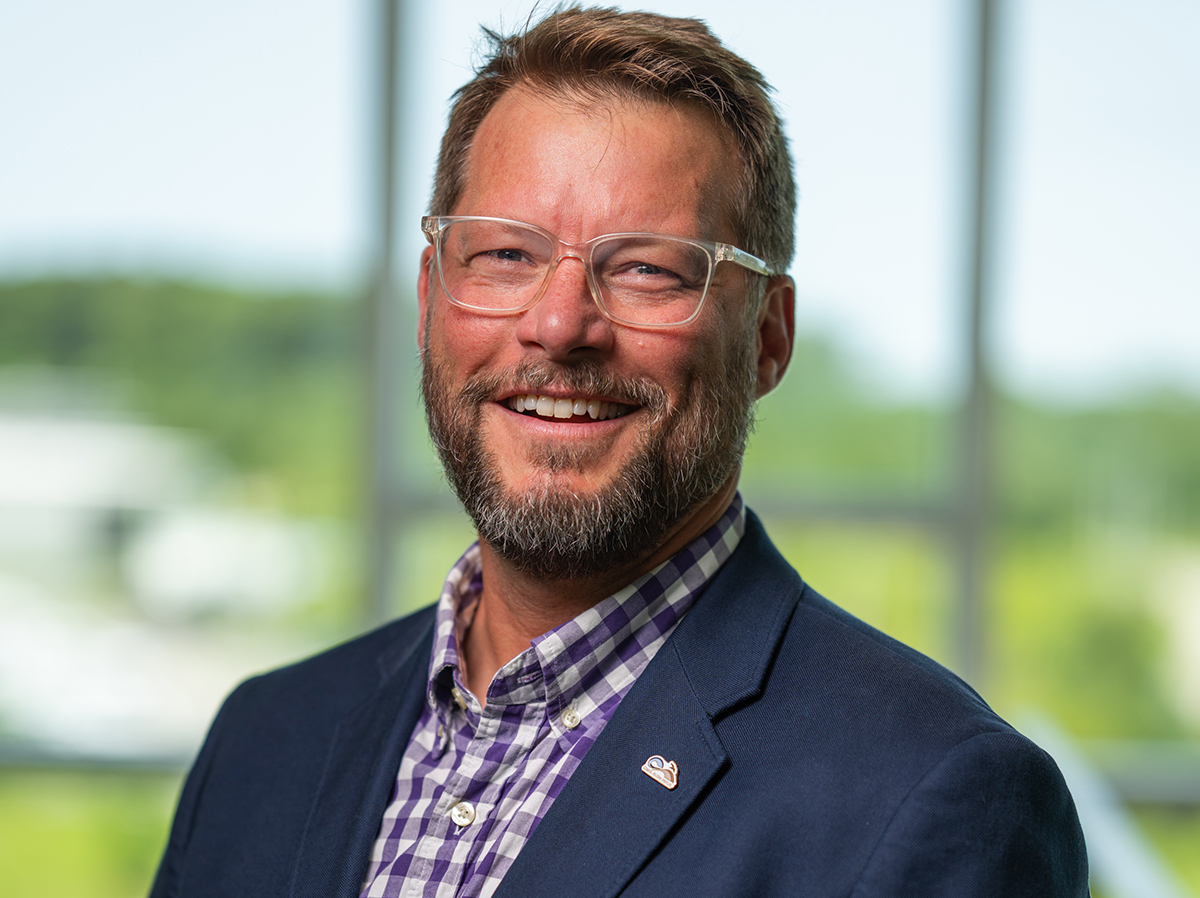
Dr. Reide Corbett, executive director of the Coastal Studies Institute on the East Carolina University Outer Banks Campus in Wanchese, is the featured lecturer this month at the institute’s “Science on the Sound” lecture series.
The public is encouraged to attend Corbett’s lecture, “Holding the Line? Coastal Change and Barrier-Island Dynamics on the Outer Banks.” The program is set for 6 p.m. May 28 at the institute and there’s no charge to attend.
Supporter Spotlight

From collapsing oceanfront homes to repeated beach nourishment projects, coastal change is becoming increasingly visible across the Outer Banks. But what do these changes reveal about how barrier islands function — and how different management approaches interact with these naturally dynamic systems?
Corbett will discuss the science behind erosion, storms, overwash, sediment transport, and sea level rise, while exploring how shoreline management strategies influence beaches, infrastructure, and long-term resilience.
“Rather than focusing on simple solutions, the discussion will examine the tradeoffs, time horizons, and challenges associated with managing development on a constantly changing coast,” organizers said in their announcement.
Whether you work in coastal science, policy, planning, or simply care deeply about the Outer Banks, this presentation offers an opportunity to better understand the processes shaping one of the most dynamic shorelines on the East Coast.
The program will also be livestreamed on YouTube.
Supporter Spotlight
Corbett is a coastal oceanographer and geochemist whose work focuses on coastal change, sediment dynamics, shoreline processes, and the geomorphic evolution of barrier island systems.
Born and reared on the North Carolina coast, he earned his bachelor’s in chemistry and his master’s and doctorate in chemical oceanography from Florida State University before beginning his academic career at Tulane University in New Orleans. He later returned to North Carolina to join ECU, where he serves as dean of Integrated Coastal Programs, executive director of the Coastal Studies Institute, and professor in the Department of Coastal Studies.
Corbett’s research examines the dynamic interface between land and sea, from estuaries and continental shelves to barrier islands and polar coastlines. His work has taken him from North Carolina and Puerto Rico to New Zealand and Antarctica, with a particular focus on how storms, sea level rise, sediment movement, human activity, and long-term geologic processes shape coastal environments. Through the lens of North Carolina’s coast, he helps communities better understand shoreline change, barrier island evolution, and the choices needed to adapt to a changing coastal future, organizers said.