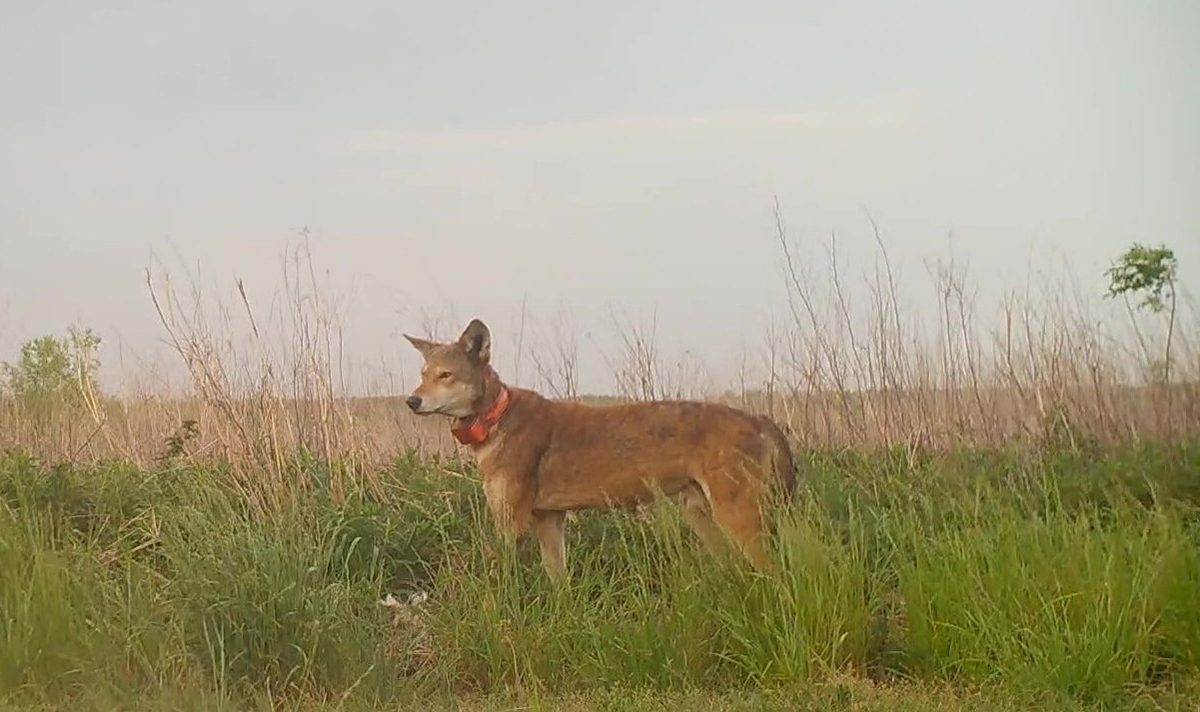
A bipartisan group of legislators has filed a bill that would authorize the North Carolina Department of Transportation’s Division of Motor Vehicles to begin issuing special vehicle registration plates with the proceeds benefiting efforts to conserve and protect the eastern red wolf population in the northeast part of the state.
Rep. Cynthia Ball, D-Wake; Rep. Stephen M. Ross, R- Alamance; Rep. Vernetta Alston, D-Durham are the primary sponsors of the measure, House Bill 1157, which was introduced Thursday. Rep. Robert T. Reives II, D- Chatham and Randolph, and Rep. Tim Longest, D-Wake, signed on as cosponsors.
Supporter Spotlight

The measure notes that “North Carolina holds a unique place in the history and future of red wolf conservation,” and that preserving native wildlife is important to the natural heritage, environmental health, educational mission, and cultural identity.
Offering a red wolf special registration plate would allow state residents “to demonstrate support for the preservation of this iconic native species.”
Naturally, North Carolina State University, its College of Veterinary Medicine, and Wolfpack faculty, staff and alums would have a hand in getting the word out. The university, “as a leading public institution with the Wolfpack identity and a broad statewide alumni and supporter network, is well positioned to help promote awareness of the Red Wolf special registration plate and its conservation purpose,” according to the bill language.
The tags are to be like other special license tags that lack “First in Flight,” “First in Freedom” or other state mottos and would, in this case, instead bear the words, “Red Wolf” and an image of a red wolf. The additional fee for the special red wolf tag would be $30.
Sale of the special tags would provide a recurring source of support for the North Carolina Wildlife Resources Commission’s red wolf conservation, management, research, monitoring, and habitat preservation and restoration.
Supporter Spotlight

The DMV may not issue the special plate if it doesn’t receive the minimum required number of applications, which is 300 for a special registration plate on a standard background and 500 for a special registration plate on a special background.
The measure would provide $15,000, nonrecurring, for fiscal 2026-27 to design the plate as well as to cover the programming, setup, production preparation, and associated administrative costs for initial implementation.
It would also appropriate $50,000 to the university in nonrecurring funds to support the initial promotion and public awareness campaigns.
It’s in the state’s interest, according to the bill language, “to provide one-time funds to support the initial design, development, and issuance of the plate so that the plate may be made available without unnecessary delay …”