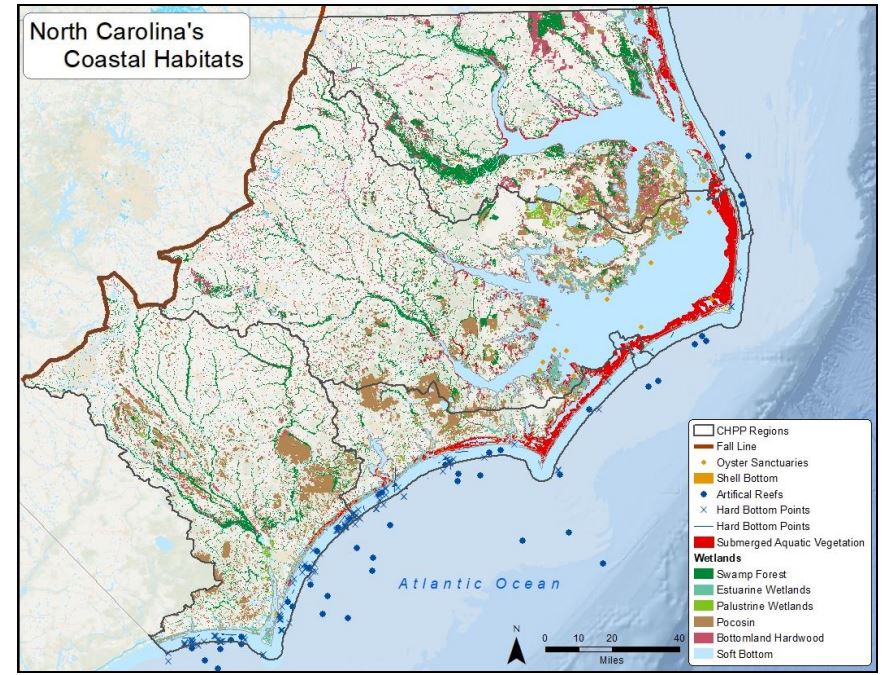
North Carolina Department of Environmental Quality staff are to present outlines for the new issue papers for the 2026 update to the Coastal Habitat Protection Plan, the state’s long-term strategy to protect coastal habitat, a necessity for a sustainable seafood industry.
Environmental Management Commission

EMC to hear progress on habitat protection plan update
The 15-member Environmental Management Commission are scheduled to hear an update to the N.C. Coastal Habitat Protection Plan at its July 9 meeting.
Environmental Management Commission meets Thursday
North Carolina Environmental Management Commission committees will meet in Raleigh on May 13, followed by a meeting of the full commission on May 14.

Speakers scold EMC, share health issues at PFAS rules hearing
About 230 crowded into Wilmington’s Skyline Center Thursday for the Environmental Management Commission’s hearing and dozens spoke, often angrily, about proposed PFAS monitoring and minimization rules.
Proposed industrial wastewater rules ‘completely inadequate’
Nearly all who spoke Tuesday during a public hearing in Fayetteville criticized the North Carolina Environmental Management Commission’s proposed industrial discharge rules fail to protect the drinking water supply of people who live farther down the Cape Fear River.
New state Clean Water Act certification rules take effect
Applicants for permits for construction and other projects with impacts to waters or wetlands that meet thresholds and conditions under the state’s newly implemented general certification will be waived from the 30-day notice requirement.
Public comments regarding river basin transfer plan pour in
New issues of concern keep arising as officials in Wilmington and Brunswick County urge rejection of Fuquay-Varina’s plan on file with the state to take more than 6 million gallons per day from the Cape Fear River to meet its growth demands.
Environmental Management Commission set to meet
The commission that adopts rules to protect natural resources and its committees will meet in Raleigh March 11-12.
Commission OKs advancing wastewater rules to public review
The public will soon be able to lodge their comments about proposed rules mandating that public sewer plants test their treated discharge into rivers, creeks and streams for three types of per- and polyfluoroalkyl substances and a chemical solvent.

EMC to vote on opening comment period for discharge rules
The state Environmental Management Commission is set to vote Thursday on whether to put proposed “monitoring and minimization” rules for some PFAS and 1,4-dioxane out for public comment.
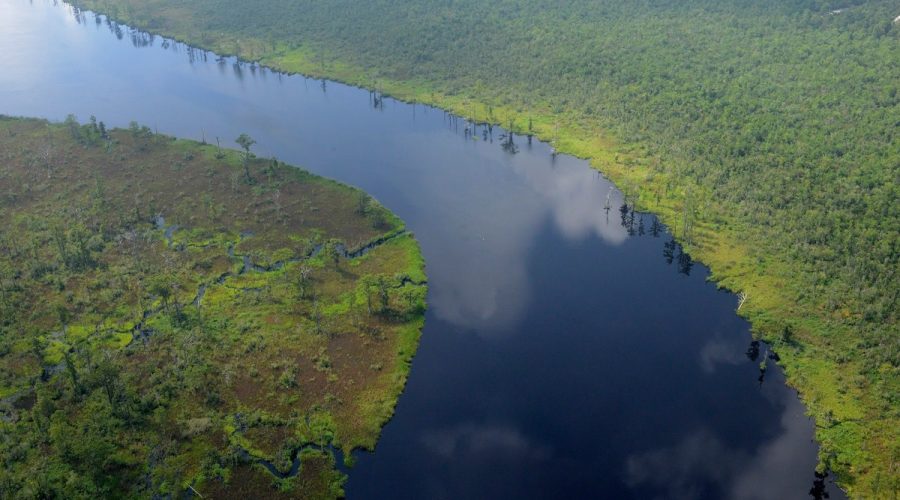
Opponents say river water transfer puts Cape Fear in peril
Fuquay-Varina seeks to transfer 6.17 million gallons per day from the Cape Fear River Basin to the Neuse River Basin to meet the Piedmont town’s projected water demands.

Asheboro plant discharges elevated levels of 1,4-dioxane
Sampling at Asheboro’s wastewater treatment plant revealed elevated discharges of 1,4-dioxane, a likely human carcinogen, in a waterway upstream of drinking water sources for some 900,000 North Carolinians.
Commission holds PFAS, 1,4-dioxane vote for future meeting
The Environmental Management Commission voted to postpone hearing proposed rules to monitor and minimize the two human-made chemical compounds from industrial users and dischargers.

EMC committee may move proposed PFAS surface water rules
The North Carolina Environmental Management Commission’s Water Quality Committee will consider proposed monitoring and minimization rules
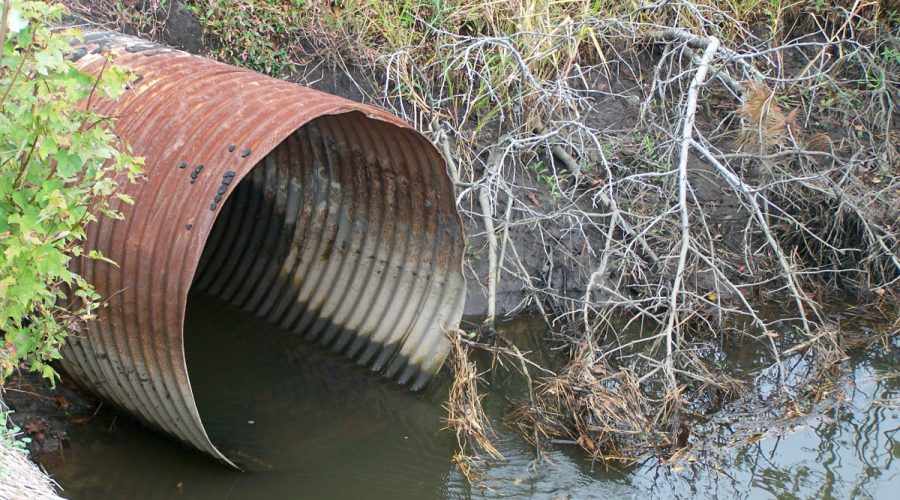
Wastewater rules comment period extended, hearing set
Public comments will be accepted through Dec. 15 on a draft rule that would allow domestic wastewater discharges into zero-flow streams.
Critics say law will derail health, environmental rulemaking
House Bill 402, which became law this past summer despite the governor’s veto, has drawn sharp criticism from environmental and health advocates who argue it will stifle an already daunting rulemaking process and create significant obstacles to addressing pollution.