Notorious for its bloated and rigid regulatory structure, the U.S. Army Corps of Engineers’ Civil Works program is looking to slim down and speed up, all while redirecting resources and prioritizing programs.
As detailed in 12 memorandums released in March, the agency’s new initiative, “Building Infrastructure, Not Paperwork,” seeks “to deliver critical projects and programs for the nation more efficiently, sooner, and at less cost than the current ways of doing business,” Assistant Secretary of the Army for Civil Works Adam R. Telle stated in a February press release.
Supporter Spotlight

“This will eliminate bureaucratic delays and provide fast, clear decisions needed to save lives and empower our economy,” he added.
According to the release, the plan’s 27 initiatives are grouped under five categories: maximizing ability to deliver national infrastructure, cutting red tape, and focusing on efficiency, transparency and accountability and prioritization. The plan would not affect the Corps’ execution of its emergency response support to natural and human-made disasters.
Even by federal government standards, the Corps’ Civil Works is massive, managing about $259 billion in water resource assets and employing an estimated 37,000 full-time-equivalent employees, 98% of whom are civilians, according to a 2025 congressional report.
Through the initiatives, there are assurances that all projects are reviewed for the best path forward, said Eugene Pawlik with the Corps’ public affairs in an email, responding to questions from Coastal Review. “(The Corps) will be focused on strategically allocating available resources to prioritize the most pressing infrastructure needs across the country.”
The slow pace of the permit approval process will be addressed with new technology and geospatial tools that will expedite jurisdictional and permitting decision-making as well as reduce subjectivity in identification and elimination of Clean Water Act areas, Pawlik said.
Supporter Spotlight

Additional permitting goals, he wrote, include reissue and expand the existing Nationwide Permit program, eliminate barriers that prevent establishment of new mitigation banks, leverage private capital to modernize and expand generating capacity at Corps facilities, provide long-term leases with rights to additional revenues to entities willing to pay for capital improvements, and reform how the Corps conducts Section 408 reviews and engineering oversight.
The Section 408 program allows people or entities to make changes to a civil works project following reviews that are to verify that the changes do not have negative effects on the public interest or the project itself.
No additional funds nor dedicated budget item is being requested to implement the program.
“We believe the transformation initiatives will be a more effective use of annual appropriations,” Pawlik said.
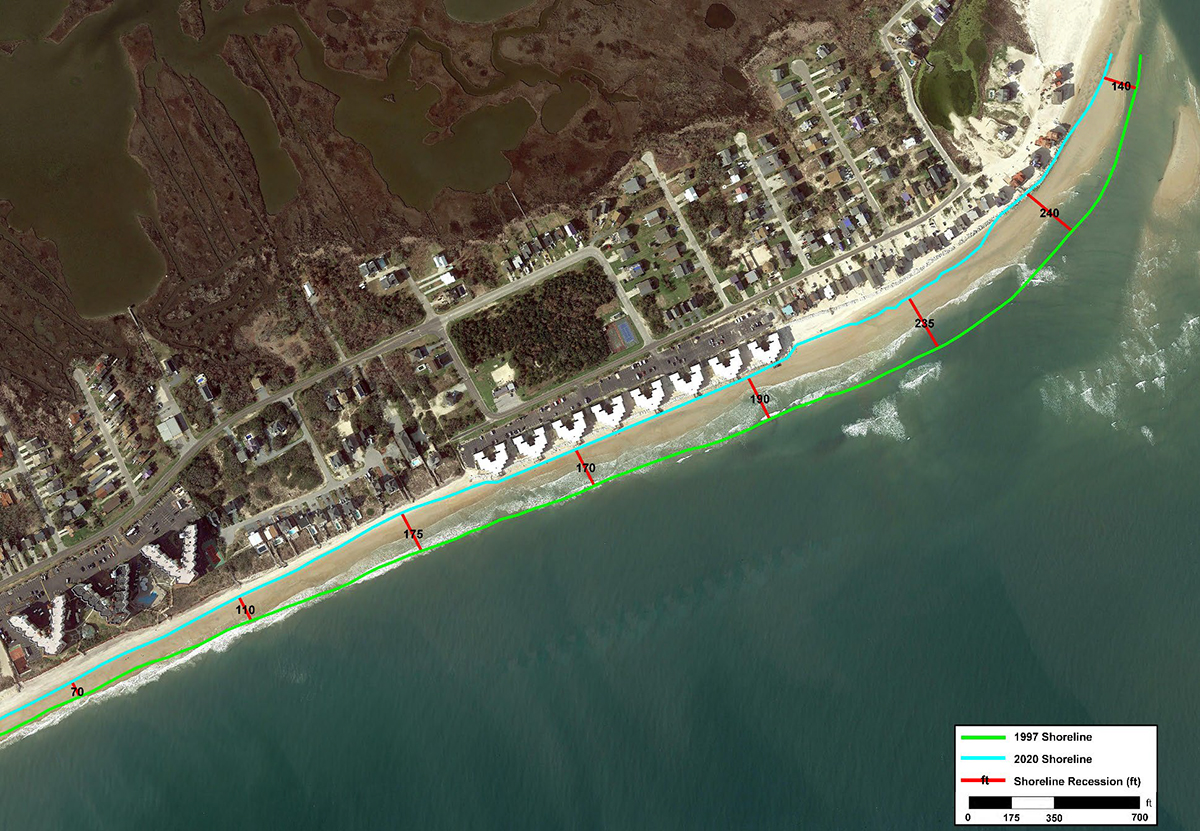
But a closer look at just two interconnected and increasingly important tasks that the Corps is charged with in North Carolina and numerous other states — that is, dredging clogged inlets and nourishing eroding beaches by pumping in sand — may seem logical and sensible. But it’s not that simple.
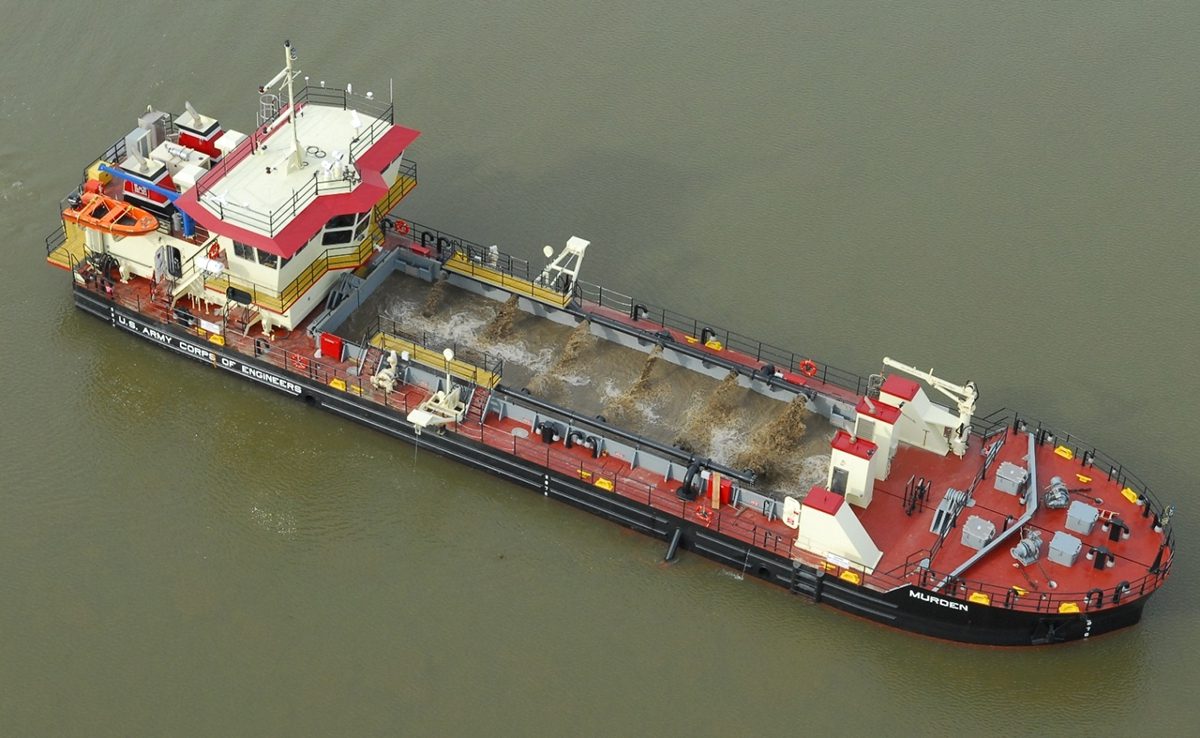
With both activities being done more frequently, while sand supplies are becoming more sparse, the Corps is more often being asked to put the dredged sand from navigation channels on the beach. And more often, and to the enormous frustration of the permit applicant, it’s not permitted.
“In the Wilmington District, maintenance dredging often serves a dual purpose through the Beneficial Use of Dredged Material,” the Corps press release said, referring to a program created under the Water Resources Development Act of 2016. “The district uses beach-quality sand removed from navigation channels and inlets to provide for North Carolina’s coastal communities.”
On the Outer Banks, for instance, dredged material from Oregon Inlet in past years had been pumped onto an adjacent beach on the north end of Pea Island National Wildlife Refuge.
“Maintenance dredging is about more than just keeping the channels clear and ships moving; in North Carolina, it’s also a critical tool for coastal resiliency,” said Col. Brad A. Morgan, commander of the Corps’ Wilmington District. “By placing dredged sand back onto our beaches, we aren’t just maintaining a channel—we are protecting coastal infrastructure, supporting the local tourism economy, and restoring vital habitats.”
But the state Division of Environmental Quality has to permit sediment placed on state beaches, and it requires that sand to meet standards. On federal lands, such as the Pea Island refuge and Cape Hatteras National Seashore, the U.S. Department of Interior also must permit the sand placement. Even when sand is removed from a nearby location, it’s not necessarily transferable to the beach where it’s needed. Dredged sand may be the wrong color or size, or testing has revealed pollutants or toxins. It might be mucky and unsuitable for bird habitat. It might be too fine for the targeted location, meaning it would soon blow away. Or as happened in 2015 at North Topsail Beach, it could be too rocky.
Still, the Corps would continue to ensure that dredged material used as beach fill meets required standards, Pawlik said.
“The Flood and Coastal Storm Risk Reduction programs reduce risk for millions of Americans and billions of dollars of infrastructure,” he wrote. “(The initiative) will ensure USACE pursues cost efficiency through better use and scheduling of dredging assets nationally and increased use of dredged materials for beneficial use.”
Pawlik said that the Corps’ district commanders would review all projects and be “key players” in forward motion of projects and allocation of resources “to prioritize the most pressing infrastructure needs across the country.”
Each of the 12 memorandums provides details of different aspects of implementation of the “Building Infrastructure, Not Paperwork” program, addressing what many people have frequently noted about the agency.
As one excerpt from the memo, “Prioritization of Efforts Within the Army Civil Works Program” reveals, there’s room for improvement: “In recent years, the Corps has prioritized every effort all at once, which of course means there are no priorities and that we can mask lack of delivery with progress on paper.”
Coastal Review will not publish Friday as our offices will be closed in observance of Good Friday.