Guest Commentary
To stimulate discussion and debate, Coastal Review welcomes differing viewpoints on topical coastal issues. Opinions expressed by the authors are not necessarily those of Coastal Review or our publisher, the North Carolina Coastal Federation.
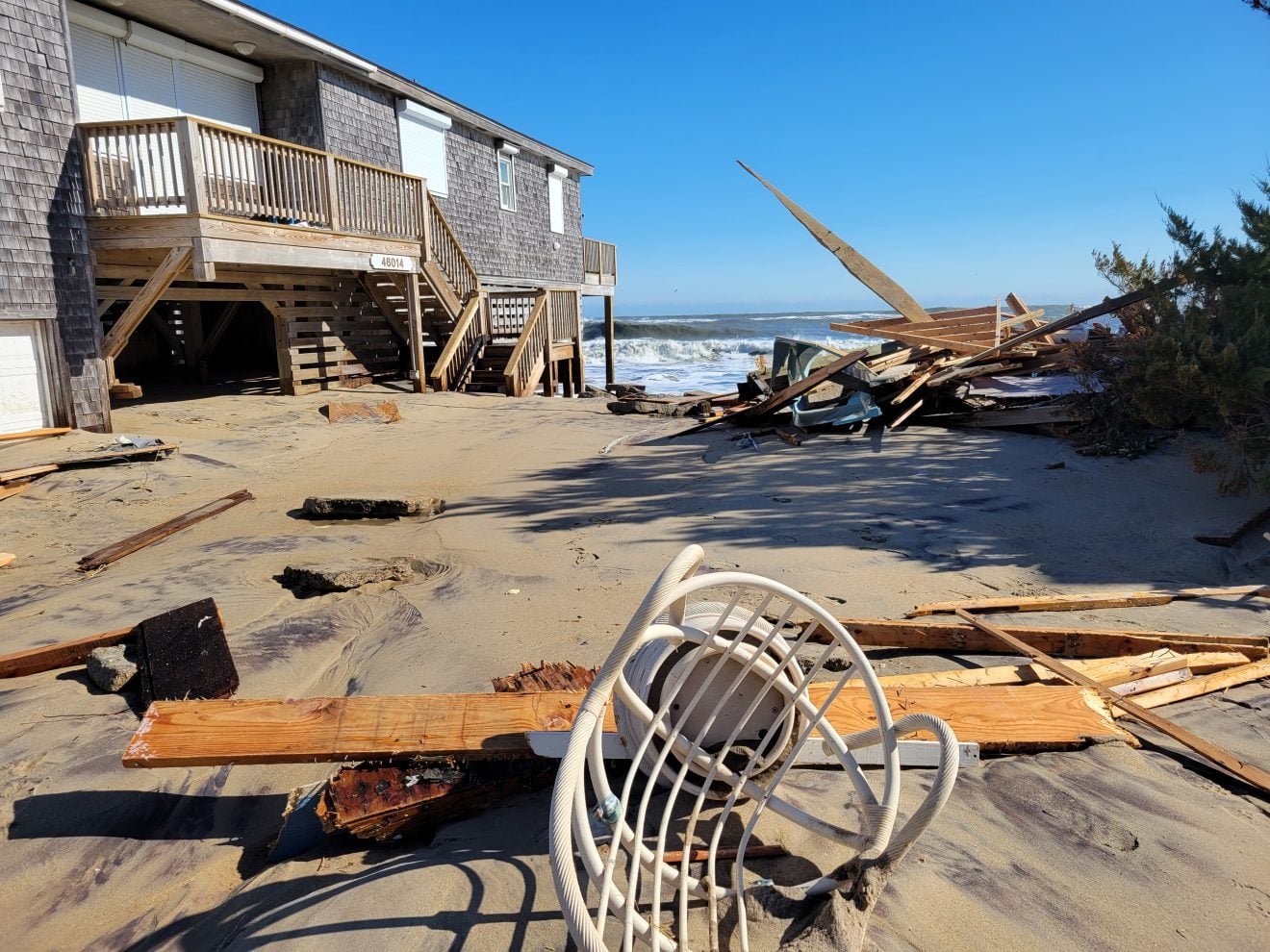
Early this February, the Outer Banks battled severe winter weather, a closed main highway due to overwash, and iced-over ferry terminals. But amidst the freeze, a more permanent disaster unfolded. On Feb. 1 and 2, the Atlantic Ocean claimed its latest prize: four homes in Buxton.
Supporter Spotlight

This brings the total number of properties lost to the ocean since 2020 to 31. While these collapses create a spectacle on social media and news outlets, for coastal managers, they are anticipated events and a reminder of our losing battle against an ever-encroaching sea.

The consequences from each collapse extend beyond the individual homeowners. Scattered debris creates hazardous conditions that close shorelines, deter tourists, and threaten the local tourism economy.
While homeowners are technically responsible for hiring contractors for debris removal, county and National Park Service crews from the neighboring Cape Hatteras National Seashore are often left to fill the gap. And until cleanup is complete, waves of nails, furniture, septic systems, and splintered wood create dangerous conditions for neighbors, tourists, and wildlife. Ultimately, we are trying to force static buildings onto dynamic barrier islands, and the islands are fighting back.
The sand subscription trap
Most of these threatened homes were built on these barrier islands between the 1970s and 1990s, originally standing hundreds of feet from the Atlantic Ocean. Today, homes in the Outer Banks cling to a shoreline eroding at rates of up to about 20 feet per year. This erosion is driven by rising sea levels, expected to increase locally by 15 to 22 inches by 2050, and intensified coastal storms.
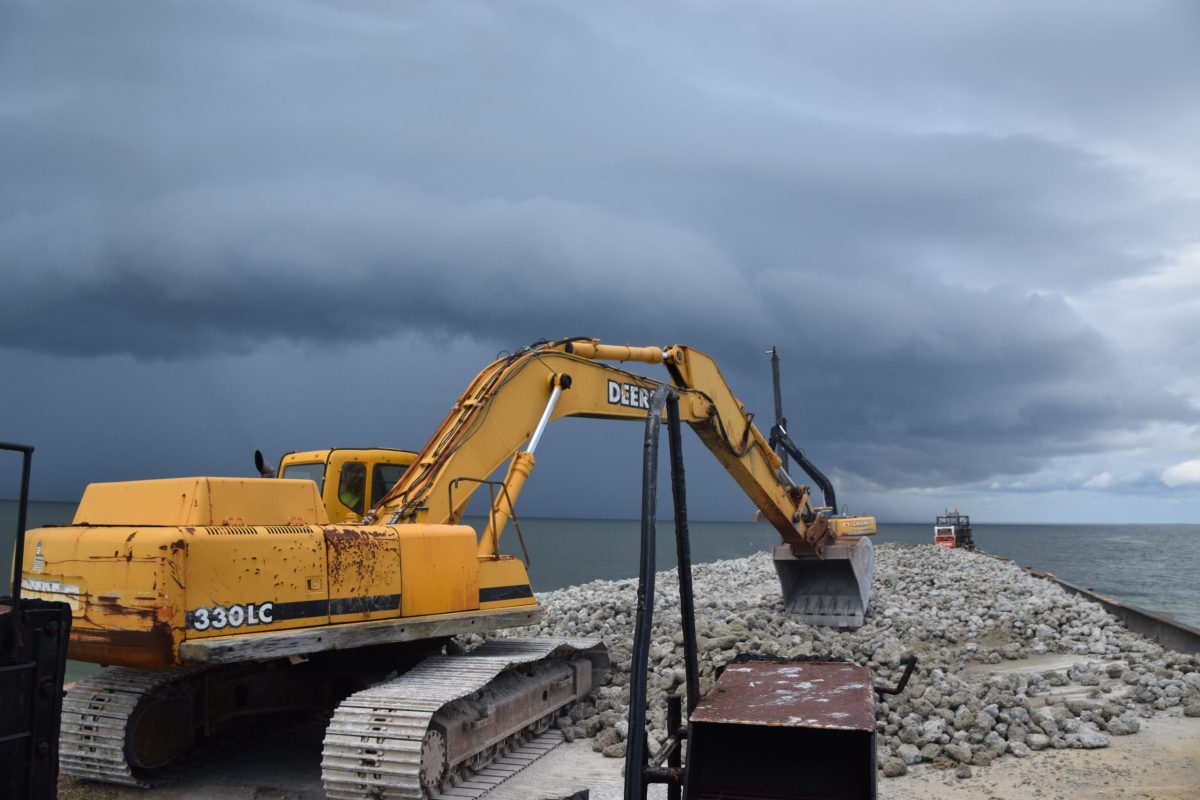
Currently, our primary adaptation strategy is beach nourishment, the artificial pumping of sand onto existing beaches to resist erosion and protect inland structures. However, this strategy is proving unsustainable. The rate of erosion has simply outpaced our administrative capacity to fund, permit, and engineer new projects. The beach in front of the latest collapses in Buxton was nourished less than four years ago. In essence, we are signing up for a recurring subscription to sand, one that costs more every year while protecting homes for a shorter period.
Supporter Spotlight

The case for buyouts
What most reports on these collapses fail to highlight is that a financially viable solution exists. A 2023 Western Carolina University cost-benefit analysis of Rodanthe, a community on the Outer Banks that has seen 12 collapses since 2020, found that long-term beach nourishment would cost the municipality approximately $120 million over 15 years. In contrast, it would cost just over $40 million to proactively buy out and remove the 80 most at-risk homes.
While the recent collapses in Buxton are making headlines, Buxton and Rodanthe, as the two communities where homes have collapsed, face different realities. Buxton is largely a year-round community where erosion threatens the broader tourism-driven economy, though the collapsing oceanfront homes themselves are primarily second homes. Conversely, Rodanthe is largely composed of vacation homes with a relatively small tax base.
Further, the somewhat recently completed “Jug-Handle” Rodanthe Bridge bypassed Rodanthe’s erosion hot spot, which has mitigated need to protect that stretch of highway. The exorbitant costs of beach nourishment and limited funds make Rodanthe unlikely to afford nourishment, and make buyouts the most logical strategy.
Buyouts are a tool for managed retreat where local, state, or federal governments purchase hazard-prone homes to relocate residents and demolish the existing structures, creating open space that naturally buffers against coastal flooding.
While beach nourishment projects in this region are projected to last about five years, a buyout is a permanent removal of the risk. There is already a precedent for this in Rodanthe as well. In 2023, the National Park Service used funds from offshore oil and gas leasing earnings to buy and demolish two threatened homes before they collapsed.
Breaking the insurance cycle
Critics often point to the loss of local tax revenue as a barrier to buyouts. However, the WCU study found that property tax revenue lost from these 80 homes, valued between $7 to $10 million over 30 years, is still significantly less than the cost to maintain the beach through nourishment. Further, our current system under federal guidelines creates deep regional inequities. Reimbursement for beach nourishment projects is only available to communities that can first afford millions to construct an engineered beach.
Only when a disaster is declared does a beach become eligible to receive emergency funding for the volume of sand lost during a specific storm-related disaster. Because of the steep costs of nourishment, only affluent communities with wealthier tax bases can afford to protect their homes.
Where federal dollars don’t pay for sand, the inherent risk of living along an eroding shoreline is subsidized through the National Flood Insurance Program (NFIP). Local and federal agencies lack the authority to force homeowners to demolish their compromised properties and therefore proactive removal is entirely voluntary and costs homeowners over $25,000 out-of-pocket. Homeowners with mortgages in these flood zones are incentivized to wait for the inevitable to be eligible to receive up to $250,000 for the structure and $100,000 for contents from the NFIP only after their home has collapsed.
Congress is largely unresponsive to escalating climate risks associated with intensifying hazards and subsequent uninsurable flood risks. Even when there have been legislative reforms to the NFIP, there have been unintended consequences for homeowners who are unable to afford higher premiums and also unable to sell their properties, with disproportionate impacts on vulnerable communities. With Rodanthe consisting primarily of vacation rentals, there is a deep equity question about how to fairly allocate taxpayer funds when low- and middle-income households are disproportionately impacted by flooding nationwide.
There is bipartisan recognition that this system must change. In 2025, Rep. Greg Murphy, R-N.C.-3, co-sponsored the Preventing Environmental Hazards Act (H.R.3161) to address this issue. The bill would authorize advance NFIP payouts of up to 40% of a home’s value up to $250,000 to proactively help homeowners demolish threatened homes before they collapse. To build on this, experts propose a “discounts for buyouts” reform to the NFIP, offering homeowners lower premiums in exchange for their agreement to sell their home and relocate once their home is substantially damaged by flooding. In addition, by prioritizing residences valued at under $250,000, the NFIP could equitably relocate vulnerable primary homes over wealthy second-home owners.
Proactive planning over reactive cleanup
Buyout programs are not a “silver bullet” to ongoing erosion and sea level rise. They come with emotional consequences, including homeowner displacement and impacts to community identity. Also, a large-scale buyout program would undoubtedly require significant local, state, and/or federal funds to remove these at-risk properties. However, voluntary programs that give homeowners autonomy over decisions on whether to participate in buyouts can mitigate these social costs.
One of the biggest hurdles is politics. Supporting government-funded buyouts can be seen as admitting defeat to the environment and is a political liability. Andrew Coburn, the associate director of the program for the Study of Developed Shorelines at WCU, noted that it is hard to imagine that a politician would ever tell their constituents, “Well, I guess it’s time we retreated.” Instead, we let the ocean decide when retreat from the shoreline happens, often at a much higher long-term cost.
The Outer Banks is an early warning sign for the rest of the U.S. coastline. While the only option appears to be expensive and temporary beach nourishment and insurance bailouts, there is a more holistic, science-based solution where long-term benefits outweigh the costs.
The logical solution is based on the values and needs of the broader Outer Banks community, U.S. taxpayers, the long-term health of the ecosystem, and equity. In the face of the 32nd collapse, we must shift from the cycle of federal subsidies and reactive cleanups toward insurance reforms and proactive retreat programs that offer homeowners a viable way out, before the Atlantic decides for them.