The two agencies that enforce the Clean Water Act have proposed changes to the waterbodies considered jurisdictional, or under federal protection, and the deadline for the public to comment is here.
The Environmental Protection Agency and Army Corps of Engineers published on Nov. 20 in the Federal Register the “Updated Definition of ‘Waters of the United States,’” opening the public comment period that ends 11:59 p.m. Monday, Jan. 5. Information on how to submit comments is on the EPA website.
Supporter Spotlight

The agencies said the proposed rule revises “the regulations defining the scope of waters federally covered under the Federal Water Pollution Control Act, as amended, also known as the Clean Water Act, in light of the U.S. Supreme Court’s 2023 decision in Sackett v. Environmental Protection Agency.”
The agencies argue that their proposed amendments to the “waters of the United States” definition when finalized, will provide clarity and align with the Supreme Court’s opinion in the Sackett case that the “Clean Water Act extends to relatively permanent bodies of water connected to traditional navigable waters and wetlands with a continuous surface connection to those waters ‘so that there is no clear demarcation between “waters” and wetlands.’”
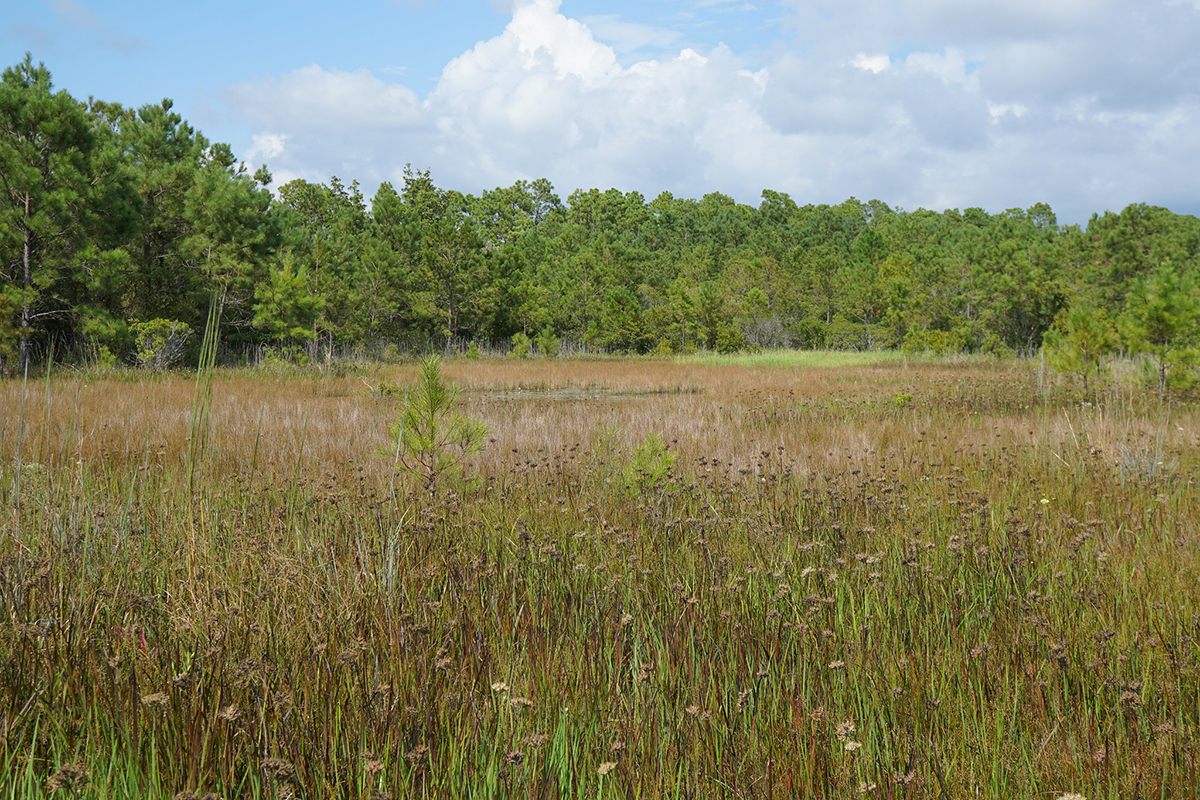
Environmental organizations argue that the proposed changes will gut basic water quality protections, which were already compromised by the 2023 Supreme Court decision on Sackett v. EPA that essentially left nontidal wetlands without protection. Nontidal wetlands are usually in floodplains along rivers and streams, in isolated depressions surrounded by dry land, along the margins of lakes and ponds, and in other low-lying areas where the groundwater intercepts the soil surface or where precipitation sufficiently saturates the soil, according to the EPA.
“When it comes to the definition of ‘waters of the United States,’ EPA has an important responsibility to protect water resources while setting clear and practical rules of the road that accelerate economic growth and opportunity,” EPA Administrator Lee Zeldin said in a Nov. 17 press release. “EPA is delivering on President Trump’s promise to finalize a revised definition for WOTUS that protects the nation’s navigable waters from pollution, advances cooperative federalism by empowering states, and will result in economic growth across the country.”
Environmental Defense Fund Coasts and Watersheds Science Senior Manager Dr. Adam Gold told Coastal Review that the “proposed rule could increase the pace of wetlands loss and lead to more flooding impacts for communities. Wetlands loss increases downstream flooding impacts, and at the same time, any new infrastructure built in former wetlands is also at increased flood risk.”
Supporter Spotlight

Under the agencies’ proposed rule, the term “waters of the United States” would include “(1) traditional navigable waters and the territorial seas; (2) most impoundments of “waters of the United States;” (3) relatively permanent tributaries of traditional navigable waters, the territorial seas, and impoundments; (4) wetlands adjacent (i.e., having a continuous surface connection) to traditional navigable waters, impoundments, and tributaries; and (5) lakes and ponds that are relatively permanent and have a continuous surface connection to a traditional navigable water, the territorial seas, or a tributary.”
The difference between the existing rule and proposed is that the existing rule includes an interstate waters category and the word “interstate” is in front of the lakes and ponds category. The agencies propose deleting both.
The agencies also recommend revising the existing exclusions from the Clean Water Act permitting process for waste treatment systems, prior converted cropland and ditches, and adding an exclusion for groundwater, as well as definitions for “continuous surface connection,” “ditch,” “prior converted cropland,” “relatively permanent,” “tributary,” “and waste treatment system.”
Carolina Wetlands Association Executive Director Rick Savage also has concerns about the flooding that could be unleashed on communities if these proposed changes go through, and the damage to water quality.
He said communities are going to see developers take wetlands without a permit.
“These wetlands are often buffers against flood waters. if they are developed then guess what happens? The flood waters just go inland to the community,” Savage said, adding that water quality could suffer as well, because of the potential for more pollution to pass into streams.”
North Carolina Sierra Club Deputy Director Erin Carey told Coastal Review that ultimately, “the American public should be very concerned that the federal agency tasked with ensuring clean water, clean air, and the protection of our natural environment seems determined to undermine that responsibility. With this proposed change, the EPA claims to seek clarity in regulation, but this rule would serve only to allow industry to profit from environmental destruction, and the ruination of our natural resources.”
Gold said that according to the fund’s analysis published September 2024 in Science that modeled different interpretations of the Sackett decision, the modeled scenario that best aligns with the proposed rule open for public comment now would result in 82 million acres, or 91%, of nontidal wetlands in the contiguous United States estimated to be without Clean Water Act protections.
About WOTUS, Sackett decision
The Clean Water Act is the revised and restructured Federal Water Pollution Control Act, enacted in 1948 to protect waterways that are used for or could be used for commerce.
“The 1972 amendments to the Clean Water Act established federal jurisdiction over ‘navigable waters,’ defined in the Act as the ‘waters of the United States,’” according to the Environmental Protection Agency.
But that’s as far as the definition goes, leaving the two agencies that jointly enforce the regulations to define the term under statute, and have had to determine what geographical features such as wetlands, streams and rivers fall under “waters of the United States,” or WOTUS, and, therefore, under federal protection under the Clean Water Act.
In the decades since, that definition has undergone several amendments, most recently in 2023 to conform to the Supreme Court’s Sackett decision.
The Sacketts are an Idaho couple who were fined by the EPA for backfilling wetlands on their property near Priest Lake. The Sacketts filed a lawsuit asserting that the wetlands were not directly connected to the lake, a navigable body of water protected by the Clean Water Act. Justices ruled in favor of the couple and put parameters on “waters of the United States.”
Justices state in the May 2023 majority opinion that the Clean Water Act’s use of “waters” only refers to geographical features described in everyday language streams, oceans, rivers, and lakes “and to adjacent wetlands that are ‘indistinguishable’ from those bodies of water due to a continuous surface connection.”
The ruling narrowed the definition of “waters of the United States, stripping away protection under the Clean Water Act for isolated wetlands, or those without an obvious connection to navigable waters.
The two federal agencies, under the Biden administration at the time, had published a revised definition in January 2023 that was then amended that September to conform to Sackett.
Shortly after the second Trump administration took office, the agencies began a campaign to change the amended 2023 WOTUS that it called “overly broad” in a news release Monday and “failing to fully implement the Supreme Court’s decision in Sackett v. Environmental Protection Agency.”
Savage explained that the Clean Water Act, passed in 1972, was based on relationships with navigable waters. Then in 1977, the Corps of Engineers came up with the wetlands definition manual, which set the process for how wetlands were defined, based on hydrology, hydrophilic vegetation and hydric soils.
“During that time, almost any wetland was protected because you could find some relationship to a navigable water, even if it’s over land, but now you know that’s all changing,” he said, and the reason it started changing was because the Supreme Court got involved.
“That was in 2006 and ever since then, it is going around and around and up and down and through. You know, nobody knows what the rules are half the time. I mean, there’s been a couple of times where half the states were under one set of rules and the other half are under another set of rules because of litigation,” Savage said.
On the state level
Savage said regarding the proposed rule change that there’s two ways to look at it: the federal level and the state level.
“Right now, as far as North Carolina is concerned, it’s not looking good, period,” he said, because of the Farm Bill that made state and federal regulations to protect wetlands the same.
During summer 2023, the General Assembly approved language in Senate Bill 582, often called the Farm Bill, to align the state’s definition of wetlands with the federal. The definition reads: “Wetlands are classified as waters of the State are restricted to waters of the United States as defined by” the Army Corps and EPA.
Savage said he’d heard that a few legislators were starting to reconsider the move, and he said part of it is because the state government is funneling millions of dollars to use nature-based solutions, like wetlands, to mitigate flooding issues. “However, what the heck is this about, not wanting to protect the very resources we need to use to protect our communities? And I think that might be having a little bit of an effect.”
Savage said they’re working with the Southern Environmental Law Center and other groups to make changes, but there’s not a lot that can be done at the state level in North Carolina because of Dillon’s rule, which means that local governments only have as much power as the state specifically allows.
“Anything a locality may want to do to protect wetlands, the state legislature can immediately overturn it” via legislation, Savage said. “So, it’s not a lot that can be done there.”
Southern Environmental Law Center Senior Attorney Mark Sabath told Coastal Review in an earlier interview that, while this proposed rule reduces federal protections, states and tribes still have authority to protect waters, and can fill the void in protecting these resources that the federal government is leaving behind.
Sabath said in some situations, it’s not a possibility because of not having the resources, “and there are examples occasionally of states that do their best to try to fill that gap. But much more often, we see the opposite, like in North Carolina.”
Savage clarified his point in noting that, just because the wetland is not considered protected by the Clean Water Act, it is still a wetland.
“Some people think if it’s not jurisdictional, then it’s not a wetland. No, it’s just not a jurisdictional wetland. It’s still a wetland. It meets the Army Corps of Engineers’ definition of a wetland, which is heavily based on science,” Savage said. “I think it’s important to make that distinction. We have jurisdictional wetlands that are protected, and the definition of jurisdictional wetlands is getting tighter and tighter and tighter, so that most of our wetlands are no longer jurisdictional, right? Therefore, they’re not protected, but they’re still wetlands, right? And that’s why we still have to be concerned about them.”
The EPA and Corps committed in a Dec. 22 press release to consider the public input received in developing a final rule.