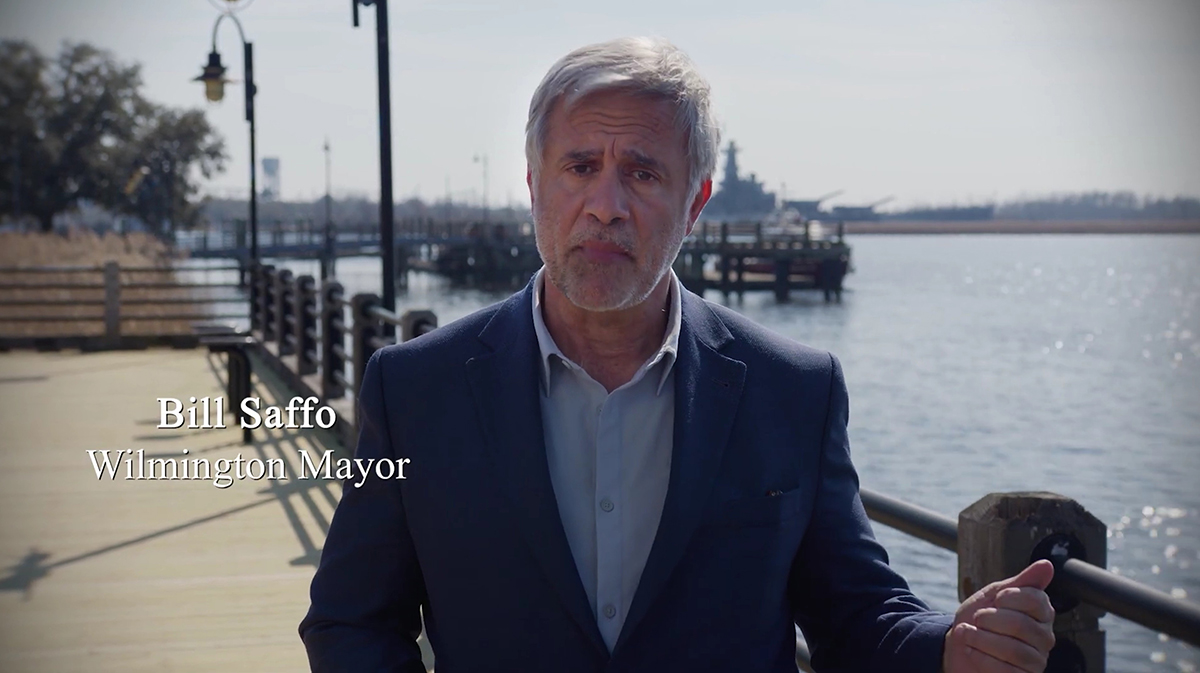
It’s been nearly a month since a video first aired of Wilmington’s mayor invoking residents to voice their opposition to one town’s plans to pull millions of gallons of water daily from the Cape Fear River.
“Today this vital resource is under threat from growing water-hungry communities upstream,” Mayor Bill Saffo says in the clip as he stands along the city’s downtown Riverwalk.
Supporter Spotlight

Fuquay-Varina, a town about 30 miles south of Raleigh, wants to move more than 6 million gallons of water each day from the Cape Fear River to the Neuse River, he explains in the video made in collaboration with the Cape Fear Public Utility Authority.
“That’s 6 million gallons gone, each day, forever. It is important that you make your voice heard now for your family and for future generations. Add your voice to those of your neighbors and friends who already are telling the state to say no to Fuquay-Varina’s permanent taking of our water,” Saffo concludes.
Only a couple of more weeks are left until the public comment period on Fuquay-Varina’s request for an interbasin transfer, or IBT, certificate closes.
Maya Holcomb, a Division of Water Resources representative, told members of the state Environmental Management Commission’s Water Allocation Committee last week that she anticipated receiving comments all the way through to the April 1 deadline.
In her presentation to the committee Thursday, Holcomb provided an update on the numbers of correspondence she’d received in the days since she initially crafted her report, when the email count was at 283.
Supporter Spotlight

Related: Opponents say river water transfer puts Cape Fear in peril
“But I just keep getting so many emails, which — we’re hearing from the public, that’s great — but I have received an additional 42 emails since this PowerPoint was created last week,” Holcomb said.
Holcomb said she had also received 41 resolutions from cities, towns, counties, homebuilders, substations and public utilities.
She did not say how many of those resolutions oppose the IBT, but instead highlighted what she described as the “newest” issues of concern: loss of water for agricultural purposes, nutrient concentration in the Neuse River Basin, such as those that cause algal blooms, per- and polyfluoroalkyl substances, hypoxia, drought vulnerability and chemical export of industrial pollutants from the Cape Fear River.
Those concerns mirror some of arguments made by dozens of people who spoke out against the transfer during a series of state-hosted public hearings in December.
Fuquay-Varina projects that the water supply, from which it currently buys from Raleigh and Harnett and Johnston counties, will fall short of demand by 2030.
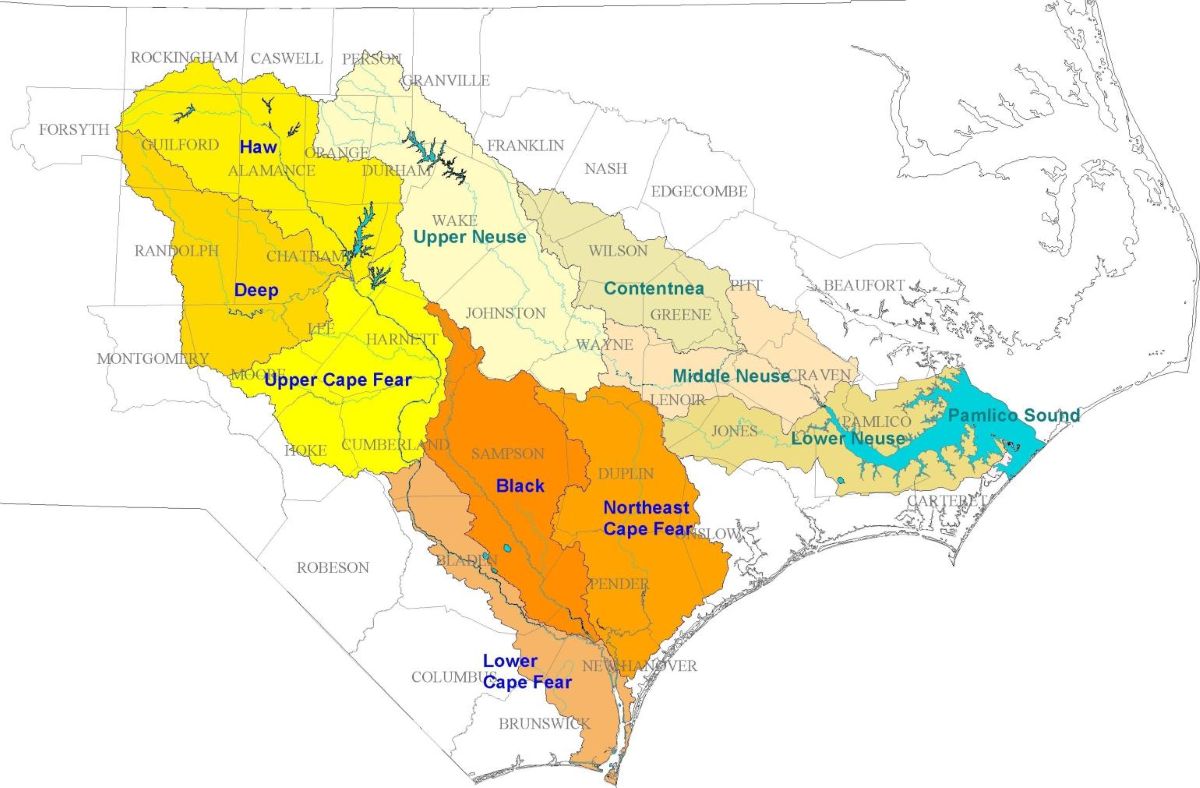
Under the proposed preferred alternative identified in a draft environmental impact statement for the transfer, Fuquay-Varina would source its entire water supply from a water treatment plant in Sanford, which is in the Cape Fear River Basin.
Once water pulled from the Cape Fear River is used by residents and businesses in that town, the treated wastewater would then be discharged into the Neuse River Basin.
This would permanently subtract 6.17 million gallons each day from the river flow that currently serves about 900,000 residents of counties, cities, towns and communities from Fayetteville to Wilmington.
“Put in perspective, 6.17 (million gallons per day) of raw water from the river is enough to provide treated drinking water to more than 27,000 homes,” according to Cape Fear Public Utility Authority’s website.
In the weeks and months leading up to CFPUA’s campaign against Fuquay-Varina’s plan, several local governments and utilities adopted resolutions and sent letters of opposition to the state.
New Hanover County, Wilmington and Brunswick County and more than a dozen Brunswick County municipalities have officially gone on record opposing Fuquay-Varina’s request.
Holcomb explained last week that, after April 1, state environmental officials will respond to comments on the draft environmental impact statement and then formulate a hearing officers’ report, which will be finalized sometime between July and September.
After that, the Environmental Management Commission will determine whether the EIS is technically adequate. Following that determination, the Department of Environmental Quality will issue its record of decision.
Another round of public hearings will be held before the EMC makes its final determination.
If approved, the transfer would occur after 2031, according to the draft impact statement.
Comments may be submitted to Maya Holcomb, Division of Water Resources, 512 N. Salisbury St., Raleigh, NC, 27604, or by email to maya.holcomb@deq.nc.gov.