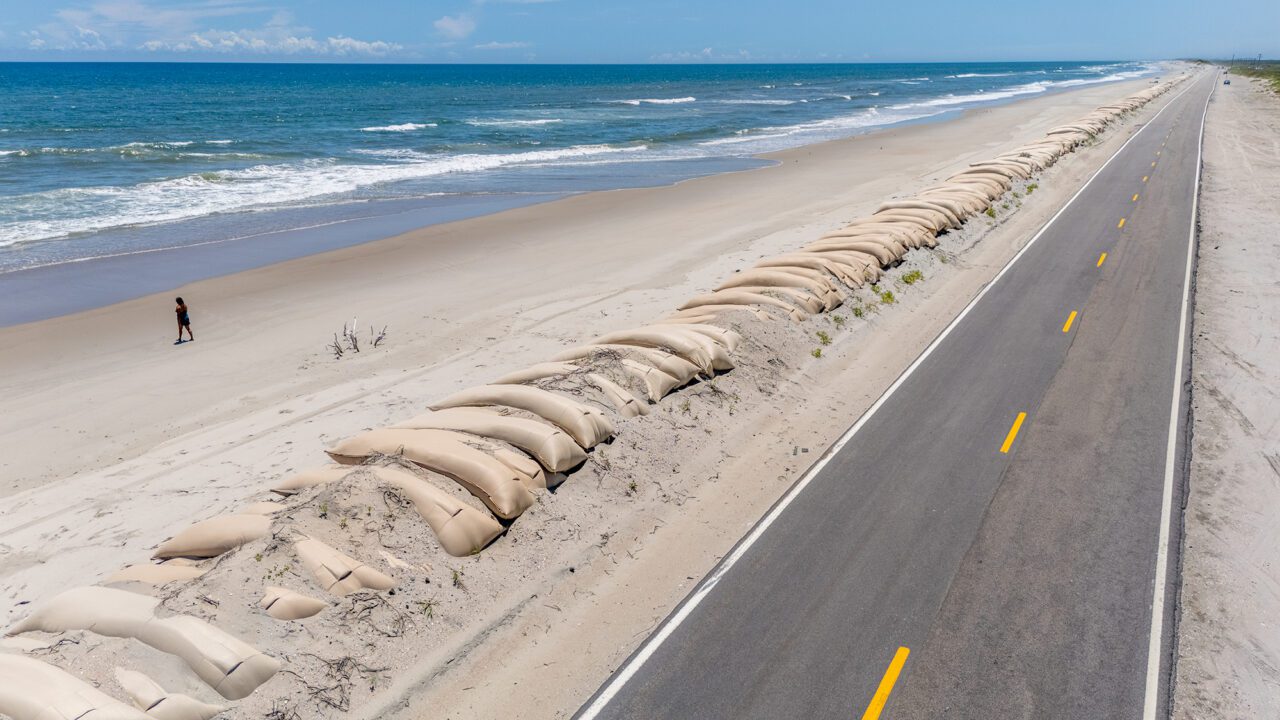
During the North Carolina Coastal Resources Commission’s meeting Feb. 25-26, members are expected to take action on proposed changes to rules for septic tanks seaward of the vegetation line, permit fee increases, using sandbags to protect public roads, and a general permit to replace existing bridges and culverts.
The public may attend the meeting that is taking place at the Dunes Club in Atlantic Beach, or view the meeting while it is livestreamed on DEQ’s YouTube channel.
Supporter Spotlight

The Coastal Resources Advisory Council, which provides the commission with local government perspectives and advice, will meet in person first at 10 a.m. Wednesday, Feb. 25. The 10-member group is expected to discuss potential inlet hazard area rule amendment options, a summary of sediment criteria rules, and research equipment general permit updates.
The full commission meeting is to set for 1 p.m. Feb. 25 and resume at 9 a.m. Feb. 26. An in-person public comment period is scheduled for 9:05 a.m. Feb. 26.
The full meeting agenda and briefing materials can be found on the CRC website. The order of individual agenda items are subject to change.
Agenda items for the commission’s first day include a variance from Figure 8 Island homeowners on a sandbag extension, and a discussion on oceanfront hardened structures with the science panel.
Public hearings are to follow on noncompetitive use of public beach and coastal waterfront access grant funds, Topsail Island acquisition closing costs, and readoption of rule language for local government land use plans.
Supporter Spotlight

When the meeting reconvenes Feb. 26, the commission is to discuss septic tanks, inlet hazard area policy, and oceanfront and inlet erosion rates and setback factors, in addition to the action items they are expected to consider.
The Coastal Resources Commission establishes policies for the N.C. Coastal Management Program and adopts rules for both the Coastal Area Management Act and the N.C. Dredge and Fill Act. The commission designates areas of environmental concern, adopts rules and policies for coastal development within those areas and certifies local land use plans.