Ocean Isle Beach hopes to pump tens of thousands of cubic yards of sand onto the beach at the easternmost tip of the island by this spring as an erosion stopgap.
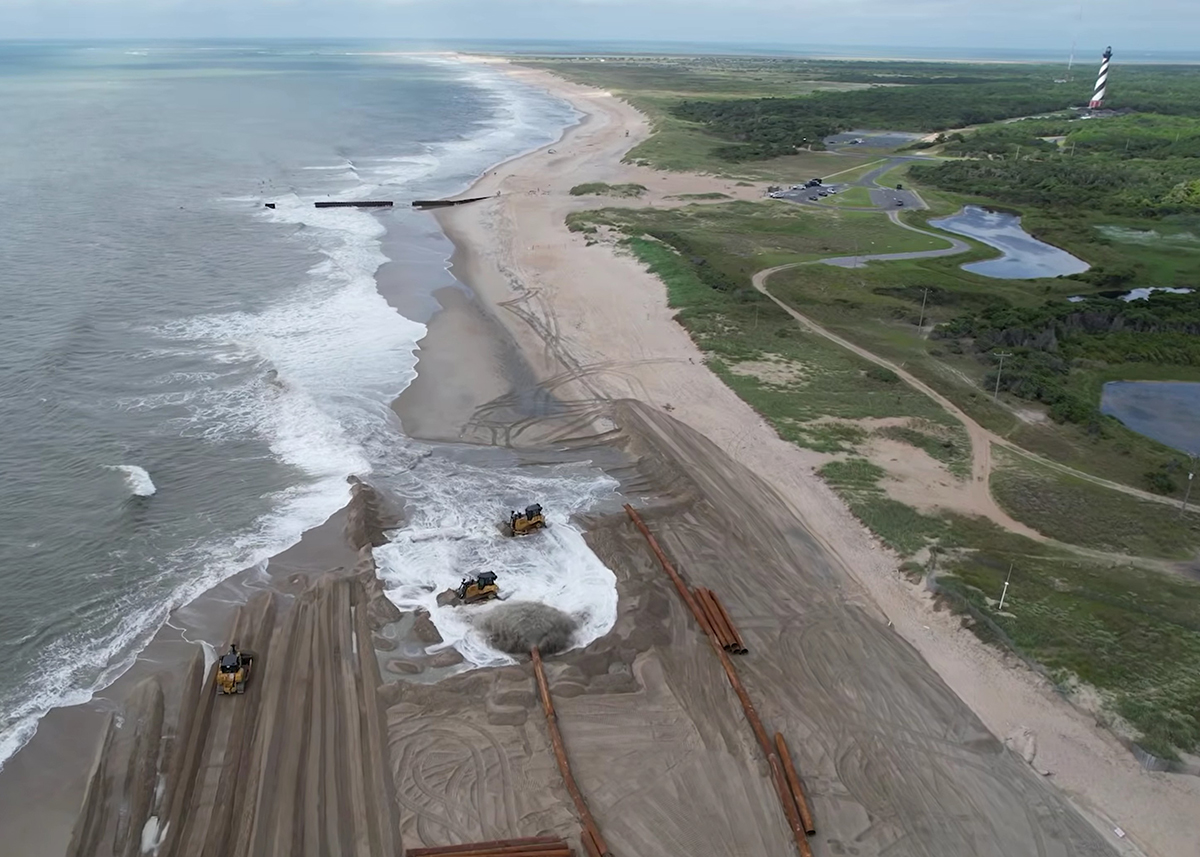
The Brunswick County town has asked the Army Corps of Engineers Wilmington District for authorization to have up to 70,000 cubic yards of sand placed east of its terminal groin where erosion has been chipping away at the shoreline in front of a luxury neighborhood.
Supporter Spotlight

The Corps announced late last week that it is accepting public comments through March 8 on the town’s application to modify the federal permit it received in 2016 to build the terminal groin at Shallotte Inlet.
As it stands, that permit does not allow sand to be placed east of the terminal groin.
A terminal groin is a wall-like structure built perpendicular to the shore at inlets to contain sand in areas with high rates of erosion.
Proposed modifications to the permit include placing sand along an 1,875-foot stretch of shoreline at The Pointe, a gated community whose oceanfront property owners have been desperately trying to hold back an encroaching sea.
Under the terms of the proposed permit changes, this would be a one-time beach nourishment project.
Supporter Spotlight

The town is also asking for its permitted sand borrow source in Shallotte Inlet to be expanded from about 83 acres to a little more than 117 acres, to add a new borrow area within the Atlantic Intracoastal Waterway and be allowed to work outside of the environmental window for dredging from April 30 to June 15.
Ocean Isle Beach Town Manager Justin Whiteside said on Tuesday that the town wants to get the modified permit as quickly as possible in hopes that the sand placement project would coincide with a federal dredging project.
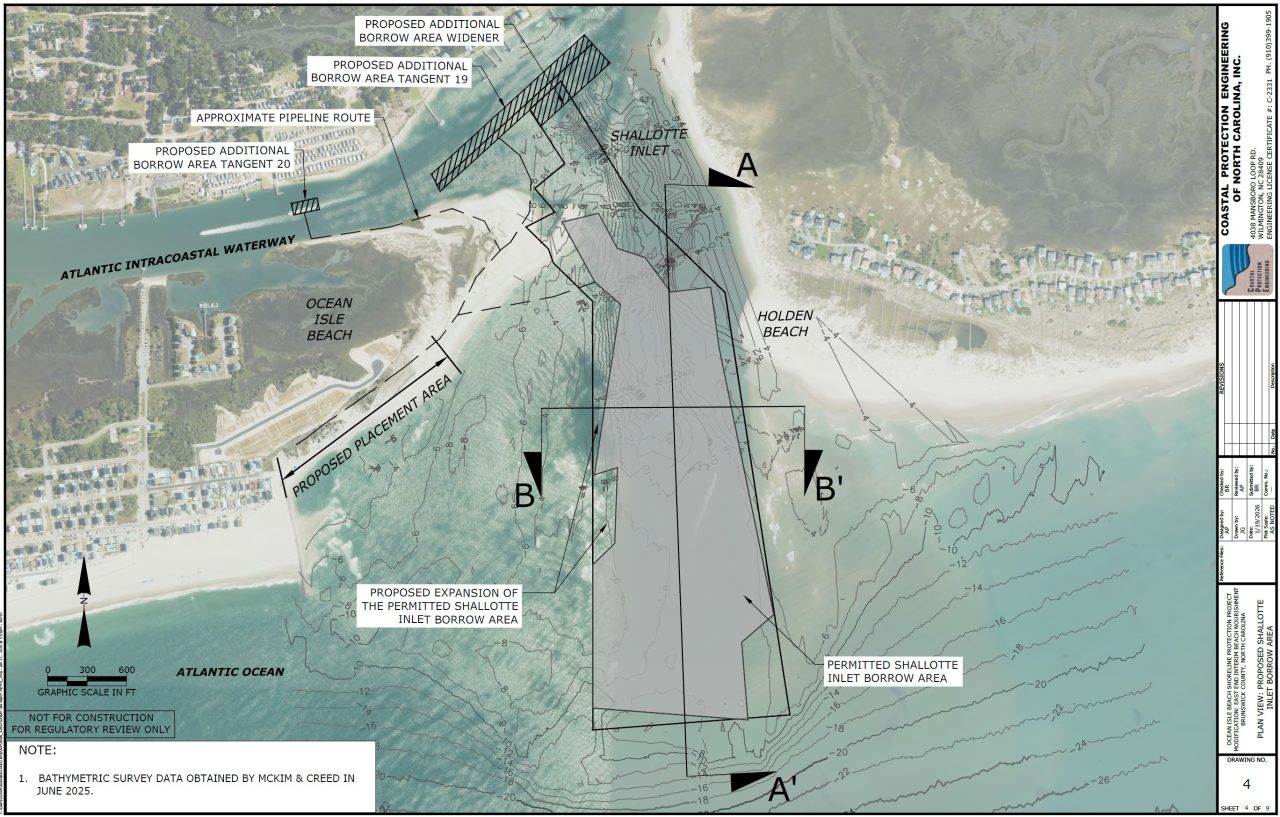
The Corps announced last September it had awarded a nearly $8.5 million contract to maintenance dredge several areas along the Intracoastal, including at the Shallotte Inlet crossing.
Whiteside explained that Ocean Isle Beach anticipates receiving 25,000 cubic yards of sand “that the town is paying for” from the Corps through the inlet crossing project.
“The hope is to get this permit modified within the timeframe that the Corps’ contractor is here on site and then we could contract with them possibly to dredge more in that federal channel or go into that inlet borrow area to put that additional sand there,” he said.
Whiteside said the town does not yet have an approximate cost of its proposal to nourish the beach east of the terminal groin.
Ocean Isle’s east end had for decades been losing ground to chronic erosion, the worst of which occurred along about a mile of ocean shoreline beginning near the inlet.
An encroaching ocean claimed homes, damaged and destroyed public utilities and prompted the North Carolina Department of Transportation to abandon state-maintained streets there.
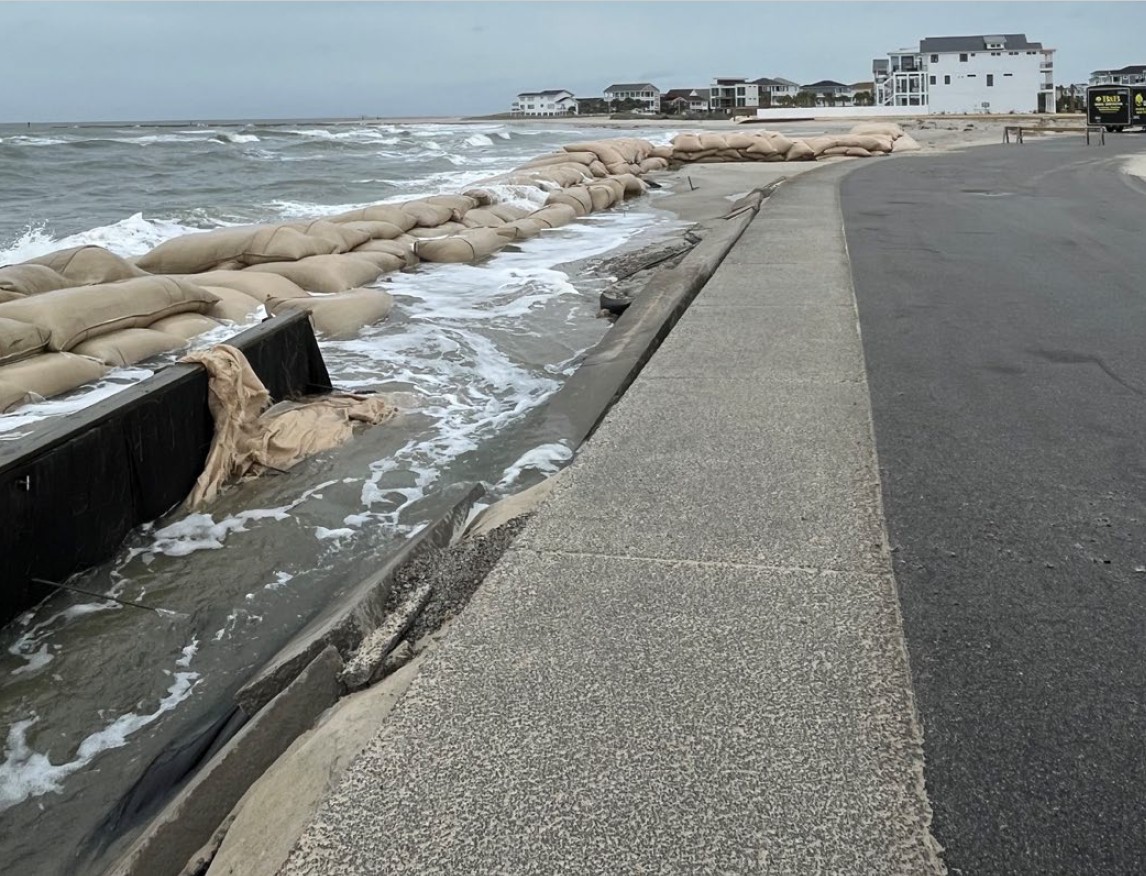
To stave off further erosion, the town in 2005 was permitted to install a wall of sandbags to protect public roads and infrastructure from getting swallowed up by the sea.
In 2011, Ocean Isle Beach was, along with a handful of other beach communities, allowed to pursue the option of installing a terminal groin at an inlet area after the North Carolina General Assembly repealed a law that banned hardened erosion control structures on the state’s ocean shorelines.
Five years later, the town received state and federal approval to build a 750-foot terminal groin.
But before construction could begin, the Southern Environmental Law Center in August 2017 filed a lawsuit on behalf of the National Audubon Society challenging the Corps’ approval of the project.
More than three years passed before the lawsuit, which later included the town, concluded after an appellate court affirmed a lower court’s decision that the Corps fairly considered the alternatives included in an environmental impact statement examining the proposed project.
Construction of the $11 million project was completed in the spring of 2022, the same year the final plan for The Pointe, a 44-lot subdivision, was approved for development.
By fall 2025, The Pointe’s oceanfront properties were suffering significant erosion.
Last November, the North Carolina Coastal Resources Commission unanimously agreed to grant permission to the owners of eight lots in that neighborhood to install larger than typically allowed sandbag structures waterward of their land.
Whiteside said Tuesday that those sandbags had not been installed.
Sand in the area east of the terminal groin, he said, appears to be “recovering a little bit.”
“We think over the past month and a half or so that we’ve gained, just looking at aerial photographs, approximately 5,000 cubic yards of sand that’s deposited east of the groin, so some of the beach is building back up in that area,” Whiteside said.
He explained that in 2022 the town’s federal beach nourishment project took place in conjunction with the construction of the terminal groin.
“The dredger came through and we had a huge spit on the east end of the island and that contractor came through and just dredged right through that spit and took it down to a negative 15-foot elevation,” Whitesaid said. “It’s kind of filled back in now and we’re thinking that’s why we’re seeing the growth back east of the groin. We’re hoping this shows that that’s some of what contributed to it, that it was maybe our own nourishment project through the Corps.”
“But, in the meantime, we know this is a short-term solution that we’ve got to figure out some type of long-term solution to, so our engineer firm is going to be doing some modeling to see what kind of modifications, if any, need to take place to the existing groin,” he continued.
Comments on the proposed project should refer the permit application number (SAW-2011-01241) and may be submitted to the Corps electronically through the Regulatory Request System at https://rrs.usace.army.mil/rrs or by email to Tyler Crumbley at tyler.a.crumbley2@usace.army.mil.
Written comments may be mailed to Commander, U.S. Army Corps of Engineers, Wilmington District, Attention: Tyler Crumbley, 69 Darlington Ave., Wilmington, NC 28403.
The Corps will consider written requests for a public hearing to be held to consider the proposed application modifications.