A North Carolina court has ruled that the state’s lead environmental agency has the authority to set 1,4-dioxane discharge limits for public wastewater utilities.
The ruling reverses a 2024 administrative law judge’s determination that the North Carolina Department of Environmental Quality did not follow the proper process when it established discharge limits for a handful of municipal wastewater treatment plants in the piedmont.
Supporter Spotlight

DEQ followed state Environmental Management Commission and U.S. Environmental Protection Agency “protocols in creating the 1,4-dioxane limits and created the criteria for the purpose of protecting the health and wellbeing of North Carolinians,” Wake County Superior Court Judge A. Graham Shirley wrote in his Feb. 5 decision. “Compliance with regulations and a desire to maintain or improve public health cannot be said to be a ‘patently in bad faith’ decision.”
Shirley wrote that the agency “did not err” in considering 1,4-dioxane, a substance used primarily as a solvent in chemical manufacturing, as a carcinogen.
“Because 1,4-dioxane is a pollutant likely to cause cancer in humans, permit limits are necessary to protect North Carolinians’ drinking water and their health,” DEQ Secretary Reid Wilson stated in a release the agency published Thursday. “The court vindicates DEQ’s decision to impose limits to protect downstream communities from this harmful carcinogen.”
Discharges of the chemical substance into North Carolinians’ drinking water sources has gained attention in recent years, with downstream public water suppliers and communities calling for tighter regulations and that pollution be controlled at the source.
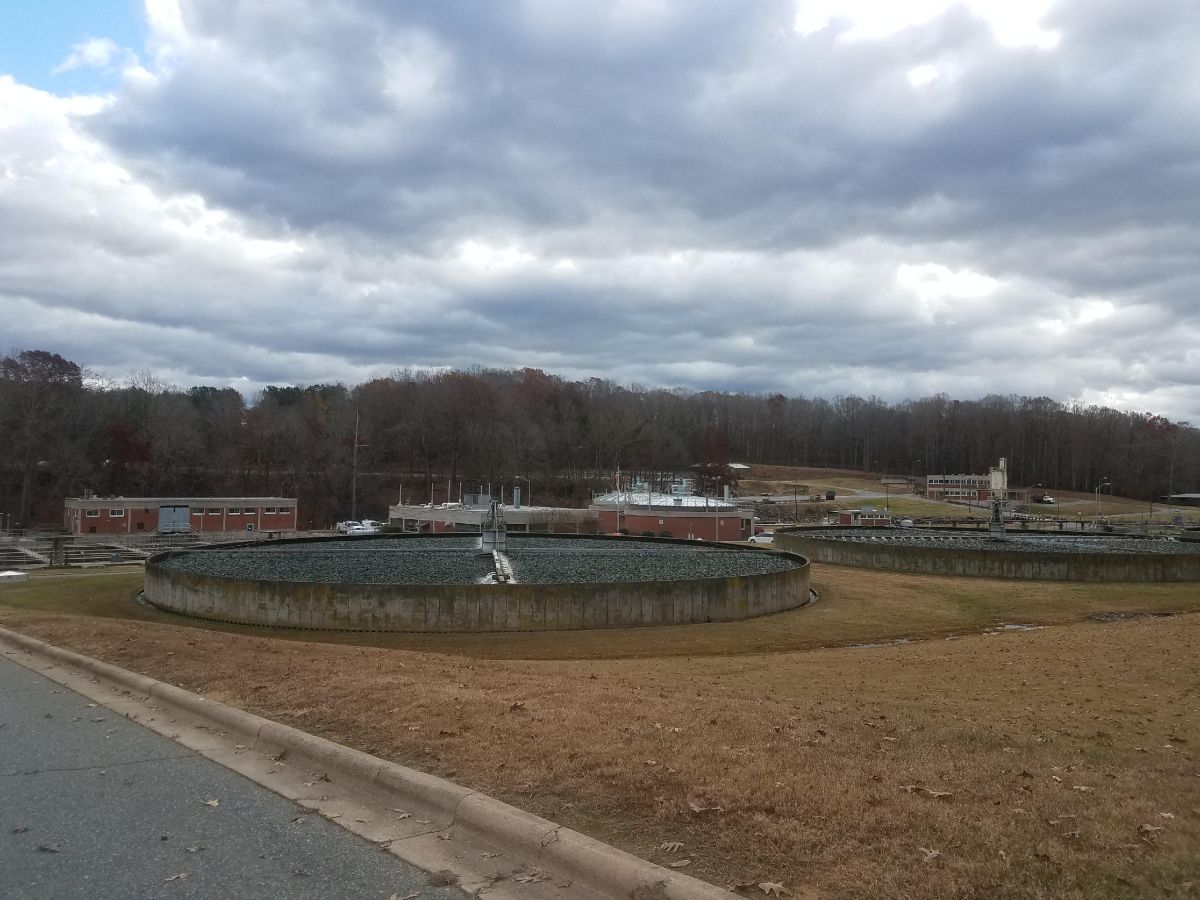
DEQ’s Division of Water Resources attempted to do that when, in August 2023, it issued Asheboro’s wastewater treatment plant a National Pollutant Discharge Elimination System, or NPDES, permit that capped its releases of 1,4-dixoane.
Supporter Spotlight

Asheboro sued, challenging the state’s authority to include a water quality standard for 1,4-dioxane in the permit and arguing the new limits created an excessive financial burden.
The cities of Greensboro and Reidsville joined the lawsuit. Both had been ordered to include limits in their draft NPDES permits after they received notices of violation for 1,4-dioxane discharges in November 2019.
Asheboro’s wastewater treatment plant discharges into Cape Fear River basin, where some 900,000 North Carolinians receive their drinking water downstream of the plant.
Brunswick County, Cape Fear Public Utility Authority and Fayetteville Public Works Commission intervened in the case, asserting that upstream 1,4-dioxane dischargers placed an undue financial burden on them to sample drinking water sources for the chemical and try and reduce the level of consumption of it to their customers.
In a September 2024 ruling, then-Chief Administrative Law Judge Dr. Donald van der Vaart sided with the upstream municipalities and revoked the permit limits set by DEQ.
“The Superior Court was right to uphold DEQ’s ability to limit chemicals in our water, and my office will continue working with DEQ to make sure people have clean drinking water,” North Carolina Attorney General Jeff Jackson stated in a release.
Cape Fear Public Utility Authority Executive Director Kenneth Waldroup said in a statement to Coastal Review Thursday afternoon that the utility is pleased with Shirley’s decision.
“CFPUA’s raw water intake is the last on the Cape Fear River. We rely on State regulators to set and enforce reasonable discharge standards upstream of our intake to protect our region’s raw water supply,” he explained. “While CFPUA’s Sweeney Water Treatment Plant is able to treat drinking water for 1,4-dioxane, that treatment process carries an expense and our ability to treat this pollution has its limits. Reducing the amounts of 1,4-dioxane and other emerging contaminants being released upstream also reduces the financial burden on downstream customers and communities.”
Last October, Waldroup joined representatives of other public water utilities and residents in asking the EPA to uphold its earlier objection to the proposed NPDES permit excluding Asheboro’s discharge limit for 1,4-dioxane.
As of this report, the EPA had not made its final determination.
Emily Donovan, co-founder of Clean Cape Fear, said in an email that the Superior Court ruling, “is a win for public health and every downstream community threatened by Asheboro’s irresponsible leadership.”
“It’s a shame cities like Asheboro prefer squandering tax dollars defending industrial polluters rather than protecting the public’s drinking water supplies,” she said. “It’s also a devastating reminder that until North Carolina creates strong source control measures for toxic chemicals, we will always be one discharge away from the next preventable crisis.”
Earlier this year, the state Environmental Management Commission voted to push proposed monitoring and minimization rules for 1,4-dioxane and three per- and polyfluoroalkyl substances, or PFAS, to the public this month.
Critics of the proposed rules argue they lack any real enforceability because they do not include water quality standards, specify what best management practices dischargers must follow, or how facilities must minimize their discharges.
The public comment period had yet to be announced as of this report.
In June of last year, the Southern Environmental Law Center filed a lawsuit on behalf of Cape Fear River Watch and Haw River Assembly against Asheboro and the city’s industrial customer StarPet Inc., to stop their discharges of 1,4-dioxane into the Cape Fear River basin.
“Asheboro, Greensboro, and Reidsville have spent years arguing for downstream communities to shoulder the health and monetary costs of the cities’ pollution,” Jean Zhuang, a senior attorney with the center’s Chapel Hill office, stated in a release. “The Wake County Superior Court saw through the cities’ arguments and restored a key tool that can be used to protect families, communities, and drinking water utilities downstream.”
According to that release, the cities have filed a motion to suspend the court’s decision and an appeal is pending.