This report first appeared Feb. 3 in NC Newsline.
North Carolina Insurance Commissioner Mike Causey says even as snow from last weekend’s storm begins to melt, his office has received a flurry of calls from business owners and lifetime Outer Banks residents upset to see more homes falling into the Atlantic Ocean.
Supporter Spotlight

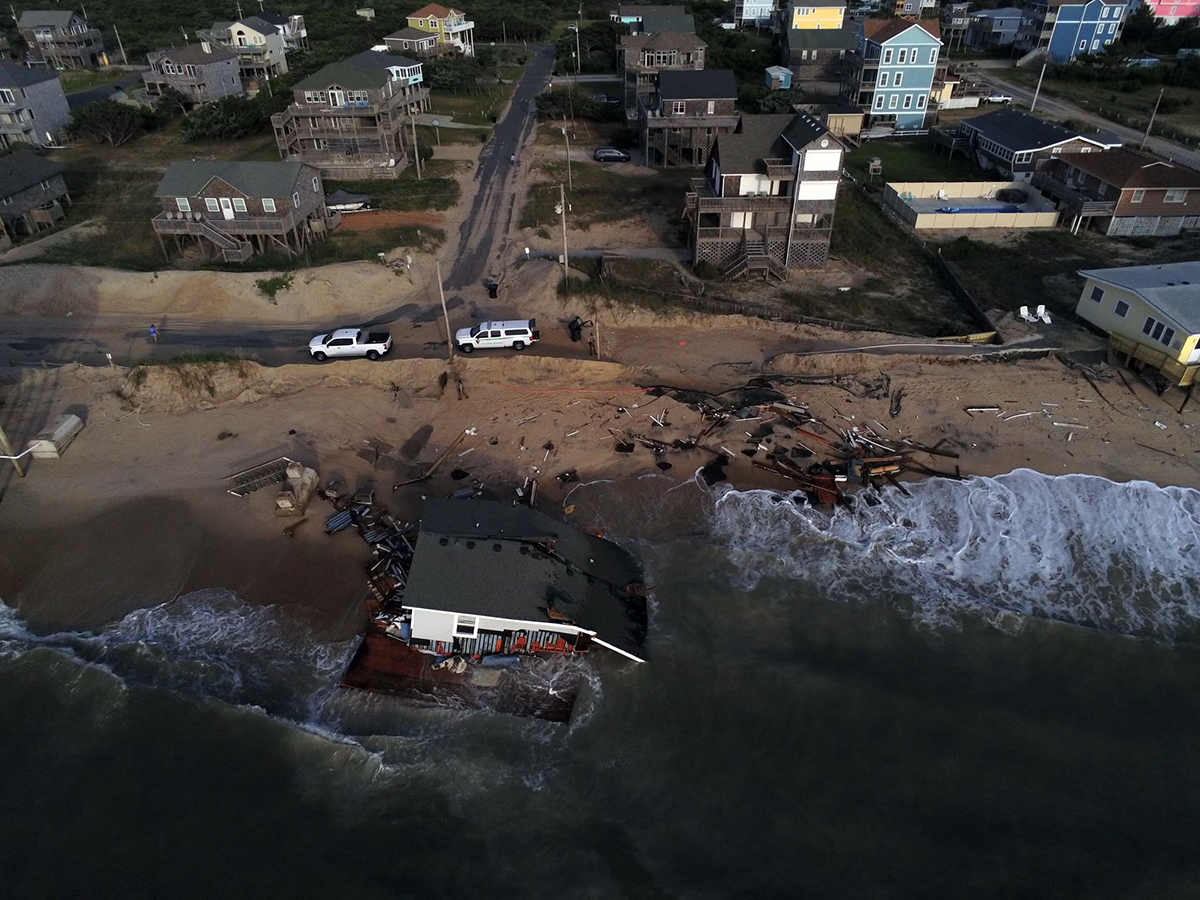
The powerful storm, packing winds of 60 mph, brought down four more unoccupied structures in Buxton.
“There’s some angry people out there,” Causey told members of the Council of State on Tuesday. “That makes a total of 31 homes that have collapsed since 2020.”
Related: Winter storm takes 4 Buxton houses, leaves inches of snow
Causey said while his office doesn’t have a solution to deal with the continually eroding shoreline, the state should listen to the locals.
“The complaint that I hear is there’s been too much finger-pointing with the multiple agencies involved, the federal government, the parks system, environmental groups, on down the list,” said Causey. “But what they’re telling me is that we need emergency help to stop the bleeding, because we can’t let these houses keep collapsing.”
Supporter Spotlight

Buxton typically loses six feet to eight feet of shoreline each year, but rising sea levels and an active storm season can accelerate that erosion. And a collapsed home can leave a debris field that stretches for miles.
“It is an economic nightmare and it’s an environmental nightmare when that happens,” said Causey.
Property owners are responsible for removing debris when a home collapses, but currents can spread the wreckage far down the coast, so responsibility has increasingly fallen on park officials to protect the shoreline.
Last year the Cape Hatteras National Seashore hauled out over 400 truckloads of debris from fallen houses.
Causey said the residents he’s spoken to this week want to see manmade reefs or hardened structures, which are currently banned, reconsidered. Beach renourishment, which has been used in other coastal communities, is an expensive and temporary solution.
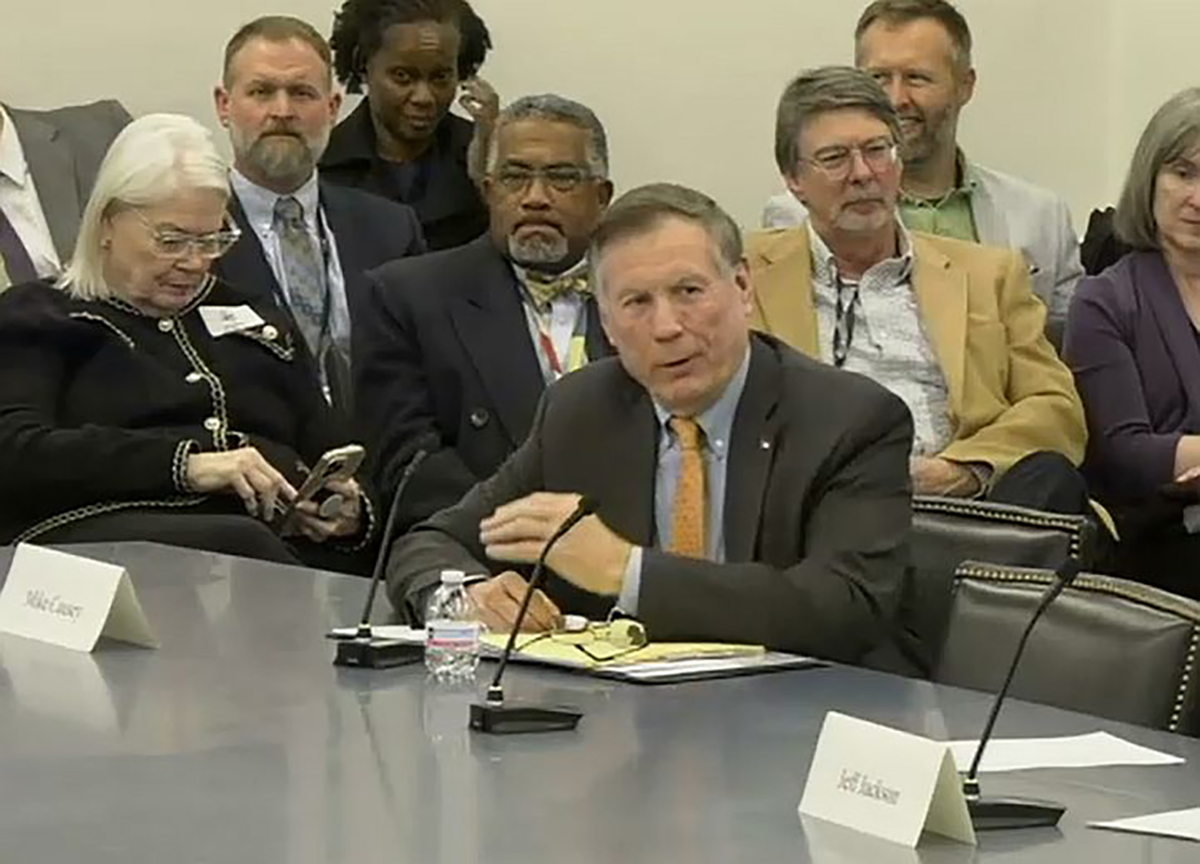
This is not the first time Causey has pressed for help for Outer Banks homeowners.
Last November, Causey and Gov. Josh Stein urged Congress to pass the Preventing Environmental Hazards Act of 2025. The bipartisan bill would allow National Flood Insurance Program (NFIP) payments to be made before an imminent collapse caused by erosion.
Standard homeowners’ insurance doesn’t cover shoreline erosion damage, so property owners can’t collect on it, even if the property is condemned, until the house collapses. The proposed legislation would give homeowners financial help to demolish or relocate a condemned structure before it falls into the surf.
“Federal NFIP pre-collapse authority would reduce hazards, protect visitors and wildlife, and save taxpayer dollars on emergency response and cleanup,” Causey and Stein wrote in their Nov. 2025 letter.
But the bill, co-sponsored by U.S. Rep. Greg Murphy (R-NC3), has not moved since last May, when it was referred to the House Committee on Financial Services.
“I think those people deserve to be heard,” said Causey.
While Causey was focused on the coast at Tuesday’s Council of State, Stein turned his attention to disaster recovery out west.
The governor’s office continues to push for Congress to authorize $13.5 billion requested for Hurricane Helene relief, Stein told the council. While North Carolina’s congressional delegation is supportive, the wheels of the federal government move very slowly, tied up in red tape due to new FEMA review requirements.
North Carolina has only received about 12% of the federal aid it has requested for Helene recovery, Stein said.
“I’m so glad I’m not in Congress because I can only imagine trying to get anything constructive done in that body,” said Stein. “But we need their help, Western North Carolina needs their help, and we’re going to keep asking for their help.”
For now, Stein said he’s incredibly grateful for the state employees who helped North Carolinians weather back-to-back winter storms in January.
Transportation crews pre-treated state roads with over 10 million gallons of brine, Stein said. Over 100,000 tons of salt was spread across North Carolina’s 100 counties, with another 20,000 tons expected to be needed in the next day or two with more wintry weather in the forecast.
“They’re just working nonstop to try to minimize the impact on our lives,” said Stein.
NC Newsline is part of States Newsroom, a nonprofit news network supported by grants and a coalition of donors as a 501c(3) public charity. NC Newsline maintains editorial independence.