Guest Commentary
To stimulate discussion and debate, Coastal Review welcomes differing viewpoints on topical coastal issues.
“They swam all the way to Ocracoke?”
Supporter Spotlight
I suppose I should not have been so incredulous upon learning that National Park Service employees were having to track down rogue coyotes on Ocracoke Island. During my time conducting surveys of colonial waterbirds across the North Carolina coast, the impacts of coyote predation on young chicks was impossible to not take seriously. Their presence posed a constant challenge for federal, state, and municipal authorities. It’s not only birds that are affected; coyotes, with their acute sense of smell, pose a serious threat to sea turtle nests as well.
Invasive species often pose a serious challenge for ecosystems that have not evolved alongside them, and the havoc they wreak often vastly outstrips the pace at which the environment can adapt to their presence. While we have come to think of coyotes as a part of our everyday lives here in the eastern U.S., they are actually only native to the Southwest.
As wolves were killed en masse and driven out of the eastern U.S., coyotes migrated eastward to fill in the ecological role that was left wide open. As they did so, they picked up genes from the retreating wolves along their way. Now native red wolves are restricted to the Albemarle peninsula of North Carolina, a remnant of a once-dominant population that would have kept the coyotes from ever reaching the barrier islands simply by virtue of their presence.
While red wolves and coyotes are somewhat similar in appearance, coyotes are solitary mesopredators (mid-level carnivores that are still threatened by apex predators) that are characteristically opportunistic when it comes to food sources such as sea turtle eggs. Red wolves on the other hand are cooperative pack hunters that go for much larger game than coyotes, and will drive coyotes away or attack them under normal ecological conditions.
I bring the expansion of coyotes up as one example of how North Carolina’s barrier islands have changed since the onset of European colonization in the 16th century. The changes have been numerous, catastrophic, profound, and formative all at the same time.
Supporter Spotlight

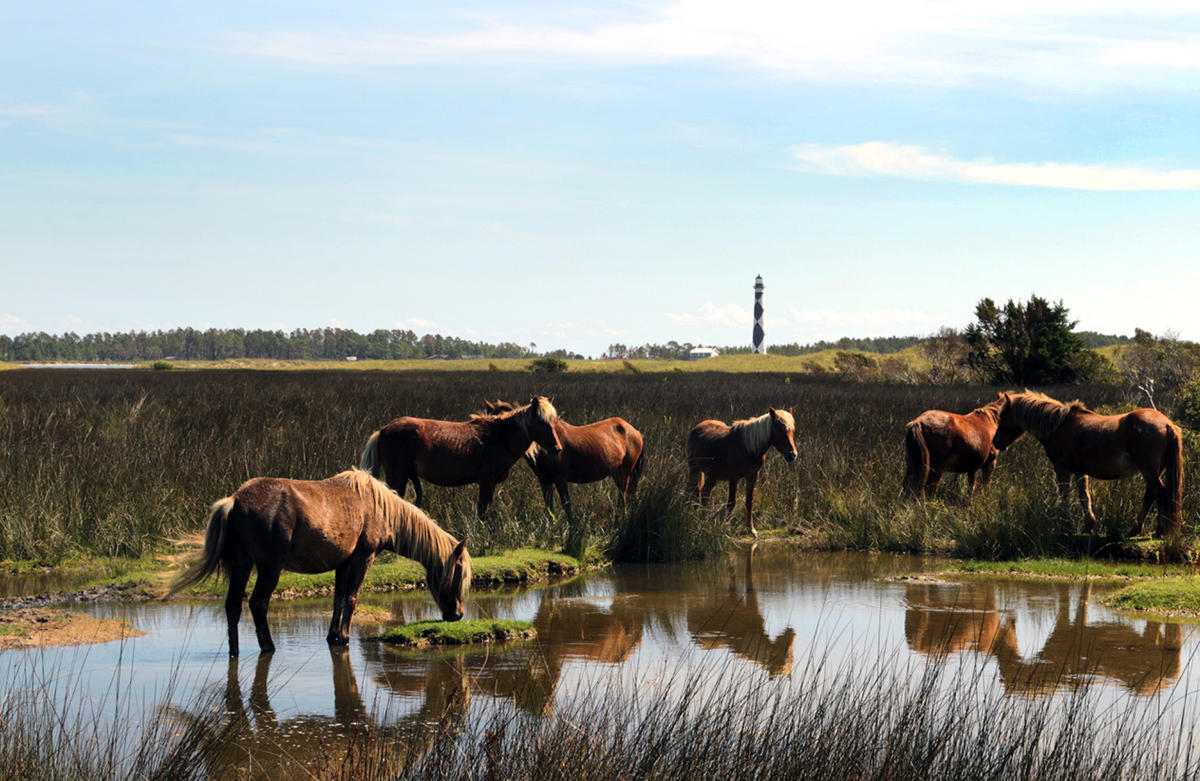
One of these changes are the wild horses that roam these dunes, in locations ranging from Corolla to Beaufort. I have enjoyed many meals from childhood to present dining on the Beaufort waterfront, looking across the narrow intracoastal waterway to find horses grazing on the Rachel Carson Reserve. For locals, they are a sight as ubiquitous as spotting dolphins in the waterway. Entire businesses and marketing promotions of the area have fixated on these horses as a unique part of the area’s culture and appeal.
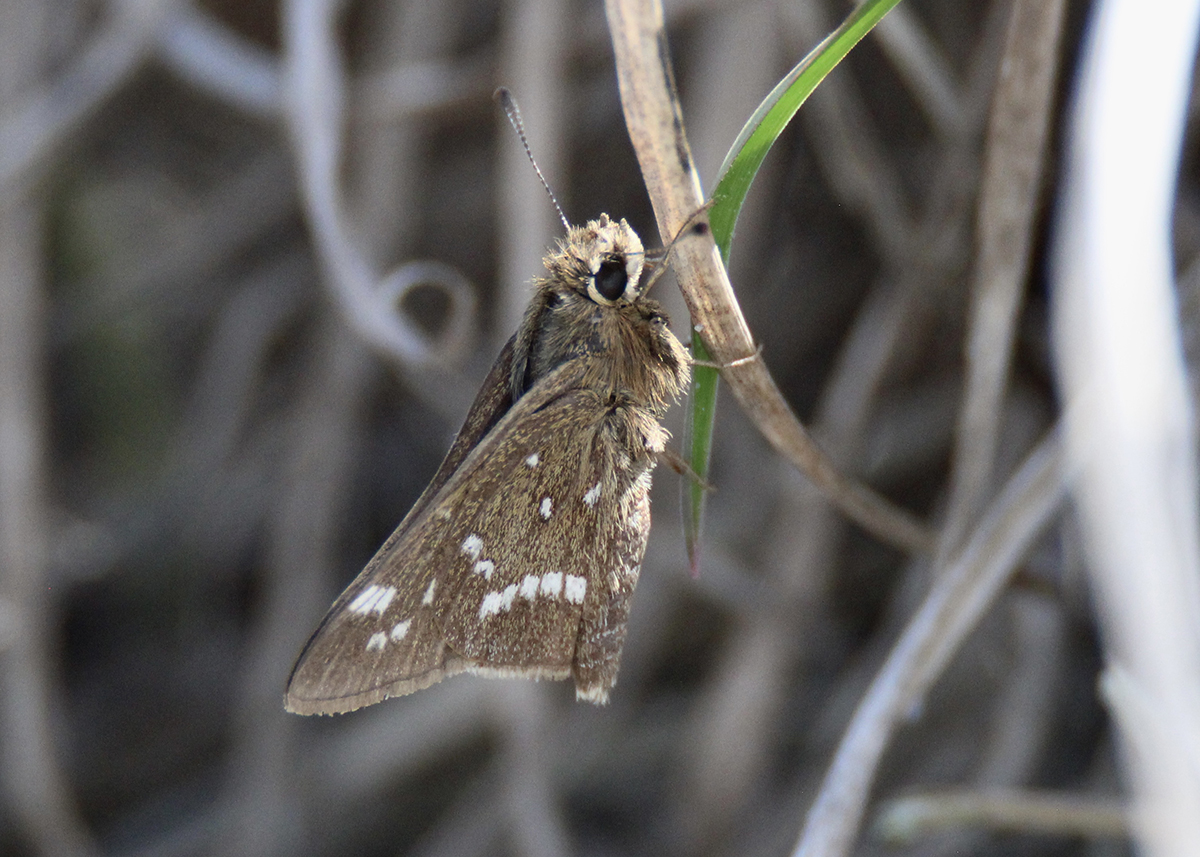
I am presently a researcher with North Carolina State University studying the crystal skipper. The crystal skipper is a butterfly species only found on a 30-mile stretch of the North Carolina Crystal Coast from Bear Island to the Rachel Carson Reserve.
The Rachel Carson Reserve just so happens to be a location with resident horses, making it the only place where horse and skipper populations interact.
People frequently come to the Rachel Carson Reserve to hike or relax on the beach, whether they come by way of ferry or their own watercraft. As my coworkers and I work in our highlighter-yellow vests, visitors are frequently drawn to us with inquiries about where they can spot the horses. Their assumptions aren’t wrong, I have been coming here for years at this point and I can direct them where to go to have a good chance of seeing them. They are often surprised, however, to find us unenthusiastic about the horses when we are directly asked about them.
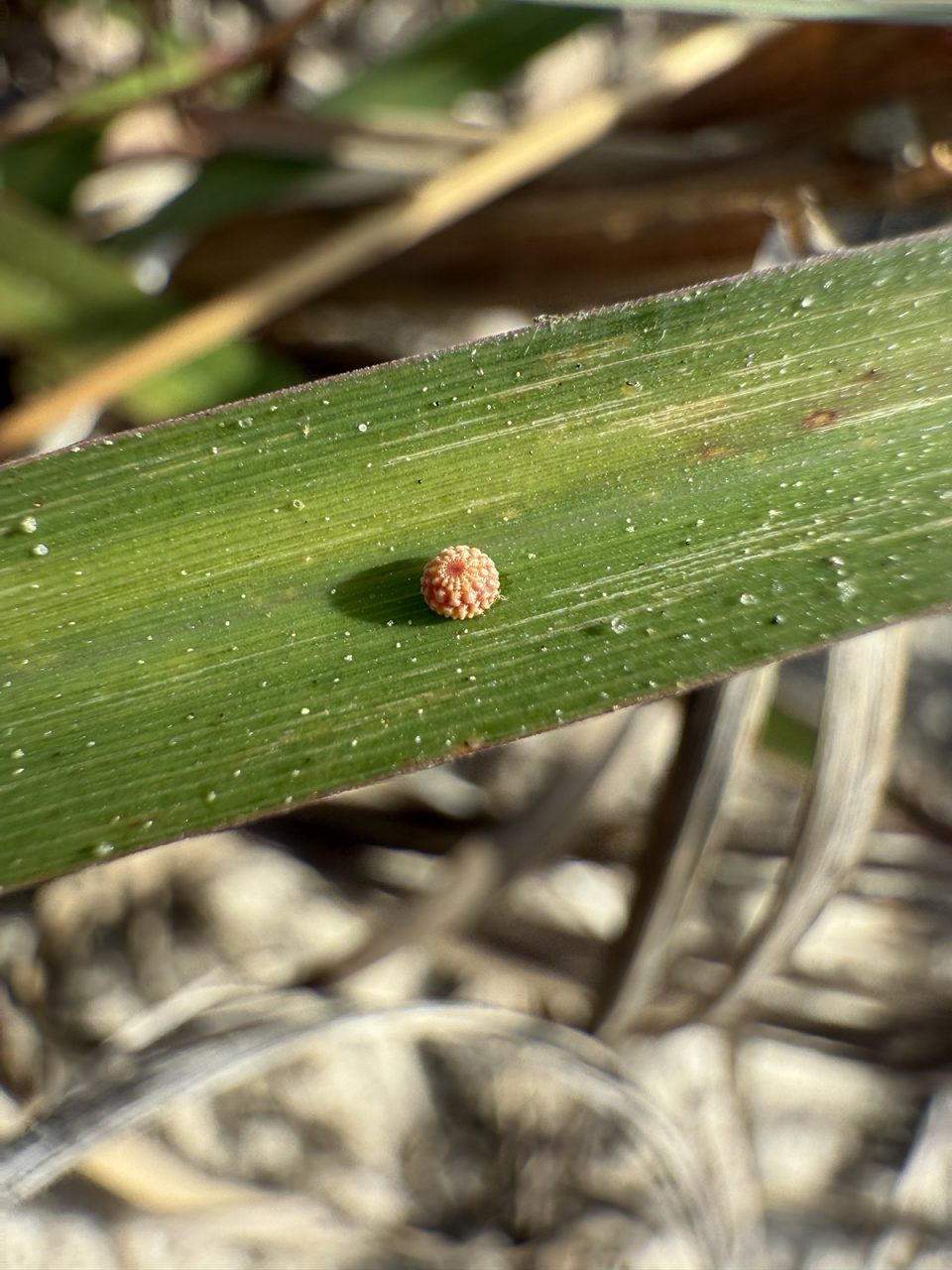
We usually address the visitors on the Rachel Carson Reserve surrounded by centipede grass, the only grass that remains after the horses have eaten their fill. Seaside little bluestem, the sole grass species the crystal skipper lays their eggs on and eats as a caterpillar, is nowhere to be found in the areas the horses frequent. It’s heart-wrenching to watch the horses stride into the one small section of the Rachel Carson Reserve that still contains a viable crystal skipper population, consuming who knows how many eggs and caterpillars as they satiate their hunger on seaside little bluestem. In a sharp contrast to the horses, the crystal skipper is not only from here, it is only found here.
Who are these horses for? For tourists?
I doubt the desire to see the horses would increase as people grow in their knowledge about the horses’ condition. When I am asked about how healthy the horses are here, I feel as though I am lying by omission if I don’t tell the truth as I see it.
For tourism boards?
North Carolina’s coast is replete with breathtaking sites and awe-inspiring nature, I doubt horses in particular are needed to promote the area.
For a rare and imperiled butterfly species found nowhere else on Earth?
Certainly not for them.
One could easily ask who the crystal skipper is for, to which I would reply that it is for the very island ecosystems that created it in the first place, whose selective pressures picked the genes that gave rise to its very body plan. Secondarily, the crystal skipper is for the people who live and visit here who are able to appreciate its beauty and intrinsic link to the land.
For all the problems I have highlighted here, I do believe that there is a solution to this problem that addresses the concerns of all involved. To anchor this solution in how I began the article, I once again want to return to the subject of Ocracoke.
Horses remain on the island but have been corralled into a pony pen, easily accessible to anybody visiting the island. These horses are given a proper diet, bereft of the hardy and sandy grasses that stitch the island together against the advances of the wind and waves. This keeps the island’s ecology and structure intact, enables visitors and residents alike to see this part of Ocracoke’s history, and keeps the horses protected from careless visitors.
It would be impertinent and wrong of me to dismiss the cultural and tourist value that the horses provide simply because I am approaching the topic as a conservationist. That said, if you are able to get a close look, the horses’ taught skin stretched over their hips and ribs represents a sharp contrast to the horses that folks are generally used to seeing.
If folks are going to come to see the Crystal Coast, I want them to see the best of the Crystal Coast, where we steward our ecological resources well and care for the animals in our charge.
Opinions expressed by the authors are not necessarily those of Coastal Review or our publisher, the North Carolina Coastal Federation.